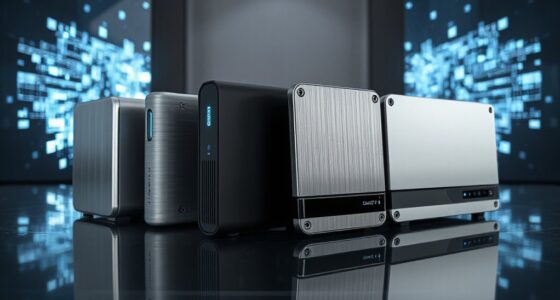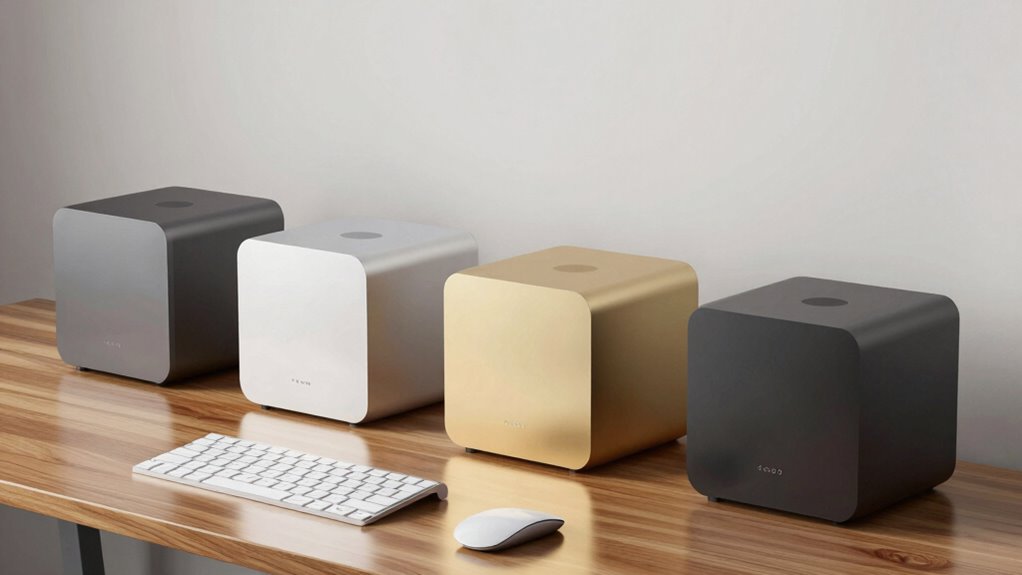

Shopping for a renewed Mac mini is one of the smartest ways to get into Apple’s desktop ecosystem without paying new-in-box prices, but the spread between options in 2026 is wider than ever. On one end sits the 2020 M1 Mac mini, still a genuinely capable machine for everyday computing and the cheapest Apple silicon you can buy renewed. On the other end is the 2026 M6 Mac mini, whose Dual 16-core Neural Engine and 170GB/s memory bandwidth make it a future-proofed AI workstation. My top pick for most buyers is the M1 Mac mini (Renewed) because it nails the value equation, while the M6 Mac mini is the pick for anyone running heavy creative or on-device AI workloads. The Intel Core i3 Mac mini (Renewed) is the budget wildcard — cheap, but with real tradeoffs I’ll explain below.

Get smart everyday buys delivered free — and shop member deals
- Fast, free delivery on millions of items
- Access to Prime Big Deal Days deals on October 6–7
- Prime Video, Amazon Music and more included
The main tension in this roundup is price versus software longevity. Older Intel and early Apple silicon machines cost less up front but have shorter runways for macOS updates, while the newest renewals carry premiums that narrow the gap with buying new. My goal here is to help you figure out exactly where on that curve you should land.
Key Takeaways
- The renewed 2020 M1 Mac mini is the best value pick — its Apple silicon architecture still outperforms the newer-in-name Intel Core i3 model while costing far less over its useful life.
- The 2026 M6 Mac mini is the performance ceiling of this lineup, with up to 4.8x faster AI performance and 32GB unified memory, but it only makes sense if your workload actually demands it.
- The Intel Core i3 Mac mini is the cheapest entry point but carries the shortest macOS support runway — buy it only for light, basic tasks.
- All three M6 configurations share the same chassis, ports, and Wi-Fi 7/Bluetooth 6 connectivity; the difference between them comes down to memory and storage configuration, so match the config to your workload.
- None of these minis include a monitor, keyboard, or mouse — budget for peripherals, especially on the base configurations.
| Apple 2026 Mac mini Desktop Computer with M6 Chip |  | Best Overall | Processor: Apple M6 chip | Memory: Up to 32GB unified memory | Memory Bandwidth: 170GB/s | VIEW ON AMAZON | See Our Full Breakdown |
| Apple 2026 Mac mini Desktop Computer M6 Chip |  | Best Premium Configuration | Processor: Apple M6 chip | Neural Engine: Dual 16-core | Memory: Up to 32GB unified memory | VIEW ON AMAZON | See Our Full Breakdown |
| Apple 2026 Mac mini Desktop Computer with M6 Chip | | Best Value Among Current-Gen | Chip: Apple M6 | Memory: Up to 32GB unified memory | Memory Bandwidth: 170GB/s | VIEW ON AMAZON | See Our Full Breakdown |
| Apple 2020 Mac Mini with Apple M1 Chip, 8GB RAM, 256GB SSD Storage – Silver (Renewed) |  | Best Value Overall | Chip: Apple M1 | CPU: 8-core | GPU: 8-core | VIEW ON AMAZON | See Our Full Breakdown |
| Apple Mac Mini Desktop – Intel Core i3-8GB Memory – 256GB Solid State Drive (Renewed) |  | Best Ultra-Budget Pick | Processor: 8th-gen Intel Core i3 quad-core, 3.6GHz | Graphics: Intel UHD Graphics 630 | RAM: 8GB 2666MHz DDR4 (upgradeable) | VIEW ON AMAZON | See Our Full Breakdown |
| renewed mac mini desktop | Ports | Operating System | Processor | Memory |
|---|---|---|---|---|
| Apple 2026 Mac mini Desktop Co | 3x Thunderbolt 4, HDMI, 2.5Gb Ethernet, 2x front USB-C, headphone jack | macOS | Apple M6 chip | Up to 32GB unified memory |
| Apple 2026 Mac mini Desktop Co | 3x Thunderbolt 4, HDMI, 2.5Gb Ethernet, 2x front USB-C, headphone jack | macOS | Apple M6 chip | Up to 32GB unified memory |
| Apple 2026 Mac mini Desktop Co | 3x Thunderbolt 4, HDMI, 2.5Gb Ethernet, 2x front USB-C, headphone jack | macOS | — | Up to 32GB unified memory |
| Apple 2020 Mac Mini with Apple | — | — | — | — |
| Apple Mac Mini Desktop | 4x Thunderbolt 3, HDMI 2.0, 2x USB 3 | macOS | 8th-gen Intel Core i3 quad-core, 3.6GHz | — |
More Details on Our Top Picks
Apple 2026 Mac mini Desktop Computer with M6 Chip
This M6 configuration earns my top spot because it balances cutting-edge performance with sensible headroom. The Dual 16-core Neural Engine and Neural Accelerators built into every GPU core translate to up to 4.8x faster AI performance, which matters even if you’re not a machine-learning practitioner — Apple Intelligence features, on-device LLMs, and AI-assisted creative tools increasingly lean on this hardware. With up to 32GB of unified memory and 170GB/s of bandwidth, this configuration keeps large projects fluid in ways the 8GB M1 and Intel i3 units simply cannot.
Compared with the other M6 listings in this roundup, this one stands out for its cleaner configuration clarity — you know exactly what memory and storage you’re getting, which matters when renewal listings can be vague. The port layout is identical across all M6 units: three Thunderbolt 4 ports, HDMI, 2.5Gb Ethernet, plus front-facing USB-C and a headphone jack that make desk life noticeably easier than the rear-only ports on the 2020 and Intel models.
The honest drawbacks: the 32GB memory ceiling will frustrate video editors working with 8K footage or developers running massive containerized environments, and Thunderbolt 4 instead of Thunderbolt 5 limits external storage speeds for the most demanding users. And as with every mini here, you supply your own display, keyboard, and mouse.
Pros:- Dual 16-core Neural Engine delivers up to 4.8x faster AI performance
- 32GB unified memory ceiling with 170GB/s bandwidth handles heavy multitasking
- Front-facing USB-C ports and headphone jack improve daily usability
- Wi-Fi 7 and Bluetooth 6 via Apple’s N1 wireless chip keep it current for years
Cons:- Memory caps at 32GB, limiting extreme professional workflows
- Thunderbolt 4 rather than Thunderbolt 5
- No included monitor, keyboard, or mouse
Best for: Professionals and enthusiasts who want maximum longevity and AI-ready performance without buying new
Not ideal for: Buyers on tight budgets or those whose workload fits comfortably within an M1’s capabilities
- Processor:Apple M6 chip
- Memory:Up to 32GB unified memory
- Memory Bandwidth:170GB/s
- Ports:3x Thunderbolt 4, HDMI, 2.5Gb Ethernet, 2x front USB-C, headphone jack
- Wireless:Wi-Fi 7, Bluetooth 6 (Apple N1 chip)
- External Displays:Up to 3
- Dimensions:5 x 5 x 1.97 inches
- Weight:1.47 pounds
- Operating System:macOS
Our verdict“The most complete renewed Mac mini you can buy in 2026 — fast, well-connected, and built to stay relevant.”
Apple 2026 Mac mini Desktop Computer M6 Chip
Where the primary M6 listing plays it safe, this configuration is the one I’d point creative professionals toward. It’s the same five-by-five chassis and the same Dual 16-core Neural Engine, but configured for people whose projects are memory-hungry: large LLMs running locally, multi-track audio sessions, and photography libraries that live in the hundreds of gigabytes. Apple’s claim of up to 2x faster storage on the M6 generation is most noticeable in exactly these scenarios, where scrubbing through large media files stops being a bottleneck.
Against the Best Overall pick, the difference is emphasis rather than architecture — this is the listing to choose when you’ve confirmed you need the higher configuration, because paying for capacity you won’t use is the most common mistake in the mini lineup. Compared with the renewed M1 further down this list, the gap is generational: the M1’s 16-core Neural Engine was impressive in 2020, but it can’t approach the M6’s AI throughput or its three-display support.
The tradeoff is straightforward — you pay a premium for headroom. Buyers doing document work, browsing, and streaming will never touch this machine’s ceiling, and the lower-priced M6 or even M1 renewals serve them better. Storage and memory upgrades on Apple hardware are never cheap, renewed or not.
Pros:- Same M6 architecture as the top pick with configuration headroom for heavy workloads
- Up to 2x faster storage accelerates large media file access
- Supports up to three external displays for multi-monitor setups
- Runs demanding LLM workflows directly on device
Cons:- Premium positioning narrows the savings versus buying new
- Overkill for everyday productivity tasks
- Peripherals sold separately
Best for: Creative professionals and developers running local AI models who need maximum memory and storage
Not ideal for: Casual users whose tasks would run identically on a cheaper configuration
- Processor:Apple M6 chip
- Neural Engine:Dual 16-core
- Memory:Up to 32GB unified memory
- Memory Bandwidth:170GB/s
- Ports:3x Thunderbolt 4, HDMI, 2.5Gb Ethernet, 2x front USB-C, headphone jack
- Wireless:Wi-Fi 7, Bluetooth 6
- External Displays:Up to 3
- Form Factor:5 x 5 inch compact desktop
- Operating System:macOS
Our verdict“The renewed M6 mini for people who know they need the ceiling — a genuine AI-era workstation in a five-inch box.”
Apple 2026 Mac mini Desktop Computer with M6 Chip
This third M6 listing is the entry point into the newest generation, and that’s exactly its role in my ranking. You get the identical chassis, the same M6 chip, the same port array, and the same Wi-Fi 7/Bluetooth 6 connectivity as the two picks above — you’re simply starting at the base memory and storage tier. For a buyer who wants a modern machine that will receive macOS updates for the better part of a decade, this is the cheapest way in without dropping back to older silicon.
Compared with the renewed M1 mini, this model justifies its premium through generational gains: dramatically faster AI performance, three-display support instead of two, 2.5Gb Ethernet instead of Gigabit, and a front I/O layout the 2020 design lacks. Compared with the pricier M6 configurations, it trades headroom for accessibility — a reasonable swap if your workload is mainstream rather than professional.
The base configuration is where the friction lives. Upgrade costs climb steeply if you decide later that you need more memory — and on Apple silicon, memory is not user-upgradeable, ever. The absence of bundled peripherals is also worth flagging for first-time mini buyers who may not have a spare monitor and keyboard sitting around.
Pros:- Full M6 feature set at the most accessible entry point in the current lineup
- Identical port selection and wireless specs as higher-priced M6 configurations
- Compact 5×5 design fits under a monitor or behind a display
- Seamless iPhone integration with Mirroring and cross-device continuity
Cons:- Memory and storage upgrades beyond the base configuration get expensive quickly
- No included monitor, keyboard, or mouse
- 32GB memory ceiling still applies regardless of configuration
Best for: Buyers who want current-generation performance and maximum update longevity at the lowest entry price
Not ideal for: Power users who already know they’ll outgrow the base memory and storage tiers
- Chip:Apple M6
- Memory:Up to 32GB unified memory
- Memory Bandwidth:170GB/s
- Neural Engine:Dual 16-core
- Ports:3x Thunderbolt 4, HDMI, 2.5Gb Ethernet, 2x front USB-C, headphone jack
- Wireless:Wi-Fi 7, Bluetooth 6
- External Displays:Up to 3
- Form Factor:5 x 5 inch compact desktop
- Operating System:macOS
Our verdict“The smartest renewed route into 2026-vintage Apple silicon if you buy the right configuration the first time.”
Apple 2020 Mac Mini with Apple M1 Chip, 8GB RAM, 256GB SSD Storage – Silver (Renewed)
Five years after launch, the renewed M1 Mac mini remains the best pure value in this lineup, and it’s not particularly close. The M1’s 8-core CPU, 8-core GPU, and 16-core Neural Engine still deliver snappy everyday performance that embarrasses the Intel Core i3 mini listed below — Apple silicon was that much of a leap. For web work, office suites, media streaming, light photo editing, and home server duty, this machine feels faster than its age suggests.
The case for it is simple: Apple silicon renewals age gracefully. Unlike the Intel mini, the M1 will keep receiving macOS updates for years, and its unified memory architecture means the 8GB feels more capable than the same number on an older PC. Set against the M6 picks, you give up AI throughput, one external display, front-facing ports, and Wi-Fi 7 — but for mainstream use, few people will feel those absences day to day.
The constraints are real, though. 8GB of non-upgradeable RAM is the hard ceiling — once you hit it, the machine swaps to disk and slows noticeably. The 256GB SSD fills fast with photos and video, pushing you toward external storage. And renewal condition means cosmetic imperfections are possible even under Amazon’s Renewed Guarantee. None of these kill the value case; they just define it.
Pros:- M1 chip still delivers fluid everyday performance years after launch
- 16-core Neural Engine handles machine learning basics well
- Cheapest renewed route into Apple silicon
- Compact, quiet, and desk-friendly form factor
Cons:- 8GB of RAM is soldered and cannot be upgraded
- 256GB of storage fills quickly for media-heavy users
- Renewed condition means cosmetic wear is possible
Best for: Students, home offices, and general users who want Apple silicon at the lowest possible price
Not ideal for: Heavy multitaskers, video editors, or anyone needing more than a few years of macOS updates
- Chip:Apple M1
- CPU:8-core
- GPU:8-core
- Neural Engine:16-core
- RAM:8GB unified memory
- Storage:256GB SSD
- Color:Silver
- Condition:Renewed
- Model Year:2020
Our verdict“The best price-to-performance ratio in renewed Mac minis — buy it if your workload is mainstream and your budget is tight.”
Apple Mac Mini Desktop – Intel Core i3-8GB Memory – 256GB Solid State Drive (Renewed)
Let me be direct about this one: the Intel Core i3 Mac mini is the cheapest listing here, and that is its entire case. The eighth-generation quad-core i3 with 8GB of DDR4 and a fast SSD will handle browsing, email, documents, and media playback without complaint. It also has four Thunderbolt 3 ports, which — ironically — gives it more rear Thunderbolt ports than any Apple silicon mini carries. For a basic utility machine, a media center puck under a TV, or a kiosk terminal, it gets the job done at a rock-bottom price.
But placed next to the renewed M1 mini, the comparison is lopsided. The M1’s CPU outruns this quad-core i3 comfortably while sipping power, its integrated graphics are in a different league than Intel UHD 630, and — the deciding factor — the M1 will receive macOS updates long after Intel support ends. Unless the price gap between these two renewals is dramatic, the M1 is the better purchase nearly every time.
The i3’s shortest software runway in this lineup is the deal-breaker for most buyers: Apple has already wound down Intel Mac support, so this machine is living on borrowed macOS time. Its one genuine advantage beyond price is that the RAM is technically user-replaceable on this chassis — the last mini generation where that was true. For tinkerers and ultra-budget builds, that flexibility counts for something.
Pros:- Lowest-cost entry into the Mac ecosystem in this lineup
- Four Thunderbolt 3 ports offer solid peripheral connectivity
- RAM is user-upgradeable on this chassis — the last mini where that applies
- Fast SSD keeps basic tasks responsive
Cons:- Shortest macOS support runway of any model here
- Quad-core i3 and UHD 630 graphics lag far behind even the M1
- 802.11ac Wi-Fi and Gigabit Ethernet are dated next to M6-spec connectivity
Best for: Ultra-budget buyers, media-center setups, and tinkerers who want the cheapest possible Mac
Not ideal for: Anyone who needs years of macOS updates or sustained performance under load
- Processor:8th-gen Intel Core i3 quad-core, 3.6GHz
- Graphics:Intel UHD Graphics 630
- RAM:8GB 2666MHz DDR4 (upgradeable)
- Storage:256GB SSD
- Ports:4x Thunderbolt 3, HDMI 2.0, 2x USB 3
- Networking:Gigabit Ethernet, 802.11ac Wi-Fi
- Condition:Renewed
- Operating System:macOS
Our verdict“A bargain only for basic utility roles — for nearly everyone else, the renewed M1 is worth the extra spend.”
How We Picked
Since renewed condition varies by seller and batch, I focused my comparison on the factors buyers can actually predict: chip generation, memory ceiling, port selection, and expected software support window. I weighed each model’s price-to-longevity ratio — how many years of macOS updates and usable performance a buyer can realistically expect relative to the renewal discount.
I also prioritized architecture over raw age. Apple silicon machines hold their value and performance far better than the late Intel models, which affects everything from daily responsiveness to resale down the road. Connectivity mattered too: Thunderbolt 4, 2.5Gb Ethernet, and Wi-Fi 7 separate the modern minis from older units stuck on Thunderbolt 3 and 802.11ac. Every pick needed meaningful drawbacks, so I treated each listing’s cons as seriously as its headline specs — a fast chip with a soldered 8GB memory ceiling is a different product than the same chip with 32GB, and I ranked accordingly.
| renewed mac mini desktop | Wireless |
|---|---|
| Apple 2026 Mac mini Desktop Co | Wi-Fi 7, Bluetooth 6 (Apple N1 chip) |
| Apple 2026 Mac mini Desktop Co | Wi-Fi 7, Bluetooth 6 |
| Apple 2026 Mac mini Desktop Co | Wi-Fi 7, Bluetooth 6 |
| Apple 2020 Mac Mini with Apple | — |
| Apple Mac Mini Desktop | — |
Factors to Consider When Choosing Renewed Mac Mini Desktops
Choosing a renewed Mac mini comes down to three questions: how long you need the machine to stay current, how much memory your workload demands, and how much risk you’ll accept for a lower price. Here’s how I’d think through each.Apple Silicon vs. Intel: The Defining Choice
The chip generation matters more than anything else on a renewed mini listing. Apple silicon models (M1 and M6) run cooler, faster, and quieter than the Intel models, and they’ll receive macOS updates for years after Intel support ends. I’d only consider an Intel mini like the Core i3 model when the price is dramatically lower and the workload is trivial — a media center or a writing machine, not a daily driver.
Memory: Buy What You Need Now
Unified memory on Apple silicon is soldered and permanently fixed at purchase. 8GB works for browsing and office work; 16GB suits light creative work and heavier multitasking; 24–32GB is the professional tier for video, development, and local AI. Because you can’t upgrade later, underbuying memory is the most expensive mistake in this category. The Intel i3 mini is the lone exception — its RAM is user-replaceable.
Storage and External Expansion
256GB fills quickly once photos, videos, and applications accumulate. External Thunderbolt or USB-C SSDs solve this cheaply on every model here, so I’d generally prioritize memory over storage when allocating a budget — storage is expandable, memory is not.
Connectivity and Display Support
The M6 minis support three external displays, Wi-Fi 7, and 2.5Gb Ethernet; the M1 supports two displays with Wi-Fi 6 and Gigabit Ethernet; the Intel model is limited further still. Front-facing USB-C and a headphone jack — exclusive to the M6 generation — sound minor but affect daily convenience more than you’d expect.
Understanding Renewed Condition
Amazon Renewed products are inspected and tested to work and look like new, with a guarantee of replacement or refund if you’re unsatisfied. That said, condition varies by unit — check the seller, confirm the listed configuration matches what you need, and test the machine thoroughly within the return window, especially ports, Wi-Fi, and the SSD’s health.
Frequently Asked Questions
Is a renewed Mac mini worth buying instead of a new one?
For most buyers, yes — the value case is strongest on models that are one to two generations old, where the renewal discount is meaningful and the hardware is still fully supported. The 2020 M1 mini is the clearest example: it performs far better than its age suggests and costs a fraction of a new machine. On the newest M6 models, the math is tighter, since renewal discounts are smaller and buying new guarantees untouched hardware and full warranty coverage. My rule of thumb is that a renewed mini is worth it when the savings matter more to you than having a sealed box.
How long will a renewed Mac mini keep getting macOS updates?
It depends entirely on the chip. The M6 models, being current-generation, should receive macOS updates for roughly seven to ten years from launch. The M1 mini has already received five-plus years of updates and likely has several more ahead of it. The Intel Core i3 model is the concern — Apple has been winding down Intel support, so expect a much shorter runway, possibly only a year or two of full macOS compatibility. If update longevity matters to you, treat the Intel model as a machine with an expiration date.
Can I upgrade the RAM or storage on a renewed Mac mini later?
Not on Apple silicon models. Both the M1 and M6 minis use soldered unified memory and non-upgradeable internal storage, so whatever configuration you buy is what you keep forever. The Intel Core i3 mini is the last generation with user-replaceable RAM, which is its one genuine advantage. External Thunderbolt or USB-C drives solve storage limitations cheaply on any model, but there is no equivalent workaround for memory — which is why I recommend prioritizing memory capacity at purchase and treating storage as expandable.
Is 8GB of unified memory enough on a Mac mini?
For browsing, email, documents, streaming, and light photo editing, 8GB holds up surprisingly well thanks to Apple’s memory-efficient architecture — the renewed M1 mini with 8GB remains a capable everyday machine. Where it breaks down is heavy multitasking, video editing, running virtual machines, or local AI workloads, where the system starts swapping to disk and responsiveness drops. If your budget allows, 16GB is the comfortable middle ground, and professionals should aim for 24GB or more. Remember that on Apple silicon, 8GB is permanent — there’s no upgrading your way out of a mistake.
Which renewed Mac mini is best for a home media center or server?
The Intel Core i3 mini is actually a reasonable fit here despite its age — media playback and file serving don’t demand modern silicon, its price is the lowest in the lineup, and its four Thunderbolt 3 ports handle external drive enclosures well. That said, the M1 mini is the pick I’d make: it’s dramatically more power-efficient (which matters for an always-on machine), quieter, faster at transcoding thanks to its media engines, and will stay software-current far longer. Unless the price gap is large, the M1 is the better long-term server even at a modest premium.
Conclusion
Matching the right renewed Mac mini to the right buyer comes down to workload and time horizon. Most people should buy the renewed M1 Mac mini — it delivers the best price-to-performance ratio in the lineup and handles everyday computing with ease, making it the clear choice for students, home offices, and first-time Mac buyers.
Professionals and power users should skip straight to the M6 lineup: the Best Overall configuration for a balanced build, the premium configuration for creatives and local-AI workloads, and the value-tier M6 for anyone who wants current-generation longevity at the lowest entry point. Ultra-budget buyers and tinkerers building a media center or utility machine can make the Intel Core i3 work — its upgradeable RAM is a genuine perk — but everyone else should treat it as a pass given its short macOS runway. Whatever you choose, buy the memory you’ll need on day one, and lean on external storage for everything else.
Halloween Picks
halloween
As an affiliate, we earn on qualifying purchases.