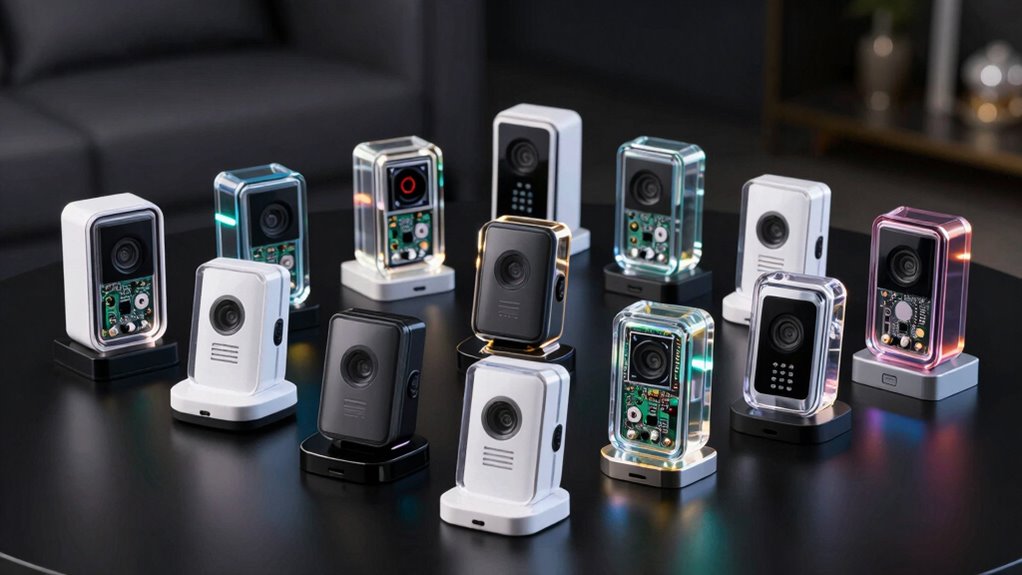

For most households already using a Gen 3 SimpliSafe system, I’d make the SimpliSafe Glassbreak Sensor my best overall pick: its sound-detection approach and stated 20-foot range suit rooms with several windows better than placing a vibration alarm on each pane. The eufy Security Glass Break Sensor E10 is a standout for HomeBase owners who want a larger stated range, while the WSDCAM four-pack offers a straightforward way to cover several individual windows. The main choice is between sound detection for room coverage and vibration alarms for pane-level alerts, with system compatibility and the number of windows shaping the decision. Read on for the full breakdown of all nine picks, including options for beginners, multi-window coverage, and dedicated alarm systems.

Get smart everyday buys delivered free with Prime
- Fast, free delivery on millions of items
- Prime Video, Amazon Music and more included
- Member-only deals all year
Key Takeaways
- Detection method changes the coverage plan: SimpliSafe and eufy list sound-detection ranges, while the WSDCAM and EVA LOGIK options use vibration sensing suited to mounting directly on windows or doors.
- System compatibility narrows the smart-sensor choices: the SimpliSafe model is for Gen 3 SimpliSafe systems, and the eufy E10 requires HomeBase; neither is a standalone choice for every home.
- Multipacks favor pane-by-pane coverage: the WSDCAM four-pack, EVA LOGIK four- and eight-packs, and six-pack window alarm focus on outfitting several openings rather than covering a room acoustically.
- Loudness does not equal detection range: the 120 dB and 125 dB figures describe alarm sound output, while the SimpliSafe and eufy range figures describe sound-detection coverage.
- The 2GIG GB1 serves a different buyer: it makes the most sense for someone building around a compatible 2GIG security system, not for someone seeking a simple peel-and-stick standalone window alarm.
| Wsdcam Ultra-Slim Wireless Glass Break Sensor Alarm, 125 dB Vibration Detector for Windows & Doors |  | Best Overall Standalone Window Detector | Detection method: Vibration | Sound level: 125 dB | Sensitivity: Adjustable | VIEW ON AMAZON | See Our Full Breakdown |
| Window Alarm System 4-Pack – Ultra-Loud 120dB Alarms with Vibration Sensors |  | Best Value for Multi-Window Coverage | Pack size: Four alarms | Detection method: Vibration sensor | Sound level: 120 dB | VIEW ON AMAZON | See Our Full Breakdown |
| WSDCAM Glass Break Sensor Alarm 125dB Wireless Glass Break Detector – 4 Pack |  | Best High-Volume Four-Pack | Pack size: Four sensors | Detection method: Vibration/motion sensor | Sound level: 125 dB | VIEW ON AMAZON | See Our Full Breakdown |
| EVA LOGIK Ultra-Thin Window Alarm with 120dB Loud Sound and Vibration Sensors, 4 Pack |  | Best for Custom-Tuned Window Alerts | Pack size: Four alarms | Detection details: Vibration sensors described; contact sensor also listed | Sound level: 120 dB | VIEW ON AMAZON | See Our Full Breakdown |
| 2GIG GB1 Glass Break Detector |  | Best for Existing 2GIG System Owners | Detection method: Glass-breaking sound | System compatibility: 2GIG home security systems | Product type: Glass break detector | VIEW ON AMAZON | See Our Full Breakdown |
| 6-Pack Window Glass Break Alarm with Vibration Sensor |  | Best for Loud, Standalone Window Alerts | Package quantity: 6 alarms | Sensor type: Vibration | Alarm sound level: 130 dB | VIEW ON AMAZON | See Our Full Breakdown |
| EVA LOGIK Ultra-Thin Window Alarm with 120dB Loud Sound and Vibration Sensors – 8 Pack |  | Best for Covering Many Windows | Package quantity: 8 alarms | Sensor technology: Vibration sensor | Audible alarm: 120 dB | VIEW ON AMAZON | See Our Full Breakdown |
| SimpliSafe Glassbreak Sensor – 20ft Range, Sound Detection Technology, Compatible with Gen 3 Home Security System |  | Best for SimpliSafe Gen 3 Homes | Detection range: 20 feet | Detection technology: Sound detection | Compatibility: SimpliSafe Gen 3 system | VIEW ON AMAZON | See Our Full Breakdown |
| eufy Security Glass Break Sensor E10, 25 ft Range, HomeBase Required |  | Best for Broad Glass-Type Coverage | Detection range: 25 feet | Detection technology: AI-assisted sound detection | Glass types: Six common types | VIEW ON AMAZON | See Our Full Breakdown |
| glass break sensor kit for home security | Power source |
|---|---|
| Wsdcam Ultra-Slim Wireless Gla | — |
| Window Alarm System 4-Pack | Battery powered |
| WSDCAM Glass Break Sensor Alar | Battery powered |
| EVA LOGIK Ultra-Thin Window Al | — |
| 2GIG GB1 Glass Break Detector | Not specified |
| 6-Pack Window Glass Break Alar | Battery operated |
| EVA LOGIK Ultra-Thin Window Al | Battery powered |
| SimpliSafe Glassbreak Sensor | — |
| eufy Security Glass Break Sens | — |
More Details on Our Top Picks
Wsdcam Ultra-Slim Wireless Glass Break Sensor Alarm, 125 dB Vibration Detector for Windows & Doors
The Wsdcam Ultra-Slim is my lead pick for someone who wants a direct, self-contained window detector without adding a hub or wiring. Its vibration sensor triggers a 125 dB alarm and flashing red indicator, giving a nearby intruder an immediate warning rather than sending an alert through a security panel. The adjustable sensitivity helps tune it to the placement, though a setting that is too sensitive can cause false alarms. Compared with the WSDCAM 4-Pack, this is the simpler choice for protecting one or two priority panes; the multi-unit pack makes more sense when coverage across several windows matters. Its slim adhesive mounting is convenient, but this detects vibration only—not the sound pattern of breaking glass—and is not a monitored system.
Pros:- 125 dB alarm with a flashing red indicator
- Adjustable sensitivity for tuning to the mounting location
- Slim, peel-and-stick installation needs no wiring or hub
- Includes three LR44 batteries and a low-battery warning
Cons:- Vibration-only detection can miss breaking glass that does not transmit enough vibration to the sensor
- Sensitivity may need adjustment to limit false alarms
- A single unit offers less multi-window coverage than the WSDCAM 4-Pack
Best for: Homeowners who want a simple, loud vibration-based detector on a specific window or glass door without a hub
Not ideal for: Buyers who need audio-based glass-break detection, remote security-system alerts, or coverage for many windows from one purchase
- Detection method:Vibration
- Sound level:125 dB
- Sensitivity:Adjustable
- Installation:Peel-and-stick, double-sided tape
- Hub or wiring:Not required
- Battery:Three LR44 batteries included
- Battery life:Up to one year
- Alert features:Flashing red indicator and low-battery warning
Our verdict“Choose this for a loud, easy-to-mount standalone window detector on a priority pane; skip it if you need sound detection or system-linked alerts.”
Window Alarm System 4-Pack – Ultra-Loud 120dB Alarms with Vibration Sensors
For buyers securing several panes at once, this four-alarm set makes broader coverage its main advantage: each unit has a vibration sensor, a 120 dB siren, and a visual warning light. Adhesive mounting keeps setup straightforward across windows in a home or office. Compared with the single Wsdcam Ultra-Slim, this pack spreads protection across more locations, while giving up some alarm volume and the listed adjustable-sensitivity feature. The alarms operate independently, so they do not form a connected system or provide a shared control method. Plan for two AAA batteries per alarm, which are not included, and note that each alarm sounds for a fixed 60 seconds. This is a practical choice for basic coverage, not a substitute for monitored or audio-based glass-break detection.
Pros:- Four standalone alarms cover multiple window locations
- 120 dB audible alarm with visual warning lights
- Adhesive mounting avoids wiring and tools
- Low-battery indicators help flag battery replacement needs
Cons:- Two AAA batteries per unit are required and not included
- Alarm duration is fixed at 60 seconds
- Vibration-only detection and no control method limit system-level response
Best for: Renters or homeowners who want standalone vibration alarms on several windows and are comfortable supplying AAA batteries
Not ideal for: Buyers who want adjustable sensitivity, linked alerts, included batteries, or detection based on breaking-glass sounds
- Pack size:Four alarms
- Detection method:Vibration sensor
- Sound level:120 dB
- Power source:Battery powered
- Battery requirement:Two AAA batteries per alarm
- Batteries included:No
- Mounting:Adhesive
- Alarm duration:Fixed 60 seconds
- Additional indicators:Visual warning light and low-battery indicator
Our verdict“Pick this set when covering several windows with simple local alarms matters more than adjustable sensitivity or connected security alerts.”
WSDCAM Glass Break Sensor Alarm 125dB Wireless Glass Break Detector – 4 Pack
The WSDCAM 4-Pack pairs multi-window coverage with a 125 dB local alarm, making it a stronger fit than the Window Alarm System 4-Pack when maximum siren volume is the priority. Each unit uses vibration detection and adjustable sensitivity, so the alarms can be tuned to their mounting spots rather than relying on one fixed response. Peel-and-stick installation and included LR44 batteries keep setup simple, though there is no wired option or hub connection for coordinated alerts. Compared with the single Wsdcam Ultra-Slim, this package covers more glass but involves maintaining several battery-powered units. The product lists a 12-meter maximum range, but these are mounted detectors, not a broad-area audio sensor; buyers should place each one on the glass they want protected.
Pros:- Four sensors provide coverage at multiple glass locations
- 125 dB alarms are louder than the 120 dB Window Alarm System 4-Pack
- Adjustable sensitivity helps tailor each unit to its placement
- Three LR44 batteries are included for each sensor
Cons:- Vibration sensing may not detect every glass-break event
- Battery replacement is needed after roughly a year
- No wired option or security-system integration is listed
Best for: Homeowners or small-business owners who want multiple adjustable, loud vibration alarms for separate windows or glass doors
Not ideal for: People seeking sound-based detection, a wired installation, or alerts integrated with a monitored security system
- Pack size:Four sensors
- Detection method:Vibration/motion sensor
- Sound level:125 dB
- Sensitivity:Adjustable
- Mounting:Peel-and-stick; door mount listed
- Battery:Three LR44 batteries per sensor, included
- Maximum range:12 meters
- Control method:Touch
- Power source:Battery powered
Our verdict“Choose this four-pack for adjustable, high-volume vibration alarms across several panes, not for centralized or audio-based detection.”
EVA LOGIK Ultra-Thin Window Alarm with 120dB Loud Sound and Vibration Sensors, 4 Pack
The EVA LOGIK 4-Pack suits buyers who want to fine-tune four local window alarms and add a visible deterrent before an intrusion. Its adjustable sensitivity, visual alerts, and included deterrent stickers offer more setup flexibility than the Window Alarm System 4-Pack, whose listed details do not specify adjustable sensitivity or stickers. Both use 120 dB alarms and adhesive mounting, so neither provides the louder 125 dB output of the WSDCAM 4-Pack. The EVA LOGIK listing describes vibration sensing but also identifies its sensor technology as a contact sensor, so shoppers should not assume it provides remote, room-wide acoustic detection. It needs two AAA batteries, which are not included, and battery life can vary. This is best treated as a set of adjustable, locally sounding window alarms.
Pros:- Four alarms provide coverage across multiple windows
- Adjustable sensitivity allows tuning for each mounting location
- Visual alerts and deterrent stickers add visible warning cues
- Thin adhesive-mounted design avoids wiring
Cons:- Two AAA batteries per alarm are required and not included
- Battery life may vary with use
- Product details do not clearly establish room-wide audio detection
Best for: People outfitting several windows who want adjustable alarm sensitivity, visual alerts, and deterrent stickers
Not ideal for: Buyers who need included batteries, consistent published battery-life expectations, or a clearly specified audio glass-break sensor
- Pack size:Four alarms
- Detection details:Vibration sensors described; contact sensor also listed
- Sound level:120 dB
- Sensitivity:Adjustable
- Power:Two AAA batteries per alarm
- Batteries included:No
- Mounting:Window mount
- Dimensions:3.2 x 3 x 0.6 inches
- Additional features:Visual alerts and deterrent stickers
Our verdict“Choose this pack for adjustable, locally sounding window alarms with visible deterrents, but not when audio-based glass-break detection is required.”
2GIG GB1 Glass Break Detector
The 2GIG GB1 stands apart from the other picks because it is described as detecting the sound of breaking glass and integrating with 2GIG home security systems. That makes it a more relevant choice for an owner seeking a system-linked glass-break alert than standalone vibration alarms such as the Wsdcam Ultra-Slim or EVA LOGIK 4-Pack. Its listed details, however, are sparse: there is no stated detection range, power information, mounting method, or compatibility beyond 2GIG systems. I would not treat it as a window-mounted vibration detector, nor assume it works with another brand’s panel. Compared with the other products here, its potential benefit is system integration, while its lack of documented setup and performance details makes it a narrower, less certain purchase.
Pros:- Designed to detect the sound of breaking glass
- Works with 2GIG home security systems
- Adds a glass-break alert to a compatible security setup
Cons:- Compatibility beyond 2GIG systems is not specified
- No detection range, power, or mounting details are provided
- Installation process and other performance details are not listed
Best for: Existing 2GIG security-system owners looking for a glass-break sound detector to add to their setup
Not ideal for: Buyers without a 2GIG system, or shoppers who need clear specifications for range, power, mounting, and installation
- Detection method:Glass-breaking sound
- System compatibility:2GIG home security systems
- Product type:Glass break detector
- Detection range:Not specified
- Power source:Not specified
- Mounting method:Not specified
Our verdict“Consider the GB1 only if you already use a compatible 2GIG system and want sound-based glass-break detection rather than a standalone window alarm.”
6-Pack Window Glass Break Alarm with Vibration Sensor
The Catsonic set is a straightforward choice for buyers who want six self-contained window alarms rather than a sensor tied to a security hub. Its vibration detection responds to glass impacts or forceful opening, and the 130 dB siren is louder than the EVA LOGIK 8-pack’s 120 dB alert. Tool-free setup and included batteries also make it easier to deploy right away. The tradeoff is coverage type: these units detect vibration at the window, not the sound of breaking glass across a room like the SimpliSafe Glassbreak Sensor. They are also window-specific and lack a magnetic entry sensor, so a door or a sliding window that opens without enough force may go undetected. Pick this for direct, audible window warnings, not whole-home system coverage.
Pros:- Six alarms provide coverage for several windows
- 130 dB siren delivers a strong local warning
- Tool-free installation takes less than a minute per unit
- Three LR44 batteries per unit are included and rated for up to 12 months
Cons:- Window-focused vibration sensing may miss glass breakage that does not create enough vibration at the unit
- No magnetic sensor for ordinary door or window opening
- The siren is a local alert rather than a connected system notification
Best for: Renters or homeowners who want multiple battery-powered alarms mounted directly on windows without installing a hub or wiring.
Not ideal for: Buyers who need sound-based glass-break detection across a room, door coverage, or alerts routed through a monitored home security system.
- Package quantity:6 alarms
- Sensor type:Vibration
- Alarm sound level:130 dB
- Battery type:LR44, 3 per unit
- Battery life:Up to 12 months
- Installation time:Less than 1 minute
- Power source:Battery operated
Our verdict“Choose Catsonic for quick, loud alerts on several windows; choose SimpliSafe or eufy if you need room-based glass-break detection integrated with a hub.”
EVA LOGIK Ultra-Thin Window Alarm with 120dB Loud Sound and Vibration Sensors – 8 Pack
For buyers prioritizing window count, this eight-alarm set covers more openings than the Catsonic six-pack and uses a slim, window-mounted design. Its adjustable vibration sensitivity gives owners a way to tune response for their surroundings, which can help when everyday knocks or nearby activity trigger unwanted alarms. The 120 dB siren is still a loud local warning, though it falls below Catsonic’s stated 130 dB output. Like Catsonic, EVA LOGIK senses vibration at the window rather than listening for breaking glass across a room; the SimpliSafe Glassbreak Sensor better fits that different detection approach. Batteries are not included, and the supplied details do not establish app-based alerts despite listing app control, so I would treat these primarily as standalone alarms. Its value is broad window coverage, not connected-system monitoring.
Pros:- Eight units cover more windows than the Catsonic six-pack
- Adjustable sensitivity helps tailor vibration response
- Slim window-mount format and wiring-free installation
- 120 dB local alarm and included visual deterrent stickers
Cons:- Batteries are not included
- Vibration-only sensing can miss glass breakage that does not produce a detectable impact at the unit
- The available product details do not confirm how app control or the stated range work in a home setup
Best for: Households, dorm residents, or small offices that need vibration alarms on many windows and want sensitivity adjustment.
Not ideal for: Buyers who want batteries in the box, sound-based room coverage, or dependable phone alerts from a connected security system.
- Package quantity:8 alarms
- Sensor technology:Vibration sensor
- Audible alarm:120 dB
- Sensitivity:Adjustable
- Power source:Battery powered
- Batteries:Not included
- Mounting type:Window mount
- Dimensions:3.2 × 3 × 0.65 inches
Our verdict“Choose EVA LOGIK when fitting alarms to many windows matters more than included batteries or sound-based detection.”
SimpliSafe Glassbreak Sensor – 20ft Range, Sound Detection Technology, Compatible with Gen 3 Home Security System
The SimpliSafe sensor suits buyers who want a window detector that listens for breaking glass instead of attaching a vibration alarm to each pane. Its 20-foot detection range can cover nearby windows from a single placement, while phone alerts through the SimpliSafe app connect the event to an existing system. That makes it a different proposition from the Catsonic and EVA LOGIK alarms, which sound locally at the window and do not list system notifications. Installation can use adhesive or hardware, offering more placement flexibility than a peel-and-stick-only approach. The limitation is firm: this sensor requires a SimpliSafe Gen 3 system and detects glass-break sounds only. It is not a standalone siren or a general opening sensor, so homes outside that ecosystem should look to the eufy E10 only if they already have a compatible HomeBase.
Pros:- Sound detection can cover multiple nearby windows from one placement
- Detection range is specified at 20 feet
- SimpliSafe app can deliver phone alerts
- Offers both peel-and-stick and hardware mounting
Cons:- Requires a compatible SimpliSafe Gen 3 system
- Sound-only detection does not cover other break-in methods such as forceful opening
- No standalone local siren is specified
Best for: Existing SimpliSafe Gen 3 owners who want one sound-based sensor to monitor nearby windows and receive app alerts.
Not ideal for: Buyers without a SimpliSafe Gen 3 system, or those seeking a standalone alarm or vibration detection for forceful window opening.
- Detection range:20 feet
- Detection technology:Sound detection
- Compatibility:SimpliSafe Gen 3 system
- Installation:Peel-and-stick or hardware mounting
- Battery:Long-lasting
- Alerts:Phone alerts through the SimpliSafe app
Our verdict“For a SimpliSafe Gen 3 household wanting app-connected glass-break alerts, this is a better fit than standalone vibration alarms.”
eufy Security Glass Break Sensor E10, 25 ft Range, HomeBase Required
The eufy E10 is the more capable system sensor for buyers already using a compatible HomeBase: its AI-assisted sound detection is designed for six common glass types, and its 25-foot range exceeds the SimpliSafe sensor’s stated 20 feet. That extra coverage may let one carefully placed sensor listen across a larger area, while adhesive or screw mounting gives owners a choice between simpler setup and a more fixed installation. It also claims a battery life of about two years. The catch is ecosystem dependence: it cannot operate without a compatible HomeBase, and its nonstandard battery requirement may make replacement less convenient than common cells. Unlike Catsonic and EVA LOGIK, it is not a window-mounted vibration alarm, so it will not serve buyers who want an independent siren triggered by impacts on the pane.
Pros:- AI algorithm is designed to recognize breaks across six common glass types
- 25-foot detection range is longer than the SimpliSafe sensor’s stated range
- Adhesive and screw-mount options suit different installation preferences
- Battery life is stated at about two years
Cons:- Requires a compatible HomeBase and cannot operate standalone
- Uses nonstandard batteries that may be harder to replace
- Sound detection does not provide the direct pane-vibration sensing offered by Catsonic and EVA LOGIK
Best for: eufy HomeBase owners who want sound-based coverage across different glass types and a longer stated detection range.
Not ideal for: Buyers who need a standalone sensor, prefer common replacement batteries, or want vibration alarms mounted directly on each window.
- Detection range:25 feet
- Detection technology:AI-assisted sound detection
- Glass types:Six common types
- HomeBase link range:Up to 656 feet
- Compatible devices:HomeBase Mini, HomeBase 2, HomeBase 3, HomeBase Pro
- Mounting:Adhesive or screw mount
- Battery life:About 2 years
- Battery details:2 nonstandard batteries required
Our verdict“Choose the eufy E10 over SimpliSafe if you have a compatible HomeBase and want broader stated range and glass-type recognition.”

How We Picked
I compared these products by the job a buyer needs done: detect glass-breaking sounds across a room, or sense vibration at an individual window or door. I also weighed stated detection range where provided, alarm output, pack size, installation approach, and whether a hub or named security system is required. Those details affect the real coverage plan more than a loudness number alone.
The ranking favors useful coverage and a clear fit for the intended buyer, while accounting for setup demands and limitations. System-specific sensors are ranked for households already invested in their compatible platform; standalone-style vibration alarms are judged on practical multi-window coverage and simplicity. Since the product information does not establish a universal detection guarantee, I treat range and sensor type as selection clues, not promises that every break will be detected.
| glass break sensor kit for home security | Power source |
|---|---|
| Wsdcam Ultra-Slim Wireless Gla | — |
| Window Alarm System 4-Pack | Battery powered |
| WSDCAM Glass Break Sensor Alar | Battery powered |
| EVA LOGIK Ultra-Thin Window Al | — |
| 2GIG GB1 Glass Break Detector | Not specified |
| 6-Pack Window Glass Break Alar | Battery operated |
| EVA LOGIK Ultra-Thin Window Al | Battery powered |
| SimpliSafe Glassbreak Sensor | — |
| eufy Security Glass Break Sens | — |
Factors to Consider When Choosing Glass Break Sensor Kit For Home Security
Before choosing a kit, decide whether you need to protect a room or individual panes. A sensor’s stated range, alarm volume, and smart-home compatibility describe different things, so matching the product to your floor plan and existing security setup matters more than choosing the biggest number.
Choose sound detection or vibration sensing
Sound-detection sensors listen for the acoustic signature of breaking glass and can cover multiple windows in one room, depending on placement and the stated range. Vibration sensors respond to movement at the surface where they are installed, so they typically call for a sensor on each opening you want covered. A common mistake is buying one vibration alarm and assuming it protects every window nearby. Sound detection may reduce device count, but room acoustics, distance, and obstructions can affect where a sensor belongs. Match the method to your layout before comparing pack sizes.
Treat detection range and alarm volume as separate specs
A range figure describes how far a sound sensor is intended to detect from its placement; a decibel figure describes how loud an alarm may sound. They are not interchangeable measures of security coverage. A 125 dB vibration alarm does not mean it can detect a break across a large room, and a sensor with a stated 25-foot range is not necessarily louder when triggered. Check what each number actually refers to, then plan placement around the relevant specification. Avoid choosing solely by the largest printed number.
Check ecosystem requirements before buying
System-dependent sensors can fit neatly into an existing alarm setup, but they are poor choices if you do not own the required hub or compatible system. Confirm the exact generation or base station named by the manufacturer rather than relying on a brand name alone. A standalone-style window alarm may be easier to install, but it may not send alerts through a broader home-security system. Think about whether you want a local audible warning, a connected system alert, or both. This decision can rule out incompatible options before you spend time comparing other features.
Count protected openings, not just devices in the box
Make a simple list of accessible windows and glass doors, then decide which ones need direct vibration coverage and which rooms could use a sound sensor. Multipacks can reduce the effort of covering many individual panes, but buying extra units does not help if the sensor type is wrong for the room. Large rooms with several windows may favor a compatible sound detector, while separated rooms may need separate coverage points. Include patio doors and other vulnerable glass in your count. Plan placement and quantity together rather than treating pack size as the whole coverage strategy.
Weigh installation and upkeep against the coverage benefit
Peel-and-stick alarms can be a simple fit for renters or buyers who want minimal setup, though every sensor still needs correct placement and eventual battery attention. A connected detector can take more planning because its location must suit both acoustic coverage and the security system. Before choosing, check the product’s power and mounting details, along with how you will notice a low battery or device fault. If you are covering many windows, the time spent installing and maintaining each unit becomes part of the decision. Choose the arrangement you can keep functional, not just the one that looks strongest on paper.
Use glass sensors as one layer, not the whole plan
A glass break sensor addresses one type of entry, but it does not replace door contacts, motion detection, or a broader alarm response plan. A sound sensor may be positioned to hear several windows, yet it does not directly report whether a door opened. A vibration alarm focuses on its mounting point and may leave other openings uncovered. For a complete setup, pair glass coverage with the other sensors suited to your doors, rooms, and household routine. This layered approach is especially useful when a single room sensor cannot cover separated or acoustically isolated areas.
Frequently Asked Questions
Should I choose a sound-detection sensor or a vibration alarm for several windows in one room?
I would start with the room layout and the sensor’s stated detection range. A sound-detection model may cover several nearby windows from one position, while vibration alarms are mounted at the individual panes or doors they monitor. The sound option can mean fewer devices, but placement and room conditions matter. Vibration units offer a more direct, opening-by-opening approach, at the cost of installing and maintaining more sensors. If the windows are far apart or divided across rooms, plan for more than one coverage point either way.
Can I use the SimpliSafe or eufy sensor without its matching security system?
The listed SimpliSafe Glassbreak Sensor is specified for a Gen 3 SimpliSafe system, and the eufy E10 requires HomeBase. I would not choose either on the assumption that it works as a generic standalone alarm. Check the exact system generation and hub requirements for your setup before ordering. If you do not own the required platform, a simple vibration alarm may be a more direct fit, though it serves a different detection role. Compatibility should come before range comparisons.
Does a 125 dB alarm protect a larger area than a 120 dB alarm?
No. Those decibel figures describe the alarm’s stated sound output, not how far away the sensor can detect breaking glass. Detection method and any stated range are better guides to coverage. A loud local alarm can alert people nearby, but it does not by itself show that a sensor will hear a break across a room. Compare the vibration or sound-detection design separately from the siren volume. Choose based on where you need detection and how you want an alert delivered.
How many window alarms should I buy for my home?
There is no single device count that fits every floor plan. For vibration alarms, count the individual windows and glass doors you want to monitor, since each unit is generally associated with a mounting point. For sound detectors, map the rooms and check whether the stated range suits the layout rather than assuming one sensor covers the entire house. Separate rooms, long distances, and obstructions can call for additional sensors. A room-by-room plan is more useful than choosing a multipack first and deciding where to put the extras later.
Is a glass break sensor enough to secure a window?
A glass break sensor can alert you to a detected break, but it does not cover every way a window can be opened or provide every part of a home alarm system. Pair it with a suitable contact sensor if you also want to know when the window itself opens, and consider motion coverage for the room. The right mix depends on whether you want local noise, connected system alerts, or both. Check how each device communicates and what other components your security setup supports. Treat glass detection as one layer in a plan for vulnerable openings.
Conclusion
Best overall: I’d choose the SimpliSafe Glassbreak Sensor for a household already using a compatible Gen 3 system and wanting sound-based room coverage. Best value for multiple windows: the WSDCAM four-pack is a practical starting point for pane-by-pane vibration coverage, while the EVA LOGIK four-pack offers a similar multi-window route. Best premium ecosystem fit: the eufy E10 suits HomeBase owners who prefer a connected sound detector with a stated 25-foot range. Best for beginners: a standalone-style vibration alarm pack is the simpler path for someone who wants direct window placement without building around a named hub. For larger homes with many separate panes, compare the six- and eight-unit packs; for a 2GIG-based setup, the GB1 is the system-focused pick. My final advice is to choose by detection method and compatibility first, then match the pack size to the openings you actually need to cover.
Fall Picks
fall essentials
As an affiliate, we earn on qualifying purchases.