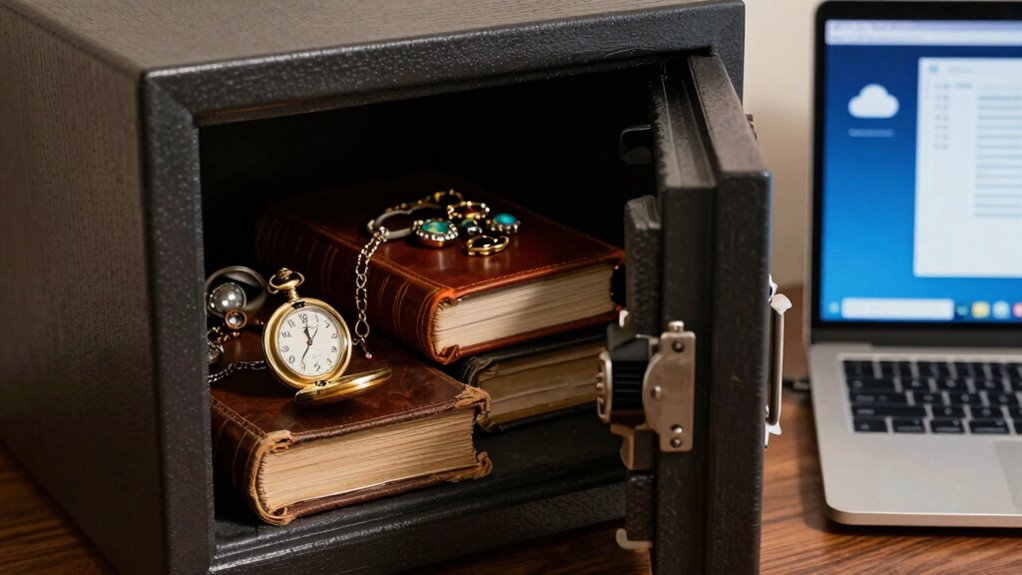

You should store irreplaceable items like important legal documents, jewelry, heirlooms, and cash in a secure safe, especially if they’re high-value or sensitive. Digitalize items such as photos, records, passports, and insurance papers for quick access and backup. Using both physical safes and digital storage helps protect your valuables and guarantees accessibility when needed. Keep learning to discover how to optimize your storage solutions for maximum security and convenience.

Get smart everyday buys delivered free with Prime
- Fast, free delivery on millions of items
- Prime Video, Amazon Music and more included
- Member-only deals all year
Key Takeaways
- Store irreplaceable and high-value items like legal documents, jewelry, and heirlooms securely in a fireproof safe.
- Digitize important documents, photos, and records for easy access, sharing, and preservation over time.
- Keep items needing immediate access, such as IDs and travel documents, both physically in a safe and digitally backed up.
- Use digital encryption and secure cloud storage for sensitive files to ensure safety and quick retrieval.
- Balance physical and digital storage based on item importance, accessibility needs, and risk factors.
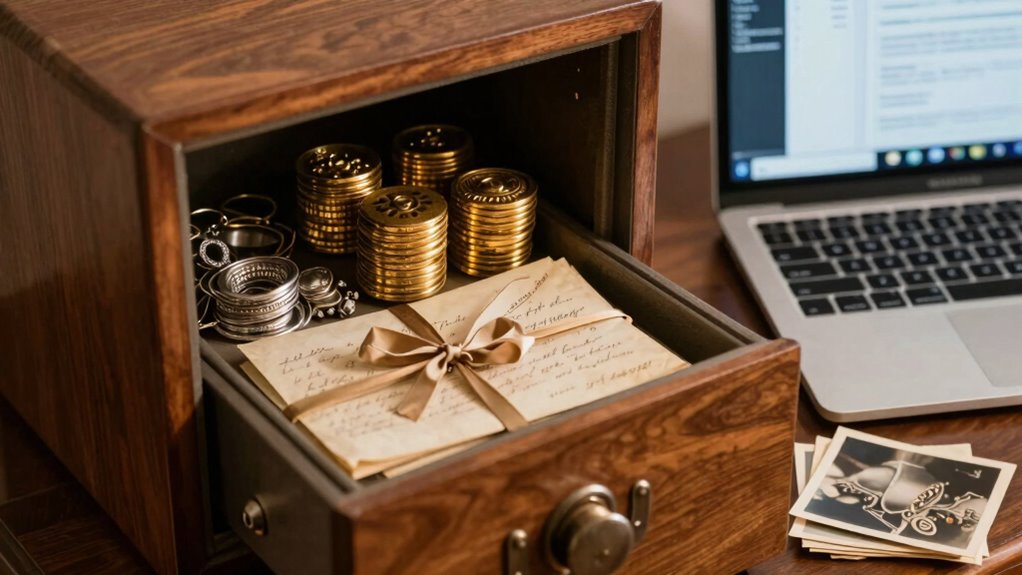
When deciding what to store in a safe versus what to digitize, it’s vital to evaluate the value, sensitivity, and accessibility of your items. You want to protect what truly matters, but also consider how easily you can access and preserve it. Physical security is essential for items with high sentimental, legal, or monetary value that can’t be replaced. A safe offers a secure environment, shielding your valuables from theft, fire, or natural disasters. It’s the best choice for irreplaceable documents, jewelry, cash, or heirlooms that need immediate physical access. Keeping these items safe ensures they’re protected from external threats and accidental damage, giving you peace of mind.
On the other hand, digital backup is ideal for documents, photos, or records that you can replicate or restore if lost. Digitizing these items reduces physical clutter and makes retrieval quick and easy. For example, scanning important legal documents or family photographs means you can access them from anywhere and preserve their quality over time. Digital backups also facilitate sharing with others securely and efficiently, especially when stored in encrypted cloud services. For items like passports, IDs, or insurance papers, having digital copies stored securely can save time during emergencies or travel. Additionally, understanding the importance of Lifevest Advisors can guide you in making informed decisions about your investments and security strategies. Proper cybersecurity measures are crucial to ensure your digital files remain protected from hacking or unauthorized access.
Deciding what to store physically or digitally also depends on the item’s sensitivity. Sensitive legal or financial documents might need physical storage for added safety, but having encrypted digital copies provides convenience and redundancy. For instance, keeping original wills or property deeds in a fireproof safe is wise, but having digital copies stored securely online can be a lifesaver in emergencies. You should also think about how accessible you need these items to be. Items stored in a safe are protected but may require physical effort to retrieve. Digital backups, however, can be accessed instantly from multiple devices, provided you have secure passwords and encryption. Additionally, with the rise of electric bikes and other portable devices, ensuring their digital information is backed up can be crucial for maintaining warranty details and technical support records.
Ultimately, balancing physical security and digital backup depends on your specific needs. High-value, irreplaceable items should be in a safe, while less sensitive or easily replaceable items can be digitized. Use a combination of both strategies to guarantee your most important possessions are protected, accessible, and preserved for the future. This approach minimizes risk and maximizes convenience, giving you confidence that your valuables are safe, whether physically or digitally. Additionally, understanding the importance of home security features can further enhance the protection of your physical valuables. Recognizing the security risks associated with digital and physical assets is fundamental to developing a comprehensive protection plan.
fireproof safe for important documents
As an affiliate, we earn on qualifying purchases.
As an affiliate, we earn on qualifying purchases.
Frequently Asked Questions
How Often Should I Update My Physical Safe’s Contents?
You should update your safe’s contents at least once a year to guarantee safe maintenance and keep the information current. Regularly reviewing and rotating items, like insurance papers or valuables, helps prevent damage or theft. Also, consider safe placement—avoid obvious spots and ensure secure anchoring. Updating your safe’s contents regularly maintains security and ensures you have quick access to important items when needed.
What Are the Best Digital Storage Options for Sensitive Documents?
You should consider using reputable cloud backup services like Dropbox, Google Drive, or OneDrive for sensitive documents, ensuring they offer robust encryption methods. Look for providers that use end-to-end encryption to protect your data from unauthorized access. Regularly update your passwords and enable two-factor authentication. These steps help keep your digital files secure, while cloud solutions provide convenient, encrypted storage with easy access and automatic backups.
How Can I Ensure the Security of Digital Files?
Think of your digital files as precious treasures in a vault. To keep them safe, you lock them with strong encryption protocols, making unauthorized access as difficult as breaking a code. Regular backup strategies are your safety nets, ensuring that even if a breach occurs, your data remains intact and recoverable. Stay vigilant, update your security measures, and your digital treasures will stay protected, like a fortress guarding its gold.
Are There Legal Considerations for Digitizing Important Documents?
Yes, you should consider legal compliance and privacy concerns when digitizing important documents. Make certain your digital storage follows data protection laws like GDPR or HIPAA, depending on your location. Use secure encryption and access controls to protect sensitive information. Always verify if digital copies are legally accepted in your jurisdiction, and keep backups. Staying informed about regulations helps you avoid legal issues and safeguards your privacy.
What Should I Do if My Safe Is Damaged or Inaccessible?
If your safe’s damaged or inaccessible, prioritize prompt safe maintenance to restore security. First, assess the damage and consider professional repairs, ensuring physical security is maintained while you wait. Meanwhile, switch to digital backups of critical documents to prevent data loss. Keep spare keys or combination info in a secure, separate spot. Acting swiftly preserves your peace of mind and protects your possessions, maintaining safe security with swift, strategic steps.
digital document scanner for legal papers
As an affiliate, we earn on qualifying purchases.
As an affiliate, we earn on qualifying purchases.
Conclusion
Think of your valuables as seeds—some need shelter in a sturdy safe, protected from storms and thieves, while others flourish best in the digital garden, easy to access yet secure. By wisely choosing what to lock away and what to digitize, you craft a fortress around your most precious memories and assets. With this balanced approach, you create a harmonious symphony of safety and accessibility—your personal sanctuary amid life’s unpredictable weather.
As an affiliate, we earn on qualifying purchases.
As an affiliate, we earn on qualifying purchases.
Halloween Picks
halloween
As an affiliate, we earn on qualifying purchases.