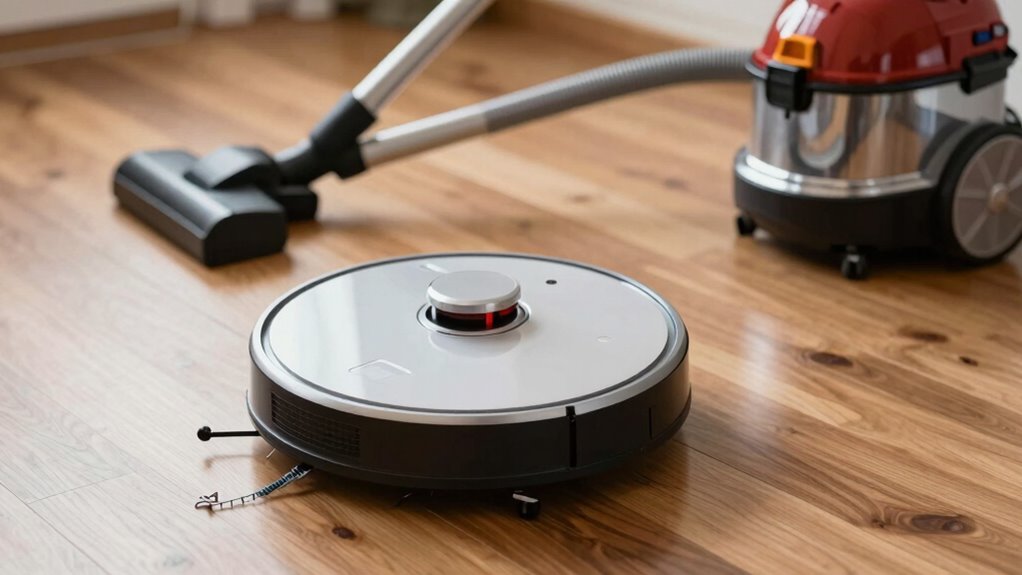
If you’re concerned about your joints, a robot vacuum is much easier to use than a traditional one. It operates independently, so you don’t need to lift, push, or maneuver heavy machines or cords. Robot vacuums require less physical effort and are quieter, reducing strain and stress. Maintenance is simple too, with minimal physical effort involved. To discover more about how a robot vacuum can help protect your joints, keep exploring.
Key Takeaways
- Robot vacuums operate independently, reducing the need for bending, pushing, or lifting, easing strain on aging joints.
- They require minimal physical effort to turn on and maneuver, unlike traditional vacuums that involve pushing and guiding.
- Robot vacuums have longer battery life and less cord management, decreasing physical effort during use.
- They tend to operate more quietly, minimizing stress and physical discomfort for sensitive or aging individuals.
- Maintenance of robot vacuums is simpler and less physically demanding than traditional vacuum upkeep.
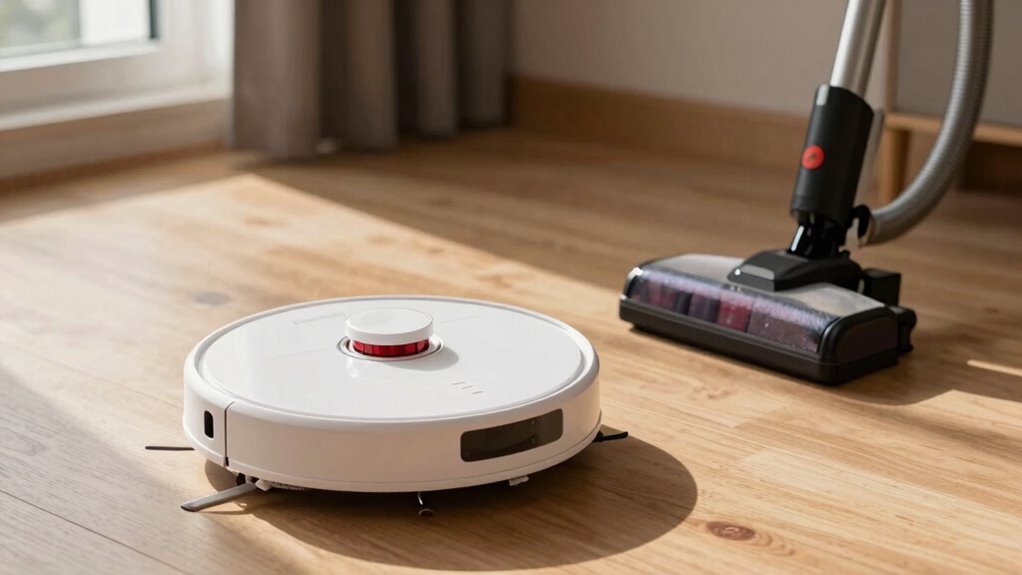
When choosing between a robot vacuum and a traditional vacuum, understanding their differences can help you make an informed decision. If you’re dealing with aging joints, ease of use becomes a top priority. One key factor to weigh is how much effort each option requires. Traditional vacuums often involve lugging around a heavy machine, bending down to reach under furniture, and maneuvering cords or hoses. This can put strain on your joints, making cleaning a tiring and sometimes painful task. On the other hand, robot vacuums operate independently, so you don’t need to lift or push them around. You simply turn them on and let them do the work, which can be a significant relief for your joints. Battery life is another important aspect. Many robot vacuums come with decent battery life, allowing them to clean large areas without needing a recharge. This means fewer interruptions, and you won’t have to worry about constantly recharging or replacing batteries. With traditional vacuums, you might find yourself switching outlets or hauling a cord around, but the physical effort involved in pushing and guiding the vacuum remains the main challenge for your joints. Noise levels are also worth considering. Some robot vacuums operate quietly, so they won’t disturb your peace or wake others while cleaning. This can make the process less stressful, especially if you’re sensitive to loud noises or prefer to keep a peaceful environment. Additionally, robot vacuums often feature minimal maintenance**, reducing the physical effort needed for upkeep. Regularly cleaning and replacing filters is generally straightforward, but some models may have advanced features that improve their performance and longevity. When it’s about maintenance, robot vacuums are generally easier. They require simple tasks like emptying the dustbin and occasionally replacing filters. Because they’re lightweight and automated**, you avoid the repetitive movements that can aggravate your joints. Traditional vacuums, however, often demand more physical effort for cleaning filters, replacing bags, or untangling cords. If you’re looking to minimize joint stress, a robot vacuum offers a hands-off approach that reduces the physical strain of cleaning.
robot vacuum for seniors
As an affiliate, we earn on qualifying purchases.
As an affiliate, we earn on qualifying purchases.
Frequently Asked Questions
Are Robot Vacuums Suitable for All Floor Types?
Robot vacuums are suitable for most floor types, but you should check their carpet compatibility and hardwood suitability first. They work well on low-pile carpets and hardwood floors, making cleaning easier. However, thick carpets or high-pile rugs may challenge some models. Make sure to select a robot vacuum designed for your specific flooring to guarantee effective cleaning without damaging your surfaces.
How Long Do Robot Vacuums Typically Last?
A typical robot vacuum lasts about 1 to 3 years. Imagine Sarah’s robot, which struggled after two years due to declining battery longevity and a small dust bin capacity. Regular maintenance, like cleaning filters and replacing batteries, extends its lifespan. If you keep up with these, your robot vacuum can serve you well longer, saving you from frequent replacements and making cleaning easier on your joints.
Can Robot Vacuums Replace Traditional Vacuums Entirely?
Robot vacuums can’t fully replace traditional vacuums because you still need manual cleaning for deep or hard-to-reach spots. They’re convenient for daily maintenance and save energy, but they might not handle heavy-duty tasks as effectively. You’ll likely find that combining both options works best, especially if you want to reduce physical strain on your joints while maintaining a thorough clean.
What Is the Noise Level Difference Between the Two Types?
Imagine a robot vacuum gliding quietly across your floor, its sound levels so low you barely notice it, thanks to noise reduction technology. In contrast, traditional vacuums often roar loudly, disturbing your peace. Robot vacuums generally offer lower noise levels, making them gentler on your ears and joints. Their sound levels create a calmer, more relaxing cleaning experience, perfect if you’re sensitive to loud noises or trying to avoid disturbing others.
Do Robot Vacuums Require Regular Maintenance?
Yes, robot vacuums do require regular maintenance. You’ll need to replace the battery when it starts holding less charge and keep the brushes and filters clean to guarantee peak performance. Additionally, software updates are necessary to improve navigation and fix bugs. Regularly checking these components helps your robot vacuum run smoothly and extends its lifespan, making it a convenient choice for those with aging joints.
lightweight robot vacuum with long battery life
As an affiliate, we earn on qualifying purchases.
As an affiliate, we earn on qualifying purchases.
Conclusion
So, as you stand there, watching either the robot silently glide across your floors or reach for your trusty traditional vacuum, one thing’s clear: the choice isn’t just about convenience. It’s about reclaiming your space and easing your aging joints. Will the robot’s quiet efficiency become your new best friend, or will you trust the familiar, tried-and-true method? The answer lies just beyond the next sweep—waiting to change your daily routine forever.
quiet robot vacuum for elderly
As an affiliate, we earn on qualifying purchases.
As an affiliate, we earn on qualifying purchases.
easy maintenance robot vacuum
As an affiliate, we earn on qualifying purchases.
As an affiliate, we earn on qualifying purchases.