

This guide helps newcomers to personal finance find the most accessible and effective books to start their financial education. It covers how to choose beginner-friendly titles, understand their focus, and build a reading list that enhances your money management skills. Designed for those with little to no prior finance knowledge, this process takes approximately 2 to 4 hours, depending on reading speed and research depth.

Get smart everyday buys delivered free with Prime
- Fast, free delivery on millions of items
- Prime Video, Amazon Music and more included
- Member-only deals all year
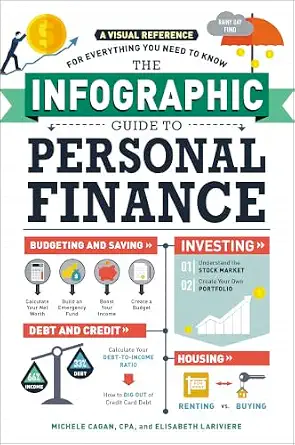
The Infographic Guide to Personal Finance: A Visual Reference for Everything You Need to Know
- ✔ Format: Paperback
- ✔ Pages: 192
- ✔ Author: J.M. Kearl

Personal Finance For Dummies
- ✔ Format: Paperback
- ✔ Pages: 408
- ✔ Author: Eric Tyson

Financial Literacy for Young Adults: Manage, Save, and Invest Money for a Secure Future
- ✔ Format: Paperback
- ✔ Pages: 150
- ✔ Author: Joan Roberts
Difficulty: Beginner | Time: 2-4 hours
What You’ll Need
Tools & Materials:
- Internet access
- Notebook or digital note-taking app
- Bookmarking tool (optional)
Knowledge:
- Basic understanding of personal finance concepts (e.g., budgeting, saving) is helpful but not required
Be prepared to spend time researching book options, reading reviews, and comparing titles to ensure they match your learning goals.
The Infographic Guide to Personal Finance: A Visual Reference for Everything You Need to Know
<p><strong>This book stands out for its engaging visual approach, making complex personal finance topics easily digestible for newcomers.</strong> Compared to traditional text-heavy guides, this book’s infographics help simplify budgeting, investing, and financial planning. However, it doesn’t delve into advanced strategies or detailed analysis, making it less suitable for those seeking in-depth financial knowledge. It’s an excellent reference for visual learners or those who want a quick overview without getting overwhelmed.</p>
Pros:
- Visually engaging and easy to understand
- Comprehensive overview of personal finance topics
- Useful as a quick reference for managing money
Cons:
- Lacks detailed, in-depth analysis
- Not suitable for advanced financial strategies
Best for: Beginners who prefer visual learning and need a quick reference guide.
Not ideal for: Readers looking for detailed investment strategies or in-depth analysis.
Bottom line: A visually appealing, beginner-friendly guide ideal for quick learning and reference.
“A visually appealing, beginner-friendly guide ideal for quick learning and reference.”
Personal Finance For Dummies
<p><strong>This pick makes the most sense for those seeking a well-rounded, easy-to-understand foundation in personal finance.</strong> Compared to the visual guide, it offers more detailed explanations across budgeting, saving, debt management, and basic investing. However, it’s potentially too basic for readers who want in-depth investment strategies or advanced financial planning. Its straightforward language makes it accessible, but some may find it lacks the nuance needed for more sophisticated financial goals.</p>
Pros:
- Clear, straightforward explanations
- Covers a wide range of personal finance topics
- Excellent for building foundational knowledge
Cons:
- May be too basic for experienced readers
- Lacks detailed investment or advanced strategies
Best for: Beginners wanting a broad, understandable overview of personal finance.
Not ideal for: Readers seeking advanced investment tactics or detailed financial analysis.
Bottom line: A solid, comprehensive starting point for beginners seeking clarity and breadth.
“A solid, comprehensive starting point for beginners seeking clarity and breadth.”
Financial Literacy for Young Adults: Manage, Save, and Invest Money for a Secure Future
<p><strong>This book offers practical advice tailored specifically for young adults aiming to develop financial independence early on.</strong> It emphasizes managing, saving, and investing money with simple strategies, making it highly relevant for those just starting out. However, it offers limited detailed content and doesn’t include customer reviews or ratings, which may concern more analytical readers. This book is best for individuals seeking immediate, practical guidance rather than in-depth financial planning.</p>
Pros:
- Practical advice tailored for young adults
- Focuses on managing, saving, and investing
- Helps build financial independence early
Cons:
- Limited detailed content or features
- No customer reviews available
Best for: Young adults or beginners eager to learn practical money management and early investing.
Not ideal for: Readers looking for detailed financial analysis or comprehensive coverage of all personal finance topics.
Bottom line: A practical, youth-focused guide ideal for building early financial independence.
“A practical, youth-focused guide ideal for building early financial independence.”
As an Amazon Associate we earn from qualifying purchases.
Before You Start
Prepare a quiet workspace and allocate dedicated time for reading or research. Avoid rushing—selecting the right books takes thoughtful consideration. Recognize that your goal is to find clear, accessible titles that build confidence in managing personal finances.
Step-by-Step Instructions
Step 1: Define your learning goals
Write down what specific financial skills or topics you want to improve, such as budgeting, saving, debt reduction, or investing basics. Clarify whether you prefer books with practical steps, motivational stories, or comprehensive overviews.
Tip: Focusing on your immediate needs helps select books that will be most relevant and engaging, increasing your motivation to read.
Check: You have a clear list of your learning goals, which will guide your book selection process.
Step 2: Research recommended beginner personal finance books
Use trusted sources like personal finance blogs, library guides, or book review sites such as Goodreads or Amazon to find top-rated titles for beginners. Look for books specifically labeled as suitable for newcomers or beginners.
Tip: Prioritize books with high ratings and positive reviews from readers new to personal finance to ensure accessibility.
Check: You have compiled a list of 3-5 highly recommended books tailored for beginners.
Step 3: Evaluate book content and approach
Read the summaries, table of contents, and sample pages or chapters online. Check if the tone, language, and structure match your learning style—preferably simple, straightforward, and free of jargon.
Tip: Skip books that seem overly technical or dense if you’re just starting out; look for titles with practical advice and clear explanations.
Check: Selected books are easy to understand, engaging, and focused on foundational topics.
Step 4: Select books that match your learning style and goals
Choose 2-3 books from your evaluated list that best align with your goals and preferences. Consider reading order: start with the most accessible or comprehensive one, then move to others for deeper insights.
Tip: Mix a practical guide with motivational stories or case studies for a well-rounded understanding.
Check: Your final reading list is tailored to your goals and preferred learning approach.
Step 5: Gather your books and set a reading schedule
Obtain the physical or digital copies of your selected books. Plan a realistic schedule, such as reading 10-15 pages daily or dedicating specific times weekly. Set reminders to stay consistent.
Tip: Breaking reading into small, regular sessions helps retain information and build steady progress.
Check: You have your books ready and a committed, manageable reading plan established.
Step 6: Begin reading and take notes
Start with your first book, highlighting key concepts and jotting down questions or ideas. Focus on understanding basic principles and practical advice.
Tip: Use a dedicated notebook to track new terms, concepts, and personal action steps.
Check: You have completed initial readings and created notes summarizing key points.
Common Mistakes to Avoid
- Choosing overly advanced or technical books — Select titles specifically labeled for beginners and review sample pages to ensure accessibility.
- Trying to read too many books at once — Limit your list to 2-3 titles and focus on thoroughly understanding each before moving on.
- Skipping reading or not applying learned concepts — Set a regular schedule and implement small actions from the books to reinforce learning.
Troubleshooting
Problem: Books are too complex or boring
Solution: Switch to simpler or more engaging titles; prioritize books with practical examples or stories.
Problem: Difficulty understanding key concepts
Solution: Find supplementary resources like videos or online articles that explain the same topics more simply.
Problem: Lack of motivation to continue reading
Solution: Remind yourself of your goals and reward progress; join online communities for support.
What Success Looks Like
Success is when you finish your selected books with a clear understanding of basic personal finance principles, feel more confident managing your money, and can identify practical steps to improve your financial situation.
Next Steps
Implement what you’ve learned by creating a simple budget, setting savings goals, or tackling debt. Revisit your reading list periodically to add more advanced titles as your knowledge grows. Continue engaging with personal finance resources to stay motivated and informed.
Frequently Asked Questions
How do I choose the best beginner personal finance book?
Look for titles labeled as suitable for beginners, read reviews, check the table of contents for clarity and practical advice, and ensure the tone matches your learning style—preferably simple and straightforward.
How many books should I read to get started?
Start with 2-3 books to avoid overwhelm. Focus on thoroughly understanding each before moving to the next, and apply key lessons immediately.
What if I find a book too boring or difficult?
Switch to a different book with a clearer, more engaging approach. Supplement with online videos or articles to reinforce your understanding and keep your motivation high.
How do I stay motivated to finish reading these books?
Set small, achievable goals, track your progress, and remind yourself of your financial goals. Reward yourself for completing each book or chapter.
Halloween Picks
halloween
As an affiliate, we earn on qualifying purchases.