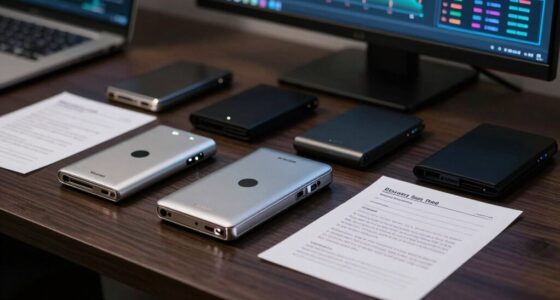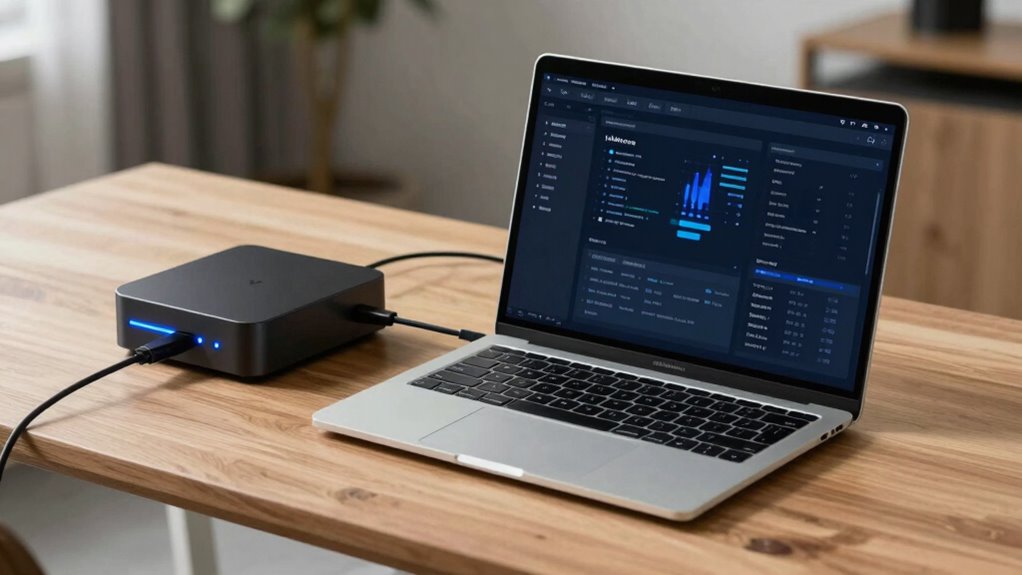

Managing an air-gapped laptop is more complex because of strict security protocols and the need for physical data transfers. You’ll need careful procedures to prevent leaks and handle hardware with care. In contrast, mini PCs are easier to maintain due to their sturdy build and straightforward setup. They’re built for durability and require less management effort overall. If you want to know which option better fits your environment and security needs, keep exploring the details below.

Get smart everyday buys delivered free with Prime
- Fast, free delivery on millions of items
- Prime Video, Amazon Music and more included
- Member-only deals all year
Key Takeaways
- Air-gapped laptops require strict physical data transfer protocols, increasing management complexity compared to mini PCs.
- Mini PCs generally offer simpler hardware maintenance due to their durability and fewer delicate components.
- Managing air-gapped laptops involves rigorous security procedures, while mini PCs focus more on hardware reliability.
- Mini PCs are easier to manage in demanding environments thanks to their rugged build and long-term stability.
- Overall, mini PCs tend to be simpler to oversee due to less intensive security protocols and hardware handling.
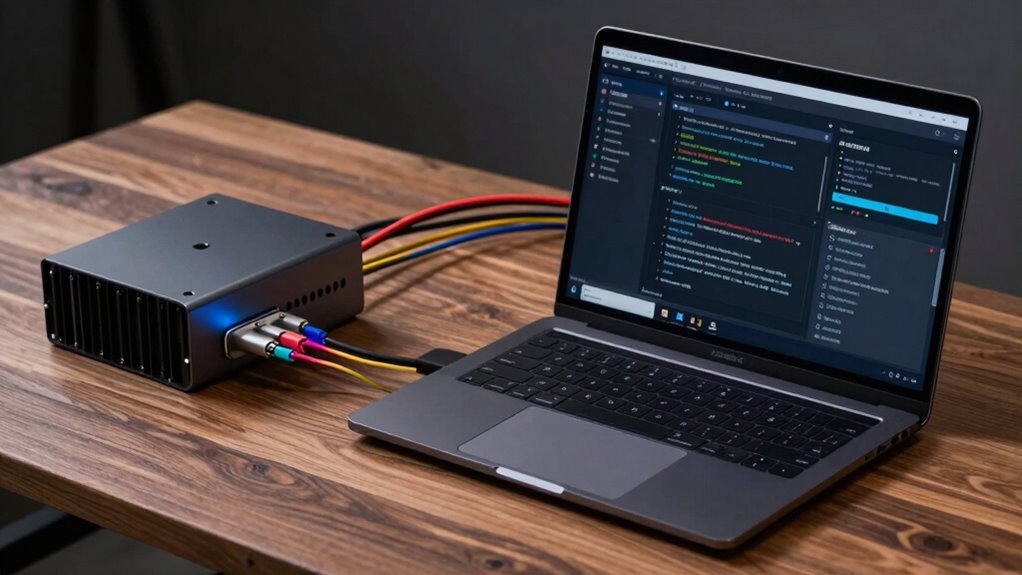
When it comes to securing sensitive data, choosing the right device can make all the difference. An air-gapped laptop and a mini PC each offer unique advantages, but their ease of management hinges on your specific security needs and operational environment. If your primary concern is maintaining robust cloud security, an air-gapped laptop provides a significant edge because it operates entirely offline, disconnected from the internet. This disconnect minimizes vulnerability to cyberattacks, data breaches, and malware that often originate from network-based threats. Managing such a device means you don’t have to worry about constantly patching or updating cloud-connected systems, reducing the attack surface and simplifying security protocols.
An air-gapped laptop offers enhanced security by operating offline, reducing vulnerability to cyber threats and simplifying management.
On the other hand, a mini PC might seem easier to handle in terms of hardware durability. These compact devices are built to withstand rough handling, extreme conditions, and prolonged use, making them ideal for environments where physical robustness is a priority. Since mini PCs often come with sturdy enclosures and are designed for continuous operation, managing their hardware can be less cumbersome. You don’t need to worry about delicate components or frequent replacements, which can be a concern with more portable devices like laptops. This durability can translate into lower maintenance efforts over time, especially in demanding industrial or field settings. Additionally, understanding hardware durability can help inform your choice, especially if your operational environment involves challenging physical conditions.
However, managing an air-gapped laptop requires deliberate planning. You’ll need to handle data transfers carefully, usually through physical media like USB drives, which adds an extra layer of operational complexity but enhances security. Its portability allows you to work remotely or in sensitive environments without exposing data to online threats, but it also demands strict protocols to prevent accidental data leaks. For example, establishing secure procedures for data transfer and device handling is crucial to maintaining the integrity of the air gap. Furthermore, being aware of interoperability considerations can help ensure seamless integration with your existing systems without compromising the security setup. A thorough understanding of security protocols and how they relate to your device choices can further help you implement best practices for managing these systems effectively. Ultimately, your choice depends on the balance you want between security and manageability. If protecting against cyber threats with maximum isolation is your goal, an air-gapped laptop offers superior control but requires meticulous management practices. If durability and ease of hardware management are more critical, a mini PC might be the better fit, offering reliable performance with less hands-on maintenance. Both options have their merits, but understanding your security priorities and operational constraints will guide you toward the device that’s easier for you to manage effectively.
As an affiliate, we earn on qualifying purchases.
Frequently Asked Questions
What Security Risks Are Associated With Air-Gapped Devices?
You face security risks with air-gapped devices mainly through data transfer and unauthorized access. Although they’re isolated, transferring data via physical media like USB drives can introduce malware. Also, if someone gains physical access, they might exploit vulnerabilities or leave malicious hardware, risking unauthorized access. Regularly monitoring, maintaining strict controls over data transfer, and physical security measures help minimize these risks.
How Do Power Consumption and Battery Life Compare?
Like a vintage radio, air-gapped laptops often excel in energy efficiency, boasting longer battery life thanks to their lightweight components and optimized power management. Mini PCs, however, tend to consume more power, especially during intensive tasks, making their energy efficiency lower. Your choice depends on how much you value portability and battery longevity versus performance. For extended use without plugging in, an air-gapped laptop’s power management gives it a clear edge.
Can Mini PCS Support High-Performance Tasks Effectively?
Mini PCs can support high-performance tasks effectively if they have robust hardware compatibility and efficient cooling solutions. Look for models with powerful CPUs, ample RAM, and dedicated GPUs. Proper cooling is essential to prevent overheating during intensive tasks. As long as you choose a mini PC with these features, it can handle demanding applications like gaming, video editing, or data processing without issues, making it a versatile option for high-performance needs.
Are There Size or Portability Differences Influencing Management?
Portability considerations definitely tip the scales in your favor. Mini PCs are compact, making size management a breeze—they fit neatly into small spaces and are easy to transport. But don’t underestimate the air-gapped laptop’s portability; it’s designed to be mobile, allowing you to carry it effortlessly wherever you go. So, if quick moves and easy size management matter most, a mini PC might just surprise you with its convenience.
What Maintenance Challenges Do Air-Gapped Laptops Face?
You’ll face maintenance challenges with air-gapped laptops mainly around hardware durability and software updates. Hardware can wear out faster since these laptops often run for extended periods without repairs, and replacing parts might be tricky due to limited access. Software updates pose a challenge because you need to manually transfer updates without internet access, increasing the risk of security gaps or outdated systems. Staying proactive helps guarantee smooth operation over time.
As an affiliate, we earn on qualifying purchases.
Conclusion
Ultimately, choosing between an air-gapped laptop and a mini PC depends on your needs, but remember, managing one of these is like wielding a double-edged sword—power and responsibility intertwined. If security is your fortress, the air-gapped laptop offers unmatched safety, yet it demands unwavering vigilance. On the other hand, a mini PC grants flexibility but requires constant care. Whichever you pick, master it wisely, or risk losing control in a digital hurricane.
USB data transfer security device
As an affiliate, we earn on qualifying purchases.
As an affiliate, we earn on qualifying purchases.
As an affiliate, we earn on qualifying purchases.
Halloween Picks
halloween
As an affiliate, we earn on qualifying purchases.