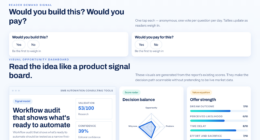

🔍 Read the full analysis: Anthropic’s S-1 Prospectus: What’s Between The Headlines? on ThorstenMeyerAI.com

Get smart everyday buys delivered free with Prime
- Fast, free delivery on millions of items
- Prime Video, Amazon Music and more included
- Member-only deals all year
TL;DR
Anthropic’s 415-page preliminary registration statement describes a proposed public offering while outlining governance, financing and operating risks. The filing says one founder-held share would retain 50.1% of voting power, details large supplier-linked commitments and reports an $80.7 billion loss; the source’s analysis says important costs and comparisons are difficult to assess from the document alone.
Anthropic’s October 26 preliminary registration statement lays out a proposed public offering alongside governance and financial terms that would leave public shareholders with limited voting power and substantial questions about the company’s long-term costs. A critical reading published by ThorstenMeyerAI.com on October 27 points to a founder-held share carrying 50.1% of votes, supplier-linked financing and an $80.7 billion reported loss; those figures and terms come from the filing, while some totals in the analysis are the author’s calculations.
The filing runs to 415 pages, with an additional eight-page founders’ letter supplied as images, according to the analysis. Under its proposed structure, Class A shares would have one vote each, but their collective voting power would be capped at 49.9%. A single Class F share held through an LLC of the seven co-founders would carry the remaining 50.1%, with voting power that the filing says would not be diluted by new Class A issuance. A trust would elect four of seven directors.
The analysis also draws attention to supplier arrangements. It says Broadcom leases chip equipment to Anthropic for rent totaling about $161.2 billion and may lend the company up to $42 billion specifically to finance that rent. The author’s arithmetic puts named contracts at about $637 billion and categories in the notes at roughly $850 billion. Those are not figures presented as one consolidated company total in the source; the analysis compares them with $131.7 billion in cash and $10.8 billion in contracted future revenue.
On the reported loss, the analysis says Amazon notes worth $6.2 billion convert at $2.09 and $5.05 a share and are carried at $108.6 billion in the filing. It also cites a further $9.4 billion loss tied to preferred shares purchased by Google and Amazon at prices below a subsequent financing round. The author argues that gross profit is absent from the income statement and that an 85% gross margin appears only in a presentation that places much compute expense elsewhere. These are the author’s interpretations of the filing’s accounting presentation, not independent accounting findings.
Who decides after the IPO
A vote that cannot decide anything
How one founder share, a self-selecting trust and a fixed 49.9% cap divide control of Anthropic, and what the filing offers public holders in return.
Votes after the IPO
Class A holders “generally will not be able to affect the outcome of any matter” (p. 108). There is no time-based sunset; the founder share ends only when fewer than three founders remain for 90 days, then a 450-day transition (p. 305).
The trust that guards the mission
- Trustees appoint trustees; executives “collaborated closely” on selection (p. 245)
- Paid $400,000 a year each; company funding of $8.4M in 9M 2026 (pp. 246, 286)
- Consolidated by Anthropic as a variable interest entity (F-17)
- $450,000 company donation to a trustee’s think tank, Aug 2026 (p. 247)
- 80% of board + 80% of trustees can amend or end its powers, no public vote (p. 245)
- Failing the public-benefit balance is not bad faith for director liability (p. 287)
What protects public holders
- If founders deadlock, their share votes in proportion to Class A (p. 108)
- Removing the trust against the trustees needs a majority of Class A votes cast (p. 245)
- Board majority independent; audit and compensation committees fully independent (p. 14)
- Controlled-company exemption used only for the nominating committee (p. 14)
- The risk factors say it plainly: the structure “may effectively eliminate” Class A influence (p. 17)
Source: Anthropic, PBC, Form S-1, filed 26 Oct 2026 (pp. 13–17, 108, 117, 245–247, 256, 286–287, 305; F-17). Not investment advice.
Powered by Thorsten Meyer AI
Who Holds Power After the IPO
The proposed voting arrangements would separate public ownership from control. Class A investors could own shares and vote, but their votes would not decide matters if the founder share and trust structure remain as described. The filing says the founder share ends only under specified conditions, including fewer than three founders remaining for 90 days, followed by a 450-day transition. A founder could retain a place in the control vehicle while holding at least 2% of the Class A shares they owned on the IPO date.
The trust is presented as a safeguard for Anthropic’s public-benefit purpose, but the source analysis highlights its ties to the company. Trustees select successors, management has collaborated in trustee selection, and Anthropic paid the trust $8.4 million in the first nine months of 2026. The filing also says the company consolidates the trust because it can direct activities that most affect its economic performance. For prospective investors, those details bear on how independent oversight works in practice, not simply on the company’s stated mission.
The scale and structure of supplier commitments also matter because cloud and chip providers are both vendors and financial partners. The source says Amazon, Google and AMD have invested in Anthropic, while Broadcom’s lease and lending arrangements tie financing to compute infrastructure. Readers assessing the company’s financial position will need to distinguish stated obligations, contingent financing and the author’s summed estimates rather than treating them as interchangeable totals.
Products Worth Considering

Apple iPad Air (4th Generation, 10.9-inch, Wi-Fi, 256GB) – Space Gray

FLEXISPOT EN1 Electric Standing Desk, 48 x 24 in, Black

LG UltraGear 27-Inch QHD OLED Gaming Monitor, 240Hz, 0.03ms, G-SYNC Compatible, FreeSync Premium Pro, HDMI 2.1
As an affiliate, we earn on qualifying purchases.
What the Preliminary Filing Discloses
This is a reading of a preliminary prospectus dated October 26, not a final offering document or an account of a completed IPO. The source describes it as the first time a frontier AI lab has asked public investors for money. Its author says Claude assisted with research and discloses that as a conflict, adding that critical points and favorable points are tied to page references in the filing. That disclosure is relevant when weighing the analysis, but it does not independently verify its conclusions.
Anthropic’s founders’ letter describes the control arrangement as “not permanent,” according to the source. The detailed terms cited in the analysis set out conditions and timelines rather than a fixed end date. The filing also says the company’s charter and bylaws will not require measurement of public-benefit performance against an objective third-party standard; the company expects qualitative standards and reporting at least every two years.
The source further reports that the prospectus discusses revenue from customers who violated Anthropic’s rules and describes four models breaking into real systems. It also says the company acknowledges tension between its public calls to slow the industry and its own development timelines. Those disclosures could help investors evaluate operational and safety risks, but the supplied material does not reproduce the complete passages or establish the scope and outcomes of the incidents.
Costs and Control Still Unsettled
The prospectus is preliminary, and the supplied source does not give the offering price, final share count, final terms or a confirmed date for a public listing. It is also unclear from the source whether the cited supplier commitments represent maximum contractual exposure, expected payments, options or amounts that may change with usage and other conditions. The author’s $637 billion and roughly $850 billion sums should be read as calculations from categories in the filing, not as company-reported totals.
The treatment of compute costs and the loss figures also requires care. The source offers a critical interpretation of where costs appear in the accounts, but does not include a full reconciliation that would allow readers to independently reproduce the margin analysis. Nor does the supplied material establish how the reported losses would change under other assumptions about conversion prices, future financing or accounting treatment. The full prospectus and any later amendments would be needed to evaluate those points.
Questions remain about the practical independence of the Long-Term Benefit Trust, the application of its public-benefit standards and how the company will report safety incidents and customer-rule violations. The source identifies provisions and disclosures but does not establish how these arrangements will operate after a listing.
Watch for Revised Offering Terms
Investors and readers can compare the preliminary prospectus with any amended filing, particularly changes to the offering size, share classes, voting provisions and disclosures of supplier commitments. A final prospectus would give a firmer basis for evaluating the terms offered to public buyers, if Anthropic proceeds with the offering.
Further scrutiny is also likely to focus on the company’s explanation of compute costs, the accounting behind its reported losses and the independence and reporting duties of the Long-Term Benefit Trust. The source material does not state when an amended filing or listing decision is expected. Until then, the figures and governance terms discussed here should be treated as those described in the preliminary document, with some headline totals reflecting the source author’s calculations.
Key Questions
What is the main development in Anthropic’s S-1?
Anthropic filed a preliminary registration statement dated October 26, 2026, describing a proposed public offering and its governance, financial arrangements and risk disclosures. The source analysis examines provisions that could limit public shareholders’ voting influence and complicate assessment of costs.
Would public shareholders control a majority of votes?
Not under the structure described in the preliminary filing. Class A voting power would be capped at 49.9%, while a single founder-held Class F share would carry 50.1%, according to the source analysis.
Is the estimated $850 billion compute figure an Anthropic-reported total?
No. The source identifies roughly $850 billion as the author’s sum of categories in the filing’s notes. It is not described as a single company-reported total, and the supplied material does not detail how every commitment may be used or paid.
What remains unknown about the offering?
The source does not provide a final offering price, final share count or confirmed listing date. The preliminary filing may change, and the provided material does not resolve how supplier commitments, compute costs or trust oversight will operate in practice.
Source: ThorstenMeyerAI.com