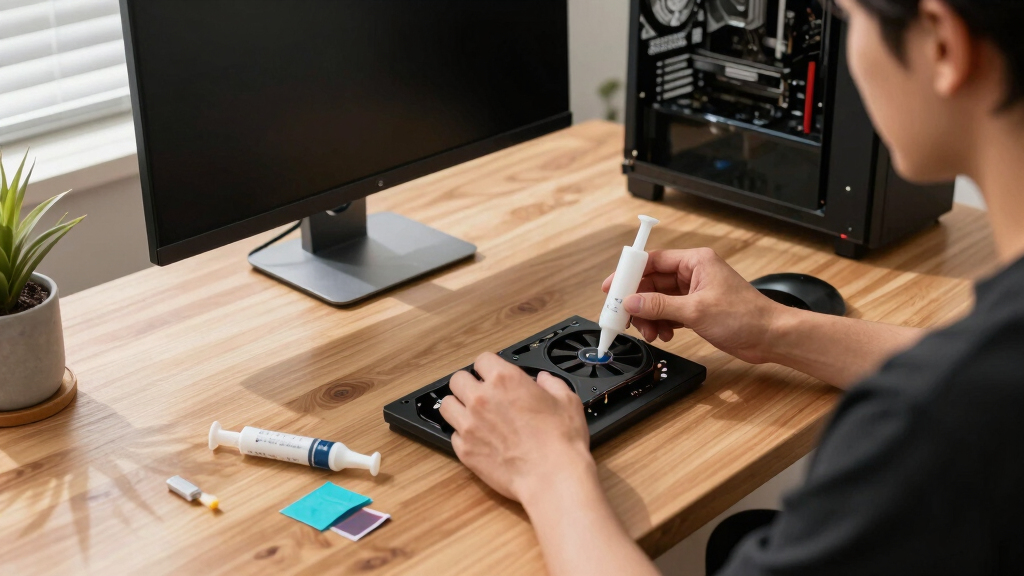

📊 Full opportunity report: Best Thermal Paste and Pads for High-TDP GPUs on ThorstenMeyerAI.com — validation score, market gap, and execution plan.

Get smart everyday buys delivered free with Prime
- Fast, free delivery on millions of items
- Prime Video, Amazon Music and more included
- Member-only deals all year
TL;DR
This article reviews the best thermal pastes and pads for high-TDP GPUs used in continuous workloads like AI inference. It emphasizes long-term stability over initial cooling performance. Key recommendations include Honeywell PTM7950, Arctic MX-6, Noctua NT-H2, and Thermal Grizzly Kryosheet.
Honeywell PTM7950 phase-change material is identified as the best thermal interface material for high-TDP GPUs running continuously, due to its resistance to pump-out and long-term stability, according to recent expert reviews and testing.
Traditional thermal pastes like Thermal Grizzly Kryonaut perform well initially but tend to dry out faster under sustained high temperatures, leading to increased GPU temperatures over time. In contrast, the Honeywell PTM7950, a phase-change material, maintains low thermal resistance over years of continuous operation, making it ideal for AI inference and other 24/7 workloads. It is supplied as a thin sheet that requires careful application but offers superior longevity.
For users preferring traditional pastes, Arctic MX-6 offers a non-conductive, easy-to-apply option with an 8–10 year lifespan, providing a good balance of performance and ease of use. Noctua NT-H2, a premium traditional paste, is also recommended for its reliability, durability, and consistent performance over time. Additionally, Thermal Grizzly Kryosheet, a graphene-based reusable pad, offers a long-term solution but requires careful handling due to its electrical conductivity.
It is important to note that most guides focus on initial temperature drops, which are less relevant for continuous workloads. The key factor for high-TDP GPUs running 24/7 is resistance to pump-out, which can degrade thermal performance over time and cause overheating.
Best thermal paste
for a high-TDP GPU.
The standard “coldest on day one” advice is wrong for a 24/7 rig. Continuous heat slowly squeezes traditional paste out — a failure called pump-out — so the real question is what stays cold for years.
Importance of Long-Term Thermal Stability for High-Power GPUs
Choosing the right thermal interface material significantly impacts GPU longevity, stability, and performance in continuous workloads. Proper selection can reduce overheating risks, extend hardware lifespan, and improve overall system reliability, especially in AI and data center environments where GPUs operate nonstop.
As an affiliate, we earn on qualifying purchases.
Thermal Interface Material Choices for High-TDP GPUs
Most thermal pastes are optimized for gaming GPUs with intermittent loads, where initial cooling performance is critical. However, high-TDP GPUs used in AI inference or server environments face sustained heat, which accelerates the degradation of traditional pastes through pump-out. Experts recommend phase-change materials like Honeywell PTM7950 for such applications, as they resist drying and pump-out, maintaining effective heat transfer over years. User reports and testing confirm that traditional pastes like Kryonaut often fail to sustain low temperatures under continuous load, emphasizing the need for specialized materials.
"For 24/7 GPU workloads, the key is long-term stability—materials like Honeywell PTM7950 resist pump-out and keep your system cool over years, not just days."
— Thorsten Meyer, AI hardware specialist
As an affiliate, we earn on qualifying purchases.
Uncertainties in Long-Term Performance of Thermal Materials
While expert consensus favors phase-change materials like Honeywell PTM7950 for long-term stability, there is limited long-term field data from widespread use in high-TDP GPU environments. Variations in application, system design, and workload intensity could influence actual longevity and effectiveness. Further testing and user reports are needed to confirm durability over multiple years.
phase-change thermal interface material
As an affiliate, we earn on qualifying purchases.
As an affiliate, we earn on qualifying purchases.
Future Testing and Adoption of Long-Term Thermal Solutions
Ongoing testing of phase-change materials and traditional pastes in real-world high-power GPU setups will continue. Manufacturers may develop new interface materials optimized for sustained high-temperature operation. Users should stay informed through industry updates and community reports to make well-informed decisions.
As an affiliate, we earn on qualifying purchases.
Key Questions
Is phase-change material better than traditional paste for high-TDP GPUs?
Yes, phase-change materials like Honeywell PTM7950 are designed for long-term stability under continuous high temperatures, resisting pump-out that degrades traditional pastes.
Can I use regular thermal paste for a 24/7 GPU workload?
Traditional pastes work initially but may degrade over time under sustained load, leading to increased temperatures. For long-term stability, specialized materials are recommended.
Does applying better thermal interface material improve GPU lifespan?
Yes, maintaining effective heat transfer reduces thermal stress and can extend the operational lifespan of high-power GPUs used continuously.
Are there risks associated with using reusable pads like Kryosheet?
Yes, since Kryosheet is electrically conductive, improper handling or contact with circuitry can cause shorts. Precise placement is essential.
Source: ThorstenMeyerAI.com
Halloween Picks
halloween
As an affiliate, we earn on qualifying purchases.