
📊 Full opportunity report: Build vs Buy a Prebuilt AI Workstation on ThorstenMeyerAI.com — validation score, market gap, and execution plan.

Get smart everyday buys delivered free — and shop member deals
- Fast, free delivery on millions of items
- Access to Prime Big Deal Days deals on October 6–7
- Prime Video, Amazon Music and more included
TL;DR
In 2026, prebuilt AI workstations often match or beat DIY costs due to component shortages and bulk buying. They offer faster deployment and validated reliability, but building provides maximum control. The decision depends on speed, customization, and long-term ownership.
In 2026, prebuilt AI workstations are often more cost-effective and quicker to deploy than custom-built systems, challenging the traditional advantage of DIY setups. This shift is driven by global chip shortages, rising component prices, and bulk purchasing power among vendors, making prebuilt options increasingly attractive for organizations and individuals needing high-performance AI hardware.
Prebuilt AI workstations arrive fully assembled, tested, and optimized for performance, including high-end GPUs, cooling solutions, and pre-installed software like CUDA and TensorFlow. Vendors such as Lambda and Puget offer systems with validated thermals, warranties, and support, reducing the risk of hardware failures and thermal issues that can plague DIY builds.
The decision to buy or build hinges on priorities: prebuilt systems provide rapid deployment, with delivery times often within 1–2 weeks, and minimal setup, making them ideal for time-sensitive projects. Conversely, building offers extensive customization, control over hardware and security, but requires significant time, expertise, and ongoing management, which can introduce hidden costs.
Cost comparisons reveal that, despite higher initial sticker prices in some cases, prebuilt systems often match or undercut DIY costs due to bulk procurement and reduced operational expenses. Hidden costs for DIY include engineering time, troubleshooting, maintenance, and potential delays, which can outweigh initial savings.
Build vs buy
an AI workstation.
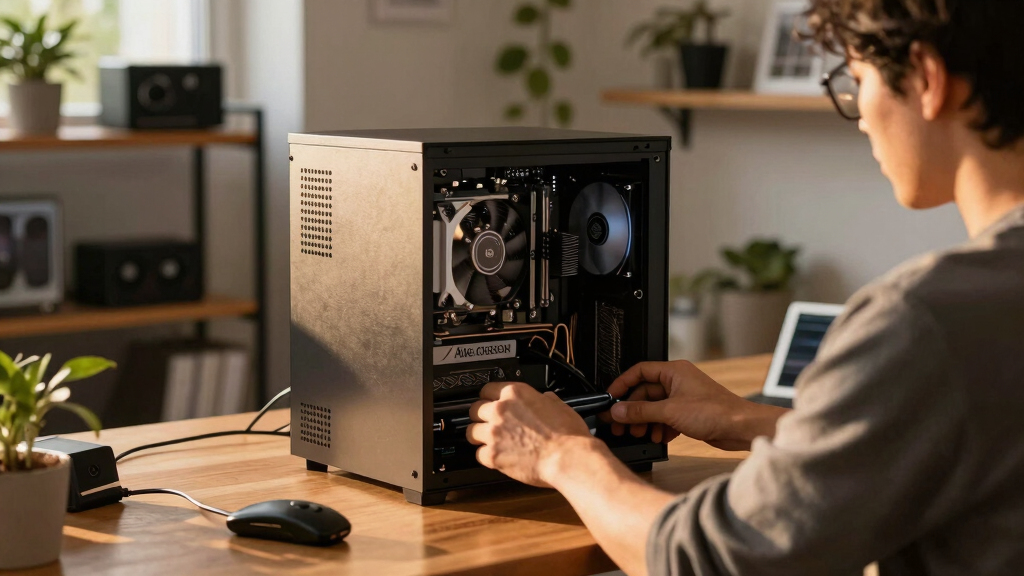
The real question behind this whole series: do you pull the five heat-and-noise levers yourself, or buy a prebuilt where the vendor pulled them for you? And in 2026, the old “building is cheaper” rule has broken. Match your situation in Part 3.
Impact of Market Shifts on Build vs Buy Choices
This shift in the market means organizations and individuals can now access high-performance AI hardware more quickly and reliably through prebuilt systems, reducing operational risks and enabling faster project start times. It also prompts a reevaluation of long-term ownership costs, as hidden expenses for DIY setups can accumulate rapidly. The trend toward prebuilt solutions reflects broader supply chain challenges and the need for streamlined deployment in AI development.prebuilt AI workstation with high-end GPU
As an affiliate, we earn on qualifying purchases.
As an affiliate, we earn on qualifying purchases.
Market Conditions Reshaping AI Hardware Decisions
Historically, building your own AI workstation was cheaper and more customizable, but recent global chip shortages, component price spikes, and supply chain disruptions have increased DIY costs. Vendors leveraging bulk purchasing now offer prebuilt systems with validated performance at competitive prices, shifting the landscape in 2026. This change has made prebuilt options more appealing for startups, enterprises, and researchers seeking quick deployment and reliable operation."Market shortages and bulk buying have leveled the playing field, making prebuilt systems often just as affordable as DIY builds, with added benefits in reliability and support."
— Thorsten Meyer, AI hardware expert
customizable AI workstation build kit
As an affiliate, we earn on qualifying purchases.
As an affiliate, we earn on qualifying purchases.
Long-term Cost and Performance Uncertainties
It remains unclear how ongoing supply chain disruptions and component price fluctuations will impact the cost-effectiveness of prebuilt versus custom builds over the next year. Additionally, the long-term performance and upgradeability of prebuilt systems compared to DIY configurations are still being evaluated, especially as new hardware generations emerge.professional AI workstation prebuilt
As an affiliate, we earn on qualifying purchases.
As an affiliate, we earn on qualifying purchases.
Future Trends and Market Developments in AI Hardware
Expect continued market consolidation among prebuilt system vendors, with more integrated solutions and extended support options. For more insights, see the original analysis. Meanwhile, DIY builds may regain appeal for highly specialized workloads or security-sensitive environments, but will require careful planning to mitigate rising costs. Monitoring supply chain stability and technological advancements will be key for decision-makers in 2026.As an affiliate, we earn on qualifying purchases.
Key Questions
Which option is more cost-effective in 2026?
Prebuilt systems often match or beat DIY costs due to bulk buying and supply chain efficiencies, but total ownership costs should include support, maintenance, and hidden expenses.
How long does it take to deploy a prebuilt AI workstation?
Most prebuilt systems can be delivered and set up within 1–2 weeks, whereas DIY builds may take several weeks or longer due to sourcing and assembly.
Can I upgrade a prebuilt AI workstation easily?
Upgradeability varies by model; some prebuilt systems allow hardware upgrades, but others are more integrated, making future upgrades more complex compared to DIY setups.
What are the risks of building my own AI workstation?
Risks include higher time investment, potential hardware incompatibilities, thermal management issues, and hidden costs from troubleshooting and maintenance.
Source: ThorstenMeyerAI.com
Fall Picks
fall essentials
As an affiliate, we earn on qualifying purchases.