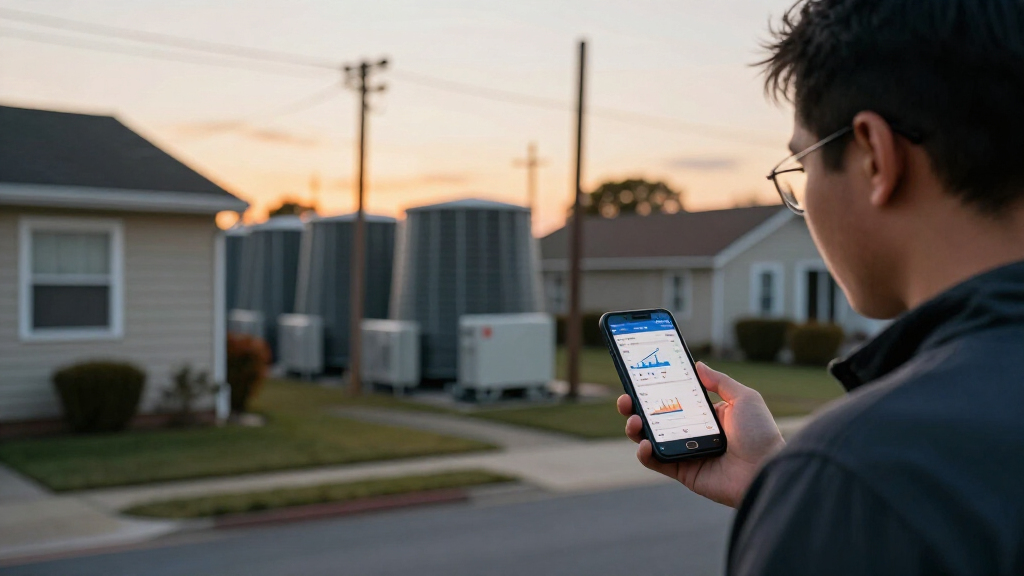
🔍 Read the full analysis: Could OpenAI’s Compute Campuses Shift Costs To Communities? on ThorstenMeyerAI.com

Get smart everyday buys delivered free with Prime
- Fast, free delivery on millions of items
- Prime Video, Amazon Music and more included
- Member-only deals all year
TL;DR
OpenAI confirmed it is considering the term “compute campuses” for its AI infrastructure, while a broader public relations campaign reported by Axios has not been confirmed as launched. Grid costs and industry pledges are documented, but the effect on household bills and water use near planned sites remains unsettled.
OpenAI has confirmed it is using “compute campuses” to describe the large facilities it is building for artificial intelligence, while a wider post-midterm public relations campaign remains a reported plan rather than a confirmed launch. The terminology debate comes as US grid operators and communities weigh the power, infrastructure and water costs associated with expanding AI computing.
TechCrunch reported on November 1, citing Axios, that OpenAI was preparing a public relations push to begin after the US midterm elections. One idea attributed to OpenAI chief global affairs officer Chris Lehane was replacing “data centers” with “AI compute campuses.” TechCrunch’s account is based on its summary of Axios; the source material says the Axios article was not independently reviewed. OpenAI confirmed the proposed term to Business Insider, saying it “better describes the scale and role of the infrastructure we’re building for AI.” As of November 3, no official OpenAI publication announcing a campaign launch was identified.
The underlying cost questions are more concrete, though their effects on households are contested. In PJM, which serves more than 67 million people across 13 states and Washington, D.C., the July 2026 capacity auction for the 2028–29 delivery year cleared at the regulator-approved cap of $325 per megawatt-day. The source material says the independent market monitor attributed $6.3 billion of $16.4 billion in auction costs to data centers. The auction was 6,831 megawatts short of its target, according to the supplied account.
Those figures show a substantial role for data centers in that auction’s costs, but do not establish how much any particular household’s bill rose because of them. The source material reports that residential electricity prices increased year over year by 11.3% in Virginia and 10.4% in Ohio, while the International Energy Agency found no simple state-level relationship between data-center growth and household prices. The US Energy Information Administration attributed a 41% increase in PJM wholesale prices to weather, rather than data centers, according to the supplied account.
Who Pays for AI Power
The distinction between a company’s energy costs and the costs ultimately borne by other electricity users is central to the debate. New facilities require power and grid connections; upgrades may be paid directly by developers, utilities, or through arrangements that affect other customers. The PJM auction figures show that data centers are a significant part of one regional capacity-cost calculation, but they do not settle how those costs flow through to individual bills.
For communities considering large projects, the question extends beyond electricity rates. Land, water use, local infrastructure and the distribution of jobs and other benefits can shape whether residents support a development. Pew Research Center’s 2026 survey of 10,548 US adults found that 60% were not too or not at all comfortable with a new data center in their area. That finding describes public sentiment, not the views of every host community or the impact of a specific project.
OpenAI says communities should help shape projects and share in the opportunities they create. Whether commitments translate into protections residents can verify depends on project details, utility rules and oversight. A change in terminology does not answer those questions; enforceable payment arrangements and accessible reporting would.
Products Worth Considering

Dell UltraSharp 32 U3226QER 4K Thunderbolt Hub Monitor

Canon PIXMA TR160 Wireless Portable Color Inkjet Printer

LG UltraWide 34U620B-B 34-Inch Curved WQHD 144Hz Monitors, 2-Pack Bundle
As an affiliate, we earn on qualifying purchases.
Pledges Meet Grid Constraints
OpenAI’s January 2026 “Stargate Community” plan pledged that the company would pay its own way on energy so its operations would not increase electricity prices. In March, Amazon, Google, Meta, Microsoft, OpenAI, Oracle and xAI signed the White House Ratepayer Protection Pledge. Its fact sheet says signatories will build, bring or buy new power generation, cover power-delivery infrastructure upgrades required for their data centers, and pay negotiated rates even when they do not use the electricity.
The pledge is a stated commitment, but the supplied material identifies no penalty, enforcement body, monitoring process or reporting requirement in the fact sheet. The IEA’s April 2026 report, “Key Questions on Energy and AI,” says recent measures shift some financial risk away from utilities, while the extent of consumer protection remains less clear. It also notes few US examples of state laws requiring full cost recovery from data-center operators.
Water is another unresolved local issue. At OpenAI’s planned site in Pike County, Ohio, the company expects water use to be comparable to an office building, but says it will publish projections once the design is final. The available material does not provide a final project design or a quantified water-use estimate.
Bills and Water Still Unsettled
The reported post-election public relations push has not been confirmed by OpenAI as launched, and the supplied account relies on TechCrunch’s summary of Axios for details about its planning. It is also unclear whether “compute campuses” will become a consistent public-facing term across OpenAI’s communications.
More broadly, the available figures do not establish how much AI facilities have changed residential electricity bills in any particular state or household. Auction costs, wholesale prices and retail bills are different measures, and multiple factors can affect each. The source material also does not give the final water-use projections for the planned Pike County site, or explain how the industry pledge will be checked and enforced.
OpenAI’s data-center financing is another area with incomplete information. The source says OpenAI owns no data centers and that partners carry the debt, while a reported reduction in its funding target has not been confirmed by OpenAI. The scale and terms of those financing arrangements are not detailed here.
Watch for Project-Level Disclosures
The next useful evidence will be specific project and utility disclosures: final power and water requirements, who funds grid upgrades, the rates charged to operators, and whether those costs can be traced through to other customers. In Pike County, OpenAI has said it expects to publish water projections when the design is final, but the timing and contents of that disclosure are not stated in the supplied material.
State regulators and utilities will also shape whether the White House pledge results in enforceable protections. Readers can look for state rules on cost recovery, utility filings and public reporting that show whether operators—not other ratepayers—cover the infrastructure costs attributed to their projects. For now, the naming change is confirmed; its broader communications rollout and the local financial effects of individual campuses remain developing questions.
Key Questions
What does OpenAI mean by “compute campuses”?
OpenAI says the phrase better describes the scale and role of the infrastructure it is building for AI. It is a new term for data-center facilities, not evidence that their energy or water requirements have changed.
Has OpenAI launched the reported public relations campaign?
That has not been confirmed in the supplied material. TechCrunch reported, citing Axios, that OpenAI was preparing a post-midterm push; OpenAI confirmed the terminology to Business Insider, but no official campaign launch was identified by November 3, 2026.
Do the PJM figures prove data centers raised household electricity bills?
No. The supplied account says the market monitor attributed $6.3 billion of $16.4 billion in PJM auction costs to data centers. That is evidence of their role in that auction’s costs, but it does not establish the amount passed through to any household. The IEA found no simple state-level relationship between data-center growth and residential prices.
Are the companies’ ratepayer protections enforceable?
The seven-company pledge states that signatories will pay for specified power and grid costs. The supplied fact sheet names no penalty, enforcement body, monitoring process or reporting requirement, so the material does not establish how compliance will be verified.
How much water will OpenAI’s planned Ohio site use?
A final figure is not available in the supplied material. OpenAI expects use at the Pike County site to be comparable to an office building and says it will publish projections once the design is final.
Source: ThorstenMeyerAI.com