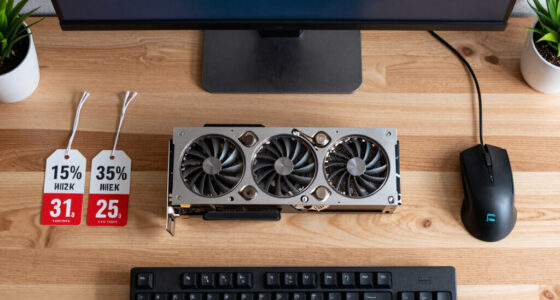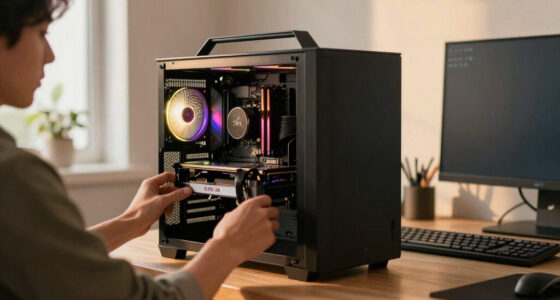

📊 Full opportunity report: The Memory Squeeze: Why Your RAM Bill Doubled on ThorstenMeyerAI.com — validation score, market gap, and execution plan.

Get smart everyday buys delivered free with Prime
- Fast, free delivery on millions of items
- Prime Video, Amazon Music and more included
- Member-only deals all year
TL;DR
RAM prices have doubled or more in early 2026 due to a deliberate shift by chip manufacturers toward AI-related memory, reducing supply for consumer markets. This ongoing reallocation is causing shortages and price hikes across the industry, similar to the supply constraints discussed in Apple’s recent chip sourcing issues.
DRAM prices have surged by up to 600% in early 2026, with the cost of a 32GB DDR5 kit rising from $80–$120 in 2025 to over $375. This sharp increase is driven by a strategic shift in chip manufacturing capacity toward AI-related memory products, significantly impacting PC builders and consumers.
Major manufacturers—Samsung, SK Hynix, and Micron—are redirecting their wafer capacity from consumer DDR5 memory to high-margin High Bandwidth Memory (HBM) designed for AI accelerators. HBM modules sell for three to five times the price of standard DDR5, making this switch highly profitable for chipmakers.
This reallocation is not a temporary supply hiccup but a deliberate, ongoing decision to prioritize AI hardware. As a result, the share of wafer output dedicated to consumer DRAM has decreased, with HBM now accounting for approximately 23% of total DRAM wafer production, up from 19% a year earlier. AI applications are projected to absorb roughly 20% of all DRAM capacity in 2026, constraining supply for traditional consumer markets.
Unlike past memory shortages, which eased when new capacity was added, this crisis is driven by a strategic, long-term shift. The industry’s capacity expansion plans are years away, with significant new fabs not reaching full operation until 2027–2028. For more on industry supply chain challenges, see this analysis of chip manufacturing constraints. Meanwhile, existing manufacturers are managing scarcity to maintain high profit margins, with some suppliers locking in multi-year contracts for large volumes of DRAM at high prices.
Why your RAM bill doubled
“Doubled” is the polite version — consumer DRAM is running 3–6× its 2024 lows. The boom-bust cycle that always brought cheap RAM back isn’t coming this time, because the factories that make your RAM now make something far more profitable instead.
HBM
This is the quiet tax on the whole AI era. Relief isn’t forecast before 2028, and even then prices may settle 30–50% above pre-crisis levels. Buy what you genuinely need now; don’t panic-buy capacity you won’t use. You can’t out-wait the fab math — but, as this series will show, you can shrink what you need. Next: HBM Ate the Fab.
Impact of AI-Driven Capacity Shift on Consumer RAM
This shift in manufacturing focus means consumers face persistent shortages and soaring prices for RAM, making PC upgrades and builds more expensive. The reduced supply and high costs could slow down PC sales and limit hardware options, especially for budget-conscious buyers. Additionally, the concentration of manufacturing among three firms raises concerns about market competitiveness and supply stability.
As an affiliate, we earn on qualifying purchases.
2026 Memory Market Reallocation Explained
Historically, memory shortages were resolved through increased capacity, leading to price drops. However, in 2026, the industry’s focus has shifted toward AI, with manufacturers prioritizing high-margin HBM over consumer DDR5. This strategic move is driven by the higher profitability of AI memory modules, which sell at significantly higher prices but are less efficient in wafer use.
Major firms like Samsung, SK Hynix, and Micron control about 95% of the DRAM market and have faced past antitrust scrutiny. Despite no current collusion allegations, their market dominance and capacity management practices influence supply and pricing dynamics. Large AI-focused buyers have also committed to long-term, high-volume contracts, further constraining supply for ordinary consumers.
“Our focus is on high-margin enterprise and AI memory products, which has affected our consumer memory supply.”
— Micron spokesperson
As an affiliate, we earn on qualifying purchases.
Unclear Scope of Market Manipulation or Supply Management
While the primary explanation is strategic capacity reallocation, it remains uncertain whether market concentration and supply management practices are also influencing prices beyond pure economics. No antitrust actions are currently underway, but the long-term effects of market dominance and supply discipline are still being evaluated.
As an affiliate, we earn on qualifying purchases.
Future Supply Expansion and Market Stabilization Outlook
Manufacturers plan to expand capacity with new fabs expected to come online around 2027–2028, which may eventually ease shortages. However, the current high-margin focus on AI memory suggests that consumer RAM prices could remain elevated until new capacity is fully operational. Buyers should monitor industry announcements and capacity expansion timelines for signs of price stabilization.
As an affiliate, we earn on qualifying purchases.
Key Questions
Why have RAM prices increased so dramatically in 2026?
Prices have surged because manufacturers are reallocating wafer capacity from consumer DDR5 to higher-margin AI memory modules like HBM, driven by profitability rather than supply shortages.
Will RAM prices return to normal soon?
Not immediately. Significant capacity expansions are years away, and current focus on AI memory means consumer RAM prices may stay high until new fabs are operational around 2027–2028.
Are the price increases due to collusion among chip makers?
No, industry officials attribute the prices to strategic capacity reallocation for higher-margin AI products. There is no current evidence of collusion, though market concentration remains a concern.
How does this affect PC builders and consumers?
Consumers face higher costs for RAM modules, potential shortages, and limited availability, which could slow PC upgrades and increase overall build prices.
Source: ThorstenMeyerAI.com
Evergreen bestsellers Picks
bestsellers
As an affiliate, we earn on qualifying purchases.