
📊 Full opportunity report: Trade and supply-chain operations signal monitor: US-Iran talks to begin Sunday in Switzerland as Tehran closes the strait over Lebanon fi on IdeaNavigator AI — validation score, market gap, and execution plan.

Get smart everyday buys delivered free with Prime
- Fast, free delivery on millions of items
- Prime Video, Amazon Music and more included
- Member-only deals all year
TL;DR
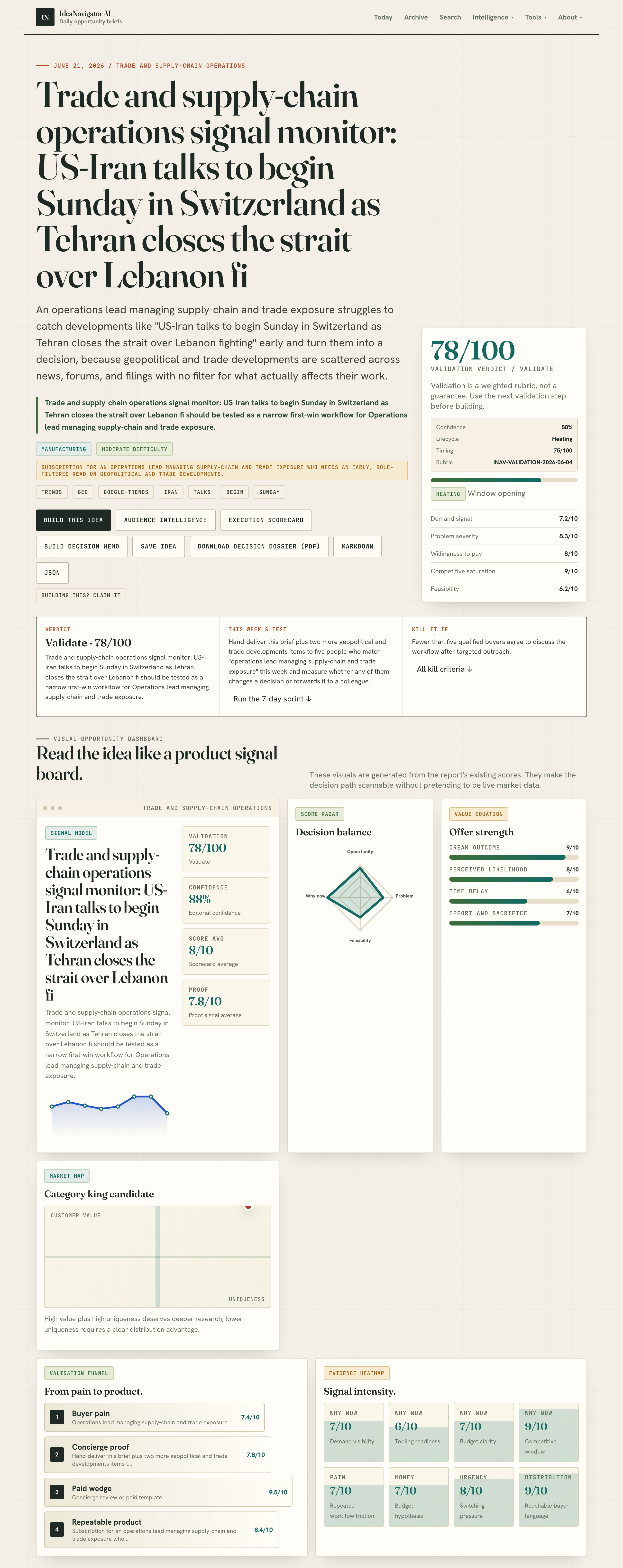
U.S. and Iran are scheduled to begin talks in Switzerland on Sunday, amid escalating tensions including Iran closing the Strait of Hormuz. This development could impact global trade routes and supply chains, especially for operations managing trade exposure.
U.S.-Iran talks are scheduled to begin this Sunday in Switzerland, as Iran has closed the Strait of Hormuz over tensions related to Lebanon, raising concerns about disruptions to global trade routes.
The negotiations between the United States and Iran are set to take place in Switzerland this Sunday, according to sources familiar with the planning. Concurrently, Iran has announced the closure of the Strait of Hormuz, a critical chokepoint for global oil and trade shipments, over tensions involving Lebanon. This combination of diplomatic talks and strategic maritime actions signals increased geopolitical instability that could significantly impact supply chains and trade operations worldwide.
Trade and supply-chain managers are closely monitoring these events, as the closure of the Strait of Hormuz could restrict maritime traffic, increase shipping costs, and cause delays across multiple sectors. The Trade and supply-chain operations signal monitor provides updates relevant to these developments. The timing of the negotiations and Iran’s maritime actions suggests a period of heightened risk for international trade flows, especially in energy markets and regions dependent on Middle Eastern oil exports. For insights on how operational risks are monitored, see the Technology operations signal monitor.
Implications for Global Trade and Supply Chains
This development is significant because the resumption of U.S.-Iran negotiations and Iran’s strategic maritime actions could lead to increased disruptions in global trade routes. The Strait of Hormuz is a vital passage for nearly a third of the world’s seaborne oil, making its closure a potential catalyst for rising energy prices and supply chain delays. For operations managers, understanding these geopolitical risks is crucial for adjusting trade strategies and mitigating exposure to disruptions that could affect delivery schedules and costs.maritime shipping supply chain monitor
As an affiliate, we earn on qualifying purchases.
As an affiliate, we earn on qualifying purchases.
Recent Escalations in U.S.-Iran Relations and Maritime Tensions
Over recent months, tensions between the U.S. and Iran have escalated, with Iran increasing its maritime activities in the Persian Gulf and threatening to close strategic waterways over regional disputes. The upcoming talks in Switzerland mark a potential diplomatic effort to de-escalate these tensions, but Iran’s recent decision to close the Strait of Hormuz over Lebanon signals a readiness to use maritime control as leverage. Historically, similar actions have led to increased market volatility and supply chain disruptions, emphasizing the need for operational preparedness.
“The talks scheduled for Sunday represent a critical opportunity to de-escalate tensions, but Iran’s maritime actions complicate the diplomatic landscape.”
— an anonymous source familiar with negotiations
trade route disruption alert system
As an affiliate, we earn on qualifying purchases.
As an affiliate, we earn on qualifying purchases.
Unconfirmed Details on Negotiation Outcomes and Strait Closure Duration
It is not yet clear whether the upcoming negotiations will lead to de-escalation or if Iran will maintain the Strait closure. The duration of the closure and its actual impact on global trade remain uncertain, pending further developments and official statements.
As an affiliate, we earn on qualifying purchases.
Next Steps in Diplomatic and Maritime Developments
Following the Sunday talks, analysts will monitor for signs of progress or escalation. Key indicators include Iran’s stance on the Strait closure, any diplomatic breakthroughs, and responses from global markets. For cybersecurity concerns related to maritime and trade, see the Cybersecurity operations signal monitor. Operational managers should prepare for potential disruptions by reassessing supply chain routes and contingency plans.
geopolitical risk management tools
As an affiliate, we earn on qualifying purchases.
As an affiliate, we earn on qualifying purchases.
Key Questions
What is the significance of the U.S.-Iran talks scheduled for Sunday?
The talks could determine whether tensions ease or escalate further, directly impacting maritime routes and trade stability.
How might Iran’s closure of the Strait of Hormuz affect global trade?
The Strait is a vital passage for oil and goods; its closure could increase shipping costs, cause delays, and raise energy prices worldwide.
What should supply chain managers do in response to these developments?
Managers should reassess trade routes, prepare contingency plans, and stay updated on diplomatic and maritime developments to mitigate risks.
Is the Strait closure likely to be temporary or permanent?
It is currently unclear how long Iran will keep the Strait closed; further official statements and negotiations will clarify the situation.
Could this lead to broader conflicts or military actions?
While escalation is possible, there are no confirmed reports of military actions at this stage. The situation remains fluid and subject to diplomatic developments.
Source: IdeaNavigator AI
Columbus Day / Indigenous Peoples' Day Picks
long weekend sales
As an affiliate, we earn on qualifying purchases.