
TL;DR

Get smart everyday buys delivered free with Prime
- Fast, free delivery on millions of items
- Prime Video, Amazon Music and more included
- Member-only deals all year
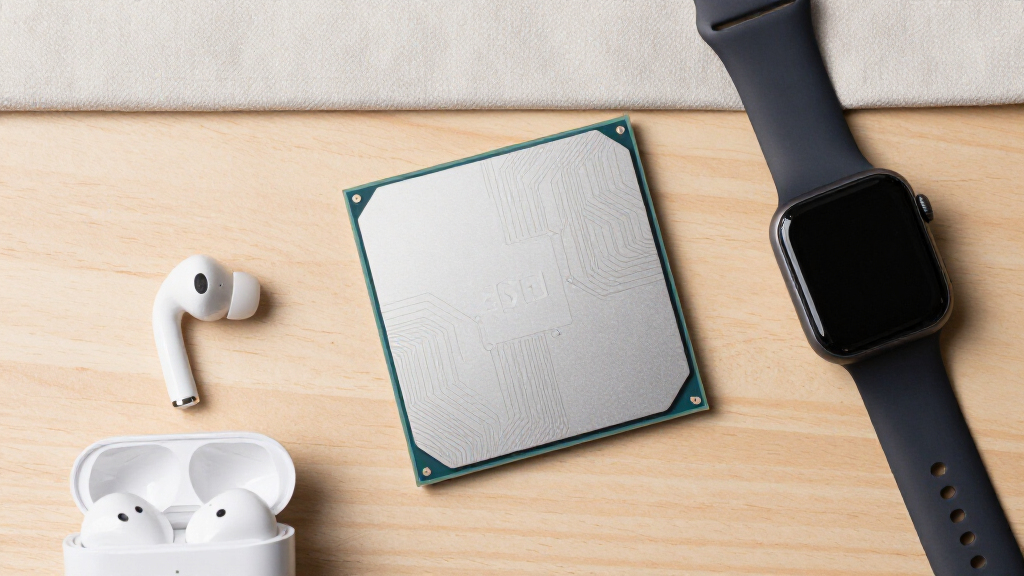
In 2026, several new AI processors have been announced, promising significant advancements in performance and efficiency. This article examines the key models, their impact, and what remains uncertain about their adoption.
Leading tech firms have announced their latest AI processors for 2026, promising breakthroughs in speed, efficiency, and AI capabilities. This development is set to transform industries from gaming to enterprise AI applications, making these processors highly relevant for consumers and businesses alike.
Several companies, including AMD, Intel, and emerging startups, have unveiled their flagship AI processors for 2026. Notably, AMD introduced the Ryzen AI-X 2026, claiming it offers a 50% increase in AI processing speed over previous models, thanks to new architectural innovations. Intel announced the Xeon AI 2026, emphasizing its improved energy efficiency and integration with enterprise systems. Details about the specific technical features remain limited, but early benchmarks suggest these processors will significantly enhance AI workloads.
Manufacturers highlight that these processors incorporate advanced neural network accelerators, optimized for real-time AI inference, machine learning training, and complex data analysis. Industry analysts, such as Thorsten Meyer from ThorstenMeyerAI.com, note that these developments could accelerate AI adoption across sectors, from autonomous vehicles to healthcare diagnostics. However, precise performance metrics and compatibility details are still emerging, and widespread adoption will depend on ecosystem support and hardware integration.
The 10 picks
- 1
 AMD Ryzen 9 9950X 16-Core Desktop ProcessorView on Amazon →
 - 2
 AMD Ryzen 7 9800X3D 8-Core, 16-Thread Desktop ProcessorView on Amazon →
 - 3
 AMD Ryzen 7 5800X3D 8-core, 16-thread Desktop Processor with AMD 3D V-Cache T…View on Amazon →
 - 4
 AMD Ryzen 7 7800X3D 8-Core, 16-Thread Desktop ProcessorView on Amazon →
 - 5
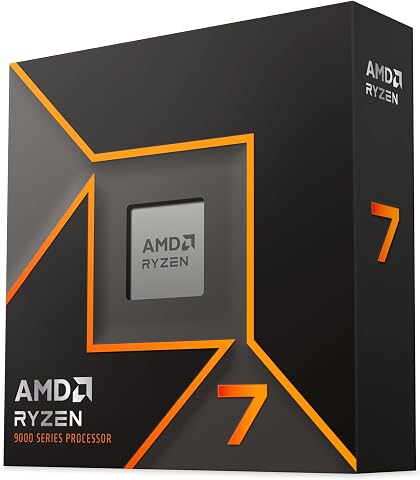 AMD Ryzen 7 9700X 8-Core, 16-Thread Unlocked Desktop ProcessorView on Amazon →
 - 6
 AMD Ryzen 7 5800XT 8-Core, 16-Thread Desktop ProcessorView on Amazon →
 - 7
 AMD Ryzen 7 7700X 8-Core, 16-Thread Unlocked Desktop ProcessorView on Amazon →
 - 8
 Intel Core Ultra 5 Desktop Processor 225, 10 cores (6 P-cores + 4 E-cores), u…View on Amazon →
 - 9
 AMD Ryzen 5 9600X 6-Core, 12-Thread Unlocked Desktop ProcessorView on Amazon →
 - 10
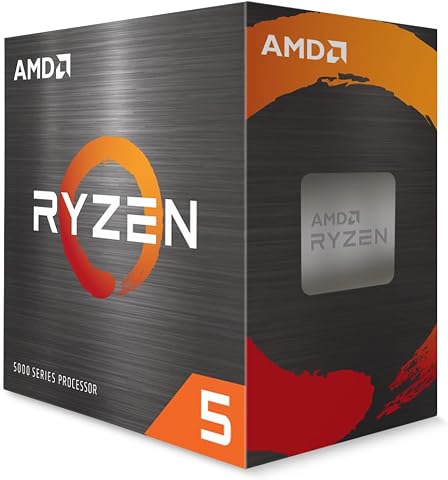 AMD Ryzen 5 5500 6-Core Desktop Processor with Wraith Stealth CoolerView on Amazon →
Implications of 2026’s Leading AI Processors
The introduction of these advanced AI processors marks a significant step forward in computational capabilities, potentially enabling real-time AI applications previously limited by hardware constraints. For consumers, this could mean faster, more capable devices for gaming, content creation, and personal AI assistants. For industries, the processors promise increased productivity, more sophisticated AI models, and new possibilities in automation and data analysis.
Moreover, these developments could influence hardware standards, prompting faster adoption of AI-optimized architectures and accelerating AI-driven innovation across multiple sectors. The increased efficiency and performance may also reshape the competitive landscape among chip manufacturers, intensifying research and development efforts.
2023–2025: The Road to 2026 AI Processor Launches
Leading up to 2026, the AI hardware industry has seen incremental improvements in neural network accelerators, power efficiency, and integration with cloud and edge systems. Companies like AMD and Intel have invested heavily in AI-focused architectures, with prototypes and limited releases appearing in 2024 and 2025. These efforts have been driven by the increasing demand for AI capabilities in consumer electronics, enterprise solutions, and autonomous systems.
Previous models, such as AMD’s Ryzen 7000 series and Intel’s 13th-generation processors, included AI-optimized features but were not solely dedicated AI chips. The current wave of 2026 processors represents a shift toward specialized hardware designed explicitly for AI workloads, with a focus on neural processing units and energy efficiency. While detailed specifications are still under wraps, industry insiders expect these processors to set new benchmarks for AI performance.
Unanswered Questions About 2026 AI Processor Adoption
While early performance claims are promising, detailed specifications, compatibility with existing systems, and real-world benchmarks are still pending. It is also unclear how quickly manufacturers will adopt these new processors in mainstream products, and whether supply chain constraints could delay widespread deployment. Additionally, the long-term energy efficiency and thermal management of these processors remain to be fully tested in diverse environments.
Next Steps for 2026’s Leading AI Processors
Manufacturers are expected to release detailed specifications and availability timelines in the coming months. Initial product launches are likely to target high-end computing devices, with broader consumer adoption following in late 2026 or early 2027. Industry analysts will closely monitor benchmark results, ecosystem support, and developer adoption to assess how quickly these processors will reshape AI applications and hardware standards.
Key Questions
What makes the 2026 AI processors different from previous models?
The 2026 AI processors feature dedicated neural network accelerators, improved energy efficiency, and architectural innovations designed specifically for AI workloads, offering significantly faster AI processing than earlier general-purpose chips.
Will these processors be compatible with existing hardware?
Compatibility depends on the socket and chipset. Manufacturers are expected to release compatibility details closer to product launch, but some early models may require new motherboards or system upgrades.
How will these processors impact AI development and deployment?
They are likely to enable faster training and inference, lower latency, and more sophisticated AI applications, accelerating AI integration across consumer and industrial sectors.
When will these processors be available to consumers?
Initial high-end models are expected in mid-2026, with broader availability in late 2026 or early 2027, depending on manufacturing and supply chain factors.
Source: ThorstenMeyerAI.com
Halloween Picks
halloween
As an affiliate, we earn on qualifying purchases.