🔍 Read the full analysis: The Future Of AI Workstations: Top Ultrawide Monitors In 2026 on ThorstenMeyerAI.com

Get smart everyday buys delivered free — and shop member deals
- Fast, free delivery on millions of items
- Access to Prime Big Deal Days deals on October 6–7
- Prime Video, Amazon Music and more included
TL;DR
In 2026, ultrawide monitors are becoming essential for AI workstations, with top models offering high resolution, curved screens, and advanced connectivity. This report highlights the best options for professionals and gamers, emphasizing performance and future-proof features.
In 2026, the market for ultrawide monitors is experiencing significant growth, with leading models designed to enhance AI workstations through high resolution, improved ergonomics, and versatile connectivity. For an overview of top options, see the 10 best ultrawide monitors in 2026. These monitors are increasingly vital for professionals engaged in AI development, data analysis, and immersive gaming, making them a key component of future-ready setups.
Major manufacturers like Samsung, SANSUI, and others have introduced new ultrawide monitors tailored for AI workstations, emphasizing high resolution (up to 5K), curved displays, and extensive connectivity options such as USB-C, HDMI, and DisplayPort. Professionals interested in privacy and security can consider the best privacy screen monitors for financial workstations. The Samsung 49″ Business Curved Ultrawide is highlighted as the top overall choice due to its high resolution, ergonomic features, and adaptability for multitasking and professional workflows.
Gaming-focused models like the Samsung Odyssey G5 and SANSUI 34-Inch Curved Gaming Monitor continue to dominate the market with high refresh rates (1000R curve and 120Hz+), offering immersive experiences that also benefit creative professionals. For a look at the latest gaming monitor innovations, see The Future Of Gaming Monitors: 10 AI-Driven OLED Displays For 2026. Price points vary widely, with premium models providing advanced features and budget options focusing on core performance, catering to diverse user needs.
The 10 picks
- 1
 Samsung 49" Business Curved Ultrawide Dual QHD Computer Monitor, USB-C, Displ…View on Amazon →
 - 2
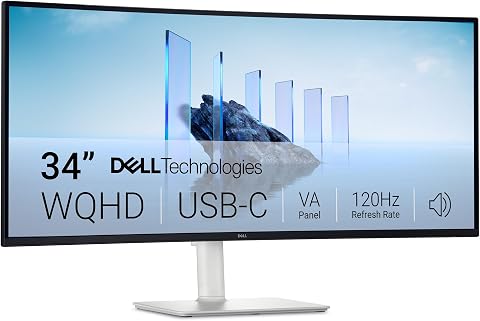 Dell 34 Monitor S3425DW, WQHD VA, 120Hz, FreeSync Premium, Eye ComfortView on Amazon →
 - 3
 LG 34WR55QK-B 34-inch UltraWide WQHD Curved Computer MonitorView on Amazon →
 - 4
 Samsung 34′ Odyssey G5 Ultra-Wide Gaming Monitor with 1000R Curved ScreenView on Amazon →
 - 5
 SAMSUNG 34" ViewFinity S50GC Series Ultra-WQHD Monitor, 100Hz, HDR10, AMD Fre…View on Amazon →
 - 6
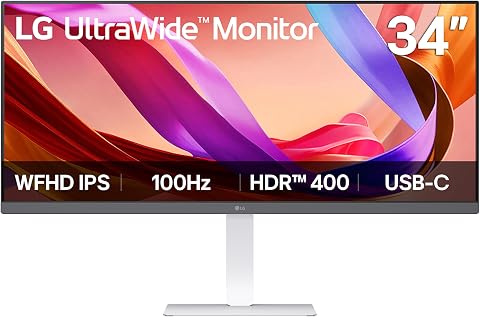 LG 34U530A-W 34-inch UltraWide WFHD IPS Computer MonitorView on Amazon →
 - 7
 SANSUI 34-Inch Curved Ultrawide Gaming Monitor UWQHD 3440 x 1440P 200HzView on Amazon →
 - 8
 LG 34U60ZB-B 34-inch UltraWide WQHD Curved MonitorView on Amazon →
 - 9
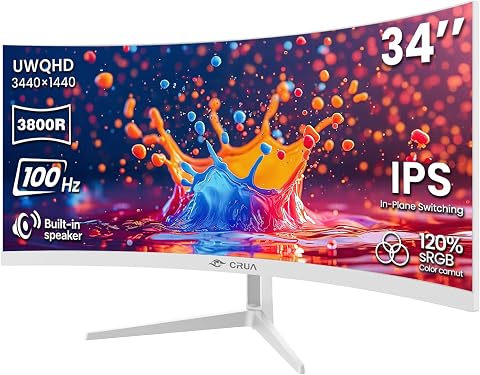 CRUA 34 Inch 21:9 UWQHD Ultrawide Curved Monitor with Speakers, WhiteView on Amazon →
 - 10
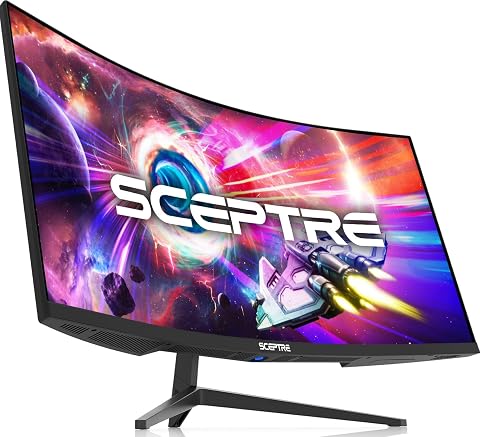 Sceptre 34-Inch Curved Ultrawide WQHD Monitor (3440 × 1440), R1500, up to 180…View on Amazon →
Advancing AI Workstation Capabilities with Ultrawide Monitors
The integration of top ultrawide monitors into AI workstations marks a significant step toward more efficient, immersive, and versatile professional environments. These displays enable better multitasking, more detailed data visualization, and enhanced gaming experiences, which are increasingly relevant as AI applications grow more complex and demanding.
For professionals, these monitors can improve productivity and accuracy, while gamers benefit from deeply immersive visuals. The widespread adoption of these high-end displays signals a shift toward more sophisticated, future-proof setups in both corporate and personal computing spaces.
Evolution of Ultrawide Monitors in 2026
Over the past few years, ultrawide monitors have gained popularity due to their ability to provide expansive screens that improve multitasking and immersion. In 2026, this trend accelerates as advances in display technology—such as higher resolutions, better color accuracy, and curvature—make these monitors more suitable for demanding AI workloads and gaming.
Leading models like Samsung’s 49″ Business Curved Ultrawide and gaming monitors like the Odyssey G5 have set new standards, emphasizing high refresh rates, ergonomic design, and connectivity options that support modern hardware. The market continues to evolve with a focus on balancing performance, price, and user comfort, reflecting the needs of a diverse user base.
Outstanding Questions About Ultrawide Monitor Adoption
While the latest models are highly advanced, it remains unclear how widespread adoption will be across different sectors, especially in smaller firms or individual setups. The long-term durability of high-end features and compatibility with emerging hardware standards are also still being tested in real-world conditions. Additionally, the impact of new display technologies, such as microLED or OLED, on ultrawide monitor availability and pricing in 2026 is yet to be fully understood.
Upcoming Developments in Ultrawide Monitor Technology
Expect further enhancements in resolution, refresh rates, and connectivity options in upcoming models, driven by advancements in display technology and AI hardware integration. Manufacturers are likely to introduce more customizable, energy-efficient, and durable designs, with increased focus on ergonomic features and environmental sustainability. Industry standards may also evolve, influencing future compatibility and feature sets.
Key Questions
Are ultrawide monitors essential for AI workstations in 2026?
While not strictly essential, ultrawide monitors significantly enhance multitasking, data visualization, and immersive experiences, making them highly valuable components of modern AI workstations.
Do I need a high-end GPU to run these ultrawide monitors at their best?
Yes, high-resolution ultrawide monitors, especially those with 4K or higher resolutions, benefit from powerful GPUs to deliver smooth performance, particularly for AI processing, gaming, or professional graphics work.
What features should I prioritize when choosing an ultrawide monitor for AI work?
Key features include high resolution, multiple connectivity options (USB-C, HDMI, DisplayPort), ergonomic adjustments, and high refresh rates if gaming or real-time data visualization is involved.
Will curved ultrawide monitors cause distortion or discomfort?
Curved screens generally improve immersion and reduce glare, but if the curvature is too aggressive, it might cause distortion or discomfort for some users. Selecting a moderate curve suited to your workspace is recommended.
How long will these ultrawide monitors remain relevant for AI workstations?
Given rapid technological advances, high-end ultrawide monitors are expected to remain relevant for at least 3-5 years, especially models with high resolutions and adaptable connectivity features.
Source: ThorstenMeyerAI.com
Halloween Picks
halloween
As an affiliate, we earn on qualifying purchases.