
🔍 Read the full analysis: Take A Closer Look At “TURBINE — WERK 9”’S Animated Rotor on ThorstenMeyerAI.com

Get smart everyday buys delivered free with Prime
- Fast, free delivery on millions of items
- Prime Video, Amazon Music and more included
- Member-only deals all year
TL;DR
TURBINE — WERK 9 is presented as an interactive field guide built around a scroll-driven SVG rotor. ThorstenMeyerAI.com describes how the interaction links movement through the page to the mechanics of the place, but does not provide technical specifications or identify the team behind the project.
ThorstenMeyerAI.com has highlighted TURBINE — WERK 9, an interactive web project that uses scrolling to animate an SVG rotor as visitors move through a digital field guide. The feature presents the interaction as a way to connect the experience of navigating a page with the mechanics of the place it depicts, though it does not provide technical specifications or name the people who built it.
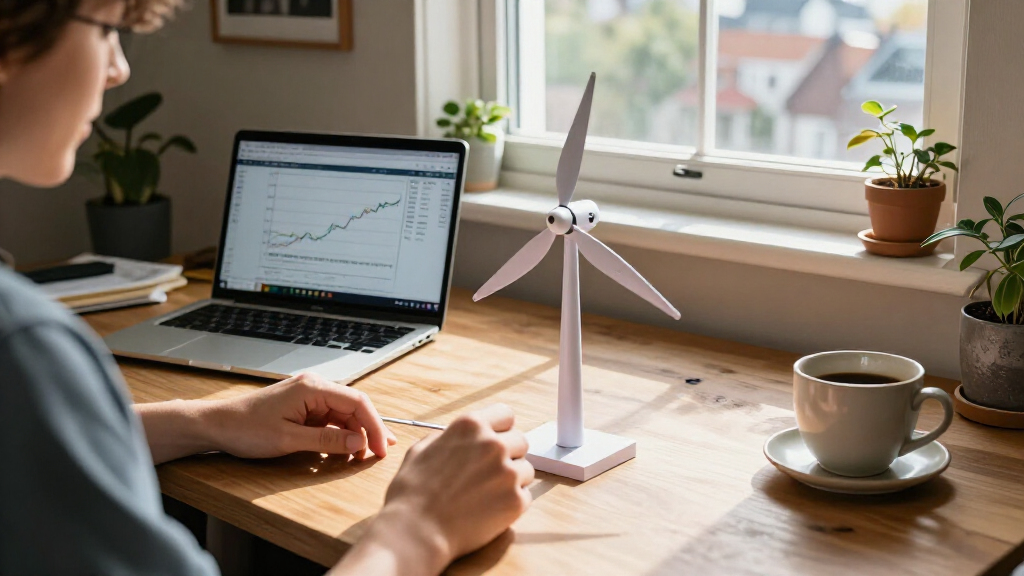
The project is described as a field guide with an industrial visual atmosphere. Rather than presenting information as a conventional brochure, it invites visitors to explore a designed environment through a browser. Its central interaction is a rotor constructed from vector paths, whose movement responds to the visitor’s scroll input.
According to the feature, the design brings together a browser, carefully constructed SVG elements and a familiar input—scrolling—to create a responsive experience. The project’s framing gives users a route through the material, while the animated rotor supplies a visual link between that route and the industrial subject matter. The article does not specify the code, software, or implementation methods used to create the effect.
ThorstenMeyerAI.com says its case study examines how the rotor’s motion was shaped, how the visual system was organized, and how a sense of physical space was translated into a browser experience. The feature points readers to a live version and a fuller design teardown, but the supplied description does not provide details such as the project’s creators, commissioning organization, or release date.
Interactive Field Guide · Design Case Study
Take a Closer Look at TURBINE — WERK 9’s Animated Rotor
A scroll-driven SVG rotor turns page navigation into part of an industrially themed browser experience. The published overview explains the design idea, while leaving the project’s technical details and creators unidentified.
At a glance
01 / The concept
A field guide shaped by movement
ThorstenMeyerAI.com presents TURBINE — WERK 9 as an interactive guide to an industrial setting. Instead of a conventional brochure, it invites visitors to move through a designed environment in a browser, with the rotor tying that journey to the machinery-inspired subject.
A route through content
The page gives visitors a structured way to explore the material, with scrolling acting as both navigation and input.
A rotor in motion
The feature says an SVG rotor responds to progress through the page, connecting screen movement with the industrial theme.
Interface meets subject
Motion and visual structure are presented as ways to make the browsing experience feel related to the place depicted.
02 / Interaction sequence
How scroll becomes part of the interface
The published account describes a simple chain: familiar page navigation influences the rotor, making the visitor’s progress visible as part of the experience.
Enter the guide
Visitors arrive in a browser-based, industrial visual environment.
Scroll the page
Movement through the content provides the interaction input.
Rotor responds
SVG vector paths animate in response to the visitor’s progress.
Read the place
The motion links navigation with the machinery-inspired setting.
03 / Design reading
What the interaction sets out to do
“What if a web page behaved less like a brochure and more like a machine you could walk around?” ThorstenMeyerAI.com
The design idea offers a focused example of how motion can reinforce a subject. The account also notes a practical tension: animated interaction should remain clear and usable as visitors explore. No user testing, accessibility review, or performance data is included to show how it works across audiences or devices.
04 / What remains unpublished
Questions the overview leaves open
The feature points toward a fuller teardown, but the supplied description does not establish the project’s production details or evaluation results.
05 / Reader guide
Key questions
What is TURBINE — WERK 9?
An interactive field guide that presents an industrial setting through a browser-based experience.
How does the animated rotor work?
The feature says it uses SVG vector paths and responds to scrolling. Code and software details are not given.
Who created the project?
The available description does not identify its creators or commissioning organization.
Where can readers learn more?
ThorstenMeyerAI.com points to a live experience and a fuller design teardown about the motion and visual system.
How Scroll Becomes Part of the Interface
The project is relevant to digital designers and people interested in interactive web experiences because it treats scrolling as an active control, not only a way to move down a page. In the feature’s account, the rotor’s response makes the visitor’s movement through the content feel connected to the depicted machinery. That approach offers a specific example of how an interface can reinforce a subject rather than simply provide a frame for text and images.
It also illustrates a design trade-off: an animated interaction can add a sense of place, but it must remain legible and usable as visitors explore. ThorstenMeyerAI.com characterizes the experience as retaining the clarity of a designed object while inviting exploration. That is the site’s description; no user testing, accessibility review, or performance measurements are provided to establish how the interaction works for different visitors or devices.
For readers following web design, the feature’s practical interest lies in the relationship among motion, navigation and visual structure. The project is presented as a case study rather than a report of a new technology or a measured industry trend. Its value is in showing a particular design idea in use, while the available account leaves the implementation and evaluation details open.
Products Worth Considering

Dell XPS 13 9350 Laptop, 13.4 FHD+ Display, Intel Ultra 7 256V, 16GB DDR5, 1TB SSD

Logitech MX Master 4 for Mac, Ergonomic Bluetooth Mouse with Haptic Feedback, Ultra-Fast Scrolling, USB-C Charging, for MacOS, iPadOS, Windo

Dell XPS 13 9350 AI Professional Laptop 13.4 120Hz FHD+ Display
As an affiliate, we earn on qualifying purchases.
A Field Guide Built for the Browser
The project’s framing distinguishes it from a standard promotional page. ThorstenMeyerAI.com describes TURBINE — WERK 9 as an interactive field guide: a browser experience in which visitors explore a place through a structured visual presentation. Its industrial atmosphere and rotor animation are intended to make that exploration feel related to the subject, rather than like moving through an unrelated sequence of web sections.
The feature connects the animation to a simple interaction already familiar to web users: scrolling. It says that the rotor is made from SVG vector paths and that its movement is driven by the visitor’s progress through the page. Beyond those points, the published description does not set out a development timeline, explain the physical site represented, or provide comparisons with earlier versions of the project. Those details cannot be established from the available account.
“What if a web page behaved less like a brochure and more like a machine you could walk around?”
— ThorstenMeyerAI.com
Project Details Still Not Published
The available description does not identify the project’s creators or explain who commissioned it. It also gives no publication date, development costs, browser or device requirements, accessibility testing results, or performance data. The feature says a fuller teardown discusses the design process, but the details of that process are not included in the supplied account.
It is also not clear how the rotor behaves for visitors using keyboards, assistive technology, or devices without a scroll wheel, or whether the animation can be paused or reduced. No evidence is provided about visitor numbers, audience response, or whether the experience has been evaluated against a conventional page. Those questions remain unanswered by the published description.
The Live Experience and Full Teardown
ThorstenMeyerAI.com directs readers to a live version of TURBINE — WERK 9 and to a full design teardown. The teardown is described as covering the rotor’s motion, the organization of the visual system, and the translation of a physical-feeling space into a browser experience. The material available here does not state when additional details will be published or confirm whether the live project will change.
For now, the next step for readers seeking more than the overview is to visit the live room and consult the linked case study. Until those materials provide further documentation, the project’s technical choices and the results of its design remain only partly described.
Source: ThorstenMeyerAI.com
Key Questions
What is TURBINE — WERK 9?
It is described by ThorstenMeyerAI.com as an interactive field guide that presents an industrial setting through a browser-based experience.
How does the animated rotor work?
The feature says the rotor is built from SVG vector paths and responds to the visitor’s scrolling. It does not provide implementation details such as code or software.
Who created the project?
The available project description does not name its creators or identify a commissioning organization.
Where can readers find more information?
ThorstenMeyerAI.com points readers to the live experience and a full design teardown, which is described as covering the motion and visual system.
Source: ThorstenMeyerAI.com