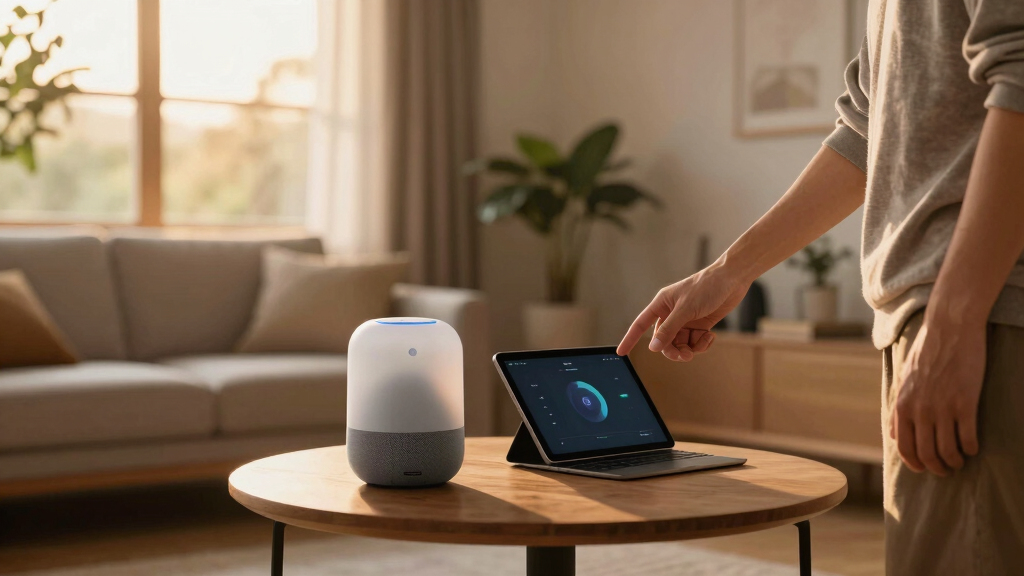

📊 Full opportunity report: The New Personal Agent Layer on ThorstenMeyerAI.com — validation score, market gap, and execution plan.

Get smart everyday buys delivered free with Prime
- Fast, free delivery on millions of items
- Prime Video, Amazon Music and more included
- Member-only deals all year
TL;DR
OpenClaw has announced the launch of its Personal Agent Layer, a new framework that allows AI agents to take actions, use tools, and maintain memory across digital platforms. This development signals a significant step toward autonomous, persistent AI assistants integrated into daily digital workflows.
OpenClaw has announced the launch of its Personal Agent Layer, a new framework designed to enable AI agents to perform actions, use tools, and maintain persistent memory across various digital platforms. This development marks a major step forward in creating autonomous AI assistants that operate continuously within users’ digital environments, both private and professional. The Orchestration Layer Arrives: What Anthropic’s Finance Agents Mean for Bloomberg, FactSet, and Wall Street.
The Personal Agent Layer by OpenClaw introduces a new class of AI agents capable of executing workflows, managing communications, and interacting with local and cloud-based applications. Unlike traditional chatbots or coding assistants, these agents are designed to be persistent, with the ability to remember past interactions, learn from experience, and act autonomously across multiple surfaces such as chat apps, email, calendars, and enterprise systems.
OpenClaw’s framework emphasizes local control and security, positioning itself as a self-hosted solution for power users, technical teams, and organizations that require high levels of privacy and customization. The company describes the layer as an ‘operating system’ for AI agents, capable of managing personal tasks like inbox management, scheduling, and even more complex workflows involving multiple tools and APIs. The Agent Trap: Why 90% of AI “Launches” Are Infrastructure Liars.
The New Personal Agent Layer.
Agents that remember, use tools, control workflows, and increasingly act across the private and professional digital environment.
This is not a comparison of ordinary chatbots. It is a map of systems that can take action, use browsers and files, connect to calendars or inboxes, build deliverables, and operate across personal, enterprise, and public-use workflows. The core question is not which model is smartest. It is who owns the agent, where it runs, what it can access, and who is accountable when it acts.
Not chatbots. Personal action infrastructure.
The OpenClaw/Hermes bucket is best understood as the agent layer between the user and the software stack: systems that can remember, plan, click, write, retrieve, schedule, summarize, and trigger actions.
Self-hosted personal agents
You run the agent. You control the data path. You also carry the operational responsibility.
Managed work agents
Hosted by providers, easier to adopt, more polished, and better aligned with enterprise procurement.
Memory-first assistants
They focus on personal context: meetings, documents, conversations, tasks, and recall across sessions.
Agent infrastructure
Developer-facing platforms for web action, workflow automation, and enterprise app control.
Capability is not enough. Fit depends on context.
Personal, enterprise, and public use are different markets.
The stronger the agent, the stronger the governance.
Agents are risky because they can read, write, click, execute, remember, and connect systems. That changes the threat model from answer quality to operational control.
- Least privilege Agents should only access what the task requires.
- Human approval Required for sending, deleting, paying, publishing, or changing accounts.
- Audit logs Every meaningful action should be traceable.
- Prompt-injection defense Email, web, and documents are untrusted inputs.
Strategic ranking by category
Best personal agents
- OpenClaw
- Hermes
- Khoj
- TwinMind
- Open Interpreter
Best enterprise agents
- ChatGPT Agent
- Claude Cowork
- Lindy
- Genspark Business
- Adept
Best public-facing tools
- Genspark
- Manus
- ChatGPT Agent
- Khoj
- Claude Cowork
Best infrastructure tools
- MultiOn
- Agent Zero
- AutoGPT
- Hermes
- OpenClaw
The next major AI interface may not be a search box or a chat window. It may be an agent that knows your context, waits in the background, and acts when needed.
Potential Impact on Digital Workflow Automation
The introduction of the Personal Agent Layer signifies a shift toward more autonomous, action-oriented AI systems that could fundamentally change how individuals and organizations manage digital tasks. Persistent agents that can operate continuously, remember past interactions, and use a variety of tools could reduce manual effort, increase efficiency, and enable new forms of digital collaboration.
This development raises questions about security, control, and accountability, especially as these agents gain more autonomy and access to sensitive data. It also highlights a broader industry move toward self-hosted, customizable AI solutions that prioritize privacy and user ownership.
As an affiliate, we earn on qualifying purchases.
Evolution of Persistent AI Agents and Market Trends
Over the past year, the AI community has seen rapid growth in persistent, action-capable agents such as OpenClaw, Hermes, AutoGPT, and others. These tools are evolving from simple chat interfaces to complex systems capable of executing workflows, using APIs, and maintaining long-term context. The market is divided between self-hosted solutions, like OpenClaw and Hermes, and managed cloud-based agents, reflecting different priorities around privacy, control, and ease of use. 8 Best Personal Finance Books for Renewal in 2026.
This trend is driven by increasing demand for AI systems that can operate autonomously, integrate seamlessly into users’ routines, and handle sensitive information securely. The launch of the Personal Agent Layer by OpenClaw is a notable milestone in this ongoing evolution, signaling a move toward more capable and persistent AI agents.
“The Personal Agent Layer represents a significant leap toward autonomous AI systems that can operate continuously across digital environments, with memory and tool use at the core.”
— Thorsten Meyer, AI researcher
As an affiliate, we earn on qualifying purchases.
Unanswered Questions About Security and Control
It is still unclear how OpenClaw will address security and safety concerns as these agents gain more autonomy. Specifics about permission models, audit trails, and accountability mechanisms remain to be detailed, especially for enterprise or sensitive personal use cases. Additionally, the extent of user control over agent actions and data sharing is still under development.
As an affiliate, we earn on qualifying purchases.
Next Steps for Adoption and Regulatory Frameworks
OpenClaw plans to release the Personal Agent Layer to select early adopters for testing, with broader availability expected later in 2026. Concurrently, industry and regulatory discussions are likely to emerge around safety standards, security protocols, and accountability for autonomous agents operating across digital environments.
As an affiliate, we earn on qualifying purchases.
Key Questions
How does the Personal Agent Layer differ from existing AI assistants?
Unlike traditional chatbots or static automation tools, the Personal Agent Layer enables AI agents to take actions, remember past interactions, and operate persistently across multiple platforms with a high degree of autonomy.
Who can use the Personal Agent Layer?
Initially, it is targeted at technical users, power users, and organizations that require customizable, secure, self-hosted AI agents. Broader public access is expected later in 2026.
What are the security implications of persistent AI agents?
Security and safety concerns are central, with OpenClaw emphasizing local control and permissions. Details on safety protocols and accountability are still being developed.
Will this development impact enterprise workflows?
Yes, the ability for AI agents to autonomously manage workflows and integrate with enterprise systems could enhance productivity but also requires careful governance and oversight.
Source: ThorstenMeyerAI.com
Fall Picks
fall essentials
As an affiliate, we earn on qualifying purchases.