
🔍 Read the full analysis: What Happens When You Build An AI Video In One Evening? on ThorstenMeyerAI.com

Get smart everyday buys delivered free with Prime
- Fast, free delivery on millions of items
- Prime Video, Amazon Music and more included
- Member-only deals all year
TL;DR
Thorsten Meyer says he built a new hand-drawn video engine in one evening, then found its first full video slow and visually dull. He measured the problems, changed the engine and added automated gates, while retaining human review as a release step. The account is a personal report, not an independent evaluation of the tool or its results.
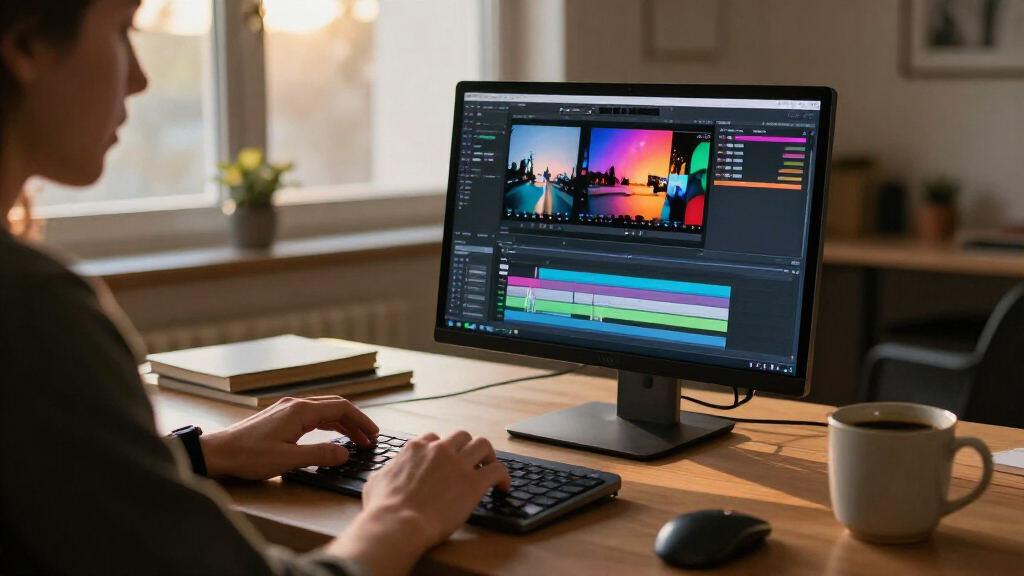
Thorsten Meyer says he built a new hand-drawn video engine in one evening, but the first full video it produced the next morning was, by his assessment, slow and boring. In an account published November 6, he describes measuring the shortcomings, revising the system and adding checks that can stop scenes from rendering when they fail specified criteria.
Meyer says the project began after he watched an explainer video whose whiteboard style he liked. To avoid copying its work, he says he wrote down a short list of general traits—such as hand-drawn strokes, a continuous illustrated world and large numbers used as color accents—and did not use the original video’s drawings, assets or layouts. He says the engine and drawing code were built from scratch, using colors from his own design system and an openly licensed handwriting font.
According to Meyer, Claude built the engine and OpenAI’s Codex reviewed the code without contributing to its construction. He says Codex reported five findings in its first review, all fixed that evening. For each fix, Meyer says, he added a test that would fail against the earlier code. That test-first approach was intended to show that a check could detect the reported problem, rather than merely pass after a change.
Meyer says he watched a roughly one-minute test video and approved it for publication. The next morning’s first full video prompted a different response: he identified excessive empty space, icons that did not support the narration and images that stopped moving after they were drawn. He says that video remains online unchanged as an example of the initial result. After measuring the first three scenes of a rebuilt video, he reported that frame coverage rose from 15% to 66%, still time fell from 29 seconds to zero, and camera moves increased from 3 to 27. The figures refer to those three scenes, based on Meyer’s account.
Infographic 01 · The new video look
One evening, one boring first video, one measured fix
Speed was not the point. The steps in between were: a second AI that reviews, a human who says yes, and numbers that became gates.
Share of the frame filled with content on the first three scenes after the fix. Before: 15%.
From an evening idea to a measured fix
Relative times, this week
- EveningA video I likedClean room: only a list of style traits, no drawings, assets or layouts
- Same eveningOwn engine, first reviewClaude builds; OpenAI’s Codex reviews; 5 findings fixed, each with a test that fails on the old code
- Same eveningA human says yesOne-minute test video approved and published
- Next morningFirst full video: slow and boringToo much white space, icons that did not fit, a picture that stood still
- Hours laterMeasured fix, then gatesThe first video in the improved look goes live
Source: my own build notes for the new video look, this week (engine history, review round, approval, critique, before/after measurement of the first three scenes).
Powered by Thorsten Meyer AI
From Visual Critique to Release Checks
The account’s practical point is that producing a working demonstration was not the same as producing a video Meyer considered ready. His response to the first full video was to turn subjective criticism—too much blank space, static images and weak links between visuals and narration—into measurable checks. He says those measures became gates: scenes deemed too empty can be stopped before rendering, and the build can flag an object that does not illustrate what is being said.
That workflow matters to readers following AI production because it shows a distinction between generation and quality control. The system’s output still needed a responsible person to review it, while automated tests were used to catch defined problems earlier. Meyer’s examples do not establish that this approach works equally well for other tools, teams or kinds of video; they describe one creator’s process and his own measurements.
Products Worth Considering

Apple Mac mini Desktop Computer with M6 Chip (2026)

FLEXISPOT ErgoX Ergonomic Office Chair with Footrest, Black

Apple iPad 11-inch (A16 Chip, 128GB, Wi-Fi, Pink)
As an affiliate, we earn on qualifying purchases.
How the First Video Was Rebuilt
Meyer places the video project within a broader account of moving AI experiments into production. He says the improved-look video went live a few hours after his critique of the first full version. The explainer accompanying his article is described as a roughly four-and-a-half-minute hand-drawn video about the build and its production rules, with narration using an AI voice clone of Meyer.
He also describes a separate experiment from the same week to make a related point about evaluating results. In that test, Claude edited the weights of a local model intended for legal questions. Meyer reports that the model completed 12 of 15 answers on their legal benchmark, compared with 4 of 15 before the edit, while its legal score remained at zero. The completion count and score measure different things; the higher number of completed answers did not, in his account, mean the model performed better on the legal scoring measure.
Meyer cites earlier problems in his own monitoring setup as another reason for checks that reach people. He says a guard wrote about 1,300 warnings to a log in August that nobody read, while an alert email failed to send. His point is that a logged warning alone did not provide effective oversight. The account does not provide an independent audit of those incidents or their underlying systems.
“And honestly, it was slow and boring.”
— Thorsten Meyer, describing his review of the first full video
Limits of the Reported Results
The account is Meyer’s own description of a project on his website. It does not include an independent assessment of the video’s quality, the engine’s reliability, or how the reported checks perform across a larger set of scenes. The coverage, still-time and camera-move figures apply to the first three scenes of the rebuilt video, not to a broad comparison of video systems.
Details of the measurement methods and thresholds are not fully specified in the supplied account. It is also unclear how often the scene gates produce false alarms, whether they catch other quality problems, or how much manual work the revised process requires. Meyer’s separate legal-model result likewise gives a completion count and a score, but the supplied material does not explain the benchmark’s scoring method or provide enough detail to assess the model’s legal accuracy.
Further Tests and Human Review
Meyer says the scene measurements now operate as build gates, so the next step in his process is to use them when producing further videos rather than relying on a final visual tweak alone. The published explainer presents the revised look and describes the rules behind it. No broader release schedule, external evaluation or planned benchmark study is specified in the account.
For readers assessing the claims, the most useful next evidence would be results across more videos and scenes, alongside a clear description of how frame coverage, still time and object-to-narration matches are measured. Until such information is available, the reported improvements should be understood as results from Meyer’s own project, with human approval remaining part of his stated publication process.
Key Questions
What happened in the one-evening AI video project?
Thorsten Meyer says he built a hand-drawn video engine in one evening. After the first full video looked slow and visually dull to him, he measured several problems, revised the engine and added checks intended to stop scenes that fail specified criteria.
What changed in the rebuilt video’s first three scenes?
Meyer reports that frame coverage rose from 15% to 66%, still time dropped from 29 seconds to zero, and camera moves rose from 3 to 27. Those figures describe the first three scenes, according to his account.
Did AI review and approve the video?
Meyer says OpenAI’s Codex reviewed the code and reported issues, while Claude built the engine. He also says a human watched the test video and approved it for publication. The account presents human review as a separate release decision, not something replaced by code checks.
Are the results independently verified?
The supplied account does not cite an independent evaluation. The measurements and descriptions are attributed to Meyer and should be read as results from his own project, rather than as a general performance claim about AI video tools.
Source: ThorstenMeyerAI.com