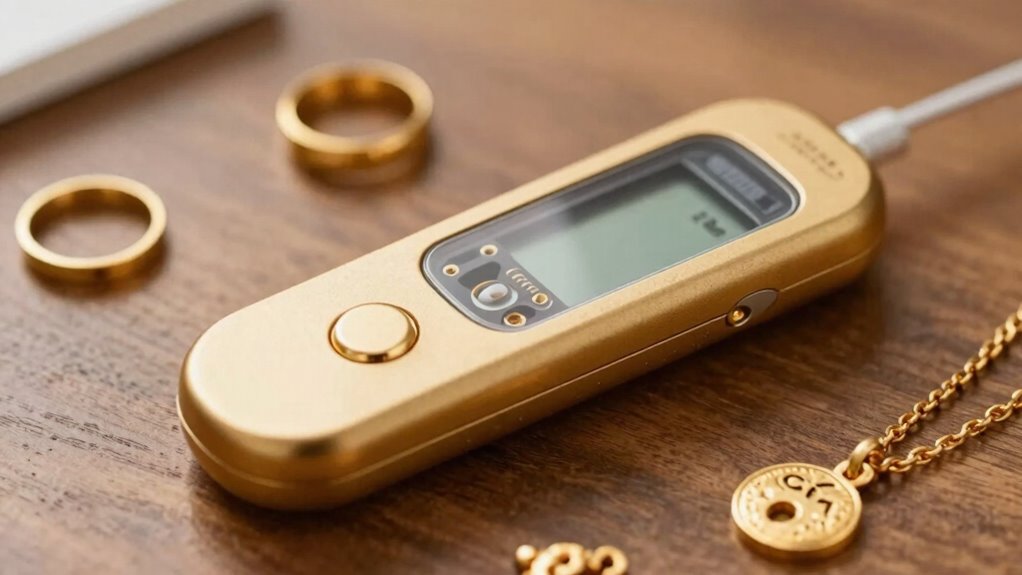

To understand gold testers, first check for marks indicating purity, but be aware these can be forged. You can also do simple tests like a magnet test—real gold isn’t magnetic—and basic visual checks. For more accuracy, acid or electronic testers are useful; they quickly reveal purity levels. For big purchases, professional lab tests offer the most reliable results. Keep learning to become confident in verifying gold and avoiding scams.

Get smart everyday buys delivered free with Prime
- Fast, free delivery on millions of items
- Prime Video, Amazon Music and more included
- Member-only deals all year
Key Takeaways
- Gold testers verify purity using visual stamps, magnet tests, and basic physical checks to identify genuine gold.
- Acid and electronic testers provide quick, reliable results but require proper handling and understanding.
- Professional testing offers the highest accuracy with advanced tools like X-ray fluorescence analyzers.
- Combining multiple methods ensures accurate verification and helps prevent counterfeit purchases.
- Knowing gold purity levels and seller reputation helps avoid overpaying and scams.
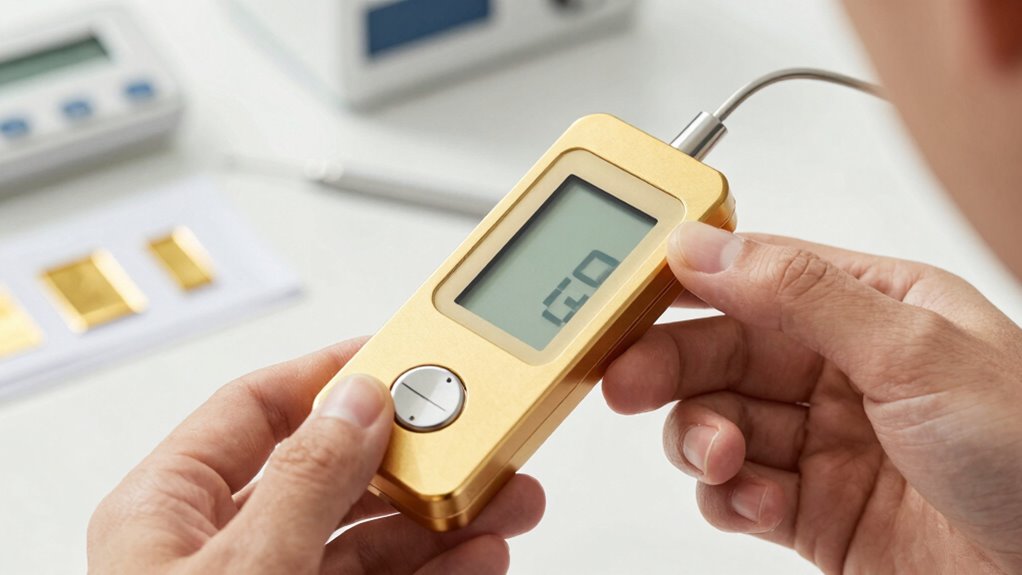
Are you new to buying gold and unsure how to verify its authenticity? It’s a common concern, especially if you’re just starting out and don’t want to fall victim to scams or buy counterfeit items. One of the most important steps is understanding gold purity levels and the common testing methods used to determine them. Gold purity levels tell you how much pure gold is in a piece, usually expressed in karats or as a percentage. For example, 24-karat gold is 100% pure, while 14-karat gold contains about 58.3% pure gold. Knowing these levels helps you assess value and authenticity when buying jewelry or bullion.
Getting an accurate reading, however, requires the right tools and knowledge of common testing methods. There are several ways to test gold, ranging from simple at-home methods to professional techniques. A basic approach is visual inspection, checking for hallmarks or stamps indicating the gold’s karat weight. But keep in mind, stamps can be forged, so visual cues alone aren’t enough. You might also perform a magnet test—real gold isn’t magnetic, so if a magnet attracts your piece, it could be counterfeit. Yet, this isn’t foolproof because some fake metals aren’t magnetic.
Use multiple tests like visual inspection and magnet checks to verify gold authenticity reliably.
Another common testing method involves using acid tests. With this approach, you apply a small drop of acid to a discreet part of the gold item. Different acids react differently depending on the gold’s purity level, revealing whether the piece is genuine or plated. It’s effective, but it does require caution and proper handling, especially if you’re unfamiliar with acids. For more precise results, many buyers turn to electronic gold testers. These devices use electrical conductivity to determine gold purity levels quickly and with high accuracy. They’re portable, easy to use, and provide immediate feedback, making them a popular choice for first-time buyers who want confidence in their purchase.
If you’re serious about verifying gold, you might also consider professional testing at a reputable assay office. These experts use advanced equipment like X-ray fluorescence analyzers to determine purity levels with certainty. Understanding gold purity is crucial for making informed decisions and avoiding overpaying or being scammed. While this option is more costly, it provides peace of mind, especially when investing significant sums. Additionally, understanding the metal composition of your gold can help you better interpret test results and avoid misjudgments. It’s also helpful to be aware of the market reputation of your seller, as trustworthy vendors are more likely to provide genuine products. As a first-time buyer, understanding these common testing methods and gold purity levels arms you with the knowledge to make informed decisions. Whether you’re inspecting jewelry, coins, or bullion, using the right testing techniques ensures you’re getting genuine gold and helps you avoid costly mistakes. Always remember, combining multiple tests is the best way to confirm authenticity before making your purchase. Incorporating proper calibration of testing tools can further improve accuracy and reliability.
As an affiliate, we earn on qualifying purchases.
Frequently Asked Questions
Do Gold Testers Work on All Gold Jewelry Types?
Gold testers generally work on most gold jewelry types, but their accuracy depends on the testing methods used. They can assess gold purity by measuring the metal’s properties, like conductivity or acid reaction. However, some testers may struggle with plated or mixed metals. To guarantee reliable results, choose a tester suitable for various gold purities and always follow the manufacturer’s instructions carefully.
How Accurate Are Electronic Gold Testers Compared to Professional Tests?
Think of electronic gold testers as your trusty compass, guiding you through treasure hunts, but not foolproof like a seasoned prospector. They offer decent accuracy, yet their reliability depends on technological limitations and historical accuracy. While they quickly give you a ballpark figure, professional tests dive deeper, confirming authenticity with precision. So, use electronic testers as a handy first step, but don’t rely solely on them for final judgments.
Can Gold Testers Identify Gold-Plated Items Accurately?
Yes, gold testers can identify gold-plated items during surface testing. They detect differences in electrical conductivity or magnetic properties between solid gold and gold-plated pieces. However, some testers might struggle with very thin gold plating or heavily worn surfaces, leading to false negatives. For the most accurate results, use testers designed for surface testing and check multiple spots on the item to confirm if it’s gold-plated.
How Should I Maintain and Calibrate My Gold Tester?
You should regularly perform calibration procedures to guarantee your gold tester stays accurate; this might involve testing it against a known gold sample. Maintenance tips include cleaning the probe with a soft cloth to prevent dirt buildup and storing your device in a dry, cool place. Confirm calibration periodically, especially after long periods of non-use or if you notice inconsistent results, to keep your gold tester reliable and precise.
Are Gold Testers Safe to Use on Delicate Jewelry?
Yes, gold testers are generally safe to use on delicate jewelry if you follow proper tester safety guidelines. Before testing, clean your jewelry gently with jewelry cleaning solutions to remove dirt that could affect results. Be careful not to scratch or damage fragile pieces, and avoid applying excessive pressure. Always read your tester’s instructions closely, and handle it with care to guarantee both your safety and the jewelry’s integrity.
As an affiliate, we earn on qualifying purchases.
Conclusion
Understanding how gold testers work helps you make smarter purchases. For example, imagine buying a ring and using a tester to confirm its authenticity before handing over your money. This small step could save you from costly mistakes and guarantee you’re investing in genuine gold. Remember, knowledge is your best tool — so always test and verify. With the right tester, you gain confidence and peace of mind in every gold buy.
As an affiliate, we earn on qualifying purchases.
As an affiliate, we earn on qualifying purchases.
Columbus Day / Indigenous Peoples' Day Picks
long weekend sales
As an affiliate, we earn on qualifying purchases.