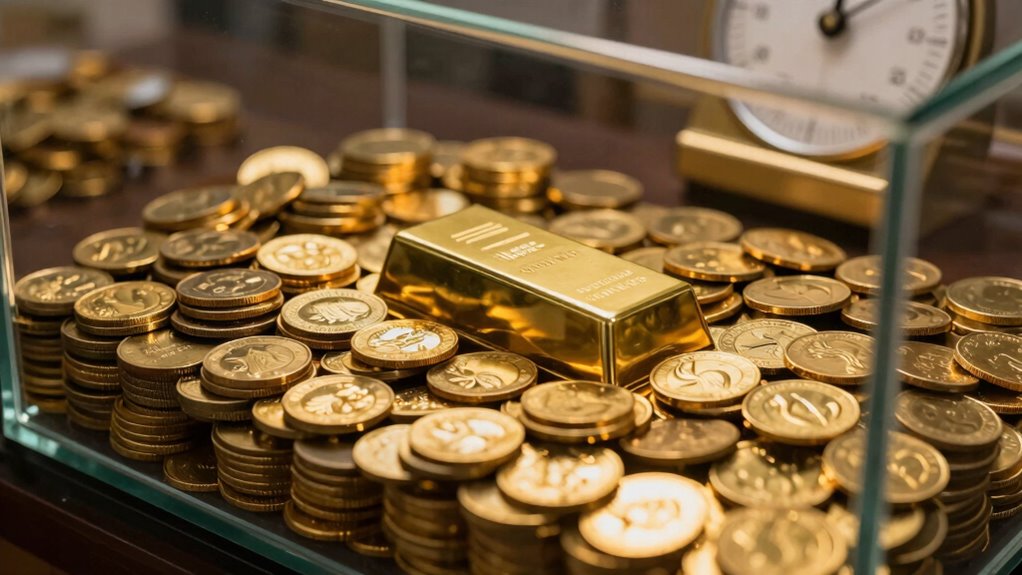

When it comes to gold, moderation is key. You should balance your holdings by considering market trends, cultural influences, and your overall investment goals. Overexposing yourself can increase risk during price dips, while underexposing can cause you to miss gains. Striking the right balance helps you benefit from gold’s stability without falling into pitfalls of excess or neglect. To discover how to find this balance and optimize your strategy, continue exploring.

Get smart everyday buys delivered free — and shop member deals
- Fast, free delivery on millions of items
- Access to Prime Big Deal Days deals on October 6–7
- Prime Video, Amazon Music and more included
Key Takeaways
- Excessive gold holdings increase risk during market downturns and can reduce portfolio diversification.
- A balanced approach considers gold’s cultural significance alongside financial stability.
- Overexposure to gold can lead to impulsive decisions driven by market volatility or emotional factors.
- Maintaining moderation helps manage risks and benefits from gold’s role as a safe haven without overconcentration.
- Knowing optimal levels aligns with market conditions, geopolitical factors, and personal risk tolerance.

Have you ever wondered how traders and investors keep gold prices stable amid fluctuating markets? It’s a question that touches on the delicate balance of supply and demand, as well as the broader economic and cultural factors at play. One of the key strategies they use involves careful moderation—knowing exactly how much gold to hold and when to buy or sell. This approach is rooted in sound investment strategies that aim to preserve value without overexposing oneself to market volatility. Keeping too much gold can lead to unnecessary risk, especially when prices dip unexpectedly, but holding too little might mean missing out on potential gains. Striking the right balance requires a nuanced understanding of market trends, geopolitical stability, and monetary policies. Additionally, understanding Free Floating can help investors better grasp how gold prices are influenced by market dynamics and external forces.
Beyond the financial aspect, gold also holds profound cultural significance in many societies. It’s often seen as a symbol of wealth, purity, and security, which influences how much people choose to invest or hoard. Cultural values can drive demand, especially during times of crisis, festivals, or significant life events, and this demand can cause sharp price swings if left unchecked. For investors, recognizing this cultural dimension is essential in developing a moderation-based strategy. It’s not just about numbers; it’s about understanding why people value gold so highly and how that impacts market behavior.
Gold’s cultural importance influences demand and market shifts, highlighting the need for a balanced, moderation-driven investment approach.
When you think about investment strategies involving gold, moderation becomes even more critical. You want to avoid the extremes—neither hoarding excessive amounts nor neglecting it altogether. A balanced approach might involve diversifying your portfolio, including gold as a hedge without letting it dominate your holdings. This way, you can benefit from gold’s stability and its role as a safe haven, especially during economic downturns, without becoming overly dependent on it.
Gold’s cultural significance also reminds you that its value isn’t solely monetary. It’s intertwined with history, tradition, and identity, which means market fluctuations can sometimes be driven by emotional or societal factors rather than pure economics. Recognizing this helps you develop a more measured view, preventing impulsive decisions driven by fear or greed. By practicing moderation—knowing how much gold to own, when to buy or sell—you maintain a strategic stance that respects both its financial stability and cultural importance. This balanced perspective ultimately helps you navigate the complexities of gold markets more effectively, avoiding the pitfalls of excess or neglect.
gold investment portfolio diversification
As an affiliate, we earn on qualifying purchases.
As an affiliate, we earn on qualifying purchases.
Frequently Asked Questions
What Are the Risks of Holding Too Much Gold?
Holding too much gold exposes you to several risks. In the gold market, prices can fluctuate unpredictably, affecting your investment value. Additionally, geopolitical risks can disrupt supply chains or trigger market instability, impacting gold prices. Overconcentration in gold also limits diversification, increasing your vulnerability to market swings. Careful balance is key—too much gold can hinder your portfolio’s growth and expose you to unnecessary risks.
How Do Gold Prices Fluctuate Over Time?
Oh, the thrill of watching gold prices dance! You see, gold prices fluctuate over time mainly due to market speculation and gold mining outputs. When investors rush in or out, prices soar or plummet—like a rollercoaster ride for the wealthy. External factors, such as geopolitical tensions, also influence these changes. So, your gold investments are forever at the mercy of the unpredictable whims of market speculation and production levels.
Is Gold a Good Hedge Against Inflation?
Yes, gold is a good hedge against inflation because it maintains its value when prices rise. By diversifying your portfolio with gold, you can reduce risk from market volatility. Keep an eye on gold market trends, as they influence its effectiveness as an inflation hedge. When inflation spikes, gold typically gains, making it a smart move to include some in your investments to protect your purchasing power.
What Are the Tax Implications of Gold Investment?
Think of tax implications as a hidden tide when you invest in gold. When you sell gold, you’ll face capital gains taxes if the price has increased since your purchase. You must report this during tax filing, especially if you’re dealing with physical gold or gold ETFs. Keep precise records of your transactions to navigate tax reporting smoothly and avoid surprises, ensuring your gold investments remain a treasure, not a tax burden.
How Can I Safely Store My Gold Assets?
You can safely store your gold assets by using secure vaults designed for precious metals and guaranteeing they’re insured. Choose a reputable custodian with robust security measures and extensive insurance coverage to protect against theft, loss, or damage. Keep your storage arrangements discreet and regularly review your insurance policy to make sure it covers the full value of your gold, giving you peace of mind and safeguarding your investment.
gold bullion bars for investment
As an affiliate, we earn on qualifying purchases.
As an affiliate, we earn on qualifying purchases.
Conclusion
So, how much gold is too much? As you’ve seen, moderation is key, but the true answer isn’t so simple. Push too far, and the risks outweigh the rewards. But stop too early, and you might miss out on potential gains. The real question remains—are you willing to find that delicate balance? The choice is yours, and the stakes are higher than ever. Will you heed the call, or let the opportunity slip away?
gold investment safety deposit box
As an affiliate, we earn on qualifying purchases.
As an affiliate, we earn on qualifying purchases.
As an affiliate, we earn on qualifying purchases.
Fall Picks
fall essentials
As an affiliate, we earn on qualifying purchases.