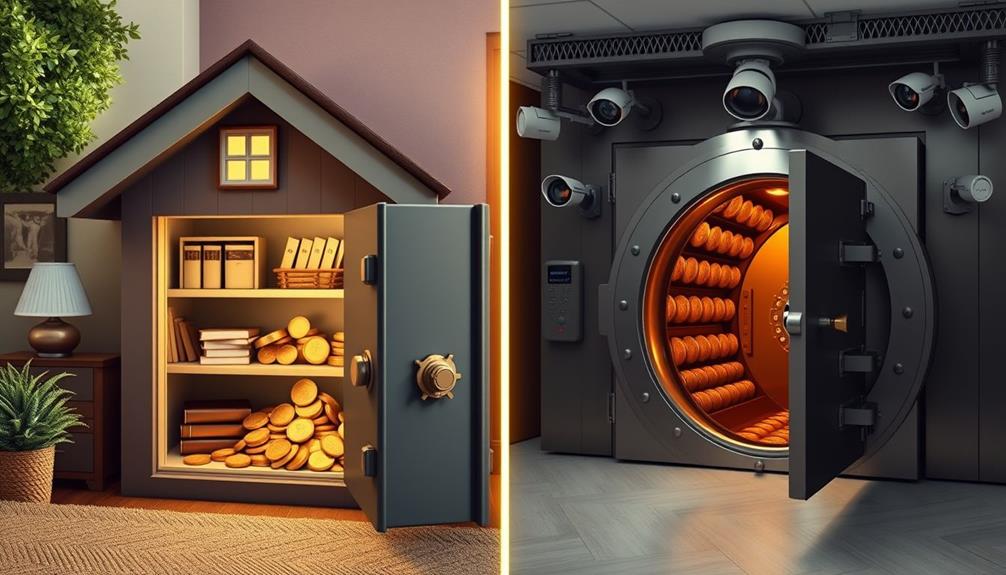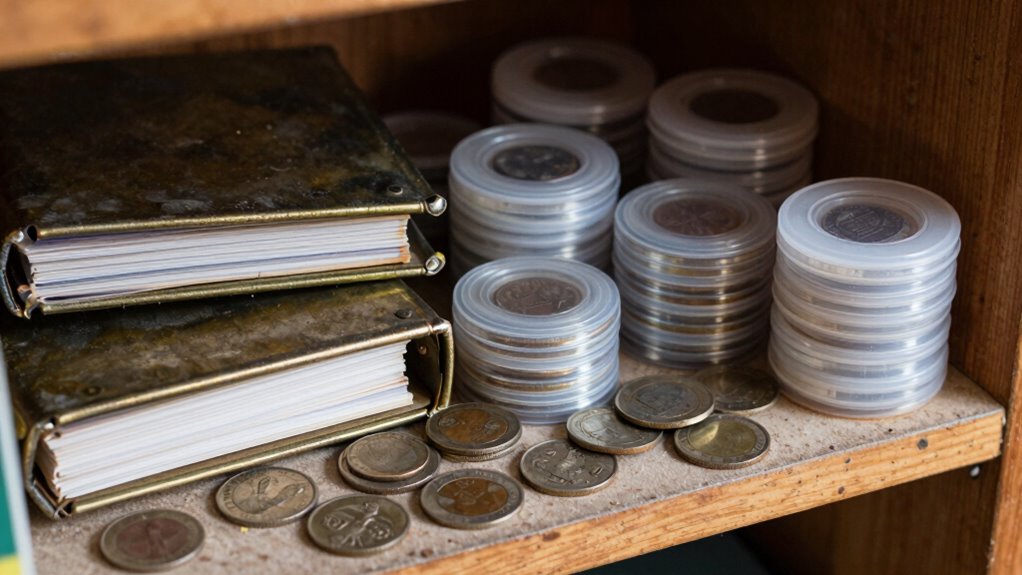

Many new coin collectors make common mistakes like using improper storage methods, such as regular paper envelopes or flimsy plastic, which can trap moisture or cause chemical reactions. They often neglect controlling environment factors like temperature and humidity, leading to tarnishing or corrosion. Stacking coins or not labeling containers can also cause scratches or make organization difficult. If you want to protect your collection’s value and appearance, you’ll want to avoid these pitfalls and learn how proper storage makes a difference.

Get smart everyday buys delivered free with Prime
- Fast, free delivery on millions of items
- Prime Video, Amazon Music and more included
- Member-only deals all year
Key Takeaways
- Using improper storage environments with uncontrolled temperature, humidity, or sunlight accelerates coin deterioration.
- Failing to separate coins individually causes scratches and surface damage, reducing value and grade.
- Employing unsuitable materials like regular paper or flimsy plastic increases chemical reactions and tarnishing risks.
- Neglecting proper labeling and organization hinders tracking coin details and diminishes collection value.
- Storing coins without considering metal composition can lead to corrosion and loss of metal purity over time.
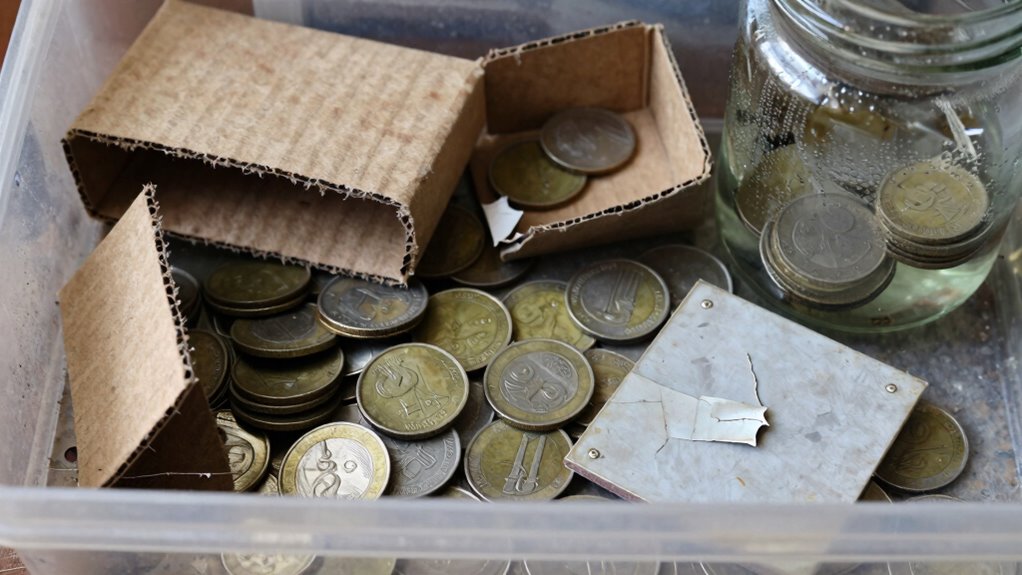
Starting a coin collection can be exciting, but many new collectors make mistakes when it comes to storing their coins. One of the most common errors is neglecting proper storage techniques that can affect coin grading and metal purity over time. When you don’t pay attention to how you store your coins, you risk damaging their surfaces or altering their appearance, which can considerably lower their value. Coin grading relies heavily on the coin’s condition, and improper storage can cause scratches, tarnishing, or corrosion, making it harder to accurately assess their worth. To avoid this, you should always keep your coins in a controlled environment, free from extreme temperatures, humidity, and direct sunlight, which can all accelerate deterioration. Proper storage techniques are essential to maintaining your coins’ condition and value over the long term. Another mistake is overlooking the importance of metal purity. Many new collectors aren’t aware that different coins are made from various metal alloys, and exposure to moisture or air can degrade these materials. For example, copper and silver coins are particularly susceptible to tarnishing and corrosion if not stored correctly. When you store coins improperly, you risk compromising their metal purity, which impacts both their appearance and long-term value. Using inappropriate storage materials, such as regular paper envelopes or flimsy plastic, can trap moisture or cause chemical reactions that alter the coin’s surface and metal composition. Instead, opt for acid-free holders, capsules, or albums designed specifically for coin storage. These materials help preserve the original metal purity and prevent any unwanted reactions that could diminish your coins’ quality. Many new collectors also underestimate the importance of individual, secure storage for each coin. Stacking coins or keeping multiple coins together in the same container can lead to scratches or abrasions that damage the surface, impacting coin grading. Separating each coin with individual holders ensures they stay in pristine condition, preserving their value and appearance. Additionally, labeling your storage containers with details like mint year, denomination, and metal composition can help you keep track of your collection’s specifics, making it easier to spot coins that need special care.
As an affiliate, we earn on qualifying purchases.
Frequently Asked Questions
What Are the Best Materials for Coin Storage Containers?
The best materials for coin storage containers are inert plastics like polypropylene or polyethylene, which prevent chemical reactions and tarnishing. You should choose storage container types like coin tubes, flips, or albums made from acid-free materials. Avoid PVC or cardboard, as they can damage coins over time. Using proper coin holder materials helps preserve your collection’s value and prevents corrosion, ensuring your coins stay in excellent condition for years.
How Often Should I Inspect My Coin Collection?
Did you know that frequent inspections can prevent over 60% of coin damage? You should inspect your coin collection at least once every 6 to 12 months. During these checks, avoid coin cleaning, which can reduce value, and focus on storage organization to prevent scratches or tarnishing. Regular inspections help catch issues early, ensuring your collection remains in top condition and retains its value over time.
Can Improper Storage Affect a Coin’s Value?
Improper storage can considerably affect your coin’s value, especially if you neglect proper handling techniques. Exposure to air, humidity, or dirt can cause tarnishing or corrosion, which reduces their worth. Avoid coin cleaning, as it can scratch or damage the surface, decreasing value. Instead, handle coins carefully by their edges, store them in quality containers, and keep them in a cool, dry place to preserve their condition and value.
Are There Specific Storage Methods for Rare or Valuable Coins?
Yes, there are specific storage methods for rare or valuable coins to guarantee proper coin preservation. You should customize storage options, like using acid-free holders, coin capsules, or archival-quality albums, to protect your coins from environmental damage. These tailored approaches prevent scratches, tarnishing, or corrosion, maintaining their value. Proper storage customization is essential to safeguard your investment and preserve the coins’ condition for years to come.
What Environmental Factors Should I Avoid When Storing Coins?
You should avoid high humidity levels that can cause corrosion and damage your coins over time. Keep humidity regulated and store coins in a dry environment. Also, protect coins from UV exposure, which can fade or discolor their surfaces. Use UV-resistant containers or storage boxes, and make sure your storage area is shaded. By managing humidity and UV exposure, you’ll preserve your coins’ condition and value effectively.
individual coin holders for collection
As an affiliate, we earn on qualifying purchases.
As an affiliate, we earn on qualifying purchases.
Conclusion
Don’t let storage snafus sabotage your silver and copper treasures. By avoiding careless containers, neglecting climate control, and overlooking organization, you protect your prized possessions and preserve their value. Be vigilant, be vigilant, be vigilant—your collection’s care counts. With mindful maintenance and meticulous methods, you’ll master the art of safeguarding your stash. Keep your coins secure, your spirit strong, and your collection’s charm shining bright for years to come.
As an affiliate, we earn on qualifying purchases.
humidity control for coin storage
As an affiliate, we earn on qualifying purchases.
As an affiliate, we earn on qualifying purchases.
Halloween Picks
halloween
As an affiliate, we earn on qualifying purchases.