
📊 Full opportunity report: Modern Industrial Operations Embrace Phone-Photo Gauge Readings on IdeaNavigator AI — validation score, market gap, and execution plan.

Get smart everyday buys delivered free with Prime
- Fast, free delivery on millions of items
- Prime Video, Amazon Music and more included
- Member-only deals all year
TL;DR
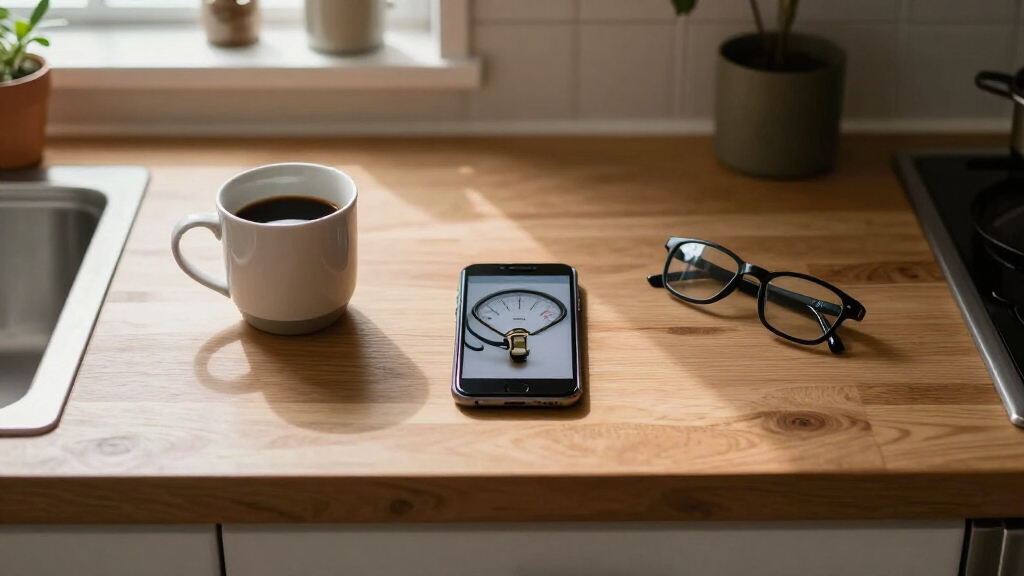
Industrial operations are piloting a new workflow where technicians use smartphones to photograph gauges, enabling automated reading and trend tracking. This approach aims to improve accuracy and reduce costs associated with legacy equipment.
Facilities are beginning to adopt a new workflow that replaces manual clipboard readings of analog gauges with smartphone photos analyzed by vision models, potentially transforming maintenance and monitoring processes across industrial sites.
In recent pilot tests, technicians at three facilities have used a dedicated app to photograph gauges during their daily rounds. The app employs machine vision to automatically read the gauge values, compare them against expected ranges, and log readings with timestamps and location data. This process aims to replace traditional manual transcription, which often introduces errors and lacks effective trend analysis.
According to an anonymous researcher involved in the pilot, the system has demonstrated reliable gauge reading accuracy from ordinary phone photos, even with varying lighting and angles. The technology leverages recent advances in vision models that can interpret analog dials, sight glasses, and counters without requiring retrofitting expensive IoT sensors onto legacy equipment. The initial goal is to run parallel photo-and-clipboard rounds over a month, comparing error rates and early anomaly detection to validate the approach.
Facility managers see this as a potential cost-effective way to improve operational oversight. The system logs data automatically, enabling better trend analysis and early failure detection, which could reduce unplanned downtime and maintenance costs over time.
Potential Impact on Maintenance and Data Accuracy
This approach could significantly enhance the accuracy of gauge readings, which are often hampered by manual transcription errors. Automated photo-based readings provide real-time data that can be immediately analyzed for anomalies, improving predictive maintenance efforts.
Moreover, by eliminating the need for retrofitting legacy equipment with sensors, facilities can adopt digital monitoring at a fraction of the cost. This innovation could lead to widespread adoption across industries relying on analog gauges, including manufacturing, energy, and water treatment sectors.
As an affiliate, we earn on qualifying purchases.
Legacy Equipment and the Cost of Digital Transformation
Many industrial facilities still depend heavily on analog gauges for critical process monitoring. Traditional digital transformation efforts involve installing IoT sensors, which can be prohibitively expensive for older equipment. As a result, manual rounds remain common, but they are prone to errors and lack effective data trending.
The recent development of reliable vision models that interpret phone photos of gauges offers a low-cost alternative. Pilot programs are testing this method as a way to bridge the gap between legacy hardware and digital data needs, with initial results indicating promising accuracy and ease of implementation.
As an affiliate, we earn on qualifying purchases.
Unconfirmed Aspects of System Reliability and Adoption
It is not yet clear how consistently the vision models will perform across different gauge types, lighting conditions, and operational environments. Long-term reliability, user acceptance, and integration with existing maintenance workflows remain to be fully evaluated.
Additionally, the scalability of the system beyond initial pilot sites and the cost implications of broader deployment are still under assessment.
As an affiliate, we earn on qualifying purchases.
Next Steps for Validation and Broader Deployment
Facilities will continue parallel testing over the coming month, with detailed comparisons of error rates and anomaly detection capabilities. If successful, plans include expanding the pilot to additional sites and refining the app’s features based on user feedback. Industry stakeholders are watching for validation of the approach as a cost-effective digital solution for legacy equipment monitoring.
As an affiliate, we earn on qualifying purchases.
Key Questions
How accurate are phone-photo gauge readings compared to traditional methods?
Initial pilot results suggest high reliability in reading gauge values from photos, but comprehensive validation over longer periods and different conditions is ongoing.
What are the cost benefits of switching to phone-photo readings?
This method eliminates the need for retrofitting legacy gauges with sensors, reducing equipment upgrade costs and enabling more frequent, accurate data collection.
Will this system replace manual rounds entirely?
Currently, it is being tested as a supplement or replacement in specific workflows; full adoption depends on validation results and operational integration success.
What challenges might arise in wider implementation?
Potential issues include variability in lighting and gauge types, user training, and ensuring data security and integration with existing maintenance systems.
Could this approach be used for all types of gauges?
While promising for analog gauges, some specialized or highly precise instruments may still require dedicated sensors or alternative monitoring methods.
Source: IdeaNavigator AI
Halloween Picks
halloween
As an affiliate, we earn on qualifying purchases.