
Choose financial planning books that match your current needs, check that their advice is credible and relevant, then use what you learn to take practical next steps. This guide is for beginners who want a clear starting point on budgeting, saving, debt, investing, or long-term planning. You do not need prior finance experience. Set aside about 1–2 hours to compare books and make a reading plan, then expect to work through the material over several weeks.

Get smart everyday buys delivered free with Prime
- Fast, free delivery on millions of items
- Prime Video, Amazon Music and more included
- Member-only deals all year

Financial Literacy Essentials for Dummies
- ✔ Format: Paperback
- ✔ Audience: Beginning financial literacy learners
- ✔ Topics: Budgeting, saving, investing, and debt management
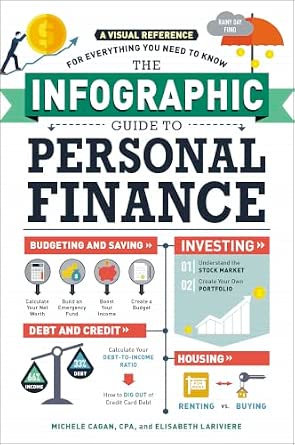
The Infographic Guide to Personal Finance: A Visual Reference
- ✔ Format: Book
- ✔ Audience: Readers who prefer visual learning
- ✔ Topics: Budgeting, saving, investing, credit, and retirement basics

Money Skills for Young Adults: A Beginner’s Guide to Smart Financial Habits
- ✔ Format: Book
- ✔ Target audience: Young adults
- ✔ Topics: Budgeting, saving, investing, and financial independence
Difficulty: Beginner | Time: 1–2 hours to choose books and set up a reading plan; several weeks to read and apply them
What You’ll Need
Tools & Materials:
- A way to browse a library catalog, bookstore, or publisher’s book listing
- A notebook or digital document for recording goals and actions
- Optional: a calculator or spreadsheet for basic budgeting exercises
Knowledge:
- A general sense of your main money question, such as managing spending, paying down debt, or starting to invest
- Willingness to check the book’s publication date and the author’s background
Write down your main question before browsing. For personal financial decisions with tax, legal, or high-stakes investment effects, treat a book as general education and seek qualified advice for your circumstances. A book cannot account for every reader’s income, location, debt, or risk tolerance.
Financial Literacy Essentials for Dummies
For a first book that needs to cover more than one corner of personal finance, Financial Literacy Essentials for Dummies is our strongest all-around choice. Its described scope joins budgeting, saving, investing, and debt management, giving beginners a route through several decisions that often affect one another. The plain-language approach and real-world examples are especially useful for readers who want to move from understanding a term to considering what it means in everyday money management.That breadth gives it an edge over The Infographic Guide to Personal Finance as a foundational read: the latter is organized for fast visual reference, while this book is described as a more conventional guide with practical explanations. It is also less narrowly aimed than Money Skills for Young Adults, so it can suit a wider range of new learners. The compromise is that breadth does not mean advanced treatment. Readers who already know the basics or want detailed investment strategies may find the explanations too introductory, and examples can date as financial conditions change.
Pros:
- Jargon-free explanations lower the barrier for first-time learners.
- Covers several essential areas, including debt management.
- Practical tips and examples connect concepts to everyday decisions.
- Paperback format is convenient for readers who like to keep a reference nearby.
Cons:
- The introductory level may feel too basic to experienced readers.
- Complex investment strategies receive limited depth.
- Examples may become dated over time.
Best for: New readers who want a broad, plain-language foundation across budgeting, saving, investing, and debt.
Not ideal for: Readers with solid financial knowledge or those seeking detailed investment, tax, or legal guidance.
Bottom line: We recommend it as the most balanced first read for beginners who want broad coverage and accessible explanations in one place.
“We recommend it as the most balanced first read for beginners who want broad coverage and accessible explanations in one place.”
The Infographic Guide to Personal Finance: A Visual Reference
When dense paragraphs make money topics harder to absorb, The Infographic Guide to Personal Finance offers a different entry point. Its visual explanations organize budgeting, saving, investing, credit, and retirement basics into a format intended for quick understanding and reference. That makes it a natural choice for readers who want to grasp the shape of a concept before exploring it in more detail.Compared with Financial Literacy Essentials for Dummies, this guide leans on layout and concise presentation rather than practical examples and broader verbal explanation. Its credit and retirement basics also give it a different emphasis from Money Skills for Young Adults, which is framed around building habits early in adulthood. The visual approach is a real strength for scanning, but it comes with a limit: static graphics and concise treatment cannot provide the same depth as a more explanatory guide. We would choose it as a companion reference or a visually oriented first step, not as the sole resource for complex decisions.
Pros:
- Visual explanations can make unfamiliar concepts easier to approach.
- Covers budgeting, saving, investing, credit, and retirement basics.
- Organized for quick reference and revisiting key ideas.
- Compact format can suit readers who prefer shorter learning sessions.
Cons:
- Concise presentation limits depth on advanced strategies.
- Static images do not offer interactive learning.
- May not provide enough explanation as a reader’s questions become more specific.
Best for: Visual learners who prefer concise diagrams and a compact reference to lengthy explanations.
Not ideal for: Readers who need detailed step-by-step guidance, extended examples, or advanced financial strategies.
Bottom line: We’d choose this guide when visual clarity and quick reference matter more than detailed instruction.
“We’d choose this guide when visual clarity and quick reference matter more than detailed instruction.”
Money Skills for Young Adults: A Beginner’s Guide to Smart Financial Habits
Money Skills for Young Adults is the most specifically targeted pick in this group. Its described focus is on helping young adults build habits through simple tools for budgeting, saving, and investing, with financial independence as a longer-term aim. For readers just beginning to manage money on their own, that framing can make foundational skills feel connected to decisions they are facing now.Its narrower audience is also the main tradeoff. Financial Literacy Essentials for Dummies covers a wider set of basics, including debt management, and may be the more adaptable starting point for readers outside the young-adult stage. The Infographic Guide is a stronger match for readers who learn best from visual summaries, while this book is described in terms of actionable tools and habits. The supplied details do not specify the depth or regional assumptions behind its guidance, so readers dealing with local tax rules or legal questions should look for information tailored to their jurisdiction.
Pros:
- Focuses on practical budgeting and saving habits.
- Introduces investing alongside everyday money management.
- Connects early decisions with longer-term financial independence.
- Its young-adult framing can make the material feel relevant to a first financial journey.
Cons:
- May not offer enough depth for readers who already know the basics.
- General guidance may not address regional tax or legal details.
- Its specific audience makes it less broadly applicable than the overall pick.
Best for: Young adults starting to manage their own budgets and savings and looking to establish sound financial habits.
Not ideal for: Readers outside its intended life stage, experienced learners, or anyone needing region-specific tax and legal information.
Bottom line: We recommend it for young adults who want habit-focused guidance, while readers seeking broader coverage should start with Financial Literacy Essentials for Dummies.
“We recommend it for young adults who want habit-focused guidance, while readers seeking broader coverage should start with Financial Literacy Essentials for Dummies.”
As an Amazon Associate we earn from qualifying purchases.
Before You Start
Separate the skill you want to learn from the product or service a book may promote. Some authors earn money from courses, memberships, financial products, or referrals. That does not automatically make a book unreliable, but it gives you a reason to check whether recommendations are explained clearly and whether conflicts are disclosed. Also check whether examples and rules apply where you live; tax accounts, retirement systems, and consumer protections vary by country.
Pick one main topic for your first book. Trying to solve every financial question at once can make it harder to act on what you read.
Step-by-Step Instructions
Step 1: Name your first money goal
Write one sentence describing what you want to do in the next three to six months. Make it specific enough to guide your book choice, such as “build a monthly spending plan,” “understand my student loan repayment options,” or “learn the basics of diversified investing.” If several issues feel urgent, choose the one that affects your day-to-day stability most.
Tip:Keep the goal focused. “Become good with money” is too broad to help you select a useful first book.
Check: You have a written goal that names a financial topic and a practical outcome.
Step 2: Choose the right subject area
Match your goal to a book category. Choose personal budgeting or cash-flow planning for help tracking income and expenses; debt management for repayment methods and interest; saving for emergency funds and short-term goals; investing for risk, diversification, and long time horizons; or comprehensive planning for a broad overview. Read the table of contents and sample pages before deciding.
Tip:If a book covers many areas, check that it gives enough detail on your main goal. A broad overview may be useful later but too general for a specific problem.
Check: The book’s contents include chapters that directly address the goal you wrote down.
Look up the author’s experience and the book’s publication date. Prefer authors who explain relevant experience, cite sources, and distinguish education from individualized advice. For topics shaped by changing laws, rates, or products, check that the material is recent enough for your location. Read the publisher’s description and sample chapter to see whether the author explains the reasoning behind recommendations.
Tip:Older books can still teach durable ideas such as spending awareness or diversification. Verify any current tax limits, account rules, rates, or product details with an up-to-date official source.
Check: You can identify who wrote the book, when it was published, and whether its subject and examples fit your situation.
Step 4: Compare two or three candidates
Shortlist no more than three books and compare their contents, writing style, and approach. Check whether each book defines financial terms, uses realistic examples, explains risks, and gives exercises or clear actions. Read a few pages from each candidate if possible. Look for an approach you can follow without needing to buy a product or subscribe to a service.
Tip:Reader reviews can reveal whether a book is accessible, but do not use ratings as proof that financial claims are sound. Check specific claims against independent, reputable sources.
Check: You have selected one book whose level, style, and contents suit your goal and your reading preferences.
Step 5: Get the book and set a reading pace
Borrow or buy the selected book in a format you can use consistently. Check the library before purchasing, and confirm that an audiobook includes any worksheets or tables you need in another format. Divide the chapters into manageable reading sessions, such as two sessions each week, and put them on your calendar. Leave time after each session to record one useful idea.
Tip:A book you can finish and apply is more useful than a long reading list. Start with one; add another only when you can name a question the first book did not answer.
Check: You have access to the book and a realistic schedule for completing it.
Step 6: Read actively and capture useful ideas
Read one section at a time and write down the main point in your own words. Mark unfamiliar terms to look up, note any advice that depends on laws or products in another country, and list questions that need verification. After each session, record one action the book suggests and whether it fits your goal and current circumstances.
Tip:Do not treat a personal example or a confident prediction as a promise of results. Pay attention to assumptions, risks, and the time period behind an example.
Check: Your notes contain a short explanation of the key ideas, questions to check, and possible actions.
Step 7: Apply one low-risk action
Choose one practical action from your notes and complete it. Examples include listing monthly bills, setting a savings target, reviewing loan balances, or learning how your workplace retirement plan works. Before changing investments, taking on debt, or moving money, verify fees, penalties, tax effects, and any relevant rules with current, appropriate sources.
Tip:Start with an action that improves your understanding or organization. You do not have to make a major financial decision just because a book recommends it.
Check: You can point to a completed action linked to your goal, or to a specific next question you are verifying before acting.
Common Mistakes to Avoid
- Choosing a book because it promises fast wealth or guaranteed returns. — Avoid claims of guaranteed outcomes. Choose material that explains uncertainty, fees, risks, and the assumptions behind its examples.
- Starting with several books on unrelated topics. — Pick one main goal and finish a focused book before adding another. Keep a separate list of questions for later.
- Applying rules from another country or an older edition. — Check the book’s location and publication date. Confirm current tax, retirement, and product rules with official sources in your jurisdiction.
- Treating general education as personal financial advice. — Compare recommendations with your own income, obligations, time horizon, and risk capacity. Get qualified help for complex or high-stakes choices.
Troubleshooting
Problem: The book feels too technical to follow.
Solution: Try the sample pages of a more introductory title, or use a library’s beginner finance reading list. Look for plain-language explanations and defined terms. Keep the same goal so the replacement still addresses your need.
Problem: The advice conflicts with another book or source.
Solution: Write down the exact disagreement and check each source’s assumptions, date, location, and incentives. Verify rules with official government or regulator information. If the decision has significant consequences, consult a qualified professional.
Problem: The book recommends accounts or products that are unavailable where you live.
Solution: Treat the recommendation as an example of a broader concept, such as tax-advantaged saving or diversification. Find current local equivalents through official sources, and do not open an account based only on a foreign example.
Problem: You finish chapters but do not take any action.
Solution: Pause reading and choose one small task from your notes. Put a date beside it and make the task concrete, such as listing debts with balances and interest rates. Resume when you have completed it or identified what information is missing.
What Success Looks Like
You have a clear financial goal, one beginner-appropriate book that directly addresses it, and a reading schedule you can follow. Your notes capture key ideas and questions, and you have completed at least one practical action or identified what must be verified before acting. You know which advice may be outdated, location-specific, or dependent on your personal circumstances.
Next Steps
Review your notes after finishing the book and choose the next action that supports your goal. Track the result for a month or for another useful period, then adjust your plan based on what you learn. If your next question concerns a different topic, choose a focused book for that topic rather than collecting titles without a plan. For tax, legal, debt, or investment choices with substantial consequences, confirm details through current local sources or a qualified professional.
Frequently Asked Questions
Which financial planning book should a beginner read first?
Start with a book focused on your immediate goal, such as budgeting, debt repayment, saving, or investing basics. Compare its contents and sample pages with your question; there is no single best first book for every reader.
Should I buy a book or borrow it from a library?
Borrow first if you are unsure about the writing style or the book’s relevance. Buy it if you want to keep its worksheets or refer to it regularly. Check that the edition you use is appropriate for your location and topic.
Are older personal finance books still useful?
They may explain lasting ideas, such as spending less than you earn or spreading investment risk. Check current sources for laws, account limits, tax rules, interest rates, and specific products before acting on older details.
How many financial books should I read at once?
One focused book is a good starting point. Reading several at once can make conflicting advice harder to evaluate. Add another title when you can name a question that remains unanswered.
Can a beginner book tell me exactly what to invest in?
A general book can explain investing concepts and trade-offs, but it cannot account for your full financial circumstances or guarantee an outcome. Use it to learn, check current local rules and fees, and seek qualified advice when a decision carries significant risk.