TL;DR

Get smart everyday buys delivered free with Prime
- Fast, free delivery on millions of items
- Prime Video, Amazon Music and more included
- Member-only deals all year
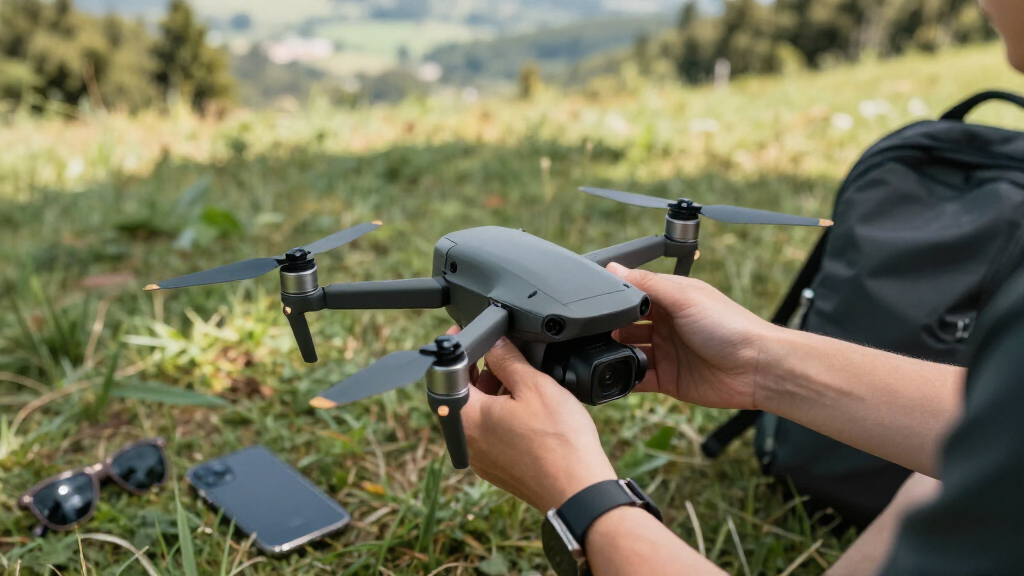
Artificial intelligence is transforming camera drone technology in 2026, enabling smarter flight, improved stabilization, and better footage quality. This development impacts both hobbyists and professionals, making drone photography more accessible and reliable.
Artificial intelligence is playing a pivotal role in shaping the most advanced camera drones of 2026, enhancing features such as flight stability, obstacle avoidance, and automated filming. This trend is confirmed by recent industry developments and product launches, indicating a significant shift in drone technology driven by AI integration. The advancements matter because they improve user experience, expand creative possibilities, and make professional-grade footage more accessible to amateurs.
Leading drone manufacturers, including DJI and Skydio, have incorporated AI algorithms into their latest models, resulting in smarter flight controls and more stable footage. For example, DJI’s Mini 5 Pro now features AI-powered obstacle detection that adapts in real-time, reducing crashes and enhancing safety during complex maneuvers. Skydio’s new R2 drone uses AI to autonomously follow subjects with high precision, even in challenging environments.
Industry experts confirm that AI-driven stabilization systems significantly outperform traditional gimbal-based stabilization, especially in windy conditions or during rapid movements. These systems analyze data from multiple sensors and adjust motor responses instantaneously, producing smoother footage. Additionally, AI enables automatic scene recognition and intelligent framing, allowing users to capture cinematic shots without extensive manual control.
Market analysts report that the integration of AI has become a key differentiator among top-tier drones, with higher-end models offering more sophisticated autonomous features. The trend is also reflected in consumer preferences, as users increasingly seek drones that combine ease of use with professional-quality results. However, the full extent of AI’s capabilities in drones is still evolving, with ongoing research into more advanced scene understanding and adaptive flight planning.
The 10 picks
- 1
 DJI Mini 5 Pro Fly More Combo Plus with DJI RC 2, 4K Camera DroneView on Amazon →
 - 2
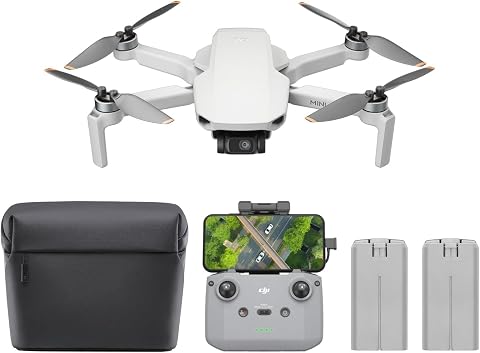 DJI Mini 4K Camera Drone Combo, 4K UHD, 249g, 3-Axis Gimbal, 10km Transmissio…View on Amazon →
 - 3
 DJI Mini 4K Drone with 4K UHD Camera and 3-Axis GimbalView on Amazon →
 - 4
 8K GPS Drone with Camera for Adults, 5G Brushless Foldable RC QuadcopterView on Amazon →
 - 5
 GPS Drone with 1080P Camera and 4.5" LCD Screen RemoteView on Amazon →
 - 6
 TD12Pro Drone with 1080P Camera and LCD Screen RemoteView on Amazon →
 - 7
 MSMV 4K HD Camera Drone, Wireless RC Toy for Boys and GirlsView on Amazon →
 - 8
 F417PRO FPV Drone with 1080P Camera and LCD Remote for Adults, Beginners, KidsView on Amazon →
 - 9
 Drone with Camera and Built-in Screen on ControllerView on Amazon →
 - 10
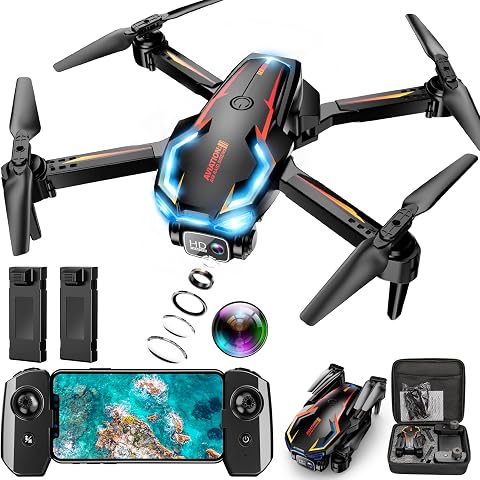 Drone with Camera for Adults, 2K HD FPV, Altitude Hold, One-Key Takeoff/Landi…View on Amazon →
Why AI Integration Matters for Drone Users
AI integration in camera drones enhances safety, ease of use, and creative potential, making high-quality aerial footage more accessible. For hobbyists, AI simplifies flying and stabilizing footage, reducing the learning curve. For professionals, AI-driven autonomous flight and scene recognition enable more complex shots with less manual input, expanding creative possibilities. This technological shift also influences the market, prompting manufacturers to prioritize AI features in new releases, thus raising the standard for what consumers expect from drone technology.
Evolution of AI in Consumer and Professional Drones
Over the past decade, drone technology has steadily incorporated AI to improve flight stability, obstacle avoidance, and autonomous navigation. Early AI features were limited to basic obstacle detection, but recent developments have introduced real-time scene analysis, intelligent flight planning, and adaptive stabilization systems. Major brands like DJI and Skydio have led the way, launching models that utilize deep learning algorithms to interpret complex environments and optimize flight paths accordingly.
In 2024, the industry saw a surge in AI-powered autonomous filming modes, allowing drones to follow subjects or capture cinematic shots with minimal human input. By 2026, these features have become standard in premium models, with ongoing enhancements in scene recognition and obstacle management. This evolution reflects a broader trend of integrating artificial intelligence into consumer electronics, aiming to democratize high-quality aerial imaging.
Despite these advancements, some limitations remain, such as AI’s dependence on sensor accuracy and computational power. Developers continue to refine algorithms to improve reliability, especially in challenging environments or complex scenes. The ongoing research aims to push AI capabilities further, including better predictive flight adjustments and enhanced scene understanding.
“AI is revolutionizing how drones perceive and interact with their environment, making autonomous flight safer and more intuitive than ever before.”
— Dr. Lisa Chen, AI Drone Technology Expert
Limitations and Future Challenges of AI in Drones
While AI has significantly advanced drone capabilities, some challenges remain. Sensor inaccuracies, computational limits, and unpredictable environmental conditions can still cause failures in autonomous flight or scene recognition. The extent to which future AI will fully eliminate these issues is still uncertain, and ongoing research is needed to improve robustness and reliability. Additionally, concerns about privacy and regulatory compliance related to autonomous AI features are emerging but remain unresolved in many regions.
Upcoming AI Innovations and Industry Trends
Manufacturers are expected to continue refining AI algorithms, focusing on real-time scene understanding, improved obstacle avoidance, and adaptive flight planning. Future models may incorporate more advanced machine learning techniques to better predict environmental changes and optimize flight paths proactively. Industry events in 2026 are likely to showcase new AI-powered drones with enhanced autonomous capabilities, making high-end aerial imaging more accessible and safer for all users. Regulatory developments may also influence how AI features are implemented and marketed.
Key Questions
How does AI improve drone stability?
AI analyzes data from sensors in real-time to make instant adjustments to the drone’s motors, resulting in smoother footage and better handling, especially in windy conditions or during quick maneuvers.
Are AI features in drones safe for beginners?
Yes, AI features like automatic obstacle avoidance and scene recognition can help beginners fly more confidently and avoid crashes, although some basic training is still recommended.
Will AI make manual flying obsolete?
While AI enhances autonomous capabilities, manual control remains important for creative flexibility and complex shots. AI is designed to supplement, not replace, human pilots.
What are the privacy concerns related to AI in drones?
AI-enabled drones can capture detailed imagery and analyze scenes autonomously, raising privacy issues, especially in public or private spaces. Regulations are still evolving to address these concerns.
When will AI fully automate drone photography?
Full automation is still under development, with ongoing improvements expected over the next few years. Future AI systems may enable completely autonomous filming in complex environments.
Source: ThorstenMeyerAI.com
Halloween Picks
halloween
As an affiliate, we earn on qualifying purchases.