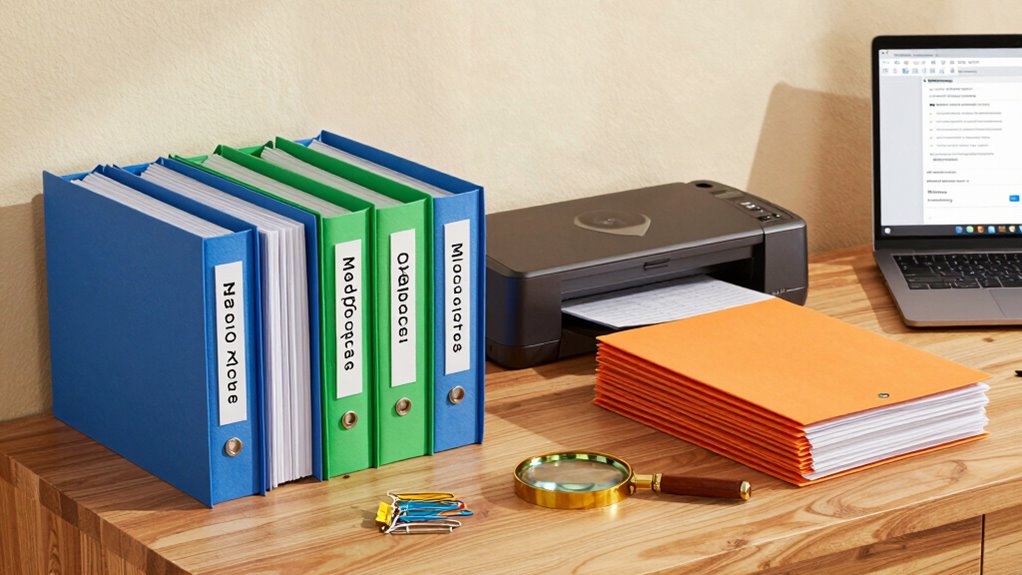

To build a home archive for your tax, Medicare, and estate documents, start by gathering all your records and sorting them into clear categories like tax, Medicare, and estate planning. Decide whether you want physical, digital, or both types of storage, and organize each with labeled folders or encrypted files. Use secure safes for physical papers, and establish a digital backup system. Keep everything updated regularly—if you take these steps, you’ll create a reliable, accessible archive that serves you well.

Get smart everyday buys delivered free — and shop member deals
- Fast, free delivery on millions of items
- Access to Prime Big Deal Days deals on October 6–7
- Prime Video, Amazon Music and more included
Key Takeaways
- Collect and categorize all relevant documents into dedicated physical folders or digital folders with clear labels.
- Prioritize digital security by encrypting files, using strong passwords, and choosing secure cloud storage options.
- Store physical documents in fireproof, waterproof safes or lockable filing cabinets for protection.
- Create a structured digital folder hierarchy mirroring physical categories, with descriptive filenames for easy access.
- Establish a routine for regular review, updating, backing up, and securely disposing of outdated records.
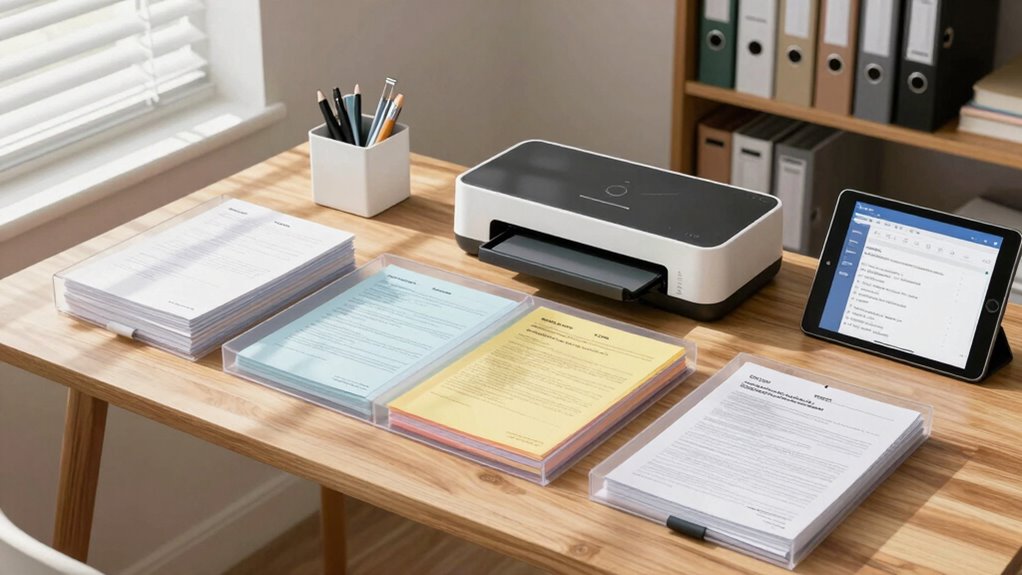
Have you ever wondered how to keep your important tax, Medicare, and estate documents organized and easily accessible? Building a home archive might seem overwhelming at first, but with a clear plan, you can create a system that’s both efficient and secure. The key is to focus on digital security and document organization, making sure your essential records are protected and easy to find when needed.
Start by gathering all your documents in one place. Sort them into categories such as tax records, Medicare information, estate planning documents, and other necessary papers. Once sorted, decide whether you want to keep physical copies, digital copies, or a combination of both. Digital copies are particularly useful because they save space and can be backed up easily, but it’s imperative to prioritize digital security. Use strong, unique passwords for your storage accounts and consider encrypting sensitive files to prevent unauthorized access. Cloud storage services with robust security features can be a good option, but always check their privacy policies and security protocols. Additionally, understanding the importance of contrast ratio in digital displays can help you better evaluate visual clarity and readability of scanned or digital documents.
For physical documents, invest in a fireproof, waterproof safe or a lockable filing cabinet. Use labeled folders or binders to keep similar documents together. Consider using color-coded labels for quick identification—this simplifies document organization and saves time during tax season or emergencies. Make sure to regularly update and review your archive, removing outdated or unnecessary papers to prevent clutter. You might also want to explore document retention policies to know how long to keep certain records and when it’s safe to discard them. Incorporating digital backup strategies can further safeguard your records against loss or damage. Additionally, staying informed about digital security best practices can help you protect your sensitive information from potential threats.
Digital organization is equally important. Create a structured folder hierarchy on your computer or cloud storage, mirroring your physical categories. Use clear, descriptive names for each file to facilitate quick searches. Regularly back up your digital archive on an external drive or a secure cloud service, and test your backups periodically to make sure they work. Keeping your digital files well-organized and secure minimizes the risk of losing important information and makes retrieval straightforward.
Finally, establish a routine for maintaining your archive. Set aside time each year to review and update your documents, ensuring everything remains current and accessible. Keep an inventory list of your most critical files and their locations, whether physical or digital, so you always know where to find what you need. By staying disciplined in your document organization and prioritizing digital security, you’ll build a reliable, accessible home archive that gives you peace of mind and safeguards your essential records for years to come.
fireproof waterproof document safe
As an affiliate, we earn on qualifying purchases.
As an affiliate, we earn on qualifying purchases.
Frequently Asked Questions
How Often Should I Review and Update My Archive?
You should review and update your archive at least once a year to guarantee your document organization stays current. Regular archive maintenance helps you spot outdated or missing documents, keeping everything accurate for tax, Medicare, and estate purposes. Additionally, update your files whenever significant life events occur, like marriage, new job, or changes in estate plans. Staying consistent ensures your archive remains reliable and easy to navigate when needed.
What Digital Tools Are Best for Organizing Documents?
You should choose digital tools that offer secure cloud storage and easy document scanning features. Cloud storage services like Google Drive, Dropbox, or OneDrive are great for organizing and accessing your tax, Medicare, and estate documents from anywhere. Use a quality scanner or mobile scanning app to digitize paper documents quickly. These tools help you keep your records organized, protected, and readily available when you need them most.
How Do I Ensure My Archive Is Secure From Theft?
Think of your archive as a treasure chest—guard it well. To keep it safe from theft, focus on physical security by locking cabinets and controlling access. Use digital encryption to protect your online files, making them unreadable to hackers. Regularly update passwords and enable two-factor authentication. Combining physical safeguards with digital encryption creates a fortress around your documents, ensuring your important information stays private and secure.
Can I Access My Archive Remotely?
Yes, you can access your archive remotely by using cloud storage services. These platforms allow you to securely store your tax, Medicare, and estate documents online, giving you remote access from any device with an internet connection. Make certain you enable strong passwords and two-factor authentication to keep your files protected. Regularly update your security settings to guarantee your remote access remains safe and reliable.
What Should I Do if I Lose My Physical Documents?
If you lose your physical documents, don’t panic. Focus on document preservation by gathering any digital copies, receipts, or backup files you might have. Review your filing strategies to locate alternative copies, such as bank statements or scanned versions. Contact relevant agencies or institutions to request replacements for essential documents like tax records or Medicare cards. Keeping organized and secure backups is key to safeguarding your important records.
digital document storage encryption software
As an affiliate, we earn on qualifying purchases.
As an affiliate, we earn on qualifying purchases.
Conclusion
Think of your home archive as a lighthouse guiding you through life’s storms. When you organize your tax, Medicare, and estate documents, you create a beacon of clarity amidst uncertainty. Just as a lighthouse offers safe passage to sailors, your well-structured files guarantee you navigate financial and legal waters with confidence. Keep it shining bright, and you’ll always find your way when it matters most, no matter how turbulent the seas.
lockable filing cabinet for important papers
As an affiliate, we earn on qualifying purchases.
As an affiliate, we earn on qualifying purchases.
cloud storage service with security features
As an affiliate, we earn on qualifying purchases.
As an affiliate, we earn on qualifying purchases.
Halloween Picks
halloween
As an affiliate, we earn on qualifying purchases.