
To protect your Medicare, Social Security, and insurance records at home, store physical copies in a locked, fireproof safe or secure filing cabinet, and label folders clearly for easy access. Shred outdated documents with personal details and regularly review your digital accounts and statements for suspicious activity. Use strong, unique passwords and enable multi-factor authentication on online accounts. Avoid sharing sensitive information over unsecured networks or phone calls. Keep your security measures up-to-date to stay protected—there’s much more to learn about safeguarding your records.
Key Takeaways
- Store physical records in a locked, fireproof safe or secure filing cabinet, and label folders clearly.
- Use strong, unique passwords and enable multi-factor authentication for digital accounts.
- Regularly review statements and online profiles for suspicious activity.
- Shred outdated or unnecessary documents containing personal information.
- Avoid sharing sensitive details over unsecured networks or with unverified contacts.
Protecting your Medicare, Social Security, and insurance records at home is vital to prevent identity theft and guarantee your personal information stays secure. When it comes to digital security, you want to make certain your devices are protected with strong, unique passwords, and that you use multi-factor authentication whenever possible. Keep your software, antivirus programs, and operating systems updated to patch security vulnerabilities. Avoid clicking on suspicious links or downloading unknown attachments that could introduce malware into your devices. Regularly back up your important records to a secure cloud service or external drive, so you’re not at risk of losing data due to theft, damage, or technical failure. Implementing strong security practices can significantly reduce your vulnerability to cyber threats.
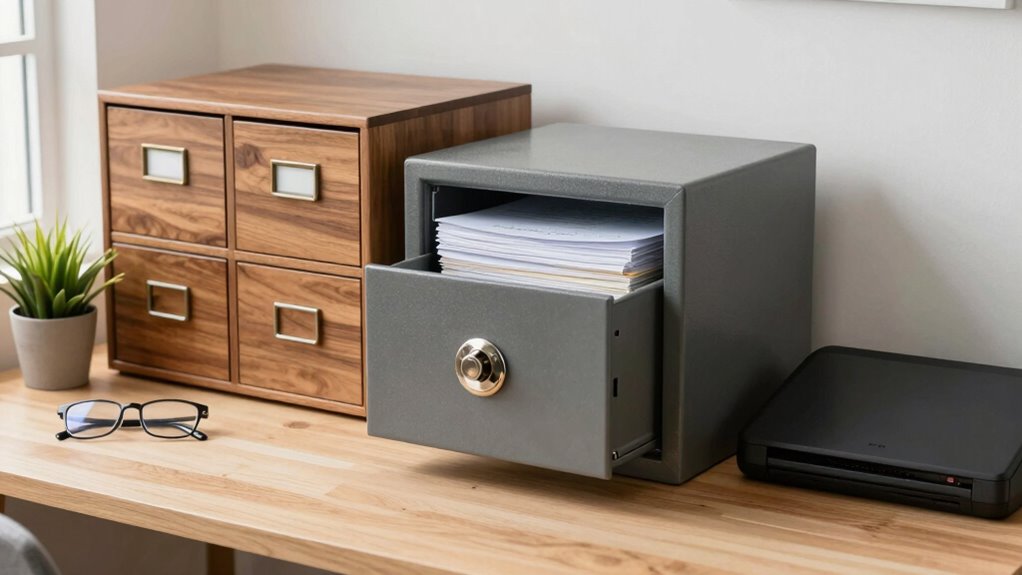
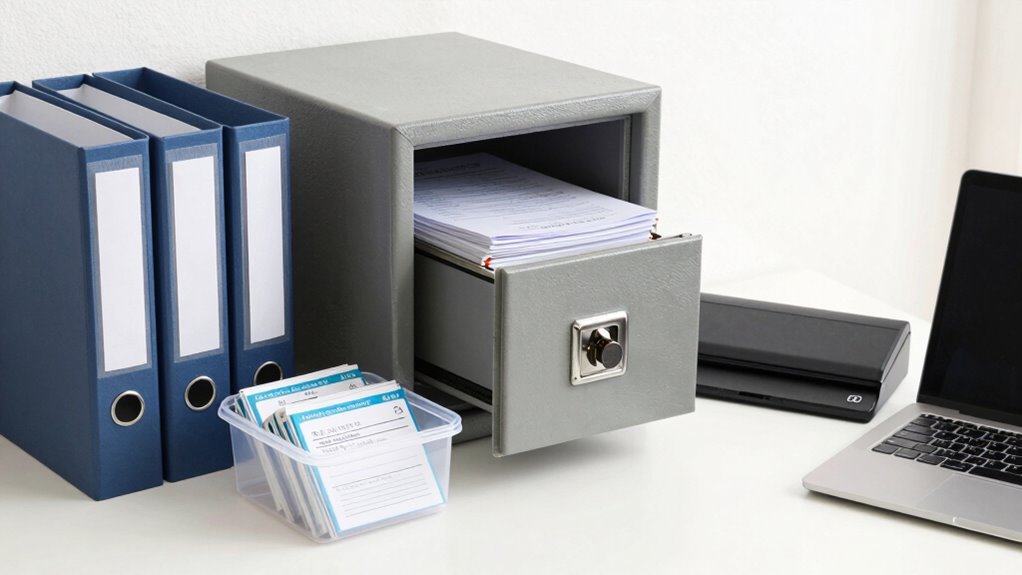
Document organization plays an essential role in safeguarding your sensitive information. Store physical copies of your Medicare, Social Security, and insurance documents in a locked, fireproof safe or a secure filing cabinet. Label folders clearly and keep only the necessary documents, avoiding clutter that could make it harder to find what you need and easier for someone to stumble upon sensitive information. Shred any outdated or unnecessary paperwork that contains personal details, rather than tossing it in the trash. When sorting your records, create a dedicated system that allows quick access in case of emergencies, while still maintaining privacy. Additionally, understanding privacy policies can help you make informed decisions about sharing your information and protecting your records. Incorporating cybersecurity awareness into your routine can further help you recognize potential threats before they cause harm. Staying informed about digital threats is also crucial in maintaining robust protections for your data. Furthermore, consider using encryption tools to add an extra layer of security when storing or transmitting sensitive information.
It’s equally important to limit access to your records, both physically and digitally. Only share your personal information with trusted entities, and never give out your Social Security number or Medicare details unless you are sure of the recipient’s legitimacy. Be cautious about sharing information over the phone or online, especially with unsolicited contacts. Use encryption tools when sending sensitive data electronically, and avoid storing your records on unsecured public Wi-Fi networks.
Furthermore, keep an inventory of your important documents and digital accounts. Regularly review your statements and online profiles for any suspicious activity. If you notice anything unusual, report it immediately to the relevant authorities or your service providers. Maintaining a routine check helps you catch potential issues early and reduces the risk of identity theft.
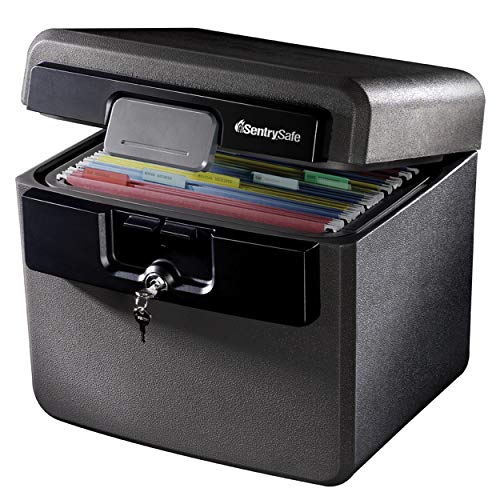
SentrySafe Black Fireproof and Waterproof Safe, File Folder and Document Box with Key Lock, Ex. 14.3 x 15.5 x 13.5 inches, HD4100
FIREPROOF: Safe is UL Classified to endure 1/2 hour at 1550°F and keep interior temperatures safe for irreplaceable…
As an affiliate, we earn on qualifying purchases.
As an affiliate, we earn on qualifying purchases.
Frequently Asked Questions
How Often Should I Review My Records for Security?
You should review your records at least once a year to guarantee they stay secure. Conduct a security audit during this time, checking for any unauthorized access or discrepancies. Regular record updating helps catch errors early and keeps your information current. Staying vigilant by consistently reviewing your records allows you to spot potential security issues promptly, protecting your sensitive Medicare, Social Security, and insurance information from fraud or identity theft.
Can I Store Digital Copies Securely at Home?
Did you know that nearly 30% of people store sensitive data on digital devices? You can securely store digital copies at home by creating digital backups and using encrypted storage methods. While cloud storage offers convenience and remote access, make sure you choose reputable providers with strong security measures. Additionally, keep backups on external drives kept in a safe, fireproof location to protect your Medicare, Social Security, and insurance records effectively.
What Signs Indicate My Records Have Been Compromised?
If your records have been compromised, you might notice identity theft signs like unfamiliar charges or accounts, or calls asking for personal info. You could also see discrepancies in your Social Security or Medicare statements. Stay vigilant for fraud signs, and act quickly by monitoring your accounts and reporting suspicious activity. These steps are essential for fraud prevention, helping you catch issues early and protect your sensitive information from further misuse.
Are There Specific Safes Recommended for Sensitive Documents?
Yes, you should consider using fireproof safes or lockboxes designed for sensitive documents. Look for safes with secure lock mechanisms, like combination or digital locks, to prevent unauthorized access. Fireproof safes protect your records from damage in case of a fire, while lockboxes add an extra layer of security. Choose a safe that’s water-resistant and sturdy, and store it in a discreet location to keep your Medicare, Social Security, and insurance records safe.
How Do I Dispose of Outdated Insurance Documents Safely?
Dispose of outdated insurance documents safely by prioritizing document shredding to prevent identity theft. Secure storage is essential until you’re ready to shred, ensuring sensitive info doesn’t fall into the wrong hands. Don’t toss documents in the trash; instead, use a cross-cut shredder for thorough destruction. This combination of secure storage and document shredding helps you protect your personal information and maintain your privacy at home.

ENGPOW File Box with Lock, Fireproof Document Box with Zipper Lid, Collapsible File Storage Organizer Filing Cabinet with Handle, Portable Home Office Safe for Hanging Letter/Legal Folders, Green
Fireproof and water-resistant: Fireproof lock box is made of double layered non-itchy silicone coated fiberglass which stands up…
As an affiliate, we earn on qualifying purchases.
As an affiliate, we earn on qualifying purchases.
Conclusion
Think of your records as a treasured garden, blooming with your life’s details. Protecting them is like fencing your garden to keep out intruders. By safeguarding your Medicare, Social Security, and insurance papers at home, you’re planting sturdy hedges around your privacy. With vigilant care and secure storage, your personal information remains safe, just as a well-tended garden stays vibrant and protected from pests. Keep watch over your records, and they’ll flourish securely.
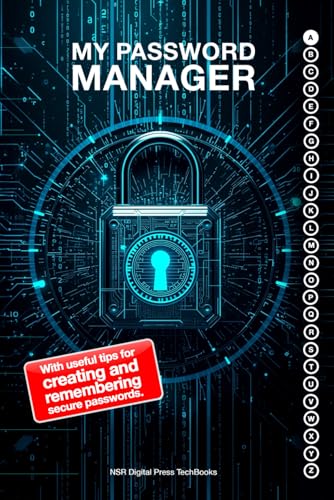
Password Manager: My Personal Organizer for Passwords and PINs: Manage and Securely Access All Your Passwords Offline
As an affiliate, we earn on qualifying purchases.
As an affiliate, we earn on qualifying purchases.

Yubico – YubiKey 5C NFC – Multi-Factor authentication (MFA) Security Key and passkey, Connect via USB-C or NFC, FIDO Certified – Protect Your Online Accounts
POWERFUL SECURITY KEY: The YubiKey 5C NFC is the most versatile physical passkey, protecting your digital life from…
As an affiliate, we earn on qualifying purchases.
As an affiliate, we earn on qualifying purchases.