Budget planners for beginners work best when they make it easy to track spending without adding a complicated routine. My best overall pick is the Beginner Budget Planner: A 12-Month Personal Budget Journal for its straightforward year-long format, while the SOLIGT Undated Monthly Budget Planner with 12 Pockets suits beginners who want paper envelopes alongside tracking pages. For a more portable approach, the Clever Fox Budget Planner pairs a compact size with bill tracking. The main tradeoff is between guided pages and flexibility: structured workbooks can make first steps clearer, while undated planners and binders leave more room to adapt. Read on for the full breakdown of all 15 options and help choosing a format you can keep up with.

Get smart everyday buys delivered free with Prime
- Fast, free delivery on millions of items
- Prime Video, Amazon Music and more included
- Member-only deals all year
Key Takeaways
- Guided structure and flexibility are the main divide: year-long workbooks offer a defined routine, while undated planners can accommodate missed months or changing goals.
- Pockets distinguish the SOLIGT and SKYDUE options: they support cash-envelope budgeting, but add little for someone who tracks spending digitally or pays mostly by card.
- Planner size affects how often it gets used: A5 and smaller formats are easier to carry, while 8.5-by-11-inch layouts offer more room to write.
- Specialized pages fit specific money goals: the savings-challenge planner and debt-focused workbook may help with a defined target, but can be more structure than a general starter needs.
- Several products share similar formats, including two listed SOLIGT pocket planners: compare page layout, dimensions, and included accessories rather than assuming a different name means a different budgeting approach.
| Budget Workbook for Beginners: Monthly and Weekly Budget Planner |  | Best for Beginners Building a Routine | Format: Budget workbook | Planning periods: Monthly and weekly | Intended audience: Beginners | VIEW LATEST PRICE | See Our Full Breakdown |
| Beginner Budget Planner: A 12-Month Personal Budget Journal |  | Best for a Full Year of Habit-Building | Format: Personal budget journal | Duration: 12 months | Experience level: Beginner | VIEW LATEST PRICE | See Our Full Breakdown |
| SOLIGT Undated Monthly Budget Planner with 12 Pockets |  | Best for Keeping Paperwork with Your Budget | Brand: SOLIGT | Format: Spiral-bound organizer | Calendar type: Undated monthly | VIEW LATEST PRICE | See Our Full Breakdown |
| SUNEE Undated Budget Planner, 12-Month A5 Finance and Expense Tracker |  | Best Guided Planner for a One-Year Reset | Brand: SUNEE | Size: A5 (6.4 x 8.3 inches) | Format: Undated, 12-month planner | VIEW LATEST PRICE | See Our Full Breakdown |
| Weekly Budget Planner: A Year-Long Undated Spending Tracker |  | Best for Simple Weekly Spending Checks | Format: Undated weekly planner | Duration: One year | Primary purpose: Spending tracking | VIEW LATEST PRICE | See Our Full Breakdown |
| Ospelelf Undated Monthly Budget Planner, 8.5 x 11 in, Pink Floral |  | Best for a Portable-Ready Desk Planner | Format: Organizer | Calendar type: Monthly | Duration: 12 months | VIEW LATEST PRICE | See Our Full Breakdown |
| Taja Undated Budget Planner and Expense Tracker, 6.9 × 9.9 in |  | Best for Guided, All-Around Tracking | Model: T010 | Format: Organizer | Calendar type: Non-dated | VIEW LATEST PRICE | See Our Full Breakdown |
| Beginner-Friendly Budget Planner with 35 Savings Challenges |  | Best for Building a Savings Habit | Format: Monthly budgeting book | Skill level: Beginner-friendly | Savings challenges: 35 | VIEW LATEST PRICE | See Our Full Breakdown |
| SOLIGT 8.5 x 11-Inch Monthly Budget Planner and Bill Organizer |  | Best for Spacious Monthly Reviews | Format: Undated monthly organizer | Duration: 12 months | Size: 8.5 x 11 inches (Letter) | VIEW LATEST PRICE | See Our Full Breakdown |
| TREES Monthly Bill Payment Checklist and 4-Year Organizer |  | Best for Long-Term Bill Tracking | Pages: 128 | Dimensions: 10 x 8 inches | Binding: Spiral-bound | VIEW LATEST PRICE | See Our Full Breakdown |
| Clever Fox Budget Planner, Monthly Bill Tracker, 5.8 x 8.3 in, Gray |  | Best All-in-One Paper Planner | Brand: Clever Fox | Model: CFBP | Size: 5.8 × 8.3 inches | VIEW LATEST PRICE | See Our Full Breakdown |
| SOLIGT Undated Monthly Budget Planner with 12 Pockets |  | Best for Paperwork Organization | Brand: SOLIGT | Format: Undated organizer | Page size: 9.25 × 6.81 inches | VIEW LATEST PRICE | See Our Full Breakdown |
| Achieve Financial Peace Budget Planner: 12-Month Debt Workbook for Beginners | 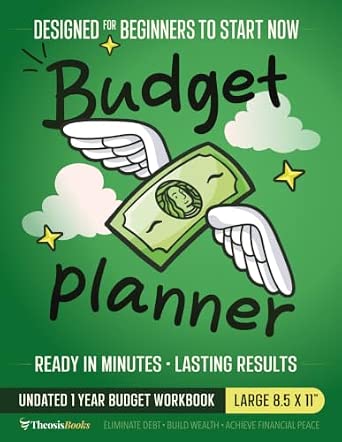 | Best for a Debt-Focused Start | Title: Achieve Financial Peace Budget Planner: 12-Month Debt Workbook for Beginners | Duration: 12 months | Format: Large-size workbook | VIEW LATEST PRICE | See Our Full Breakdown |
| SKYDUE A6 Budget Binder – Money Organizer with 8 Zipper Envelopes, 12 Expense Sheets & 24 Rose Gold Sticky Labels |  | Best for Cash Stuffing | Brand: SKYDUE | Model: SKY-A6Binder-Mystic Blue | Color: Mystic Blue | VIEW LATEST PRICE | See Our Full Breakdown |
| SKYDUE A6 Budget Binder with Zipper Envelopes and Expense Sheets |  | Best Compact Refillable Binder | Brand: SKYDUE | Color: Pink | Size: A6 | VIEW LATEST PRICE | See Our Full Breakdown |
| budget planners for beginner | Format |
|---|---|
| Budget Workbook for Beginners: | Budget workbook |
| Beginner Budget Planner: A 12- | Personal budget journal |
| SOLIGT Undated Monthly Budget | Spiral-bound organizer |
| SUNEE Undated Budget Planner | Undated, 12-month planner |
| Weekly Budget Planner: A Year- | Undated weekly planner |
| Ospelelf Undated Monthly Budge | Organizer |
| Taja Undated Budget Planner an | Organizer |
| Beginner-Friendly Budget Plann | Monthly budgeting book |
| SOLIGT 8.5 x 11-Inch Monthly B | Undated monthly organizer |
| TREES Monthly Bill Payment Che | — |
| Clever Fox Budget Planner | Notebook and organizer |
| SOLIGT Undated Monthly Budget | Undated organizer |
| Achieve Financial Peace Budget | Large-size workbook |
| SKYDUE A6 Budget Binder | — |
| SKYDUE A6 Budget Binder with Z | — |
More Details on Our Top Picks
Budget Workbook for Beginners: Monthly and Weekly Budget Planner
This workbook stands out for pairing monthly planning with weekly check-ins, giving a new budgeter both a broad view and a smaller, repeatable task. That combination can help beginners connect monthly limits to everyday spending instead of relying on a single end-of-month review. Compared with Weekly Budget Planner: A Year-Long Undated Spending Tracker, it also includes monthly planning, while the other title points to a weekly focus. The tradeoff is limited product detail: the available information does not specify page layouts, categories, or extra tracking tools, so I can’t tell how much guidance the workbook provides beyond its two planning periods. It makes most sense for someone who wants a straightforward starting structure, not a detailed finance system.
Pros:- Combines monthly and weekly planning in one workbook
- Designed specifically for beginner budgeters
- Offers both a broad budget view and a recurring short-term check-in
Cons:- Available product details do not describe page layouts or included categories
- No stated features for savings, debt, bills, or receipt storage
Best for: First-time budgeters who want to pair monthly planning with a weekly spending check-in.
Not ideal for: Buyers who need clearly documented worksheets, built-in spending categories, or detailed instructions before choosing a planner.
- Format:Budget workbook
- Planning periods:Monthly and weekly
- Intended audience:Beginners
- Monthly budget journal:Included
- Weekly budget planner:Included
- ASIN:1712635050
Our verdict“Choose this workbook if you want a beginner-oriented routine that links monthly budgets to weekly tracking, and skip it if you need clearly documented worksheets or specialized tools.”
Beginner Budget Planner: A 12-Month Personal Budget Journal
The clearest reason to choose this journal is its 12-month tracking span: beginners can keep expense records in one year-long format rather than starting over after a short trial. Its stated focus on spending and money habits gives it a simple purpose, though the product details do not reveal the actual tracking pages or how the journal guides each month. Compared with Budget Workbook for Beginners: Monthly and Weekly Budget Planner, this one is described as a year-long personal journal, while that workbook explicitly combines monthly and weekly planning. That makes this a better fit for someone who wants continuity, but a less certain pick for a buyer who needs a specific weekly structure or visible categories before committing. The format favors steady recording over feature-rich planning.
Pros:- Designed for beginner budgeters
- Provides a 12-month tracking period
- Focuses on expense tracking and developing money habits
Cons:- Available details do not describe the journal layout
- Specific tracking tools and categories are not listed
- No stated features for bills, savings, or debt tracking
Best for: New budgeters who want to keep expense records and practice consistent money habits across a full year.
Not ideal for: Buyers who need a confirmed weekly layout, named spending categories, or detailed information about included worksheets.
- Format:Personal budget journal
- Duration:12 months
- Experience level:Beginner
- Primary purpose:Expense tracking and spending management
- Stated goal:Support better money habits
- ASIN:B0GDVG4MB9
Our verdict“Pick this journal if a full year of expense tracking is your main goal, but choose a planner with documented weekly pages if you need more structure.”
SOLIGT Undated Monthly Budget Planner with 12 Pockets
Among these picks, the SOLIGT is the most clearly equipped for hands-on monthly management: its pages cover income, expenses, savings, debt payoff, and bills, while 12 pockets keep receipts and documents close to the corresponding planning routine. The undated pages suit beginners who may want to start midyear or pause without wasting dated sections. Compared with the SUNEE Undated Budget Planner, this model’s standout practical difference is its 12 separate pockets; SUNEE instead lists a budgeting guide, stickers, and a dual-sided pocket. SOLIGT’s tradeoffs are its manual approach and lack of pre-filled categories or months, which asks the user to supply more of the organization. It is also larger than a pocket-size journal, though its stated dimensions remain portable for a bag.
Pros:- Tracks income, expenses, savings, debt payoff, and bills
- Includes 12 pockets for receipts and financial documents
- Undated pages allow flexible start dates
- Monthly tabs and a hardcover support regular, organized use
Cons:- Manual tracking requires the user to enter and organize information
- No pre-filled months or categories are listed
- Larger than a small-format journal
Best for: Beginners who manage bills and receipts on paper and want dedicated storage alongside monthly budget tracking.
Not ideal for: People who prefer pre-filled categories, automated tracking, or a compact planner that takes up very little bag space.
- Brand:SOLIGT
- Format:Spiral-bound organizer
- Calendar type:Undated monthly
- Size:9.25 x 6.81 inches
- Weight:0.3 kg
- Paper:100 gsm
- Pockets:12
- Cover:Hardcover
- Model:SOLIGT37-US
Our verdict“Choose the SOLIGT if you want broad monthly tracking plus separate paper storage, and skip it if you prefer guided categories or minimal manual setup.”
SUNEE Undated Budget Planner, 12-Month A5 Finance and Expense Tracker
The SUNEE is the strongest fit here for a beginner who wants extra cues around the budgeting process, not just blank space to fill in. It covers income, expenses, bills, savings, debt, and financial goals, and adds a budgeting guide, full-page calendars, colorful tabs, and stickers. Those touches can make a first year feel more organized without requiring the user to design every page. Compared with the SOLIGT Undated Monthly Budget Planner with 12 Pockets, SUNEE offers a guide and planning accessories, while SOLIGT is the more compelling choice for storing receipts across separate pockets. SUNEE’s main limit is its one-year scope; it is less suited to someone seeking a longer-running organizer. Its A5 size keeps the setup relatively compact, but it still asks for regular manual entry.
Pros:- Covers income, expenses, bills, savings, debt, and financial goals
- Undated 12-month format can start at any time
- Includes a budgeting guide and full-page calendars
- Water-resistant cover, elastic band, pocket, tabs, and sticker sheets add practical organization
Cons:- Designed for one year of use
- Includes a dual-sided pocket rather than the SOLIGT’s 12 separate pockets
- Manual planning still depends on regular user entries
Best for: First-time budgeters who want a compact one-year planner with a guide, calendars, and visual cues for several financial goals.
Not ideal for: People who want a multi-year organizer, multiple receipt pockets, or a budget system that tracks spending automatically.
- Brand:SUNEE
- Size:A5 (6.4 x 8.3 inches)
- Format:Undated, 12-month planner
- Cover:Water-resistant
- Storage:Dual-sided pocket
- Organization:Colorful monthly tabs
- Accessories:4 sticker sheets
- Guidance:Budgeting guide
- Warranty:90 days
Our verdict“Choose SUNEE if you want guided, visual planning for a single year; pick the SOLIGT instead if keeping receipts in multiple pockets matters more.”
Weekly Budget Planner: A Year-Long Undated Spending Tracker
This planner’s defined lane is weekly spending tracking across a year, with an undated format that lets a beginner start when ready. A weekly view can make spending patterns easier to notice before the month ends, especially for someone who prefers short check-ins over building a detailed monthly budget. Compared with Budget Workbook for Beginners: Monthly and Weekly Budget Planner, this product is described only as a weekly tracker, while the workbook explicitly pairs weekly and monthly planning. That narrower scope may suit a buyer who wants a simple weekly habit, but the sparse product information leaves major questions about its layout, categories, and any supporting worksheets. It is a less informed choice than the SOLIGT or SUNEE planners, whose listed features spell out more of what beginners can track.
Pros:- Undated format allows a flexible start date
- Designed for year-long spending tracking
- Weekly focus supports frequent check-ins
Cons:- Available details do not describe the planner’s layout
- No specific tracking categories or extra features are listed
- Monthly planning tools are not specified
Best for: Beginners who want an undated, year-long place to check spending weekly and do not need a confirmed monthly budget system.
Not ideal for: Buyers who need documented page layouts, monthly budget pages, or named tools for bills, savings, and debt.
- Format:Undated weekly planner
- Duration:One year
- Primary purpose:Spending tracking
- Planning period:Weekly
- Calendar status:Undated
- ASIN:1441332863
Our verdict“Pick this if you want a simple weekly spending tracker for a year, but choose a more fully specified planner if you need broader budgeting tools.”
Ospelelf Undated Monthly Budget Planner, 8.5 x 11 in, Pink Floral
The Ospelelf suits beginners who want one place for monthly budgets, bills, savings goals, and daily expenses, with no printed dates to make a late start feel wasted. Its clipboard-style hard cover, pockets, pen loop, and elastic closure help keep loose paperwork and a pen together, while the ruler and bookmark support quick page-to-page use. Compared with the Taja Undated Budget Planner, Ospelelf offers a larger letter-size writing area and a more protective cover, but that extra room makes it less convenient to carry around. The included stickers add a little flexibility, though they do not replace the work of entering dates and maintaining a routine. I’d pick it for someone who mainly plans at home or at a desk and wants a substantial all-in-one organizer.
Pros:- Undated 12-month format can be started at any time
- Includes sections for budgets, bills, savings, and daily expenses
- Hard cover, pockets, pen loop, and elastic closure help keep planning supplies together
- Bookmark, ruler, and stickers are included
Cons:- Letter-size format is less convenient to carry than a smaller planner
- Users must fill in dates and keep the planner updated themselves
Best for: Beginners who plan mostly at home and want room for monthly budgets, daily spending, bills, and savings in one sturdy organizer.
Not ideal for: Commuters or anyone seeking a compact planner; its 8.5 x 11-inch pages take up more bag space than the Taja.
- Format:Organizer
- Calendar type:Monthly
- Duration:12 months
- Dates:Undated
- Size:8.5 x 11 inches
- Binding:Ring
- Cover:Hard cardboard with metal corner protectors
- Included accessories:Stickers, bookmark, ruler, pockets, pen loop, and elastic closure
Our verdict“Choose Ospelelf if you want a roomy, accessory-rich planner for mostly desk-based budgeting rather than daily carry.”
Taja Undated Budget Planner and Expense Tracker, 6.9 × 9.9 in
The Taja is a practical starting point for beginners who need to track more than everyday spending: its monthly pages cover income, expenses, savings goals, bills, and debt, and a guidebook offers extra direction. That broader scope makes it a stronger fit for someone organizing several parts of their finances than a bill-focused checklist such as the TREES Monthly Bill Payment Checklist. Its undated layout also lets a new budgeter begin whenever they are ready. The tradeoff is that users must write in the dates, so it requires a small setup step before the monthly routine begins. At 6.8 × 9.8 inches, it is less bulky than the letter-size Ospelelf, while still offering a dual-sided pocket and elastic band for keeping papers in place. Three sticker sheets are a bonus, not a substitute for consistent tracking.
Pros:- Tracks income, expenses, savings goals, bills, and debt
- Undated monthly pages can be started at any time
- Guidebook supports users who want direction as they begin
- Includes a dual-sided pocket, elastic band, and three sticker sheets
Cons:- Dates must be filled in by the user
- Its 6.8 × 9.8-inch format is not a pocket-size planner
Best for: New budgeters who want guided monthly tracking for income, bills, debt, expenses, and savings in one undated planner.
Not ideal for: Buyers who want a predated planner or a small pocket-size option; the dates need to be filled in and its pages are larger than compact carry formats.
- Model:T010
- Format:Organizer
- Calendar type:Non-dated
- Size:6.8 × 9.8 inches
- Binding:Spiral-bound
- Pages:150
- Color:A. Pink
- Included extras:Guidebook, three sticker sheets, dual-sided pocket, and elastic band
Our verdict“Choose Taja if you want guided, broad monthly tracking and do not mind filling in the dates yourself.”
Beginner-Friendly Budget Planner with 35 Savings Challenges
This planner’s clearest point of difference is its 35 savings challenges, making it a good match for beginners who need a concrete prompt to save alongside their monthly budget. It also covers income, expenses, debts, bills, and sinking funds, with tools for recurring and variable expenses. Compared with the Taja Undated Budget Planner, which pairs broad tracking with a guidebook and storage pocket, this option puts more emphasis on turning saving into a series of activities. That focus can make a new routine feel more actionable, but the supplied details do not specify its size, binding, page count, or whether it is undated. I would choose it for the savings prompts and category coverage, not for portability or a particular physical layout. Buyers who want those practical details settled before purchase may prefer a planner with more clearly listed specifications.
Pros:- Includes 35 savings challenges to prompt regular saving
- Tracks income, expenses, debts, and bills
- Includes sinking funds as part of the budgeting scope
- Addresses both recurring and variable expenses
Cons:- Size, binding, and page count are not specified in the provided product details
- The available details do not confirm whether pages are dated or undated
Best for: Beginners who want savings prompts and a place to track bills, debt, income, expenses, and sinking funds.
Not ideal for: Shoppers who need a confirmed size, binding style, page count, or undated format before choosing a planner.
- Format:Monthly budgeting book
- Skill level:Beginner-friendly
- Savings challenges:35
- Tracking areas:Income, expenses, debts, and bills
- Savings planning:Sinking funds and savings challenges
- Expense types:Recurring and variable expenses
Our verdict“Choose this planner if savings challenges are the main motivation you need, and verify the physical format if layout matters to you.”
SOLIGT 8.5 x 11-Inch Monthly Budget Planner and Bill Organizer
The SOLIGT is built for beginners who want generous writing space and a monthly review habit, not a planner to carry everywhere. Its undated, 12-month layout combines budget, debt, bill, and expense trackers with financial goals and monthly review sections, so users can see both routine spending and progress over time. Compared with the Ospelelf, it adds a specified 120 gsm paper weight and a receipt-and-bill pocket, while sharing the large letter-size format that limits portability. Its spiral-bound hardcover suits repeated page use, but the roomy layout will take more space than the smaller Taja. Five stickers are included, though the core value is the tracking structure rather than decorative extras. I’d rank it for someone who budgets at a table and wants space to write and reflect each month.
Pros:- Undated 12-month format can be started at any time
- Dedicated sections cover budgets, debt, bills, expenses, goals, and monthly reviews
- 120 gsm paper and spiral-bound hardcover support a substantial planning format
- Includes a document pocket and five stickers
Cons:- Large letter-size pages are less convenient for carrying
- Users must fill in dates and maintain their own budgeting routine
Best for: Beginners who plan at home and want ample page space for monthly budgets, debt tracking, bills, expenses, and reviews.
Not ideal for: People who need a lightweight everyday carry planner; its 8.5 x 11-inch size is less portable than Taja’s format.
- Format:Undated monthly organizer
- Duration:12 months
- Size:8.5 x 11 inches (Letter)
- Binding:Spiral-bound
- Cover:Hardcover, boho design
- Paper weight:120 gsm
- Features:Monthly budget, debt, bill, expense, financial goal, and monthly review sections
- Extras:Document pocket and five stickers
Our verdict“Choose SOLIGT if writing room and monthly reflection matter more to you than a compact planner.”
TREES Monthly Bill Payment Checklist and 4-Year Organizer
The TREES stands apart from the other planners here by stretching bill and finance records across four years. Its 128 pages include bill records, due dates and payments, income and expenses, debt payoff logs, savings goals, yearly summaries, bank details, and notes. That makes it a better fit for someone who wants ongoing records than the Beginner-Friendly Budget Planner with 35 Savings Challenges, which emphasizes short-term savings prompts. At 8 × 10 inches, it is a little smaller than the letter-size SOLIGT, though still a substantial paper planner. The longer tracking period can reduce the need to replace it each year, but it also means committing to a multi-year handwritten system. I’d choose TREES for continuity and bill organization, not for users looking for a challenge-led introduction to saving.
Pros:- Tracks bills, due dates, payments, income, and expenses
- Includes debt payoff logs and savings goals
- Four-year tracking period supports longer-term record keeping
- Provides yearly summaries, bank-detail sections, and notes
Cons:- All records must be written in by hand
- The 8 × 10-inch format is larger than a compact daily-carry planner
Best for: Beginners who want one handwritten place to track bills, debt payoff, income, expenses, and savings goals across multiple years.
Not ideal for: People who prefer digital tracking, want savings challenges, or need a very compact planner; entries are handwritten and the format is 8 × 10 inches.
- Pages:128
- Dimensions:10 x 8 inches
- Binding:Spiral-bound
- Color:Green
- Tracking period:4 years
- Bill records:960
- Tracking sections:Bills, income, expenses, savings goals, and debt payoff
- Additional sections:Yearly summaries, bank details, and notes
Our verdict“Choose TREES if multi-year bill records matter more than guided savings challenges or digital convenience.”
Clever Fox Budget Planner, Monthly Bill Tracker, 5.8 x 8.3 in, Gray
The Clever Fox is a strong fit for a beginner who wants one book to cover monthly budgets, spending, savings, and debt without choosing a start date first. Its undated 12-month setup lets you begin when you are ready, while the included guide can help make the first planning session less of a guessing game. Compared with the SOLIGT Undated Monthly Budget Planner with 12 Pockets, it is more compact and adds dedicated savings and debt trackers, but gives up the SOLIGT’s many pockets for keeping paper bills and receipts sorted by month. The vegan-leather cover, bookmarks, pen loop, stickers, and receipt pocket make it a self-contained kit. The tradeoff is that its 5.8 × 8.3-inch pages offer less writing room than a larger planner, and the structured monthly format may feel limiting to anyone who wants daily cash-envelope tracking.
Pros:- Undated 12-month format can start at any point in the year.
- Includes separate monthly budget and expense pages, eight savings trackers, and 12 debt trackers.
- Receipt pocket, pen loop, bookmarks, and stickers keep basic planning supplies together.
- User guide offers a starting point for beginners unfamiliar with budgeting layouts.
Cons:- Compact pages may feel cramped for detailed notes or multiple income sources.
- One receipt pocket offers less category-by-category storage than the SOLIGT planner’s 12 pockets.
- Monthly tracking is less suited to people who want to record cash spending day by day.
Best for: Beginners who want a portable, guided 12-month paper system for monthly spending, savings goals, and debt tracking.
Not ideal for: People who need generous writing space, daily tracking, or many separate pockets for sorting receipts and bills.
- Brand:Clever Fox
- Model:CFBP
- Size:5.8 × 8.3 inches
- Format:Notebook and organizer
- Duration:Undated, 12 months
- Paper:120 gsm
- Cover:Vegan leather
- Trackers:Monthly budget and expenses, 8 savings trackers, 12 debt trackers
- Included features:Pen loop, elastic band, three bookmarks, receipt pocket, budgeting stickers, and user guide
Our verdict“Choose the Clever Fox if you want a guided, portable planner that combines monthly budgeting with dedicated savings and debt tracking.”
SOLIGT Undated Monthly Budget Planner with 12 Pockets
The SOLIGT is the clearest choice here for a beginner who wants to keep receipts and bills physically sorted alongside a written budget. Twelve pockets give each month a place for paperwork, while tabs make it easier to move between sections than in the pocket-light Clever Fox Budget Planner. Its pages cover income, expenses, bills, savings, and debt across daily, monthly, and yearly planning, giving a new budgeter several ways to review money habits. The undated format also avoids wasting pages if you begin midyear. The tradeoff is that the budget categories are blank, so beginners must decide what to track rather than rely on a fully assigned category list. It is also limited to one year of pages, and its 9.25 × 6.81-inch format is less compact than an A6 binder such as the SKYDUE.
Pros:- Twelve pockets provide a separate storage place for each month’s bills and receipts.
- Undated pages let users begin at any time without losing calendar pages.
- Daily, monthly, and yearly pages cover several levels of financial planning.
- Navigation tabs make the planner easier to browse than an unsectioned notebook.
Cons:- Blank budget categories require beginners to choose and write in their own labels.
- The included planning pages cover only one year.
- Its larger page footprint is less portable than the SKYDUE A6 binders.
Best for: Beginners who handle paper bills or receipts and want a tabbed, one-year planner with a dedicated pocket for each month.
Not ideal for: People who want pre-filled budget categories, a multi-year system, or a compact planner that takes up little bag space.
- Brand:SOLIGT
- Format:Undated organizer
- Page size:9.25 × 6.81 inches
- Binding:Spiral-bound
- Cover material:Cardboard
- Color:Blue Floral
- Pockets:12
- Weight:0.3 kg
- Planning coverage:Daily, monthly, and yearly pages for income, expenses, bills, savings, and debt
Our verdict“Pick the SOLIGT if keeping monthly paperwork with your budget matters more than pre-set categories or a compact format.”
Achieve Financial Peace Budget Planner: 12-Month Debt Workbook for Beginners
This workbook is aimed at beginners whose main budgeting goal is to get a clearer handle on debt alongside everyday finances. Its 12-month scope provides a year-long structure, and the large format suggests more room for written budgeting and debt-tracking activities than the compact SKYDUE A6 binder. That can suit someone who prefers working through figures on the page rather than storing cash in envelopes. Compared with the Clever Fox Budget Planner, the Achieve Financial Peace title puts debt-workbook use at the center, while the Clever Fox provides more specified tools, including eight savings trackers, 12 debt trackers, a receipt pocket, and a user guide. The information provided here does not detail the workbook’s page layout, materials, or specific exercises, so I would not choose it on the assumption that it includes a particular method. Its large format may also be less convenient to carry.
Pros:- Designed specifically for beginners starting a budgeting routine.
- Combines budgeting and debt tracking in one 12-month workbook.
- Large format may provide more room for written activities than an A6 binder.
Cons:- Available product details do not specify page layouts or particular debt-planning exercises.
- No included storage pockets, labels, or other organizing accessories are specified.
- Large format is less convenient to carry than the Clever Fox or SKYDUE A6 options.
Best for: Beginners who want a year-long, large-format workbook centered on budgeting and debt tracking at a desk.
Not ideal for: Shoppers who need confirmed details about page layouts and exercises, or who want a compact planner with storage accessories.
- Title:Achieve Financial Peace Budget Planner: 12-Month Debt Workbook for Beginners
- Duration:12 months
- Format:Large-size workbook
- Intended audience:Beginners
- Planning focus:Budgeting and debt tracking
- Workbook type:Budget planner and debt workbook
Our verdict“Choose this workbook if a large, year-long budgeting and debt focus matters more to you than portable storage or detailed feature specifications.”
SKYDUE A6 Budget Binder – Money Organizer with 8 Zipper Envelopes, 12 Expense Sheets & 24 Rose Gold Sticky Labels
The SKYDUE A6 binder suits beginners who want budgeting to be hands-on and cash-based. Eight tear-resistant zipper envelopes let users divide cash by spending category, while the 12 expense sheets and 24 sticky labels support a simple record of where money goes. Its compact A6 size is easier to carry than the larger SOLIGT spiral planner, but that portability comes with less room for notes and only eight envelope slots. Compared with the pink SKYDUE A6 Budget Binder, this mystic blue version has the same core envelope-and-sheet approach, with the supplied description specifically calling out rose gold labels and hidden compartments. The six-ring format accepts standard A6 pages, not larger documents. This is a focused cash organizer rather than a full monthly planning book, so it may not be enough on its own for someone who wants broad income, savings, and debt planning.
Pros:- Eight zipper envelopes offer separate compartments for cash categories.
- Includes 12 expense sheets and 24 sticky labels for organizing and recording spending.
- Compact A6 format is easy to carry in a handbag or backpack.
- PU faux-leather cover includes hidden compartments and pen hoops.
Cons:- Eight envelopes may not cover every category in a detailed household budget.
- A6 pages provide limited space compared with full-size planners.
- Standard A6 format does not fit larger documents or sheets.
Best for: Beginners who want to try cash stuffing with labeled envelopes and a small expense record they can carry in a bag.
Not ideal for: People who need more than eight cash categories, roomy writing pages, or a comprehensive monthly budget and debt planner.
- Brand:SKYDUE
- Model:SKY-A6Binder-Mystic Blue
- Color:Mystic Blue
- Material:PU faux leather
- Paper size:A6
- Binding:Six-hole format
- Cash envelopes:8 zipper envelopes
- Expense sheets:12
- Labels:24 rose gold sticky labels
Our verdict“Choose this SKYDUE binder if you want a portable cash-stuffing starter kit and do not need a full-size planning workbook.”
SKYDUE A6 Budget Binder with Zipper Envelopes and Expense Sheets
This pink SKYDUE is a compact option for beginners who want to carry a basic cash-and-expense tracking setup rather than a bound monthly planner. Its six-ring A6 format, eight zipper pockets, and 12 expense sheets combine cash storage with a place to record deposits, withdrawals, and spending. The cover’s storage compartments and pen loop add practical carry features. Compared with the mystic blue SKYDUE A6 Budget Binder, this listing also specifies a 7.5 × 5.3-inch size and 0.28 kg weight; both share the small-format, eight-envelope approach, so neither is the pick for extensive category tracking. The refillable ring format can suit someone who wants to add or rearrange standard A6 pages, but the included capacity is only 0.5 inches. Beginners seeking a guided, year-long budget structure may find the Clever Fox more complete.
Pros:- Eight zipper pockets organize cash by category.
- Twelve expense sheets support tracking deposits, withdrawals, and spending.
- Six-ring A6 format allows standard-size pages to be added or rearranged.
- Cover includes storage compartments and a pen loop.
Cons:- A6 pages offer less writing room than larger planners such as the SOLIGT.
- Eight pockets may be too few for users with many spending categories.
- The 0.5-inch capacity limits how many extra pages the binder can hold.
Best for: Beginners who want a lightweight, refillable A6 binder for carrying cash envelopes and recording basic spending.
Not ideal for: People who want generous writing space, many cash categories, or a guided year-long budget and debt-planning system.
- Brand:SKYDUE
- Color:Pink
- Size:A6
- Dimensions:7.5 × 5.3 inches
- Weight:0.28 kg
- Material:Faux leather, metal, paper, and plastic
- Binding:Six-hole format
- Zipper pockets:8
- Expense sheets:12
Our verdict“Pick this SKYDUE if portability and rearrangeable A6 pages matter more than a roomy, guided budget-planning layout.”

How We Picked
I compared the 15 listed planners by how approachable their budgeting systems appear for someone starting from scratch. I looked at the type of routine each supports—monthly planning, weekly expense tracking, bill checklists, savings challenges, debt work, or cash envelopes—and whether its format leaves room to adjust. Size and portability mattered because a planner that stays at home serves a different purpose from one carried for daily spending notes.
The ranking favors tools that can support a useful beginner routine without requiring a narrow budgeting style. A clear general-purpose planner ranks ahead of a specialized format for most first-time budgeters; compact options, large writing areas, and cash-envelope systems earn attention for buyers who prioritize those needs. Tradeoffs count: a binder may offer hands-on cash organization but require more upkeep, while a workbook may guide planning but provide less flexibility. Product names and listed features are used as supplied; where two entries appear identical or similar, I do not treat the duplicate listing as proof of a different design.
Factors to Consider When Choosing Budget Planners For Beginners
Before choosing a planner, decide what action you want it to make easier: setting a monthly plan, recording day-to-day spending, remembering bills, or separating cash into categories. The best starter format is usually the one that fits your existing habits, not the one with the most pages or accessories.
Choose a planning rhythm you can maintain
Monthly pages work well when income and bills follow a predictable cycle, because you can plan once and check progress through the month. Weekly tracking gives frequent feedback, which can help if small purchases are easy to lose track of. A common mistake is picking a daily or weekly system because it sounds more thorough, then leaving it blank when life gets busy. Think about how often you already review your money and choose a planner that asks for a similar level of attention. If your schedule varies, an undated format can reduce the pressure of missed pages. A fixed year-long workbook may feel more guided, but its calendar structure can be less forgiving if you start midyear.
Match the page layout to your writing habits
Large planners give you room for notes, itemized spending, and bill details, but they take up more desk or bag space. A5 and pocket-size options are easier to carry, though their smaller writing areas may encourage brief entries rather than detailed reviews. Consider whether you plan at a table or want to record purchases away from home. Before buying, check the dimensions and look for the kinds of entries you expect to make, such as category totals or bill dates. Beginners often focus on page count and overlook whether the available space fits their handwriting and level of detail. A smaller planner is not automatically simpler if each page feels crowded.
Decide whether you need a cash-envelope system
Pocket planners and zipper-envelope binders are designed to connect a written budget with physical cash set aside by category. That can make spending limits visible, but it requires withdrawing cash, dividing it, and updating the planner consistently. If you mostly pay by card, a pocket system may become an extra task rather than a helpful cue. Also think about whether you are comfortable carrying cash and how securely you can store the binder. A plain expense tracker may be easier to maintain for card-based spending, while envelopes can suit people who benefit from a tangible boundary. Choose the system that matches how you actually pay, not a method you feel you ought to adopt.
Check whether you want general budgeting or a focused goal
A general monthly planner can support bills, spending, and savings within one routine. A savings-challenge book puts more attention on building a specific savings habit, while a debt-focused workbook centers the process on repayment. Specialized pages can make a concrete goal easier to follow, but may leave less room for unrelated planning. A frequent beginner mistake is choosing a goal-specific planner before identifying the main source of money stress. Start by naming the task you most want help with, then decide whether a focused workbook or a flexible all-purpose layout fits better. If your priorities may change soon, flexibility can be more useful than extra themed pages.
Think about upkeep before paying for extras
Accessories such as pockets, labels, and envelopes can help organize a process, but each one adds another item to maintain. A binder may invite category-by-category cash organization, while a bound journal keeps the routine simpler and more contained. Ask yourself whether you will refill envelopes, label categories, and keep loose pages together. More components do not automatically make a budget easier to follow. For a first planner, a modest setup can be a better learning tool than a system that demands frequent sorting. Choose extras only when they solve a problem you already recognize.
Frequently Asked Questions
Should I choose a dated year-long planner or an undated one?
A dated year-long planner can provide a clear sequence and encourage regular reviews if you are starting at the beginning of its planning period. An undated planner lets you begin whenever you are ready and skip unused months without feeling behind. The tradeoff is that undated pages may require you to label dates or create your own rhythm. If you tend to abandon planners after a missed week, flexibility may matter more than a pre-set calendar. Choose based on how you respond to structure, not on how complete the planner looks.
Do I need a planner with pockets or zipper envelopes?
You need them only if you plan to budget with physical cash and want separate amounts for spending categories. Envelopes can make remaining cash easy to see, but they take ongoing effort to fill, carry, and reconcile. If your purchases are mostly electronic, a planner with expense and bill pages may fit your routine better. Consider comfort and security too: carrying cash is not convenient for every person or situation. A cash system should make your existing plan clearer, not force you into a payment method you dislike.
Is a compact budget planner too small for a beginner?
Not necessarily; a compact planner can work well if you mainly need brief spending notes, bill reminders, and regular check-ins. It may feel limiting if you want to write detailed category plans or keep several financial goals on each page. Think about where you will use it and how much you typically write before choosing a size. A portable planner may be more useful if you will carry it, while a larger format can suit at-home planning. Check the stated dimensions rather than relying on labels such as A5 or pocket size alone.
Should I start with a savings-challenge or debt-focused planner?
Choose a specialized planner when that goal is the main reason you want a paper system. A savings-challenge format can add prompts and milestones for setting money aside, while a debt workbook can keep repayment planning in focus. If you also need help tracking ordinary bills and spending, check that the specialized pages cover those tasks or pair them with another method. Beginners sometimes choose a motivating goal format but discover it does not answer their day-to-day budgeting needs. Start with your most urgent task, then decide whether you need a focused tool or a general planner first.
What should I do if I miss a week or month of budget entries?
Resume with the next useful planning period rather than trying to recreate every detail you missed. Use bank or card records for a broad picture if you need to catch up, but avoid turning the planner into a bookkeeping project. This is one reason undated formats can suit beginners who expect interruptions. A fixed workbook can still work if you treat unused pages as optional rather than a reason to quit. A planner should help you make the next decision, not punish you for an imperfect record.
Conclusion
For most beginners, I would start with the Beginner Budget Planner: A 12-Month Personal Budget Journal as the best overall choice for a guided, general-purpose routine. For best value, consider the Weekly Budget Planner: A Year-Long Undated Spending Tracker if frequent spending check-ins are your priority and you want the freedom to start at any time. The best for beginners is the guided 12-month journal; choose the SOLIGT undated planner with 12 pockets as the best for cash-envelope budgeting, or a SKYDUE A6 binder if a compact envelope-based setup is the specific need. For a more involved, goal-focused system, the Achieve Financial Peace debt workbook is the best premium-style pick among these options for readers whose main task is debt planning. Match the format to the habit you want to build, and choose a simpler planner if extra structure is likely to go unused.
Fall Picks
fall essentials
As an affiliate, we earn on qualifying purchases.