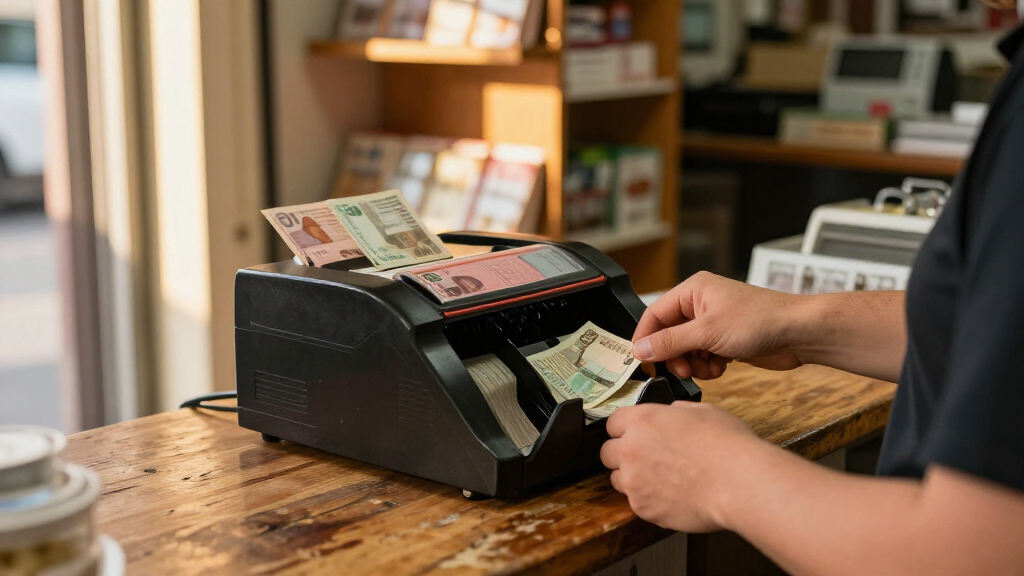

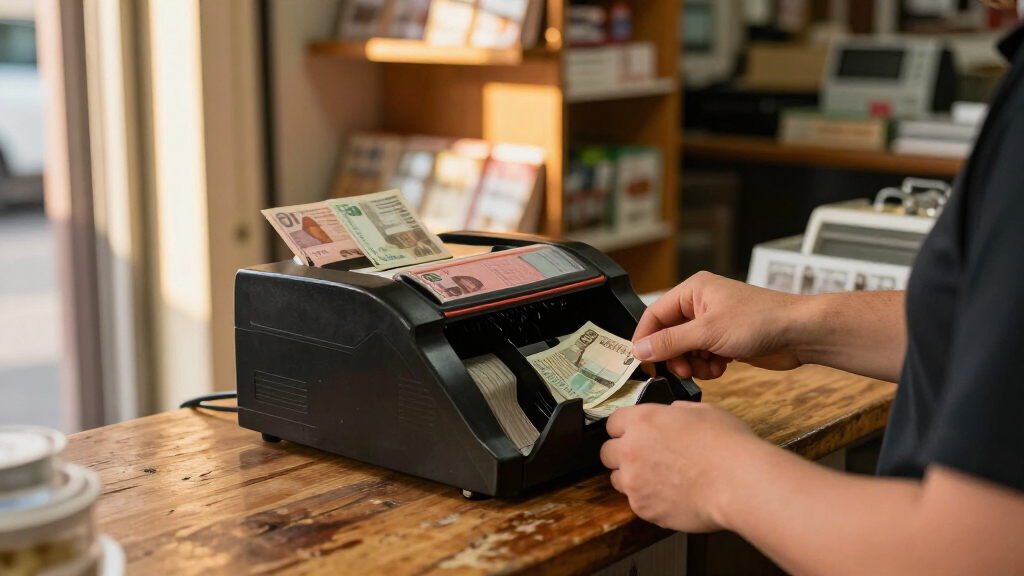
Cash counting machines split into two camps: affordable single-denomination counters that tally bills fast, and mixed denomination machines that actually tell you how much money you have. My top pick overall is the Kolibri KBR-1500 V2, because its mixed denomination counting and dual counterfeit detection handle the widest range of real-world tasks. The MUNBYN IMC22 Pro is a strong runner-up for small businesses wanting mixed counting with dual displays at a lower price point, while the Cassida Money Bill Counter Business Grade is the best simple workhorse if you count same-denomination batches all day. The main tradeoff is speed versus intelligence: basic counters are faster and cheaper but can’t total mixed stacks, while value-counting models cost more and count slower. Read on for the full breakdown of all 15 machines.

Get smart everyday buys delivered free with Prime
- Fast, free delivery on millions of items
- Prime Video, Amazon Music and more included
- Member-only deals all year
Key Takeaways
- Mixed denomination counters (Kolibri KBR-1500 V2, MUNBYN IMC22 Pro, Aneken N60) dominated the top spots because they count value, not just quantity — the single biggest differentiator in this lineup.
- The MUNBYN IMC51 appears twice in the lineup as both a solo unit and bundle offering, so buyers comparing prices should check which accessories are included rather than assuming duplicates.
- Counterfeit detection depth varies widely: PONNOR‘s dual models stack UV, IR, MG and DD sensors, while entry-level units like the SVANTTO lean on fewer layers — a real gap if fake bills are a known risk.
- Business-grade models from Cassida and Kolibri trade smart features for durability and throughput, making them better suited to high-volume counting than any mixed denomination machine here.
- Dual displays (Aneken N60, MUNBYN IMC22 series) matter more than they seem, letting a clerk and a customer verify the same count simultaneously — a quiet advantage for retail counters.
| MUNBYN IMC51 Money Counter Machine |  | Best for High-Speed Single-Denomination Counting | Model: IMC51 | Currency: USD only | Counting Speed: 1,100 bills/min | VIEW LATEST PRICE | See Our Full Breakdown |
| PONNOR Money Counter with UV, IR, MG, and DD Detection (AL-5100) |  | Best Value Workhorse | Model: AL-5100 | Currencies: USD, EUR | Counting Speed: Up to 1,300 bills/min | VIEW LATEST PRICE | See Our Full Breakdown |
| Aneken N60 Mixed Denomination Money Counter Machine |  | Best Overall | Model: N60 | Currencies: USD, CAD, MXN, EUR, GBP | Counting Speed: 1,200 bills/min | VIEW LATEST PRICE | See Our Full Breakdown |
| PONNOR Money Counter with Value Counting and Counterfeit Detection (US0720-N) |  | Best for Quiet Front-Counter Use | Model: US0720-N | Counting Speed: Up to 1,200 bills/min | Detection: UV, MG, IR, MT, DD | VIEW LATEST PRICE | See Our Full Breakdown |
| Cassida Money Bill Counter Business Grade (Valucount) |  | Best for High-Volume Throughput | Model: Valucount | Counting Speed: 1,400 notes/min | Detection: UV, Magnetic, Infrared | VIEW LATEST PRICE | See Our Full Breakdown |
| Cassida 5520 UV/MG Money Bill Counter |  | Best Speed-First Single-Feed Counter | Counting Speed: Up to 1,300 bills per minute | Detection: Ultraviolet, magnetic, and infrared sensors | Modes: Count, add, and batch | VIEW LATEST PRICE | See Our Full Breakdown |
| MUNBYN IMC51 Money Counter Machine |  | Best Counterfeit Screening for the Price | Counting Speed: 1,100 bills per minute | Detection Technology: UV, IR, MG, MT, dimensional, thickness, security line, variable ink, spectrum, fluorescence | Modes: Value count, add, batch | VIEW LATEST PRICE | See Our Full Breakdown |
| Aneken Money Counter with Value Count and Counterfeit Detection |  | Best Budget Starter Machine | Counting Speed: Up to 1,000 bills per minute | Noise Level: Under 60 dB | Detection Modes: UV, MG, IR, DD, DBL, HLF, CHN | VIEW LATEST PRICE | See Our Full Breakdown |
| MUNBYN IMC22 Mixed Denomination Money Counter with Dual Display and Counterfeit Detection |  | Best for Multi-Currency Businesses | Counting Speed: Up to 1,200 bills per minute | Counterfeit Detection: CIS, UV, MG, IR, and MT sensors; 11 security checks | Display: 3.5-inch TFT display and customer-facing screen | VIEW LATEST PRICE | See Our Full Breakdown |
| MUNBYN IMC22 Pro Mixed Denomination Money Counter with Dual Displays |  | Best Premium Pick for Serious Cash Operations | Counting Speed: Up to 1,200 bills per minute | Counting Modes: MDC, SDC, CNT, Batch, ADD | Counterfeit Detection: CIS, UV, IR, MG, and MT sensors; 11 detection technologies | VIEW LATEST PRICE | See Our Full Breakdown |
| SVANTTO Money Counter Machine with Value Count |  | Best Portable Pick | Counting Speed: 1300 notes/min | Hopper Capacity: 200 bills | Stacker Capacity: 200 bills | VIEW LATEST PRICE | See Our Full Breakdown |
| Aneken DC002 Money Counter with Value Counting |  | Best Value Pick | Currencies: USD and EUR | Counting Speed: Up to 1,300 bills per minute | Hopper Capacity: Up to 200 bills | VIEW LATEST PRICE | See Our Full Breakdown |
| LOLARAN AL1000 Money Counter Machine with Value Counting for USD & EUR |  | Best for Readability | Counting Speed: 1,300 notes/min | Hopper Capacity: 200 banknotes | Display: 3.7-inch LCD plus external display | VIEW LATEST PRICE | See Our Full Breakdown |
| Kolibri KBR-500 Business Grade Money Counter Machine |  | Best Multi-Currency Workhorse | Counting Speed: 1,200 bills per minute | Supported Currencies: USD, CAD, MXN, GBP, EUR | Detection Features: IR, UV, magnetic, half/chain/double bill detection | VIEW LATEST PRICE | See Our Full Breakdown |
| Kolibri KBR-1500 V2 Mixed Denomination Money Counter |  | Best Premium for USD | Counting Speed: 1,200 notes/min | Display: 4.5-inch TFT | Detection Types: IR, UV, MG, MT, DD, HLF | VIEW LATEST PRICE | See Our Full Breakdown |
| cash counting machine | Counting Speed |
|---|---|
| MUNBYN IMC51 Money Counter Mac | 1,100 bills/min |
| PONNOR Money Counter with UV | Up to 1,300 bills/min |
| Aneken N60 Mixed Denomination | 1,200 bills/min |
| PONNOR Money Counter with Valu | Up to 1,200 bills/min |
| Cassida Money Bill Counter Bus | 1,400 notes/min |
| Cassida 5520 UV/MG Money Bill | Up to 1,300 bills per minute |
| MUNBYN IMC51 Money Counter Mac | 1,100 bills per minute |
| Aneken Money Counter with Valu | Up to 1,000 bills per minute |
| MUNBYN IMC22 Mixed Denominatio | Up to 1,200 bills per minute |
| MUNBYN IMC22 Pro Mixed Denomin | Up to 1,200 bills per minute |
| SVANTTO Money Counter Machine | 1300 notes/min |
| Aneken DC002 Money Counter wit | Up to 1,300 bills per minute |
| LOLARAN AL1000 Money Counter M | 1,300 notes/min |
| Kolibri KBR-500 Business Grade | 1,200 bills per minute |
| Kolibri KBR-1500 V2 Mixed Deno | 1,200 notes/min |
More Details on Our Top Picks
MUNBYN IMC51 Money Counter Machine
The MUNBYN IMC51 is built around one job: counting pre-sorted USD bills fast, and at 1,100 bills per minute it does that well. Its standout strength is the upgraded roller assembly, which handles old and creased bills that stall cheaper machines — a real advantage if your cash comes from tips, registers, or street vendors rather than a bank. Compared with the PONNOR AL-5100, it trades multi-currency support (USD only) for that smoother feeding, and the Add+Batch mode makes strapping bundles a one-step job. The tradeoff is structural: it cannot recognize denominations, so mixed drawers must be hand-sorted first. If you count large volumes of same-denomination cash daily, this focus is a feature, not a flaw — but it makes the IMC51 a poor fit for anyone handling varied tills.
Pros:- 1,100 bills/min counting speed keeps large deposits moving
- Four-layer counterfeit detection (UV, MG, IR, MT) catches suspect bills
- Add+Batch mode combines tallying and bundling in one pass
- Upgraded rollers feed worn and creased bills reliably
Cons:- No denomination recognition — bills must be pre-sorted by hand
- USD-only support with a 110V plug limits international use
Best for: Small business owners who count large, pre-sorted stacks of US currency daily and bundle bills for bank deposits
Not ideal for: Retailers or events handling mixed-denomination drawers, since every stack must be manually sorted before counting
- Model:IMC51
- Currency:USD only
- Counting Speed:1,100 bills/min
- Detection:UV, MG, IR, MT
- Modes:Value, Add, Batch
- Voltage:110V
Our verdict“This pick makes the most sense for US businesses that already sort by denomination and want fast, jam-resistant counting above all else.”
PONNOR Money Counter with UV, IR, MG, and DD Detection (AL-5100)
PONNOR’s AL-5100 earns its value badge by refusing to cut corners where it counts. At up to 1,300 bills per minute, it outpaces the pricier Aneken N60 on raw speed, and the 200-bill hopper plus dual displays (a 3.7-inch LCD plus an external screen) are features usually reserved for costlier machines. The external display matters more than it sounds — customers at a counter can watch the count happen, which builds trust at point of sale. Compared with the MUNBYN IMC51, it adds EUR support and dimensional detection (DD), though like most budget counters it still expects pre-sorted stacks. It runs under 60 dB, which is quieter than many rivals. The compromises: 110V-only power and no support for currencies beyond USD and EUR keep it firmly in the value lane rather than the premium one.
Pros:- Up to 1,300 bills/min with a 200-bill hopper capacity
- Four counterfeit detection methods including dimensional checks
- Dual displays let customers verify counts in real time
- Runs under 60 dB for front-of-house use
Cons:- Cannot recognize mixed denominations automatically
- 110V American-standard plug requires a converter abroad
Best for: Budget-conscious shop owners who need bank-deposit-ready counting speed and customer-facing displays without paying for mixed-denomination intelligence
Not ideal for: Businesses operating on 220V power or handling currencies beyond USD and EUR
- Model:AL-5100
- Currencies:USD, EUR
- Counting Speed:Up to 1,300 bills/min
- Detection:UV, IR, MG, DD
- Hopper Capacity:200 bills
- Display:3.7-inch LCD + external display
- Noise Level:Under 60 dB
- Weight:12.54 lbs
Our verdict“A sensible middle ground for US and EUR businesses that want speed, dual displays, and solid detection at a working price point.”
Aneken N60 Mixed Denomination Money Counter Machine
The Aneken N60 takes the top spot because it solves the problem that trips up the other machines here: mixed denomination counting. Drop an unsorted till of USD, CAD, MXN, EUR, or GBP into the 200-bill hopper and it recognizes each bill’s value automatically — no pre-sorting, no manual denomination selection like the Cassida Valucount or PONNOR US0720-N demand. The dual-screen setup (3.5-inch TFT plus an external monitor) pushes it toward bank-grade usability, letting a customer watch the tally climb while the operator works. Counterfeit coverage spans UV, MG, IR, and DD sensors across five currencies, which is broader validation than the USD-only MUNBYN IMC51. The tradeoff is fussiness: bills need careful, consistent placement to avoid jams, and that precision requirement makes it less forgiving of sloppy stacking than simpler single-purpose counters.
Pros:- Automatic mixed-denomination value counting across five currencies
- Four counterfeit detection sensors including dimensional checks
- Dual screens enable customer-facing verification
- 1,200+ bills/min speed with a 200-bill hopper
Cons:- Requires careful bill placement to avoid jams
- Heavier and bulkier than basic single-currency counters
Best for: Businesses with mixed-currency or mixed-denomination cash flow — restaurants, exchanges, and multi-register retailers — that want a true total without pre-sorting
Not ideal for: Operators who feed crumpled or haphazardly stacked bills, since careless placement causes jams
- Model:N60
- Currencies:USD, CAD, MXN, EUR, GBP
- Counting Speed:1,200 bills/min
- Hopper Capacity:200 bills
- Detection:UV, MG, IR, DD
- Display:3.5-inch TFT + external monitor
- Weight:11.41 lbs
Our verdict“If eliminating hand-sorting is the whole point of your purchase, this is the machine in this lineup that actually delivers it.”
PONNOR Money Counter with Value Counting and Counterfeit Detection (US0720-N)
This PONNOR model carves out its niche with a dedicated silent mode, something the PONNOR AL-5100 and MUNBYN IMC51 don’t offer, making it the better choice where counting happens steps away from customers — a salon, pharmacy, or café counter. Detection is the most layered in this batch: UV, MG, IR, MT, and DD sensors flag both counterfeits and damaged bills, and the included external display keeps the tally visible to whoever’s watching. At 8.5 pounds it’s also the lightest here, easier to move between stations or stash in a drawer. The honest limitation is its value-counting logic: you must select the denomination first, and it cannot total a mixed stack — so unlike the Aneken N60, it automates detection rather than denomination math. For sorted-stack workflows, that distinction barely matters.
Pros:- Silent mode suits noise-sensitive, customer-facing environments
- Five detection layers including MT and dimensional sensing
- Light 8.5-pound build is easy to relocate
- Full mode set: count, add, batch, auto, and manual
Cons:- Cannot calculate the total value of mixed denominations
- 110V US-only power design
Best for: Customer-facing businesses that need a quiet, portable counter with maximum counterfeit screening for pre-sorted US cash
Not ideal for: Anyone expecting true mixed-denomination totals, since value counting requires single-denomination stacks and manual selection
- Model:US0720-N
- Counting Speed:Up to 1,200 bills/min
- Detection:UV, MG, IR, MT, DD
- Modes:Count, add, batch, auto, manual
- Display:External display included
- Weight:8.5 lbs
- Voltage:110V, American standard plug
Our verdict“The right pick where discretion and counterfeit screening matter more than automatic denomination recognition.”
Cassida Money Bill Counter Business Grade (Valucount)
Speed is the Cassida Valucount’s whole argument, and at 1,400 bills per minute it’s the fastest machine in this lineup — a genuine edge when nightly deposits run into thousands of notes. The 2.8-inch TFT touch panel is the most polished interface here, easier to navigate than the button-driven PONNOR AL-5100, and its counting reports help reconcile drawers at close. But the speed comes with fine print: like the MUNBYN IMC51, it cannot automatically recognize bill values — you select the denomination manually before each run. And the infrared detection is sensitive to feeding technique; sloppy stacks can trigger double-bill errors, which undercuts the raw speed advantage if you’re not careful. This model suits disciplined, high-volume operators; the Aneken N60 remains the smarter buy if unsorted cash is your reality.
Pros:- Fastest counting in this batch at 1,400 bills/min
- 2.8-inch TFT touch panel with detailed counting reports
- UV, magnetic, and infrared counterfeit detection
- Combined Add-with-Batch mode streamlines bundling
Cons:- No automatic value recognition — manual denomination selection required
- IR detection prone to double-bill errors with careless bill feeding
Best for: High-volume operations — casinos, banks, or busy retailers — counting large pre-sorted stacks where every second of throughput counts
Not ideal for: Businesses feeding unsorted or loosely stacked bills, since manual denomination selection and IR sensitivity slow the workflow down
- Model:Valucount
- Counting Speed:1,400 notes/min
- Detection:UV, Magnetic, Infrared
- Screen:2.8-inch TFT touch panel
- Modes:Count, Add, Batch, Add with Batch
Our verdict“Built for volume over versatility: choose it when speed on sorted stacks trumps everything, and skip it when mixed cash is the norm.”
Cassida 5520 UV/MG Money Bill Counter
Speed is the whole story here. At 1,300 bills per minute, the Cassida 5520 outpaces the MUNBYN IMC51 and the Aneken counter by a comfortable margin, which matters most when you are counting large volumes of pre-sorted bills — think end-of-day register dumps or bank straps. The three-tier sensor array (UV, magnetic, infrared) catches the fakes that matter: chain, double, and half notes. Where it falls behind is workflow: the back-loading, 100-bill hopper means more hands-on reloading than front-load rivals, and like the Aneken it has no value counting at all — it counts pieces, not dollars. Compared with the MUNBYN IMC22, which reads mixed denominations automatically, this is strictly a single-denomination workhorse. It makes the most sense for businesses that sort by denomination anyway and simply want raw throughput.
Pros:- Fastest counting speed in this lineup at up to 1,300 bills per minute
- Triple-layer detection with UV, magnetic, and infrared sensors
- Count, add, and batch modes cover standard daily needs
- Rugged steel-and-plastic build suited to constant commercial use
Cons:- Hopper and stacker top out at 100 bills each, forcing frequent reloading on big counts
- No denomination recognition or value counting
- Back-loading design is less convenient than front-feed machines for continuous operation
Best for: High-volume businesses like bars, markets, or event venues that count pre-sorted bills nightly and prioritize speed over smart features
Not ideal for: Anyone handling mixed-denomination stacks — it has no value counting, so totals must be calculated manually per denomination
- Counting Speed:Up to 1,300 bills per minute
- Detection:Ultraviolet, magnetic, and infrared sensors
- Modes:Count, add, and batch
- Hopper Capacity:100 bills
- Stacker Capacity:100 bills
- Loading Style:Back loader
- Weight:11.9 pounds
Our verdict“Buy the 5520 if raw speed on pre-sorted cash is your bottleneck; skip it if you need automatic value totals.”
MUNBYN IMC51 Money Counter Machine
What separates the IMC51 from similarly priced counters like the Aneken and the PONNOR UV/IR/MG model is the sheer depth of its authentication stack — ten detection layers including spectral analysis, variable ink, security line, and fluorescence, on top of the usual UV, IR, and magnetic checks. For businesses in counterfeit-prone environments, that redundancy translates directly into fewer bad bills slipping through. The upgraded rollers also handle old, limp, or creased bills that stall cheaper machines, a real advantage over the Cassida 5520 for anyone counting well-worn circulation cash. The catch is the same one the Aneken has: it counts value only for pre-sorted single denominations, so mixed stacks require manual separation first. And being locked to 110V rules it out for international use, unlike the MUNBYN IMC22 line.
Pros:- Ten detection technologies including spectral, fluorescence, and variable-ink checks
- Upgraded rollers feed old and creased bills reliably
- 1,100 bills per minute keeps pace with busier counters
- Value count, add, and batch modes support bundling routines
Cons:- Cannot total mixed-denomination stacks without manual pre-sorting
- 110V-only power limits use to North American outlets
Best for: Retailers, taxi depots, or cash-heavy small businesses in areas with counterfeit risk who sort bills by denomination before counting
Not ideal for: Businesses handling mixed-denomination drawers or operating outside 110V regions — both will frustrate daily use
- Counting Speed:1,100 bills per minute
- Detection Technology:UV, IR, MG, MT, dimensional, thickness, security line, variable ink, spectrum, fluorescence
- Modes:Value count, add, batch
- Voltage:110V
- Model:IMC51
Our verdict“The IMC51 is the pick when counterfeit interception matters more than mixed-bill convenience.”
Aneken Money Counter with Value Count and Counterfeit Detection
This is the entry point of the roundup, and judged as such it holds up well. It covers the full detection basics — UV, MG, IR, double, half, and chain-note checks — that budget machines often trim, and it adds a genuinely useful external display plus spare parts and currency straps in the box, which the Cassida 5520 does not. The red LCD and audible alarm make errors impossible to miss during busy counts. The tradeoffs are clear compared with everything above it: at 1,000 bills per minute it is the slowest here, and like the MUNBYN IMC51 it requires manual denomination setting — it never reads bills automatically, so value counting only works on sorted stacks. For a first machine, a food truck, or a small shop counting modest daily volume, those limits are acceptable; for growing businesses, the MUNBYN IMC22’s automatic mixed counting is worth the upgrade.
Pros:- Full detection suite including UV, MG, IR, and bill-error checks at an entry price
- External customer-facing display included
- Runs quietly at under 60 dB for counter-front use
- Bundled accessories: brush, spare parts, straps, and manual
Cons:- Slowest counter in this batch at 1,000 bills per minute
- No automatic denomination recognition — value counting requires sorted bills
- 110V-only power limits portability
Best for: First-time buyers, food trucks, and small shops that need reliable counting and counterfeit checks at low daily volume
Not ideal for: Higher-volume or mixed-denomination operations — the slow speed and manual denomination setting become daily friction
- Counting Speed:Up to 1,000 bills per minute
- Noise Level:Under 60 dB
- Detection Modes:UV, MG, IR, DD, DBL, HLF, CHN
- Counting Modes:Count, add, batch (manual or automatic)
- Denomination Recognition:Manual setting required
- Voltage:110V
- Accessories:Power cord, brush, external display, spare parts, manual, 4 currency straps
Our verdict“A sensible, low-risk first machine for small sorted-cash counts, as long as speed and mixed bills aren’t part of your day.”
MUNBYN IMC22 Mixed Denomination Money Counter with Dual Display and Counterfeit Detection
Where the IMC51 and the Aneken make you sort bills first, the IMC22 does the sorting itself — counting mixed denominations automatically while tallying true dollar value. Its standout trait versus its own Pro sibling is breadth: native support for USD, MXN, EUR, and CAD with upgradeable currencies makes it the obvious choice for border-town retailers, currency exchanges, or businesses serving international customers. Eleven security checks anchored by a CIS image sensor put its authentication closer to bank-grade than the magnetic-only checks on cheaper units, and the 100–240V power range means it travels internationally — unlike the IMC51. The dual displays let a customer watch the count in real time, which builds trust at the counter. Just know that sloppy bill placement causes jams, and unlocking extra currencies means contacting the manufacturer rather than a simple update.
Pros:- Automatic mixed-denomination counting with total value display
- Native multi-currency support for USD, MXN, EUR, and CAD
- 11 security checks including CIS image-based detection
- 100–240V compatibility for international use, plus a two-year warranty
Cons:- Currency upgrades require contacting the manufacturer
- Poorly placed bills can jam the feed
- Bigger footprint than compact counters like the Aneken
Best for: Currency exchanges, border-region retailers, and businesses handling USD alongside MXN, EUR, or CAD daily
Not ideal for: Set-and-forget operators — bills must be aligned carefully in the hopper to avoid jams, and extra currencies require manufacturer contact
- Counting Speed:Up to 1,200 bills per minute
- Counterfeit Detection:CIS, UV, MG, IR, and MT sensors; 11 security checks
- Display:3.5-inch TFT display and customer-facing screen
- Supported Currencies:USD, MXN, EUR, CAD (upgradeable)
- Voltage:100–240V
- Dimensions:15.75 x 9.25 x 13.39 inches
- Weight:8.8 lbs
- Warranty:Two years
Our verdict“The IMC22 earns its spot by counting mixed, multi-currency cash accurately — ideal where several currencies cross the counter.”
MUNBYN IMC22 Pro Mixed Denomination Money Counter with Dual Displays
The IMC22 Pro is the most complete package in this batch, and the differences from the standard MUNBYN IMC22 are mostly about support and mode depth. You still get mixed-denomination counting with total value and quantity on screen, 1,200 bills per minute, and 11 detection technologies — but the Pro adds five counting modes (MDC, SDC, CNT, Batch, ADD), a 150-bill hopper that reduces reloading, and, most importantly, U.S.-based repair support with lifetime software and currency upgrades. That after-sale structure is what justifies it as the premium pick: a machine that down for a week costs more than the upgrade itself. Compared with the Cassida 5520, it trades a little raw speed for vastly smarter counting. It is not flawless — bills still need careful alignment to avoid jams, and out of the box it supports four currencies, with more requiring an upgrade request.
Pros:- Counts mixed bills with automatic total value and quantity display
- 150-bill maximum load reduces interruptions on large counts
- 11 detection technologies including CIS image scanning
- 2-year protection, U.S. repair support, and lifetime currency upgrades
Cons:- Bills must be loaded straight and aligned to prevent jams
- Only four currencies supported without an upgrade request
- Priced at the top of this lineup, overkill for low-volume users
Best for: Retailers, offices, and cash-handling operations that need maximum uptime, mixed-bill value counting, and long-term support
Not ideal for: Casual or occasional users — the premium is wasted if you count cash only once a week and sort it anyway
- Counting Speed:Up to 1,200 bills per minute
- Counting Modes:MDC, SDC, CNT, Batch, ADD
- Counterfeit Detection:CIS, UV, IR, MG, and MT sensors; 11 detection technologies
- Supported Currencies:USD, CAD, MXN, COP
- Displays:3.5-inch TFT primary and customer-facing secondary display
- Maximum Bill Load:150 bills
- Dimensions:310 x 260 x 170 mm
- Voltage:100–240V
- Warranty and Support:2-year protection; U.S. repair support; lifetime software and currency upgrades
Our verdict“If cash handling is central to your business and downtime is not an option, the IMC22 Pro is the strongest all-around choice here.”
SVANTTO Money Counter Machine with Value Count
Among a lineup full of desk-bound machines, this model stands out for its built-in carry handle and portable footprint, which makes it the easiest option here to shuttle between registers, back offices, or off-site events. The 1300 notes-per-minute speed matches the Aneken DC002 and LOLARAN AL1000, so portability doesn’t cost you throughput. Screening is also unusually thorough for the class: five separate checks (UV, MG, MT, IR, DD) catch doubles as well as suspect notes, and the external LED display lets customers verify counts alongside the cashier — handy for shift handoffs. The tradeoff is the same one shared by the Aneken and LOLARAN units: no mixed denomination recognition, so every stack must be pre-sorted and the denomination set manually before value counting. It’s also locked to 110V, a limitation for anyone counting cash abroad.
Pros:- Portable design with carry handle for moving between stations
- 1300 notes/min speed matches pricier desktop rivals
- 5-way screening including double-note detection
- External LED display for shared viewing during handoffs
Cons:- No mixed denomination recognition — requires manual pre-sorting
- 110V only, limiting international use without an adapter
- Value count mode requires manually setting the denomination
Best for: Small business owners and market vendors who need to move a counter between locations or count cash at events
Not ideal for: Operations handling mixed till drawers — the lack of denomination recognition means manual sorting before every count
- Counting Speed:1300 notes/min
- Hopper Capacity:200 bills
- Stacker Capacity:200 bills
- Screening Modes:UV, MG, MT, IR, DD
- Display:Host screen plus external LED (RJ11)
- Mixed Denomination Support:No
- Voltage:110V
Our verdict“This is the machine for buyers whose counting happens in more than one place and who can live with pre-sorting bills.”
Aneken DC002 Money Counter with Value Counting
Compared with the LOLARAN AL1000, which offers a similar single-denomination counting package, the DC002 distinguishes itself with dual-currency value counting for USD and EUR and an add mode that accumulates totals across separate runs — a small feature that saves real time during multi-drawer reconciliation. Its counterfeit screening is the deepest sensor list in this batch at this price level, spanning UV, magnetic, IR, thickness, dimensional, color-changing ink, fluorescence, and security-line checks. The accessory bundle (external display, cleaning brush, spare fuse) also covers the maintenance basics that some rivals leave out. Like the SVANTTO, it can’t total a mixed pile of notes, so it’s a counting and verification tool rather than a sorter. Be prepared for occasional sensitivity tweaking: users who hit an EE5 error will need to adjust settings rather than return the unit.
Pros:- Value counting for both USD and EUR
- Add mode accumulates totals across multiple runs
- Eight-layer counterfeit detection suite
- Complete accessory package including spare fuse and cleaning brush
Cons:- Cannot calculate total value of mixed-denomination stacks
- Sensitivity settings may need adjustment if EE5 errors appear
Best for: Budget-conscious small businesses that handle USD and EUR separately and want strong counterfeit coverage without paying mixed-denomination prices
Not ideal for: Anyone who wants to dump an unsorted drawer and get a total — this machine counts one denomination at a time
- Currencies:USD and EUR
- Counting Speed:Up to 1,300 bills per minute
- Hopper Capacity:Up to 200 bills
- Stacker Capacity:Up to 200 bills
- Counting Modes:Auto and manual
- Counterfeit Detection:UV, MG, IR, thickness, dimensional, color-changing ink, fluorescence, security line
- Included:Counter, manual, power cable, external display, cleaning brush, spare fuse
Our verdict“The most sensible spend for buyers who want verified, single-denomination counting with dual-currency support and don’t need sorting.”
LOLARAN AL1000 Money Counter Machine with Value Counting for USD & EUR
Where the SVANTTO relies on a small host screen plus a remote LED, the AL1000 pairs a large 3.7-inch LCD with an external display, making it the easiest machine in this batch to read from across a counter — a genuine advantage in bright retail lighting or for staff who glance at totals mid-transaction. Its five counting modes (Count, Add, Batch, Auto, Manual) mirror the Aneken DC002’s flexibility, and detection coverage extends beyond basic UV/MG/IR to catch chain, half, and double bills. The included spare parts kit and currency straps push the out-of-box value further than most rivals. The familiar catch: it doesn’t recognize denominations, so value counting means manually configuring each stack — the same workflow limitation as the SVANTTO and Aneken, and the reason the Kolibri models command their premium.
Pros:- Large 3.7-inch LCD plus external display for dual-view readability
- Five counting modes including batch and add
- Detection suite covers chain, half, and double bills
- Ships with spare parts kit and currency straps
Cons:- No automatic denomination recognition — value set manually
- Manual reconfiguration needed when switching between denominations
Best for: Retail counters and customer-facing stations where a large, glanceable display matters more than mixed-denomination sorting
Not ideal for: Bookkeepers who want an automatic grand total from an unsorted cash drawer
- Counting Speed:1,300 notes/min
- Hopper Capacity:200 banknotes
- Display:3.7-inch LCD plus external display
- Detection Technologies:UV, MG, IR, DD, DBL, HLF, CHN
- Supported Currencies:USD, EUR
- Modes:Count, Add, Batch, Auto, Manual
- Included Accessories:Power cord, brush, external display, spare parts kit, 4 currency straps, manual
Our verdict“Pick this if display clarity and mode flexibility top your list and pre-sorted counting fits your workflow.”
Kolibri KBR-500 Business Grade Money Counter Machine
This is where the lineup shifts from single-denomination counters to true sorters. Unlike the LOLARAN AL1000 or Aneken DC002, the KBR-500 handles mixed denomination piles at 1,200 bills per minute and supports five currencies — USD, CAD, MXN, GBP, and EUR — a combination nothing else in this roundup matches. Its 3-year warranty and lifetime technical support also outclass the consumer-tier machines here, which matters for a device that runs all day, every day. Low-noise operation makes it friendlier for front-of-house placement than the louder budget counters. The tradeoffs are subtler but real: at 1,200 bpm it trails the 1,300 bpm pace of the cheaper machines, and buyers who only ever count USD get more currency flexibility than they need — the KBR-1500 V2 digs deeper into value calculation for American-only operations.
Pros:- Genuine mixed-denomination counting and sorting
- Five supported currencies including CAD, MXN, and GBP
- 3-year warranty with lifetime technical support
- Low-noise operation suits customer-facing spaces
Cons:- Slightly slower at 1,200 bills/min versus 1,300 on budget rivals
- Currency breadth is wasted cost for single-currency businesses
Best for: Border-town retailers, currency exchanges, and multi-market businesses handling several currencies in mixed stacks
Not ideal for: USD-only operations that don’t need five-currency support and could get comparable value calculation from a cheaper dedicated model
- Counting Speed:1,200 bills per minute
- Supported Currencies:USD, CAD, MXN, GBP, EUR
- Detection Features:IR, UV, magnetic, half/chain/double bill detection
- Modes:Mix, Sort, Count, Add, Batch
- Warranty:3 years with lifetime technical support
- Origin:Designed and engineered in the US
Our verdict“The clear choice when mixed foreign currencies cross your counter and warranty backing matters as much as speed.”
Kolibri KBR-1500 V2 Mixed Denomination Money Counter
Sitting at the top of this batch, the KBR-1500 V2 does what none of the single-denomination machines — SVANTTO, Aneken DC002, or LOLARAN — can: dump in an unsorted stack and get an automatic total value with full sorting, verified by a six-sensor detection stack (IR, UV, MG, MT, DD, HLF) that approaches CIS-based systems in rigor. The 4.5-inch TFT display is the largest and clearest screen in the lineup, and lifetime California-based tech support backs the 3-year warranty for operations that can’t afford downtime. Compared with its sibling KBR-500, this model trades the five-currency flexibility for deeper USD value calculation — a sharper tool for a narrower job. The honest limitation: it’s USD-only, so any business touching CAD, MXN, GBP, or EUR should route to the KBR-500 instead.
Pros:- Automatic sorting and value calculation for mixed USD denominations
- Six-layer detection suite comparable to CIS-based systems
- Large 4.5-inch TFT display
- 3-year warranty with lifetime California-based tech support
Cons:- USD-only currency support
- Premium positioning overkill for businesses counting pre-sorted single denominations
Best for: US-only retailers, restaurants, and event operators who need automatic totals from unsorted drawers and want long-term support
Not ideal for: Businesses handling non-USD currency — the machine is locked to dollar detection
- Counting Speed:1,200 notes/min
- Display:4.5-inch TFT
- Detection Types:IR, UV, MG, MT, DD, HLF
- Currency Support:USD (mixed denomination)
- Warranty:3 years
- Support:Lifetime California-based technical support
Our verdict“The most complete USD counting solution here — buy it if unsorted drawers are your daily reality and skip it if foreign currency ever is.”
How We Picked
I ranked these cash counting machines around one question: what does a buyer actually need counted, and how reliably does the machine do it? Mixed denomination accuracy came first, because a machine that can total a mixed stack saves the most labor. Counterfeit detection depth was next — I favored models stacking multiple sensors (UV, MG, IR, DD) over single-mode detection. Speed, hopper capacity, and build quality separated business-grade units from occasional-use machines, while ease of use (clear displays, simple controls, error handling) decided close calls.
The ranking logic is role-based rather than purely spec-based. The Kolibri KBR-1500 V2 earns best overall for combining mixed counting with commercial durability. Value picks like the MUNBYN IMC22 Pro and Aneken N60 sit close behind for smaller budgets. Simpler counters from Cassida, MUNBYN, and PONNOR fill specific roles — high-volume tallying, budget counting, or counterfeit-first screening — because for many buyers, a fast basic counter beats a slow smart one.
Factors to Consider When Choosing Cash Counting Machines
Before choosing a cash counting machine, it helps to understand what separates a smart purchase from an expensive paperweight. These are the factors that shaped my rankings and should shape your decision.Mixed Denomination vs. Single Denomination Counting
This is the single most consequential choice. A single denomination counter tells you how many bills are in a stack — useful only if you sort cash beforehand or handle till drops of one denomination. A mixed denomination counter identifies each bill’s value and gives you a total, which is what most small businesses actually need at the end of the day. The tradeoff is real: mixed counters run noticeably slower and cost more, because they must scan and classify every bill. A common mistake is buying a cheap single-denomination machine, then discovering your staff spends more time pre-sorting than they saved counting. If your daily intake mixes fives, tens, and twenties, pay for the mixed capability upfront.
Counterfeit Detection: How Many Layers Do You Need?
Detection specs read like alphabet soup — UV, MG, IR, DD — but each layer catches different fakes. UV detection checks fluorescent ink, MG (magnetic) verifies magnetic properties, IR reads infrared patterns, and DD compares bill dimensions. More layers mean better coverage, but also more false rejections on worn or older bills. If your business handles mostly crisp bank-issued cash, two sensors may suffice. If you take cash from the general public at high volume, a multi-layer system like PONNOR’s flagship models is cheap insurance compared to eating a single counterfeit hundred. Calibrate expectations too: no consumer-grade machine replaces a bank’s verification, so treat detection as a screen, not a guarantee.
Speed, Hopper Capacity, and Daily Volume
Manufacturer speed ratings (bills per minute) matter less than matching the machine to your actual workload. A shop counting one till per day doesn’t need the throughput of a business-grade Cassida or Kolibri built for continuous operation. What matters more at volume is hopper capacity — how many bills fit at once — and whether the machine handles continuous feeding without jamming or overheating. Cheaper machines often hit their rated speed but slow dramatically on worn, folded, or creased bills. If you count large daily deposits, also look at add/batch functions so the machine can pause and resume without losing totals. Undershooting capacity is the most common regret I see in this category.
Display, Reporting, and Connectivity
Dual displays — one facing the operator, one facing a customer — turn a counting machine into a trust-building tool at retail counters. Machines like the MUNBYN IMC22 series and Aneken N60 offer this, and it’s worth paying slightly more for if customers watch you count their cash. Beyond displays, consider whether the machine reports by denomination, stores batch counts, or connects to printing/receipt systems. Multi-currency support (like the LOLARAN AL1000’s USD and EUR handling) matters for businesses near borders or handling travel money. Skip connectivity features you won’t use — they add cost and complexity without improving the core count.
Build Quality and Long-Term Maintenance
Cash counting machines are mechanical devices with rollers, sensors, and feed paths that wear out. Business-grade chassis from Cassida and Kolibri use heavier frames and better motors rated for daily sustained use, while budget machines often share similar housings with lighter internals. Check whether the manufacturer supplies replacement parts, cleaning instructions, and accessible sensor paths — a machine you can’t clean yourself will degrade quietly and start miscounting. Also look at warranty length as a proxy for expected lifespan. The best value isn’t always the cheapest machine: a mid-tier unit that runs five years beats replacing a budget model every eighteen months.
Worn, Old, and Damaged Bills
The spec sheets never mention it, but bill condition is where cheap counters fail. Worn currency, older bill series, and creased notes cause jams, miscounts, and false counterfeit alarms — especially on machines relying heavily on dimension checking. If your cash comes from vending, transit, or public intake, expect degraded bills and prioritize machines with adjustable sensitivity and robust feed mechanisms. Reading the manual matters here too: most false counterfeit rejections can be resolved by adjusting sensor thresholds for older bill series. Businesses with pristine bank-issued cash can ignore this factor entirely, which is why the same machine earns opposite reviews from different buyers.
Frequently Asked Questions
Can a cash counting machine detect counterfeit bills automatically while counting?
Most modern machines do combine counting with counterfeit screening, but the depth varies a lot between models. Entry-level units typically run one or two checks — often ultraviolet or magnetic — while better machines layer UV, MG, IR, and dimension checks simultaneously, like the PONNOR flagship models in this roundup. Multi-layer detection catches more sophisticated fakes but can also flag worn or older legitimate bills, so expect occasional false alarms that require manual verification. Treat any consumer machine’s detection as a strong first screen rather than absolute proof, and have a separate plan (UV pen, bank verification) for suspicious bills it pulls aside.
Do I need a mixed denomination counter, or is a basic bill counter enough?
It depends entirely on whether your cash arrives pre-sorted. If you count same-denomination stacks — like a till drop of twenties or a vending route’s sorted collections — a basic counter is faster and cheaper, and models like the Cassida business-grade units do this extremely well. If you receive mixed cash from customers and need a dollar total at day’s end, a mixed denomination machine like the Kolibri KBR-1500 V2 or MUNBYN IMC22 Pro eliminates manual sorting entirely. The honest tradeoff is speed: mixed counters classify each bill, so they run slower than basic counters. Many businesses eventually upgrade to mixed counting once they realize how much labor pre-sorting consumes.
Why does my money counter keep stopping or miscounting bills?
Nine times out of ten, the culprit is bill condition rather than a faulty machine. Worn, folded, dog-eared, or damp bills jam feed rollers and confuse dimension-based sensors, causing stops and miscounts. Regular cleaning of the rollers and sensor paths — usually with a simple cleaning card — resolves most chronic issues, and many owners never do it. Sensitivity settings also matter: if counterfeit detection is set too aggressively for your currency’s age, legitimate bills get rejected and recounted. If problems persist with clean, crisp bills, check that you’re not overfilling the hopper, as overloading is another common cause of misfeeds.
Are these machines accurate enough for business accounting, or should I still verify counts manually?
Quality machines from established brands like Cassida, Kolibri, MUNBYN, and Aneken are highly accurate with bills in reasonable condition, and double-counting a stack is standard practice for reconciliation rather than manual recounting. For accounting purposes, the bigger risk isn’t the count quantity but counterfeit acceptance and denomination classification on mixed machines — a single misidentified bill shifts the total more than a miscount. Most businesses run important deposits through twice and compare totals, which takes seconds and catches virtually all errors. Keep in mind that banks will still run their own count, so occasional small discrepancies between your machine and the bank usually point to bill condition, not theft or malfunction.
Will a cash counting machine work with multiple currencies?
Some will, but most machines in this price range are programmed for a single currency — typically USD — and only models like the LOLARAN AL1000 explicitly advertise multi-currency support for USD and EUR. Mixed denomination machines rely on built-in bill databases, so a machine designed for US currency can’t classify euros even if it counts them mechanically. If your business handles multiple currencies regularly, confirm the exact list of supported currencies before buying, since ‘multi-currency’ claims sometimes mean count-only for foreign bills rather than value counting. Single-currency buyers can ignore this entirely and often get better detection accuracy from a purpose-built machine.
Conclusion
Choosing the right cash counting machine comes down to what you’re counting and how often. For best overall, the Kolibri KBR-1500 V2 delivers the fullest package: mixed denomination value counting, layered counterfeit detection, and business-grade durability. For best value, the MUNBYN IMC22 Pro and Aneken N60 bring mixed counting and dual displays to smaller budgets without giving up much capability.
For beginners and low-volume users, the SVANTTO Money Counter with Value Count or the standard MUNBYN IMC51 offer simple operation and gentle learning curves. For premium, high-volume counting, the Cassida Money Bill Counter Business Grade and Kolibri KBR-500 are built for daily sustained throughput where simple tallying is the job. For specific needs: the PONNOR flagship with UV, IR, MG, and DD suits counterfeit-worried businesses, the LOLARAN AL1000 handles USD and EUR counting, and the Aneken DC002 covers value counting on a tight budget. Match the machine to your daily cash reality, and you won’t overpay for features you’ll never touch.
Halloween Picks
halloween
As an affiliate, we earn on qualifying purchases.