
The best personal finance books for beginners make money decisions easier to act on, not just easier to read about. I rank Get a Financial Life as the best overall for practical guidance aimed at young adults, while Personal Finance 101 stands out for broad topic coverage and The Infographic Guide to Personal Finance for visual learners. The main tradeoff is between a focused action plan and a wider reference covering subjects such as taxes, debt, and investing. Age-specific books can feel more relevant, while general guides may stay useful for longer. Continue reading for the full comparison and help matching a book to your goals.

Get smart everyday buys delivered free with Prime
- Fast, free delivery on millions of items
- Prime Video, Amazon Music and more included
- Member-only deals all year
Key Takeaways
- Get a Financial Life leads for readers in their twenties and thirties because its audience and practical focus make it a more direct starting point than broad reference books.
- Personal Finance 101 and Personal Finance For Dummies suit readers who want coverage across several money topics rather than a narrow budgeting or debt plan.
- The four youth-focused titles divide by age and emphasis: teen books introduce foundational habits, while young-adult books address money management closer to independent living.
- The Total Money Makeover and The Simple Path to Wealth offer more defined approaches to debt reduction and investing, but their focus is less suited to readers seeking a neutral overview of every topic.
- Readers who learn by doing or seeing may get more from the Personal Finance Workbook for Beginners or The Infographic Guide to Personal Finance than from a text-heavy general guide.
| QuickStart Guide – Simplified Beginner’s Guide to Eliminating Financial Stress, Building Wealth, and Achieving Financial Freedom |  | Best for an Action-Oriented First Plan | Format: Book | Audience: Beginners | Primary focus: Reducing financial stress and building wealth | VIEW LATEST PRICE | See Our Full Breakdown |
| Personal Finance for Teens and Young Adults: Learn Money Skills Not Taught in School |  | Best for Teen and Young Adult Beginners | Format: Book | Audience: Teens and young adults | Primary focus: Practical money skills | VIEW LATEST PRICE | See Our Full Breakdown |
| Get a Financial Life: Personal Finance in Your Twenties and Thirties |  | Best for Money Decisions in Your Twenties and Thirties | Format: Book | Audience: People in their twenties and thirties | Primary focus: Personal finance for young adults | VIEW LATEST PRICE | See Our Full Breakdown |
| Personal Finance For Dummies |  | Best Broad Introductory Reference | Format: Book | Audience: Beginners | Primary focus: Managing personal finances | VIEW LATEST PRICE | See Our Full Breakdown |
| Financial Literacy for Young Adults: Manage, Save, and Invest for a Secure Future |  | Best for Building Young-Adult Money Habits | Format: Book | Audience: Young adults | Reader level: Beginners | VIEW LATEST PRICE | See Our Full Breakdown |
| Money Skills for Teens: A Beginner’s Guide to Budgeting, Saving, and Investing |  | Best for Teen Beginners | Format: Book | Audience: Teenagers | Level: Beginner | VIEW LATEST PRICE | See Our Full Breakdown |
| How to Adult: Personal Finance for the Real World |  | Best for First-Time Adult Responsibilities | Format: Book | Audience: Adults new to personal finance | Level: Beginner | VIEW LATEST PRICE | See Our Full Breakdown |
| Personal Finance 101: From Saving and Investing to Taxes and Loans, an Essential Primer on Personal Finance |  | Best Broad-Scope Primer | Format: Book | Audience: Personal finance beginners | Level: Introductory | VIEW LATEST PRICE | See Our Full Breakdown |
| Money Skills for Young Adults: A Beginner’s Guide to Financial Habits and Budgeting |  | Best for Building Young-Adult Money Habits | Format: Book | Audience: Young adults | Level: Beginner | VIEW LATEST PRICE | See Our Full Breakdown |
| The Total Money Makeover: A Proven Plan for Financial Peace |  | Best for a Structured Debt Payoff Plan | Format: Book | Audience: Personal finance beginners seeking a structured plan | Main focus: Financial stability and debt elimination | VIEW LATEST PRICE | See Our Full Breakdown |
| Budgeting For Dummies |  | Best for Building a Budget | Format: Book | Subject: Budgeting and personal finance | Intended audience: Beginners | VIEW LATEST PRICE | See Our Full Breakdown |
| The Infographic Guide to Personal Finance: A Visual Reference for Everything You Need to Know | 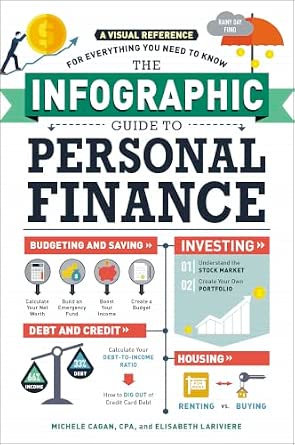 | Best Visual Reference | Format: Visual reference book | Presentation: Infographics | Audience: Personal finance beginners | VIEW LATEST PRICE | See Our Full Breakdown |
| Finance for Beginners: 101 Concepts |  | Best Broad Introduction | Format: Book | Audience: Beginners | Concept count: 101 concepts | VIEW LATEST PRICE | See Our Full Breakdown |
| Personal Finance Workbook for Beginners: Practical Exercises for Smarter Money Management and Financial Empowerment |  | Best for Hands-On Practice | Format: Workbook | Audience: Beginners | Approach: Practical exercises and actionable steps | VIEW LATEST PRICE | See Our Full Breakdown |
| The Simple Path to Wealth: Your Road Map to Financial Independence and a Rich, Free Life |  | Best for Long-Term Wealth Building | Format: Book | Audience: Beginners | Primary focus: Financial independence and wealth building | VIEW LATEST PRICE | See Our Full Breakdown |
| personal finance books for beginner | Format | Audience |
|---|---|---|
| QuickStart Guide | Book | Beginners |
| Personal Finance for Teens and | Book | Teens and young adults |
| Get a Financial Life: Personal | Book | People in their twenties and thirties |
| Personal Finance For Dummies | Book | Beginners |
| Financial Literacy for Young A | Book | Young adults |
| Money Skills for Teens: A Begi | Book | Teenagers |
| How to Adult: Personal Finance | Book | Adults new to personal finance |
| Personal Finance 101: From Sav | Book | Personal finance beginners |
| Money Skills for Young Adults: | Book | Young adults |
| The Total Money Makeover: A Pr | Book | Personal finance beginners seeking a structured plan |
| Budgeting For Dummies | Book | — |
| The Infographic Guide to Perso | Visual reference book | Personal finance beginners |
| Finance for Beginners: 101 Con | Book | Beginners |
| Personal Finance Workbook for | Workbook | Beginners |
| The Simple Path to Wealth: You | Book | Beginners |
More Details on Our Top Picks
QuickStart Guide – Simplified Beginner’s Guide to Eliminating Financial Stress, Building Wealth, and Achieving Financial Freedom
QuickStart Guide is aimed at beginners who want clear next steps more than an in-depth survey of finance. Its plain-language approach and step-by-step strategies cover budgeting, saving, and investing, giving readers a practical starting point for reducing money stress and building better habits. Compared with Personal Finance For Dummies, which promises broader topic coverage, this book appears more focused on actionable guidance and financial confidence. That focus can make it easier to start, but it also means less room for complex investment questions or advice tailored to a reader’s full financial picture. I’d choose it for a reader who wants a manageable introduction and immediate actions, not a detailed reference for decisions involving advanced investments or personalized planning.
Pros:- Uses clear, jargon-free language for first-time learners.
- Offers step-by-step strategies that readers can put into practice.
- Covers budgeting, saving, and investing in one introductory guide.
- Motivational tone may help readers build confidence around money.
Cons:- May feel too basic to readers with existing finance knowledge.
- Provides limited depth on complex investment topics.
- Does not offer personalized financial planning advice.
Best for: Beginners who feel stressed about money and want straightforward steps for budgeting, saving, and getting started with investing.
Not ideal for: Experienced investors or readers seeking detailed investment analysis or a financial plan tailored to their circumstances.
- Format:Book
- Audience:Beginners
- Primary focus:Reducing financial stress and building wealth
- Topics:Budgeting, saving, and investing
- Approach:Simplified, step-by-step guidance
- Advice style:Actionable and motivational
Our verdict“Choose this if you want an approachable, action-focused starting point, and pick Personal Finance For Dummies instead if you want broader coverage.”
Personal Finance for Teens and Young Adults: Learn Money Skills Not Taught in School
Personal Finance for Teens and Young Adults makes age its clearest point of difference: it is for readers learning money skills as they approach independence, rather than adults seeking a broad personal-finance reference. The stated focus includes budgeting, saving, and investing, with practical guidance intended to fill gaps in school instruction. Compared with Financial Literacy for Young Adults, it shares a young-reader audience and core topics, but its title puts particular emphasis on skills readers may not have learned in class. The available description does not establish how deeply it treats each topic, so readers wanting detailed investing instruction should keep expectations modest. Its audience focus is useful for a teen or young adult starting out, but less relevant to older beginners who want guidance framed around adult financial decisions.
Pros:- Targets teens and young adults rather than a general reader.
- Covers practical foundations including budgeting, saving, and investing.
- Addresses money skills that may be missing from school lessons.
Cons:- The available description does not specify how much depth each topic receives.
- May be too basic for readers with prior finance knowledge.
Best for: Teens and young adults who are beginning to manage their own money and want an introduction to budgeting, saving, and investing.
Not ideal for: Older beginners looking for a broad adult-oriented finance reference, or readers who already have solid money-management skills.
- Format:Book
- Audience:Teens and young adults
- Primary focus:Practical money skills
- Topics:Budgeting, saving, and investing
- Learning context:Skills not typically taught in school
- Goal:Greater financial independence
Our verdict“Pick this for a young beginner seeking school-gap money skills; older readers may find Personal Finance For Dummies a better fit.”
Get a Financial Life: Personal Finance in Your Twenties and Thirties
Get a Financial Life is the most clearly life-stage-specific choice in this group: its guidance is framed around the financial concerns of people in their twenties and thirties. Its stated coverage spans budgeting, saving, investing, and debt management, so readers can connect day-to-day money habits with longer-term planning. Compared with Personal Finance for Teens and Young Adults, this book is aimed at people further along in adulthood, while the teen-focused option speaks to the first steps toward independence. That adult framing is useful for readers building a financial foundation, but the description does not point to advanced investing instruction, and experienced investors may find it introductory. I’d favor it when age-relevant guidance matters more than a general reference format.
Pros:- Explicitly addresses personal finance in the reader’s twenties and thirties.
- Includes debt management alongside budgeting, saving, and investing.
- Supports readers building a broad financial foundation.
Cons:- May be too introductory for advanced investors.
- The available product information does not provide detailed specifications or a breakdown of chapters.
Best for: Readers in their twenties or thirties who want beginner guidance on budgeting, debt, saving, and investing.
Not ideal for: Teen readers seeking an introduction designed specifically around starting financial independence, or advanced investors wanting technical detail.
- Format:Book
- Audience:People in their twenties and thirties
- Primary focus:Personal finance for young adults
- Topics:Budgeting, saving, investing, and debt management
- Reader level:Starting financial journey
- Goal:Building a solid financial foundation
Our verdict“Choose this for age-relevant guidance in your twenties or thirties; younger readers may relate more to Personal Finance for Teens and Young Adults.”
Personal Finance For Dummies
Personal Finance For Dummies earns its place as the broadest-scope pick among these five: its description spans budgeting, saving, investing, and debt management, with an emphasis on informed financial decisions. That makes it a useful starting reference for someone who wants several core areas in one guide, rather than the more age-specific framing of Get a Financial Life or Personal Finance for Teens and Young Adults. The tradeoff is that broad coverage can introduce many subjects without giving each the depth a reader needs for complex decisions. It is designed for beginners, and the supplied information warns that advanced readers may find it basic. I’d choose it for range and accessible explanations, not as a substitute for specialized investing guidance.
Pros:- Covers several core personal-finance areas in one guide.
- Uses explanations designed to be accessible to beginners.
- Includes debt management alongside saving, budgeting, and investing.
Cons:- The breadth may leave complex subjects without the depth advanced readers want.
- May feel basic to readers who already understand personal finance.
Best for: Beginners who want one accessible introduction covering everyday money management, debt, saving, and investing.
Not ideal for: Advanced readers seeking specialized investment analysis or in-depth treatment of a single financial topic.
- Format:Book
- Audience:Beginners
- Primary focus:Managing personal finances
- Topics:Budgeting, saving, investing, and debt management
- Approach:Easy-to-understand explanations
- Purpose:Building financial literacy for informed decisions
Our verdict“Choose this for broad beginner coverage; pick Get a Financial Life if you want the guidance framed specifically around your twenties and thirties.”
Financial Literacy for Young Adults: Manage, Save, and Invest for a Secure Future
Financial Literacy for Young Adults is a straightforward fit for young readers who want introductory guidance on managing, saving, and investing money. Its stated goal—building a secure and independent future—gives the core topics a practical direction, though the available description does not name specific exercises or explain how each subject is taught. Compared with Personal Finance for Teens and Young Adults, it has a similar age focus and topic range, but this title emphasizes financial literacy and future security rather than skills absent from school. That makes the choice more about framing than a proven difference in depth. Beginners may appreciate the direct scope; readers with existing knowledge or a need for detailed investment guidance may want a more advanced resource.
Pros:- Focuses on young adults and their path toward financial independence.
- Covers managing, saving, and investing money.
- Frames basic money skills around future security.
Cons:- The available description gives little detail about its teaching methods or chapter structure.
- May be too basic for readers who already know personal-finance fundamentals.
Best for: Young adults starting to manage their own money who want a beginner introduction to saving, investing, and financial habits.
Not ideal for: Readers with prior finance knowledge or those seeking detailed investment instruction and clearly specified learning exercises.
- Format:Book
- Audience:Young adults
- Reader level:Beginners
- Primary focus:Financial literacy and independence
- Topics:Managing, saving, and investing money
- Goal:Building a secure financial future
Our verdict“Choose this for a young-adult introduction centered on future security; Personal Finance for Teens and Young Adults may suit readers focused on school-gap skills.”
Money Skills for Teens: A Beginner’s Guide to Budgeting, Saving, and Investing
Money Skills for Teens puts budgeting, saving, and investing in a teen-focused package, making it a better age match for high-school readers than How to Adult, which is aimed at everyday adult responsibilities. Its accessible explanations and practical budgeting and saving tips can help a young reader start building money habits before managing rent, credit, or other adult expenses. The tradeoff is breadth without much depth: the description does not point to specific worksheets, tools, or detailed investment guidance. Compared with Personal Finance 101, it is narrower and more tailored to teenagers, rather than a broad primer on topics such as taxes and loans. I’d choose it for an early introduction, not as a reference for advanced investing questions.
Pros:- Covers budgeting, saving, and investing in a teen-oriented introduction.
- Uses explanations described as easy to understand.
- Offers practical budgeting and saving tips.
- Can introduce money-management habits before adulthood.
Cons:- No specific tools or features are identified in the product information.
- Investment strategies receive limited detail.
- The basic level may not satisfy readers who already know personal finance fundamentals.
Best for: Teenagers who want a readable first introduction to budgeting, saving, and basic investing before taking on adult financial responsibilities.
Not ideal for: Adult beginners or teens seeking detailed investing strategies, hands-on worksheets, or advanced financial planning guidance.
- Format:Book
- Audience:Teenagers
- Level:Beginner
- Main topics:Budgeting, saving, and investing
- Budgeting guidance:Practical tips
- Saving guidance:Practical tips
Our verdict“Choose this for a teenager who needs a clear first guide to everyday money habits, but not for detailed investment instruction.”
How to Adult: Personal Finance for the Real World
How to Adult: Personal Finance for the Real World is aimed at readers who are beginning to handle money in day-to-day adult life. Its practical focus on budgeting, money management, and financial planning makes it a stronger fit for that stage than Money Skills for Teens, which is written for younger readers. The accessible guidance also gives beginners a less sweeping starting point than Personal Finance 101, whose listed topics extend to taxes, loans, saving, and investing. That narrower focus is also the tradeoff: the description does not promise detailed investment strategies or advanced financial topics. I’d pick this for someone trying to get basic money routines in place, rather than a reader looking for a broad reference or an in-depth investing guide.
Pros:- Focuses on practical adult financial responsibilities.
- Covers budgeting and everyday money management.
- Offers guidance described as easy to understand for beginners.
Cons:- Does not provide detailed investment strategies.
- May leave advanced financial topics uncovered.
- The product information does not identify specific tools or exercises.
Best for: Young adults handling their own budget and everyday financial decisions for the first time.
Not ideal for: Readers seeking detailed investing instruction, advanced planning, or a broad reference covering many specialized finance topics.
- Format:Book
- Audience:Adults new to personal finance
- Level:Beginner
- Main topics:Personal finance, budgeting, and financial planning
- Guidance style:Practical advice
- Intended use:Everyday financial responsibilities
Our verdict“Choose this for straightforward guidance on everyday adult money management, and look elsewhere if investing depth is your priority.”
Personal Finance 101: From Saving and Investing to Taxes and Loans, an Essential Primer on Personal Finance
Personal Finance 101 earns its place for beginners who want several money topics introduced in one book: the description includes saving, investing, taxes, and loans. That wider scope separates it from The Total Money Makeover, which centers on a step-by-step debt-elimination plan, and from How to Adult, which emphasizes everyday money management. The advantage is a broader starting map; a reader can see how different parts of personal finance fit into the same learning path. The limitation is that this is an introductory primer, not a source of advanced strategies, and no supplementary materials are listed. I’d choose it when topic coverage matters more than a single prescriptive plan or hands-on exercises.
Pros:- Covers a wide range of beginner personal finance subjects.
- Includes saving, investing, taxes, and loans.
- Described as accessible for readers new to the subject.
- Provides a broader topic overview than narrower, single-focus guides.
Cons:- Does not offer detailed advanced strategies.
- No supplementary materials are identified.
- The broad scope may provide less depth on any one subject than a specialized guide.
Best for: Adult beginners who want an accessible overview spanning saving, investing, taxes, and loans before choosing topics to study in more depth.
Not ideal for: Readers who need a focused debt payoff program, advanced investment methods, or included workbooks and other supplementary materials.
- Format:Book
- Audience:Personal finance beginners
- Level:Introductory
- Main topics:Saving, investing, taxes, and loans
- Coverage:Broad personal finance primer
- Supplementary materials:None specified
Our verdict“Choose this as a broad first primer across several money topics, rather than as a detailed plan for debt payoff or investing.”
Money Skills for Young Adults: A Beginner’s Guide to Financial Habits and Budgeting
Money Skills for Young Adults is centered on the habits and practical tools that can help young adults begin managing money independently. Its stated coverage includes budgeting, saving, and investing, with a particular focus on building financial independence. That gives it a different emphasis from How to Adult, which frames its advice around adult responsibilities more generally, and from Money Skills for Teens, which targets a younger audience. The product information also mentions simple budgeting and saving tools, a useful fit for readers who want practical starting points rather than a purely topical overview. Its main limit is investment depth: readers seeking detailed strategies may get more of an introduction than a full guide. I’d favor it for habit-building, not technical investing.
Pros:- Targets young adults developing financial independence.
- Covers budgeting, saving, and investing.
- Includes simple tools for budgeting and saving.
- Emphasizes practical financial habits.
Cons:- Investment strategies are not covered in depth.
- The product information does not specify the tools’ format or detail.
- Its focus on young adults may be less relevant to older readers seeking a general finance reference.
Best for: Young adults who want simple budgeting and saving tools while developing the habits needed for financial independence.
Not ideal for: Readers looking for advanced investing guidance or a detailed, specialized plan for taxes, loans, or debt payoff.
- Format:Book
- Audience:Young adults
- Level:Beginner
- Main topics:Budgeting, saving, and investing
- Tools:Simple budgeting and saving tools
- Focus:Financial habits and independence
Our verdict“Choose this for practical money-habit building as a young adult, but seek another guide for advanced investment instruction.”
The Total Money Makeover: A Proven Plan for Financial Peace
The Total Money Makeover is the clearest choice here for beginners who want a step-by-step route toward financial stability and debt elimination. Unlike Personal Finance 101, which introduces a range of subjects including investing, taxes, and loans, this book is organized around following a specific plan. That structure can help readers who feel unsure what action to take next, but it asks for commitment rather than serving as a neutral overview of every financial approach. The listed strengths include actionable advice and an updated, expanded edition; the tradeoff is its narrow emphasis on personal finance and debt reduction, with no stated focus on investing or business. I’d place it ahead of broader primers only for readers whose main goal is tackling debt through a defined process.
Pros:- Presents a step-by-step approach to financial stability.
- Focuses on actionable advice and debt elimination.
- Listed as an updated and expanded edition.
- Provides a defined plan for readers who want clear next steps.
Cons:- Focuses on personal finance rather than investing or business.
- Following the plan requires sustained commitment.
- Its debt-centered structure is narrower than the broad subject coverage of Personal Finance 101.
Best for: Beginners who want a structured, actionable plan focused on eliminating debt and improving financial stability.
Not ideal for: Readers whose main priority is learning investing, business finance, or comparing a wide range of personal finance strategies.
- Format:Book
- Audience:Personal finance beginners seeking a structured plan
- Main focus:Financial stability and debt elimination
- Approach:Step-by-step plan
- Edition detail:Updated and expanded edition
- Investment coverage:Not a focus
Our verdict“Choose this if debt elimination and a defined action plan matter more to you than broad coverage of investing and other finance topics.”
Budgeting For Dummies
Budgeting For Dummies is the most direct fit for a beginner whose immediate goal is getting a workable budget in place. Its practical guidance centers on managing personal finances and creating effective budgets, making it more focused than Finance for Beginners: 101 Concepts, which covers a wider range of money topics. That narrower scope can help readers concentrate on day-to-day planning rather than juggling an introductory survey of investing and money management. The tradeoff is that readers seeking advanced strategies or substantial material beyond budgeting may need another book. The provided information also does not describe accompanying online resources, so this is best approached as a standalone guide. I’d place it ahead of broader introductions for readers who want budget-focused advice, but not for those seeking a full financial curriculum.
Pros:- Beginner-friendly explanations make budgeting concepts approachable.
- Practical tips focus on applying budgeting ideas to personal finances.
- A focused subject can help readers prioritize everyday money management.
Cons:- The described material does not provide detailed advanced strategies.
- No digital or online resources are listed.
Best for: First-time budgeters who want approachable guidance on organizing spending and building a personal budget.
Not ideal for: Readers looking for advanced financial planning, investing depth, or digital tools to support their learning.
- Format:Book
- Subject:Budgeting and personal finance
- Intended audience:Beginners
- Focus:Creating effective budgets
- Guidance style:Practical advice and strategies
- Advanced strategies:Not detailed, according to the supplied product information
- Digital resources:None included, according to the supplied product information
Our verdict“Choose this if your first priority is learning to make and manage a budget rather than surveying every area of personal finance.”
The Infographic Guide to Personal Finance: A Visual Reference for Everything You Need to Know
The Infographic Guide to Personal Finance is the clearest match for beginners who absorb information more easily through visuals than long explanations. Its infographic format covers budgeting, investing, money management, and financial planning, giving it broader topic coverage than Budgeting For Dummies. That breadth makes it useful for getting a quick sense of how personal finance subjects fit together, or for revisiting a concept without reading a full chapter. The compromise is depth: the supplied description says explanations are limited and the book functions mainly as a visual reference. Readers who need step-by-step instruction or sustained reasoning may find Finance for Beginners: 101 Concepts a better starting point. I see this as a companion-style overview, not a substitute for detailed teaching.
Pros:- Infographics make complex money topics easier to scan.
- Covers several personal finance areas, including budgeting and investing.
- Can serve as a handy reference for revisiting key ideas.
Cons:- Visual summaries provide less depth than extended textual explanations.
- The reference format may not provide enough instruction for a beginner learning to apply concepts.
Best for: Visual learners who want a quick, illustrated overview of budgeting, investing, and other core money topics.
Not ideal for: Beginners who need detailed written explanations, guided practice, or step-by-step help applying financial concepts.
- Format:Visual reference book
- Presentation:Infographics
- Audience:Personal finance beginners
- Topics:Money management, budgeting, investing, and financial planning
- Primary use:Overview and reference
- Textual explanation:Limited, according to the supplied product information
- Coverage style:Visual summaries of personal finance concepts
Our verdict“Pick this for a visual introduction and quick reference, but choose a text-led guide if you need detailed instruction.”
Finance for Beginners: 101 Concepts
Finance for Beginners: 101 Concepts is the broadest introductory choice in this set: it aims to explain personal finance, investing, and money management in accessible terms. That makes it a stronger starting point for someone who wants a general foundation than Budgeting For Dummies, whose focus is specifically budgeting. Its beginner-friendly explanations may also help readers who are new to investing connect that subject with everyday money decisions. The tradeoff is that a wide survey can leave less room for advanced strategy, and the supplied description notes that it does not include practical exercises. Readers who learn by doing may get more immediate application from Personal Finance Workbook for Beginners. I’d choose this for concept-building, then pair it with a focused guide or workbook when ready to put those ideas into practice.
Pros:- Beginner-friendly explanations introduce unfamiliar financial concepts.
- Covers personal finance, investing, and money management in one overview.
- Can help readers build a broad foundation before choosing a narrower subject.
Cons:- The described coverage does not extend to detailed advanced strategies.
- No practical exercises are included, limiting hands-on application.
Best for: New learners who want an accessible overview spanning personal finance, investing, and money management.
Not ideal for: Readers who already know the basics, want advanced investing strategies, or need exercises to practice each concept.
- Format:Book
- Audience:Beginners
- Concept count:101 concepts
- Topics:Personal finance, investing, and money management
- Explanation style:Easy-to-understand overview
- Advanced strategies:Not detailed, according to the supplied product information
- Practical exercises:None included, according to the supplied product information
Our verdict“Choose this for a broad, approachable foundation, and favor the workbook if practice matters more than an overview.”
Personal Finance Workbook for Beginners: Practical Exercises for Smarter Money Management and Financial Empowerment
Personal Finance Workbook for Beginners takes an activity-led approach, making it the most practice-oriented pick here. Its exercises and actionable steps are meant to help readers build money-management habits rather than only read explanations. That gives it a different role from Finance for Beginners: 101 Concepts, which offers a broad conceptual overview but no practical exercises. For a beginner who wants to turn financial ideas into routines, the workbook format may feel more useful from the outset. The limitation is the lack of detail in the supplied description: it does not specify the exercise topics, available tools, or the book’s size and page count. Readers who need a clearly mapped curriculum may prefer the more defined topic coverage of The Infographic Guide to Personal Finance, though that offers less practice.
Pros:- Exercises give readers a way to engage actively with personal finance.
- Action steps aim to support better money-management habits.
- Beginner-oriented format emphasizes practical application and financial empowerment.
Cons:- The supplied description does not detail the workbook’s exercise content.
- No tools or additional resources are listed.
- Size and page count are not provided, making the scope hard to judge.
Best for: Beginners who learn by completing exercises and want prompts for developing smarter money-management habits.
Not ideal for: Readers who want a clearly specified curriculum, extensive explanations, or included tools and resources.
- Format:Workbook
- Audience:Beginners
- Approach:Practical exercises and actionable steps
- Subject:Personal finance and money management
- Stated goal:Smarter money management and financial empowerment
- Included tools or resources:None listed in the supplied product information
- Size and page count:Not specified in the supplied product information
Our verdict“Pick this if you want to work through activities, but choose a more clearly described guide if you need a defined topic map.”
The Simple Path to Wealth: Your Road Map to Financial Independence and a Rich, Free Life
The Simple Path to Wealth is the best fit here for a beginner whose main interest is building wealth over time and working toward financial independence. Its straightforward advice and long-term orientation set it apart from Budgeting For Dummies, which is more directly aimed at organizing a household budget. That makes this book a better match for readers ready to look beyond monthly cash flow and think about the larger purpose of saving and investing. The tradeoff is that the supplied description does not point to detailed investment strategies or specific product features, so readers seeking technical instruction may need a more specialized resource. Compared with Finance for Beginners: 101 Concepts, this pick has a clearer long-term wealth-building focus, but offers less clearly described breadth across everyday finance subjects.
Pros:- Straightforward advice is positioned for accessible reading.
- Keeps attention on long-term wealth building.
- Financial independence provides a clear goal for readers planning beyond day-to-day spending.
Cons:- Detailed investment strategies are not described in the supplied product information.
- Specific product features and specifications are not provided.
- The described focus is less directly centered on practical budgeting than Budgeting For Dummies.
Best for: Beginners who already want to focus on long-term wealth building and financial independence rather than starting with budgeting alone.
Not ideal for: Readers who need hands-on budgeting instruction, detailed investment strategies, or a clearly itemized beginner curriculum.
- Format:Book
- Audience:Beginners
- Primary focus:Financial independence and wealth building
- Guidance style:Straightforward financial advice
- Investment focus:Investing wisely
- Time horizon:Long-term wealth building
- Detailed investment strategies:Not described in the supplied product information
Our verdict“Choose this if your beginner goal is long-term wealth and financial independence, not a step-by-step budgeting workbook.”

How We Picked
I compared these books by how well they serve a true beginner: whether the subject and intended reader are clear, whether the title signals practical instruction or general reference, and how approachable its format is for someone learning money basics. I also looked at the breadth of topics implied by each book, its apparent focus on action, and whether its approach is suited to a distinct need such as teen finances, budgeting, debt payoff, or investing.
The ranking gives priority to books that offer a useful starting point without requiring readers to already know which money topic to study. Broad beginner guides rank ahead of narrower books for the overall position, while specialized options earn their place for specific goals or learning preferences. A focused strategy can be more actionable, but it ranks lower for readers who need a balanced introduction; a visual or workbook format can improve engagement, but may not replace a full guide. I treat these titles as educational starting points, not substitutes for advice tailored to an individual’s finances.
| personal finance books for beginner | Format |
|---|---|
| QuickStart Guide | Book |
| Personal Finance for Teens and | Book |
| Get a Financial Life: Personal | Book |
| Personal Finance For Dummies | Book |
| Financial Literacy for Young A | Book |
| Money Skills for Teens: A Begi | Book |
| How to Adult: Personal Finance | Book |
| Personal Finance 101: From Sav | Book |
| Money Skills for Young Adults: | Book |
| The Total Money Makeover: A Pr | Book |
| Budgeting For Dummies | Book |
| The Infographic Guide to Perso | Visual reference book |
| Finance for Beginners: 101 Con | Book |
| Personal Finance Workbook for | Workbook |
| The Simple Path to Wealth: You | Book |
Factors to Consider When Choosing Personal Finance Books For Beginners
Before choosing a title, I would match the book to the decision you need help making now. A beginner who needs a first budget has a different job from someone comparing investment approaches or trying to understand credit and taxes. These broader checks can help you avoid buying a book that is readable but poorly matched to your next step.
Choose a Starting Point, Not Just a Broad Topic List
New readers often assume the book covering the most subjects is automatically the best first choice. A wide-ranging guide can introduce budgeting, saving, credit, taxes, and investing, but a long list of topics may leave little room to practice any one skill. If you have a specific immediate task, such as making a budget or understanding debt repayment, a focused book may help you act sooner. If you are unsure what you need, start with a general primer and use it to identify follow-up questions. Avoid buying several overlapping introductions before you have tried the basics. The best first book is the one that helps you make a useful next decision.
Match the Book to the Reader’s Age and Money Situation
Age labels can signal examples and assumptions, but they do not automatically determine whether a book will fit. A teen may need explanations of earning, saving, and first spending decisions, while an adult starting late may prefer material on bills, borrowing, and retirement planning. A title aimed at young adults might feel relevant to someone building independent habits but less useful to a reader with complex family finances. Check whether the book’s scope matches the decisions you face, not only the age printed on its cover. A reader can outgrow a beginner book quickly if it focuses on a life stage they have already passed. Pick relevance over the assumption that one age group’s book is always simpler.
Decide Whether You Need a Plan or a Reference
Some books are organized around a defined route, while others aim to explain a range of financial concepts. A step-by-step plan can reduce indecision when you have one clear priority, such as paying down debt. A reference-style book gives more room to compare subjects, which helps if you are still deciding what matters most. The tradeoff is that a strong prescribed approach may not fit every reader’s income, responsibilities, or comfort with risk. Before choosing, ask whether you want someone to lay out a sequence or help you understand the menu of choices. If you want both, pair a broad introductory title with a focused resource rather than expecting one book to answer everything.
Pick a Format You Will Actually Use
Readable prose, visual summaries, and guided exercises support different learning habits. A visual guide can make unfamiliar terms easier to scan, while a workbook can turn advice into decisions about your own spending and goals. Neither format guarantees depth: a compact presentation may leave out context, and exercises can feel repetitive if you prefer to read first and act later. Consider how you usually learn when a subject feels unfamiliar. If you need to remember key ideas, diagrams or short concept explanations may help; if you need a routine, written prompts can give you a place to start. Do not choose a format solely because it looks easier—choose one that will help you continue past the first chapter.
Check Whether the Book Fits Your Need for Current Information
Personal finance principles such as spending less than you earn can remain useful, but tax rules, account limits, and financial products can change. A beginner book is a foundation, not a live reference for every current rule. Readers making decisions about taxes, benefits, or investment accounts should verify details with current official resources or qualified professionals. This is especially relevant when a book devotes attention to specific procedures or recommendations. Do not reject a useful guide just because it cannot replace updated information; instead, separate durable habits from details that may have changed. That distinction helps prevent a clear explanation from being mistaken for current personalized advice.
Spend More Only When the Added Format or Focus Helps
A longer or more specialized book is not automatically a better beginner purchase. The extra material is useful when it addresses a goal you genuinely have, such as working through exercises or studying investing in greater detail. For a basic overview, a concise primer may be enough to identify your next question. A common mistake is paying for an advanced-feeling approach before understanding the fundamentals it assumes. Look for a clear match between the book’s added focus and the problem you want to solve. If you are choosing between two titles, favor the one that fills a gap rather than repeating what you already know.
Frequently Asked Questions
Should I start with a general personal finance book or one about budgeting?
Start with a general guide if you are unsure whether your biggest gap is budgeting, debt, saving, credit, or investing. A dedicated budgeting book makes more sense if your immediate problem is tracking spending or building a workable plan for regular expenses. The broader titles in this roundup, such as Personal Finance 101, offer a wider orientation, while Budgeting For Dummies narrows the focus. You do not need to master every topic before making a budget. Choose the scope that answers your most urgent question, then use a second book only if you find a clear gap.
Are books written for teens useful for adults who are new to money management?
They can be useful if you want plain introductions to foundational habits and do not need extensive guidance on adult financial decisions. The teen titles here focus on basics such as budgeting, saving, and investing, which can still help readers starting from scratch. An adult managing rent, loans, taxes, or workplace benefits may find the examples too narrow for their needs. In that case, a young-adult or general beginner guide is more likely to connect the basics to independent living. Choose by the situations covered, not by whether the book’s audience label feels more or less advanced.
Is a book with a specific debt or investing plan a good first choice?
It can be a strong first choice when you already know that debt reduction or investing is your priority. A defined approach can make the next steps easier to follow than a general survey of money topics. The tradeoff is that a focused plan may leave other basics, such as budgeting or taxes, less addressed, and its recommendations may not fit every reader. If you are still learning the vocabulary or unsure where your money should go first, begin with a broader primer. You can then decide whether a specialized strategy deserves a closer look.
Do I need both a finance book and a workbook to make progress?
No; a workbook is most useful when you benefit from prompts and want to apply ideas to your own decisions as you read. A conventional guide may be enough if you prefer to understand concepts before filling out exercises. The Personal Finance Workbook for Beginners is a format choice, not a requirement for learning money skills. If you choose a workbook, set aside time to complete the activities rather than treating it as a reference to skim. If you are not sure which style suits you, start with the format you are more likely to finish.
Can a beginner personal finance book replace advice about my taxes or investments?
No. These books can explain basic terms and help you frame questions, but they cannot account for your full financial situation or guarantee that their details reflect current rules. Tax requirements and investment choices can depend on location, account type, time horizon, and personal circumstances. Use a book to build understanding, then check official sources for current rules and consult a qualified professional when a decision has substantial consequences. This matters most when a title presents a specific strategy as a route to follow. Treat general education as a starting point for informed decisions, not individualized instruction.
Conclusion
For most readers seeking one starting point, I recommend Get a Financial Life as the best overall pick, particularly for people in their twenties and thirties who want practical guidance. The best value in this lineup is Personal Finance 101 for readers who want a broad primer in one place; my best for beginners is Personal Finance For Dummies for an accessible general reference. For a more focused premium-style choice, The Simple Path to Wealth suits readers ready to study investing and financial independence, while The Total Money Makeover is more tailored to readers seeking a defined debt-payoff approach. Teens should start with one of the age-specific books, visual learners may prefer The Infographic Guide to Personal Finance, and readers who want to put ideas into practice can choose the workbook. Let your current money question decide the book, then add another only when you know what the first one left unanswered.
Fall Picks
fall essentials
As an affiliate, we earn on qualifying purchases.