
The best financial planning software depends less on features and more on what kind of planner you are. For most people managing everyday budgets alongside long-term goals, Quicken Classic Deluxe stands out as the best overall pick because it combines bank connectivity, budgeting, and investment tracking in one polished package. If you want something that never charges a subscription, SavePoint Personal Finance Software is the strongest alternative, with Monte Carlo simulations and FIRE planning tools that outclass far pricier programs. And for people who need a debt-payoff roadmap more than a spreadsheet, Dave Ramsey’s Personal Finance Software wraps budgeting in a proven behavioral framework. The main tradeoff in this category is convenience versus control: subscription tools sync your accounts automatically but depend on internet connectivity, while offline tools like SavePoint demand manual entry but never expire or charge again. One surprise from this comparison: two of the eight entries are actually books, not software, and they earned their spots for different reasons. Read on for the full breakdown.

Get smart everyday buys delivered free — and shop member deals
- Fast, free delivery on millions of items
- Access to Prime Big Deal Days deals on October 6–7
- Prime Video, Amazon Music and more included
Key Takeaways
- Quicken Classic Deluxe took the top spot because it is the only pick in this lineup that handles banking, budgeting, and investment tracking together without forcing a workflow built around a single philosophy.
- SavePoint is the rare financial planning tool with a one-time purchase model, and its Monte Carlo simulations and FIRE planning features make it the deepest analytical option here despite requiring manual data entry.
- Two of the eight entries — Financial Planning and Analysis and the Wiley FP&A title — are professional books rather than software, so buyers expecting a downloadable program should note the distinction before purchasing.
- Ramsey-branded software dominates the beginner segment because both entries prioritize debt payoff and behavioral habit-building over advanced modeling, which also makes them a poor fit for experienced investors.
- Retirement Planning Toolkit Deluxe 2.0 is the narrowest pick in the group: it beats the generalists for retirement-specific projections but should be paired with, not substituted for, a day-to-day budgeting tool.



| financial planning software | Format |
|---|---|
| Financial Planning and Analysi | Book |
| Financial Planning 3.0: Evolvi | Book |
| SavePoint Personal Finance Sof | — |
| Quicken Classic Deluxe for New | — |
| Dave Ramsey’s Personal Finance | — |
| Retirement Planning Toolkit De | PC download |
| Financial Planning & Analysis | Book |
| Financial Peace Personal Finan | — |
More Details on Our Top Picks
Financial Planning and Analysis: Mastering Financial Planning and Analysis to Drive Smarter Business Decisions
Business-focused financial analysis gives this book a different purpose from the personal budgeting tools in this roundup. It covers techniques and strategies for using financial planning and analysis to support business decisions, making it a stronger fit for finance professionals and students than Quicken Classic Deluxe, which focuses on tracking household accounts, spending, and debt.
The tradeoff is that this is learning material, not working software: it includes no budgeting interface, financial accounts, or built-in planning tools. Its broad coverage may also feel dense to readers new to finance. Compared with Financial Planning 3.0, which centers on personal money habits, this title is aimed more squarely at organizational analysis. I’d choose it to build business finance knowledge, not to automate a personal financial plan.
Pros:- Covers financial analysis techniques for business planning
- Connects financial planning to business decision-making
- Useful as a learning resource for finance professionals and students
Cons:- Provides no software, calculators, or other interactive tools
- May be dense for readers without a finance background
Best for: Finance students and early-career analysts seeking a book on financial analysis for business decisions
Not ideal for: Households seeking budgeting software, account syncing, or interactive personal financial planning tools
- Format:Book
- Focus:Financial planning and analysis
- Primary use:Business decision-making
- Coverage:Financial analysis techniques and strategies
- Interactive software tools:None included
- Intended audience:Finance professionals and students
Our verdict“Choose this book to study business financial analysis; choose Quicken Classic Deluxe for hands-on household budgeting.”
Financial Planning 3.0: Evolving Our Relationships with Money
Money habits and changing attitudes are the focus here, setting this book apart from software that tracks balances or forecasts cash flow. It offers a modern perspective on personal financial planning and how people relate to money. Compared with Dave Ramsey’s Personal Finance Software Version 5.3, which is described as a tool for straightforward budgeting, this title is better suited to readers reflecting on their financial approach than those looking for a digital system to manage it.
That perspective comes with a practical limit: the product information describes no detailed planning tools or software features. Readers who want step-by-step budgeting functions or account management should look to Quicken Classic Deluxe instead. I’d pick this book to explore ideas about personal finance, while treating it as a complement to a planning workflow rather than the workflow itself.
Pros:- Explores modern perspectives on financial planning
- Focuses on how people’s relationships with money evolve
- Offers a conceptual alternative to feature-led budgeting software
Cons:- Product information does not specify practical planning tools
- Does not provide software for tracking accounts or building budgets
Best for: Readers interested in how financial planning and personal money habits are changing
Not ideal for: People who need software for budgets, account tracking, cash-flow reports, or scenario planning
- Format:Book
- Focus:Modern financial planning
- Subject:Relationships with money
- Coverage:Personal finance strategies and financial behaviors
- Software tools:None specified
- Practical planning features:Not specified
Our verdict“Choose this book for perspective on personal finance; choose Quicken Classic Deluxe when you need working budgeting and account tools.”
SavePoint Personal Finance Software – Budgeting, FIRE Planning, Monte Carlo Simulations, Balance Sheets, Cash Flow, Offline, No Subscriptions + 8GB USB Drive
Offline planning with FIRE projections gives SavePoint the clearest fit for people who want more than a monthly budget. It combines budgeting and cash-flow management with balance sheets and Monte Carlo simulations, so users can explore long-range financial scenarios while keeping their information stored locally. Compared with Quicken Classic Deluxe, SavePoint adds a stated focus on FIRE planning and works without a subscription; Quicken, by contrast, is described as managing a broad set of household accounts and debts.
SavePoint’s local-only setup is both its privacy advantage and its main limitation: there is no cloud backup, and no mobile app is listed. Its advanced planning features may take time to learn. I’d favor it for desktop users who want offline access and scenario planning, while account holders who value cloud access or mobile use may prefer another approach.
Pros:- Combines budgeting, balance sheets, cash flow, and FIRE planning
- Monte Carlo simulations support exploration of long-range scenarios
- Offline operation keeps financial data on the user’s computer
- Supports 8 languages and more than 150 currencies
Cons:- Requires a Windows PC or Mac and has no mobile app support
- Local storage means no cloud backup option
- Advanced planning features may take time to learn
Best for: Desktop-based planners pursuing financial independence who want offline budgeting, cash-flow tools, and simulations
Not ideal for: People who need mobile access, cloud backups, or a synced plan across devices
- Offline operation:Yes
- License:Lifetime
- Device compatibility:PC and Mac
- Languages supported:8
- Currencies supported:150+
- Reports:10+
- Account and transaction limit:Unlimited
- USB drive included:Yes, 8 GB
Our verdict“Choose SavePoint for offline desktop planning with FIRE simulations, provided local-only storage and no mobile app suit your workflow.”
Quicken Classic Deluxe for New Subscribers | 1 Year PC/Mac Online Code
Broad household account management makes Quicken Classic Deluxe the most direct fit here for people who want to bring everyday finances into one planning routine. Its listed scope includes bank accounts, credit cards, debts, investments, and property, alongside budgets, spending tracking, and debt scenario planning. Compared with SavePoint, it emphasizes managing a range of household accounts, while SavePoint more explicitly highlights offline use and FIRE simulations.
The main tradeoff is the one-year subscription term, which means continued use requires renewal. This listing is also limited to new subscribers. Unlike Dave Ramsey’s Personal Finance Software Version 5.3, whose details emphasize simplified budgeting but leave features less fully specified, Quicken names a wider set of financial areas to manage. I’d choose it for an integrated household view, while buyers seeking lifetime offline access should compare SavePoint.
Pros:- Covers bank accounts, credit cards, debts, investments, and property
- Includes budgeting and spending tracking
- Debt scenario planning can help users compare repayment approaches
- Available for PC and Mac
Cons:- The license covers one year and requires renewal for continued use
- The offer is limited to new subscribers
Best for: New PC or Mac users who want budgeting alongside tracking for debts, investments, and property
Not ideal for: Existing subscribers or buyers seeking a lifetime license, offline-only use, or explicit FIRE simulations
- Platform:PC and Mac
- Duration:1 year
- Delivery type:Online code
- Eligibility:New subscribers
- Account management:Bank accounts and credit cards
- Financial areas:Debts, investments, and property
- Planning tools:Budgets, spending tracking, and debt scenarios
Our verdict“Choose Quicken Classic Deluxe for a broad, one-year household finance workflow on PC or Mac.”
Dave Ramsey’s Personal Finance Software Version 5.3
Simple money management is the stated draw of this software: it aims to help users organize their money quickly and budget without an elaborate planning setup. That makes it a more approachable-sounding choice than SavePoint, whose FIRE planning and Monte Carlo simulations add depth but may bring a learning curve. It also differs from Quicken Classic Deluxe, which lists a broader range of account types and debt scenario tools.
The tradeoff is limited feature detail. The available description does not say which accounts it supports, what reports it produces, or what platforms it runs on, so buyers cannot tell how well it fits a detailed financial plan. I’d consider it for someone who wants a simple budgeting aid and already knows the product suits their setup; planners needing explicit account coverage or long-range projections should compare Quicken or SavePoint.
Pros:- Designed to simplify personal budgeting
- Emphasizes quick, straightforward money management
- Offers a simpler stated purpose than SavePoint’s advanced scenario planning
Cons:- Available product details do not specify supported platforms
- Account coverage and reporting capabilities are not described
- No long-range projection or simulation tools are listed
Best for: Budget-focused users who want a simple personal finance tool and do not need extensive planning features
Not ideal for: Planners who need verified platform compatibility, detailed account tracking, reports, or retirement and FIRE projections
- Version:5.3
- Product type:Personal finance software
- Primary focus:Budgeting and money management
- Stated use:Quick personal finance management
- Supported platforms:Not specified
- Account and reporting details:Not specified
Our verdict“Choose this option only if straightforward budgeting is your priority and its unspecified platform and feature details fit your needs.”
Retirement Planning Toolkit Deluxe 2.0 [PC Download]
” image=”https://m.media-amazon.com/images/I/61RfTzIpaTL._AC_SY445_SX342_QL70_FMwebp_.jpg” link=”0″]Best for Retirement Planning
View Latest PriceRetirement Planning Toolkit Deluxe 2.0 is the most retirement-specific choice in this group: its 19 calculators, worksheets, and checklists give planners several ways to organize decisions, from financial analysis to estate planning. Compared with SavePoint Personal Finance Software, which is described as covering budgeting, cash flow, and FIRE planning, this toolkit is focused on retirement tasks rather than a broader view of day-to-day finances. Its backup and restore option and AES-256 encryption add practical data-protection measures. The tradeoff is accessibility: it requires a PC download, while the available details do not establish mobile access or how the tools guide a first-time planner. Its breadth may also feel demanding for beginners. I’d choose it for structured retirement work, not as an all-purpose household finance hub.
Pros:- 19 calculators support a range of retirement planning tasks
- Worksheets and checklists help organize detailed planning
- Includes backup and restore
- AES-256 encryption is specified for data protection
Cons:- Requires a PC download rather than offering a stated mobile app
- The broad toolkit may be complex for new planners
- The supplied details do not clarify compatibility, updates, or how the tools are guided
Best for: PC users who want retirement-focused calculators, planning worksheets, and checklists in one toolkit
Not ideal for: Beginners seeking guided, simple budgeting or people who need to plan from a mobile device
- Number of calculators:19
- Worksheets:Included
- Checklists:Included
- Backup and restore:Included
- Encryption:AES-256
- Format:PC download
Our verdict“Choose this toolkit if you want a PC-based set of retirement calculators and planning documents, and skip it if you need beginner guidance or mobile access.”
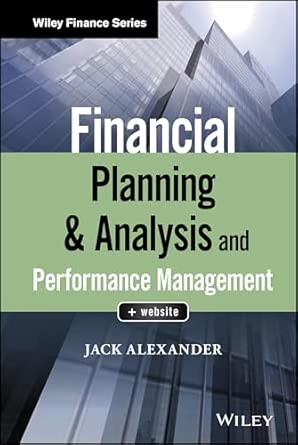
Financial Planning & Analysis and Performance Management (Wiley Finance)
Financial Planning & Analysis and Performance Management is a professional reference for readers studying how organizations plan, analyze results, and measure performance. That makes it a different kind of financial planning resource from Financial Peace Personal Finance Software, which is presented as a tool for household budgeting, expense tracking, and personal goals. The book’s practical examples and case studies can help finance professionals and students connect analysis methods to business decisions. It is not described as interactive software, and the supplied product details provide no calculators, worksheets, or digital planning features. Its technical focus may also make it a poor fit for readers who simply want to manage a household budget. I’d place it on this list for its planning and analysis education, with the caveat that it teaches the subject rather than managing finances for you.
Pros:- Covers financial analysis techniques
- Addresses performance management and measurement
- Includes practical examples and case studies
- Relevant to both finance professionals and students
Cons:- A book rather than interactive financial planning software
- Technical material may be difficult for beginners
- The supplied details do not specify edition, format, or included digital resources
Best for: Finance professionals and students who want to study business financial analysis and performance management
Not ideal for: Households looking for budgeting software, automated expense tracking, or hands-on personal financial planning tools
- Format:Book
- Series:Wiley Finance
- Subject:Financial planning and analysis
- Additional subject:Performance management
- Examples and case studies:Included
- Intended audience:Finance professionals and students
Our verdict“Choose this book to build professional knowledge of business planning and analysis, not to organize personal finances.”
Financial Peace Personal Finance Software
Financial Peace Personal Finance Software is the clearest fit here for someone whose main goal is to budget, track expenses, and plan personal financial goals. Its described user-friendly interface points toward a more approachable starting place than Retirement Planning Toolkit Deluxe 2.0, whose 19 calculators, worksheets, and checklists are aimed at detailed retirement planning. That distinction matters: Financial Peace is framed around routine money management, while the toolkit concentrates on retirement tasks. The product information, however, is sparse. It does not specify supported devices, particular budgeting methods, or how goal tracking works, so buyers have little basis for judging fit beyond the broad feature description. I’d consider it for basic personal finance organization, but readers who need confirmed platform details or specialized planning tools should compare alternatives with fuller documentation.
Pros:- Designed for budgeting and expense tracking
- Includes tools for planning financial goals
- Described as having a user-friendly interface
Cons:- Available details do not explain supported platforms or devices
- The feature description does not establish advanced planning capabilities
- Limited product information makes it difficult to compare specific workflows
Best for: Individuals who want an approachable tool for household budgeting, expense tracking, and personal financial goals
Not ideal for: Buyers who need detailed retirement calculators, confirmed device compatibility, or clearly documented advanced features
- Product type:Personal finance software
- Budgeting tools:Included
- Expense tracking:Included
- Financial goal planning:Included
- Interface:Described as user-friendly
- Platform compatibility:Not specified in the supplied product details
Our verdict“Consider Financial Peace for approachable everyday budgeting, but look for a better-documented option if you need specialized planning or confirmed compatibility.”

How We Picked
I judged every entry against five buyer-relevant criteria: planning depth (can it model retirement scenarios, run projections, or is it just a budget tracker?), ease of adoption (how fast can a non-financial person get value from it?), data control (cloud sync versus offline ownership), cost structure (subscription versus one-time purchase), and scope (general money management versus a single specialized job). Weighting differed by intended buyer — beginners got more credit for guided workflows, while analytical users got credit for simulation and forecasting power.
The ranking logic follows versatility: tools that cover more of the financial planning lifecycle placed higher, while single-purpose tools placed lower but earned specialist labels. Books were evaluated on whether they genuinely substitute for software in a specific scenario — professional FP&A study is the one case where a book beats an app, which is why both titles made the list despite not being programs at all.
| financial planning software | Format |
|---|---|
| Financial Planning and Analysi | Book |
| Financial Planning 3.0: Evolvi | Book |
| SavePoint Personal Finance Sof | — |
| Quicken Classic Deluxe for New | — |
| Dave Ramsey’s Personal Finance | — |
| Retirement Planning Toolkit De | PC download |
| Financial Planning & Analysis | Book |
| Financial Peace Personal Finan | — |
Factors to Consider When Choosing Financial Planning Software
Choosing financial planning software goes beyond comparing feature lists. The mistakes buyers make in this category are remarkably consistent, and they usually come from picking a tool for the person they wish they were rather than the planner they actually are.Subscription Versus One-Time Purchase
The pricing model shapes your entire relationship with the software. Subscription tools like Quicken keep bank feeds, transaction categorization, and software updates current, which saves hours of manual work every month — but that convenience quietly compounds into a meaningful lifetime cost, and losing your subscription can cut off access to features you have built years of data around. One-time-purchase tools like SavePoint flip the tradeoff: you own the software forever, offline, with no renewal surprises, but you absorb the cost of manual data entry and you will not get continuous improvements. My advice is to be honest about your tolerance for data entry before choosing. Buyers who abandon manual entry after three weeks get more value from a subscription, even at a higher long-term cost, because software you actually use beats software you own.
Budgeting Versus Life Planning
Many buyers conflate two different jobs: tracking where money went and planning where it should go. Budget-first tools like the Ramsey offerings excel at the monthly cycle — assigning dollars, cutting spending, killing debt — but they generally stop at a one-year horizon. True financial planning software adds long-horizon modeling: retirement projections, Monte Carlo simulations that stress-test your plan against thousands of market scenarios, net worth tracking over decades. SavePoint and the Retirement Planning Toolkit sit on this side of the divide. The common mistake is buying a long-range planner when the actual problem is a monthly cash-flow leak, or the reverse. If you carry credit card debt, a budget-first tool solves your real problem; if your finances are stable and the question is whether you can retire at 55, you need projection software.
Philosophy-Locked Versus Neutral Tools
Some of the most popular personal finance tools are built around a specific money philosophy — Ramsey’s baby steps, the FIRE movement’s aggressive savings doctrine — and that framing is either their greatest strength or their greatest limitation. A philosophy-locked tool provides structure and momentum for people who need a system, not just software, which is why Ramsey products work so well for debt-focused beginners. But if your situation does not match the doctrine (you are a business owner, you already invest heavily, you disagree with the debt-averse stance), the built-in assumptions start fighting you. Neutral tools like Quicken impose no worldview and let you design your own plan, at the cost of providing less guidance. Decide first whether you want a coach or a calculator; the answer eliminates half the market immediately.
Cloud Sync Versus Offline Ownership
Cloud connectivity is the feature nobody appreciates until they have it and nobody misses until they lose it. Automatic bank sync means every transaction appears without typing, and account balances are always current — but it also means your financial life lives on someone else’s servers, and features can change or disappear when the vendor decides. Offline tools give you total data ownership, work without internet access, and cannot be remotely deprecated, which matters to privacy-conscious users and people in areas with unreliable connectivity. The practical middle ground is a hybrid approach: a synced tool for daily tracking paired with an offline tool for sensitive long-term planning. Buyers who skip this consideration entirely often discover, after a vendor discontinues a cloud service, that years of categorized history walked out with it.
Personal Versus Professional Use
This roundup straddles two markets, and conflating them is the most expensive mistake a buyer can make here. Personal finance software manages your own household money; FP&A (financial planning and analysis) is a corporate discipline covering budgeting, forecasting, and performance management for organizations. If you are studying for a career in corporate finance or preparing for FP&A interviews, the Wiley title and the FP&A mastery guide are legitimately the right purchases — no app teaches variance analysis or driver-based forecasting. But someone searching for help with a household budget who accidentally buys an FP&A textbook gets nothing usable. Check whether a product is oriented toward home balance sheets or corporate income statements before adding it to your cart.
Platform and Longevity Risks
Financial data is a decade-long asset, so the vendor matters as much as the software. Before committing, verify that the tool supports your platform — several picks here are PC-only, and Mac users have been burned by assuming cross-platform support that was not there. Also weigh the vendor’s track record: Quicken has decades of continuity behind it, while smaller one-time-purchase products carry a risk that development stops and the software slowly rots as operating systems evolve. A reasonable hedge is to confirm you can export your data in a standard format like CSV or QIF. Software that traps your history in a proprietary format converts a purchase into a hostage situation, and longevity matters more in this category than almost any other software you will buy.
Frequently Asked Questions
Is Quicken Classic Deluxe worth it if I already track spending in a spreadsheet?
It depends on what your spreadsheet cannot do. If yours handles basic budgeting fine, the value of Quicken comes from the parts spreadsheets handle poorly: automatic transaction import, continuous investment tracking across multiple accounts, and up-to-date net worth without manual updating. The subscription also keeps categorization rules and reports maintained for you, which removes the monthly maintenance a spreadsheet demands. If your spreadsheet takes more than 30 minutes a month to update, or you avoid updating it because of the tedium, that friction is exactly what a subscription eliminates. But if you enjoy maintaining the sheet and your finances are simple, Quicken may feel like paying for automation you do not need.
What is the difference between SavePoint and Quicken for long-term planning?
The core difference is analytical depth versus daily convenience. SavePoint includes Monte Carlo simulations, FIRE planning projections, and balance sheet modeling — tools that stress-test whether your plan survives bad markets — while Quicken focuses on tracking what is actually happening across your accounts. SavePoint is offline with no subscription, but you supply the data yourself, whereas Quicken syncs everything automatically but models less. Many serious planners use both: a synced tool for the monthly picture and an offline simulator for decade-scale questions. If you have to pick one, choose based on whether your bottleneck is data entry or long-range projection.
Why are two books in a financial planning software roundup?
Because for one specific buyer, a book genuinely beats an app. Both the Wiley FP&A title and the Financial Planning and Analysis guide target the corporate finance discipline — budgeting, forecasting, and performance management for organizations — which is a profession, not a household task. There is no consumer software that teaches driver-based forecasting or variance analysis, so someone preparing for an FP&A career gets more from either book than from any program in this list. That said, if you found this list looking for help with personal money management, skip both books; they will not balance your checkbook. They earned their spots by being the right answer for a buyer type software cannot serve.
Which option is best if my main goal is getting out of debt?
The Ramsey-branded options are purpose-built for that job. Both Dave Ramsey’s Personal Finance Software and Financial Peace Software are built around the debt-snowball method and the baby steps framework, which research and countless user stories suggest works because of momentum psychology, not math. They guide you through behavior change — emergency funds, debt payoff order, spending discipline — rather than just displaying numbers. The tradeoff is that once the debt is gone, you will likely outgrow them, since neither offers serious investment modeling or long-range projections. Treat them as a phase-one tool, and plan to graduate to Quicken or SavePoint once you are debt-free and the question shifts to building wealth.
Do I need Monte Carlo simulations for retirement planning?
You do not need them for a rough answer, but they change the quality of your confidence. Simple retirement calculators project a single average return, which hides the risk that a bad decade early in retirement derails everything — a failure mode called sequence-of-returns risk. Monte Carlo tools, like the ones in SavePoint and the Retirement Planning Toolkit, run thousands of market scenarios and tell you how often your plan survives, which tells you whether you need to save more or can retire earlier. If you are within 15 years of retirement or targeting early retirement, this analysis is worth having. If you are 30 with decades of earning ahead, simpler projections are usually sufficient and the simpler tool is the better buy.
Conclusion
After comparing all eight, the right choice maps cleanly to buyer type. Best overall goes to Quicken Classic Deluxe — it covers budgeting, banking, and investments in one subscription package and suits the widest range of households. Best value is SavePoint, whose one-time price, offline ownership, and Monte Carlo engine deliver analytical power that subscription tools often reserve for premium tiers, provided you accept manual data entry. Best for beginners is Dave Ramsey’s Personal Finance Software, which turns budgeting into a guided behavioral program — the right on-ramp for anyone escaping debt, though the Wiley FP&A titles are the pick for beginners in corporate finance specifically. Best premium pick is the Financial Planning & Analysis and Performance Management (Wiley Finance) title for professionals investing in a career, not a budget. For specific needs: choose the Retirement Planning Toolkit Deluxe for retirement projections, Financial Peace Software for Ramsey-style money management on the original framework, and Financial Planning 3.0 if what you really need is a mindset shift before any software will help. Match the tool to the job, and the decision makes itself.
Fall Picks
fall essentials
As an affiliate, we earn on qualifying purchases.