Searching for a computerized goto telescope for adults can feel overwhelming with so many options. The Celestron NexStar 8SE stands out as the best overall choice, offering a powerful combination of performance and user-friendly controls. The Odyssey PRO Unistellar makes a compelling case for those seeking smart, app-controlled technology, while budget-conscious buyers might lean toward the Celestron AstroMaster 130EQ. Each model balances features and cost differently, and understanding these tradeoffs is key to making the right choice. Continue reading for a detailed breakdown to find the perfect fit for your stargazing goals.

Get smart everyday buys delivered free with Prime
- Fast, free delivery on millions of items
- Prime Video, Amazon Music and more included
- Member-only deals all year
Key Takeaways
- The top picks balance between advanced features and ease of use, catering to both newcomers and seasoned astronomers.
- Smart app-controlled models like the Odyssey PRO offer modern convenience but come at a higher price point.
- Entry-level options remain affordable while still providing reliable GoTo functionality for beginners.
- Size and portability vary, with some models designed for easy transport and others offering maximum aperture for detailed viewing.
- Build quality and motor reliability significantly influence long-term satisfaction and accuracy of star alignment.
| Celestron NexStar 90SLT Maksutov-Cassegrain Portable Telescope for Planets |  | Best Compact and Portable for Easy Stargazing | Optical Design: Maksutov-Cassegrain | Aperture: 90mm | Features: Computerized star locating, SkyAlign, portable design | VIEW ON AMAZON | See Our Full Breakdown |
| Celestron AstroMaster 130EQ Telescope for Beginners |  | Best for Beginners Needing a Balance of Power and Ease | Aperture: 130mm | Optics Coating: Aluminum and SiO₂ | Mount Type: Equatorial | VIEW ON AMAZON | See Our Full Breakdown |
| Celestron NexStar 5SE Schmidt-Cassegrain Computerized Telescope |  | Best for Versatile Observation and Beginner to Intermediate Use | Aperture: 5 inches | Optics: Schmidt-Cassegrain with Starbright XLT coatings | Mount: Fully automated GoTo | VIEW ON AMAZON | See Our Full Breakdown |
| Celestron NexStar 8SE Computerized Telescope – Schmidt-Cassegrain |  | Best for Serious Observation and Advanced Users | Aperture: 8 inches | Optics: Schmidt-Cassegrain | Mount: Computerized GoTo | VIEW ON AMAZON | See Our Full Breakdown |
| Odyssey PRO Unistellar Smart Telescope with Eyepiece, 85mm f/3.9, Digital & Computerized, App-Controlled, Motorized Alt-Az, RAW/FITS Export, 64GB, 5h Battery |  | Best for Tech-Savvy Adults and Citizen Science Enthusiasts | Mount: Motorized Alt-Az | GoTo: One-click | Mirror Diameter: 85 mm | VIEW ON AMAZON | See Our Full Breakdown |
| Celestron NexStar 127SLT Maksutov-Cassegrain Computerized GoTo Telescope |  | Best Portable All-Around for Beginners | Aperture: 127mm | Optical Design: Maksutov-Cassegrain | Database: Over 40,000 objects | VIEW ON AMAZON | See Our Full Breakdown |
| Celestron NexStar 4SE Maksutov-Cassegrain GoTo Telescope |  | Best Compact for Beginners and Occasional Imaging | Aperture: 4 inches | Optics: Maksutov-Cassegrain | Mount Type: GoTo computerized | VIEW ON AMAZON | See Our Full Breakdown |
| Celestron 114LCM Computerized Reflector Telescope for Beginners |  | Best Entry-Level for Beginners on a Budget | Type: Reflector | Optics: All glass | Object Database: 4,000 celestial objects | VIEW ON AMAZON | See Our Full Breakdown |
| Celestron NexStar 6SE Schmidt-Cassegrain Telescope | 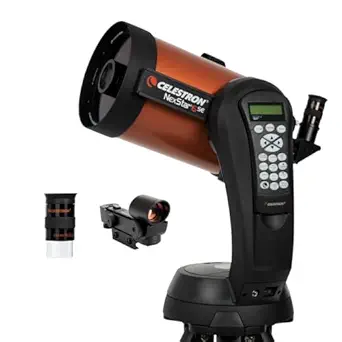 | Best for Serious Astronomers and Deep-Sky Viewing | Aperture: 6 inches | Optics: Schmidt-Cassegrain | Mount Type: GoTo computerized | VIEW ON AMAZON | See Our Full Breakdown |
| Odyssey PRO Unistellar Smart Telescope with Eyepiece, 85mm f/3.9, Digital & Computerized, App-Controlled, Motorized Alt-Az, 64GB Storage, 5h Battery |  | Best for Tech-Savvy Observers and Citizen Science | Mount: Motorized Alt-Az | Mirror Diameter: 85 mm | Focal Length: 320 mm | VIEW ON AMAZON | See Our Full Breakdown |
| Celestron NexStar 102SLT Computerized Refractor Telescope |  | Best for Portable Visual Astronomy | Aperture: 102mm | Optical Design: Refractor | Mount Type: Computerized Altazimuth | VIEW ON AMAZON | See Our Full Breakdown |
| computerized goto telescope for adult | Aperture | Warranty |
|---|---|---|
| Celestron NexStar 90SLT Maksut | 90mm | 2 years |
| Celestron AstroMaster 130EQ Te | 130mm | — |
| Celestron NexStar 5SE Schmidt- | 5 inches | — |
| Celestron NexStar 8SE Computer | 8 inches | 2 years |
| Odyssey PRO Unistellar Smart T | 85mm | — |
| Celestron NexStar 127SLT Maksu | 127mm | 2 years |
| Celestron NexStar 4SE Maksutov | 4 inches | 2 years |
| Celestron 114LCM Computerized | — | 2-year US warranty |
| Celestron NexStar 6SE Schmidt- | 6 inches | 2 years |
| Odyssey PRO Unistellar Smart T | — | — |
| Celestron NexStar 102SLT Compu | 102mm | — |
More Details on Our Top Picks
Celestron NexStar 90SLT Maksutov-Cassegrain Portable Telescope for Planets
This model excels in portability, making it a perfect choice for adults who want a quick setup for planetary and lunar viewing without lugging around heavy equipment. Its SkyAlign technology simplifies alignment, which is a boon for casual users, but its limited 90mm aperture means it gathers less light than larger telescopes like the NexStar 8SE, impacting deep-sky performance. Compared to the NexStar 5SE, it’s more portable but offers slightly less versatility in object detail. It’s ideal for those who prioritize convenience and quick setup over raw light-gathering power, though some familiarity with star alignment helps achieve optimal results.
Pros:- Compact and lightweight for easy transport
- User-friendly SkyAlign technology for quick setup
- Extensive database of over 40,000 celestial objects
Cons:- Limited to a 90mm aperture, reducing light collection for faint objects
- Requires some familiarity with star alignment procedures
Best for: Adults seeking a portable, easy-to-use telescope primarily for planets and the Moon.
Not ideal for: Advanced astrophotographers or deep-sky observers needing large apertures and detailed images.
- Optical Design:Maksutov-Cassegrain
- Aperture:90mm
- Features:Computerized star locating, SkyAlign, portable design
- Warranty:2 years
Our verdict“This telescope works best for adults wanting a portable, straightforward device for planetary and lunar observation with minimal fuss.”
Celestron AstroMaster 130EQ Telescope for Beginners
This telescope offers a significant step up in aperture with 130mm optics, making it a versatile choice for those starting out and wanting to explore both planets and faint deep-sky objects. Its equatorial mount allows smoother tracking compared to the NexStar 90SLT, but it’s manual, which may require some learning curve for complete novices. Compared with the NexStar 5SE, it lacks automation but provides a more traditional, hands-on experience that’s better suited for learning the sky. Its quick assembly and included accessories make it an attractive option, yet it needs a stable setup space and some patience to master manual controls.
Pros:- Large 130mm aperture for better deep-sky viewing
- Stable equatorial mount with smooth manual controls
- Easy to set up with included accessories
Cons:- Manual controls may challenge total beginners
- Limited to basic accessories, requiring additional upgrades for advanced use
Best for: Beginners who want a powerful, easy-to-assemble telescope with manual operation capabilities.
Not ideal for: Users seeking automatic object tracking or astrophotography features without additional investment.
- Aperture:130mm
- Optics Coating:Aluminum and SiO₂
- Mount Type:Equatorial
- Eyepieces Included:20mm and 10mm
- Finderscope:StarPointer red dot
- Setup:Quick assembly, no tools
Our verdict“Ideal for beginners who prefer a larger aperture and manual operation to learn the basics of stargazing.”
Celestron NexStar 5SE Schmidt-Cassegrain Computerized Telescope
The NexStar 5SE strikes a balance between portability and power, with a 5-inch aperture that reveals impressive lunar and planetary detail while still being easy enough for beginners to handle. Its automated GoTo system simplifies object navigation, similar to the NexStar 90SLT, but with greater light-gathering capacity. Compared to the NexStar 8SE, it’s lighter and more manageable, though it doesn’t match the 8-inch’s ability to resolve faint galaxies. This telescope makes the most sense for those who want quick setup, decent astrophotography potential, and a broad object database, but initial alignment can be tricky for newcomers.
Pros:- Portable and easy to set up with automated GoTo
- High-contrast optics with great lunar and planetary detail
- Includes wedge for astrophotography
Cons:- Initial alignment may challenge new users
- Additional eyepieces are recommended for more detailed views
Best for: Adults looking for a versatile, portable telescope with good astrophotography options and automatic object locating.
Not ideal for: Those needing large apertures for deep-sky imaging or advanced astrophotography without additional equipment.
- Aperture:5 inches
- Optics:Schmidt-Cassegrain with Starbright XLT coatings
- Mount:Fully automated GoTo
- Object Database:40,000+ objects
- Included Eyepiece:25mm Plossl
- Alignment Technology:SkyAlign
Our verdict“Best suited for adults wanting a portable, user-friendly telescope that balances power and ease of use for general sky exploration.”
Celestron NexStar 8SE Computerized Telescope – Schmidt-Cassegrain
The NexStar 8SE stands out for its substantial 8-inch aperture, offering exceptional detail on the Moon, planets, and deep-sky objects. Its fully automated GoTo system makes object location straightforward, similar to the 5SE but with far more light-gathering power—perfect for experienced amateurs seeking detailed views. It’s less portable than smaller models like the NexStar 5SE due to its weight and size, which can be a drawback if mobility is a priority. This telescope is a good investment for those willing to manage its setup complexity and weight to achieve higher-resolution imaging and viewing.
Pros:- Large 8-inch aperture for detailed lunar and planetary views
- Automated GoTo for easy object location
- Excellent contrast with high-quality optics
Cons:- Heavy and less portable for frequent transport
- Requires initial setup and alignment effort
Best for: Adults with some experience who want a large aperture for detailed lunar, planetary, and deep-sky observation with automation.
Not ideal for: Beginners or those needing a lightweight, highly portable telescope for quick trips.
- Aperture:8 inches
- Optics:Schmidt-Cassegrain
- Mount:Computerized GoTo
- Object Database:40,000+ objects
- Alignment Technology:SkyAlign
- Warranty:2 years
Our verdict“Ideal for experienced amateurs seeking high-resolution views with minimal manual effort but willing to handle a heavier, less portable setup.”
Odyssey PRO Unistellar Smart Telescope with Eyepiece, 85mm f/3.9, Digital & Computerized, App-Controlled, Motorized Alt-Az, RAW/FITS Export, 64GB, 5h Battery
The Odyssey PRO Unistellar offers cutting-edge digital imaging and seamless app control, making it ideal for adults who want a modern, smart telescope with quick setup and advanced features. Its automatic alignment and app interface are superior to traditional push-to systems, providing a more immersive experience, especially for city dwellers or those interested in astrophotography. Compared with the NexStar 5SE, it offers more digital integration and onboard storage, but at a higher weight and a shorter 5-hour battery life. It’s perfect for users who want to participate in citizen science projects, but less suitable for those wanting lightweight or extended outdoor use without recharging.
Pros:- Quick, one-click automatic alignment
- High-quality digital imaging with immersive eyepiece
- Built-in 64GB storage and long battery life
Cons:- Relatively heavy at 4 kg for the scope and 2.5 kg for the tripod
- Limited to 5 hours of battery life per charge
Best for: Adults interested in digital imaging, app control, and citizen science projects, especially in urban settings.
Not ideal for: Traditionalists or those needing longer battery life and portability without electronic dependency.
- Mount:Motorized Alt-Az
- GoTo:One-click
- Mirror Diameter:85 mm
- Focal Length:320 mm
- Aperture:85mm
- Battery Life:up to 5 hours
Our verdict“Best suited for adults seeking a high-tech, app-controlled telescope with digital imaging and citizen science capabilities, accepting some weight and battery tradeoffs.”
Celestron NexStar 127SLT Maksutov-Cassegrain Computerized GoTo Telescope
The NexStar 127SLT stands out for its compact size and ease of use, making it ideal for those wanting to explore the night sky without lugging heavy equipment. Compared to the larger NexStar 6SE, it offers easier transport and setup, though with a tradeoff in limiting deep-sky viewing due to its smaller aperture. Its Maksutov-Cassegrain design provides sharp lunar and planetary images, while the SkyAlign technology simplifies alignment for newcomers. However, it’s primarily suitable for amateur stargazing and not for serious astrophotography or detailed deep-sky observation, which require larger apertures or more advanced mounts. This pick makes the most sense for casual enthusiasts seeking a portable, reliable starter telescope.
Pros:- Highly portable and lightweight for travel and quick setup
- Quick setup with SkyAlign technology simplifies initial alignment
- Includes astronomy software for sky planning
Cons:- Limited to amateur astronomy, not suitable for serious astrophotography
- Requires some familiarity with telescope operation for optimal use
Best for: Beginners and casual astronomers who want a lightweight, easy-to-setup telescope for planetary and lunar viewing
Not ideal for: Advanced users or deep-sky astrophotographers who need larger apertures and more sophisticated tracking capabilities
- Aperture:127mm
- Optical Design:Maksutov-Cassegrain
- Database:Over 40,000 objects
- Warranty:2 years
Our verdict“This telescope is best for casual users prioritizing portability and ease of use over deep-sky performance.”
Celestron NexStar 4SE Maksutov-Cassegrain GoTo Telescope
The NexStar 4SE offers a balanced combination of portability and performance, making it suitable for those wanting quality lunar and planetary views with the convenience of automation. Its 4-inch Maksutov-Cassegrain optics provide sharp images comparable to larger scopes, but with a smaller aperture that limits deep-sky object viewing. The built-in wedge allows for basic astrophotography, setting it apart from smaller, purely visual scopes like the NexStar 127SLT. Compared with larger models like the NexStar 6SE, it sacrifices some light-gathering power but remains easier to transport and set up. This scope is ideal for hobbyists who want a compact, capable telescope for both observing and occasional imaging, without the bulk.
Pros:- Compact and portable with excellent optical quality for its size
- Automated GoTo system with SkyAlign for easy object location
- Includes built-in wedge for simple astrophotography
Cons:- Limited aperture reduces ability to view faint deep-sky objects
- Requires power source for computerized functions
Best for: Beginner to intermediate users interested in planetary and lunar observation with some astrophotography potential
Not ideal for: Deep-sky astrophotographers or those needing a larger aperture for detailed galaxy viewing
- Aperture:4 inches
- Optics:Maksutov-Cassegrain
- Mount Type:GoTo computerized
- Object Database:40,000+ objects
- Warranty:2 years
Our verdict“This telescope is perfect for those seeking a portable, capable scope for planetary, lunar, and basic astrophotography tasks.”
Celestron 114LCM Computerized Reflector Telescope for Beginners
The 114LCM is a solid choice for newcomers seeking an easy-to-use, affordable computerized reflector. It automatically locates over 4,000 celestial objects, making it accessible for those new to astronomy. Its full-height tripod and included accessories like two eyepieces and a red dot finderscope simplify setup, while the free sky software supports sky simulation and planning. Compared with the NexStar 127SLT, it offers a more traditional reflector design, which can be advantageous for lunar and planetary detail. However, its weight and size make it less portable, and its basic features lack the advanced tracking or astrophotography capabilities of higher-end models. Best suited for beginners who want straightforward operation without extra bells and whistles.
Pros:- Automated object locating simplifies initial astronomy experience
- Includes essential accessories and free sky software
- Full-height tripod provides stable viewing
Cons:- Lacks advanced features for serious astrophotography
- Heavier and less portable for travel
Best for: Beginners and casual observers looking for an affordable, easy-to-operate telescope
Not ideal for: Intermediate or advanced astronomers desiring more detailed deep-sky viewing or astrophotography
- Type:Reflector
- Optics:All glass
- Object Database:4,000 celestial objects
- Eyepieces:25mm & 9mm
- Finderscope:StarPointer red dot
- Warranty:2-year US warranty
Our verdict“This model is best for beginners wanting a straightforward, budget-friendly telescope for lunar and planetary observation.”
Celestron NexStar 6SE Schmidt-Cassegrain Telescope
The NexStar 6SE combines a powerful 6-inch aperture with advanced optics, making it the go-to choice for enthusiasts who want detailed lunar, planetary, and deep-sky views. Its Schmidt-Cassegrain design offers significant light-gathering ability, surpassing smaller scopes like the NexStar 4SE. The fully automated NexStar+ mount with SkyAlign technology simplifies locating objects across a large database of over 40,000 celestial targets. Despite its impressive capabilities, its size and weight make it less portable than smaller models, and beginners might find the setup and operation more complex. This telescope strikes a balance between power and convenience, ideal for those ready to upgrade from beginner scopes to serious observing and imaging.
Pros:- Powerful 6-inch aperture for high-resolution lunar and planetary images
- Automated GoTo with large object database simplifies tracking
- Compatible with a variety of accessories for upgrades
Cons:- Complex for complete beginners to operate effectively
- Size and weight reduce portability for frequent travel
Best for: Intermediate to advanced amateurs seeking detailed views of planets, the Moon, and faint deep-sky objects
Not ideal for: Casual stargazers or those prioritizing portability, as the scope is relatively bulky
- Aperture:6 inches
- Optics:Schmidt-Cassegrain
- Mount Type:GoTo computerized
- Object Database:40,000+ objects
- Warranty:2 years
Our verdict“This scope is ideal for committed amateur astronomers aiming for detailed lunar, planetary, and deep-sky observations with room to expand.”
Odyssey PRO Unistellar Smart Telescope with Eyepiece, 85mm f/3.9, Digital & Computerized, App-Controlled, Motorized Alt-Az, 64GB Storage, 5h Battery
The Odyssey PRO Unistellar offers a modern, app-controlled experience with quick setup and advanced digital imaging features. Its 85mm aperture and fast f/3.9 focal ratio enable wide-field views and citizen science applications, setting it apart from traditional telescopes like the NexStar 127SLT. The motorized Alt-Az mount and app interface make alignment effortless, ideal for city and dark-sky observations alike. On the downside, the reliance on smartphone or tablet control may be a barrier for less tech-oriented users, and the 5-hour battery life might not suffice for extended sessions. This model fits best for users who want a blend of digital imaging, portability, and community engagement, despite its higher price point.
Pros:- Quick and easy setup with automatic alignment and app control
- Advanced digital imaging capabilities with RAW/FITS export
- Compact, lightweight design with onboard storage and long battery life
Cons:- Dependent on smartphone or tablet for full functionality
- Limited battery life may restrict longer observing sessions
Best for: Tech-savvy enthusiasts interested in digital imaging, citizen science, and app-based operation
Not ideal for: Casual stargazers or those seeking long-session, battery-independent viewing
- Mount:Motorized Alt-Az
- Mirror Diameter:85 mm
- Focal Length:320 mm
- Field of View:33.6 × 45 arcmin
- Battery Life:up to 5 hours
- Connectivity:Wi-Fi
Our verdict“This telescope is well-suited for users wanting a modern, digital approach to astronomy with citizen science features, despite a higher cost and reliance on mobile devices.”
Celestron NexStar 102SLT Computerized Refractor Telescope
The Celestron NexStar 102SLT stands out for its portability and user-friendly setup, making it ideal for adults who want a reliable telescope they can take on trips or to outdoor locations. Its SkyAlign technology ensures quick alignment, which is a significant advantage over larger, more cumbersome models like the NexStar 5SE, though it sacrifices some of the advanced capabilities those larger telescopes offer. The included Starry Night Special Edition software enhances the experience by simulating the night sky, appealing to beginners and casual observers alike. However, its optical design may introduce chromatic aberration, especially when viewing planets at high magnifications, and it does not support astrophotography, limiting its use for more serious sky imaging. Compared to the NexStar 90SLT Maksutov-Cassegrain, this scope offers larger aperture for better viewing of faint objects but is less portable and slightly more complex to set up. This pick makes the most sense for adults seeking an accessible, versatile telescope for visual observation rather than imaging or advanced astrophotography.
Pros:- Portable and lightweight for easy transport
- Quick setup with SkyAlign technology
- Includes engaging astronomy software for sky simulation
- Capable of detailed views of planets, the Moon, and deep-sky objects
Cons:- Limited to visual observation, no astrophotography support
- Initial setup and alignment can be time-consuming for some users
- Optical design may produce chromatic aberration at high magnification
Best for: Adults who want a portable, easy-to-use telescope for casual skywatching and planetary viewing
Not ideal for: Experienced astronomers interested in astrophotography or deep-sky imaging, as it lacks imaging capabilities and has potential chromatic aberration
- Aperture:102mm
- Optical Design:Refractor
- Mount Type:Computerized Altazimuth
- Included Software:Starry Night Special Edition
- Tripod:Adjustable steel tripod
- Alignment Technology:SkyAlign
- Finderscope:StarPointer with red LED
Our verdict“This telescope suits adults seeking an easy-to-transport and straightforward device for casual astronomy without the need for imaging features.”

How We Picked
The products in this roundup were evaluated based on performance, ease of setup, build quality, user interface, and value for money. We prioritized models with accurate and smooth GoTo capabilities, as these directly impact the user experience. Additional factors like portability, app integration, and motor durability also influenced the rankings. Our goal was to identify options that serve different needs—whether for casual stargazing, astrophotography, or educational purposes—while maintaining reliable operation over time.Factors to Consider When Choosing Computerized Goto Telescope For Adults
Choosing the right computerized goto telescope involves several key considerations. Beyond just features, understanding how a telescope fits your skill level, goals, and environment helps ensure satisfaction and long-term enjoyment. Here are the main factors to keep in mind:Aperture Size and Optical Quality
bigger apertures gather more light, revealing fainter objects and providing sharper images. However, larger telescopes tend to be heavier and less portable. Consider your primary targets—planets, deep-sky objects, or both—and balance aperture with ease of handling. Optical quality impacts clarity and contrast; investing in a well-made lens or mirror can significantly enhance your viewing experience, especially for detailed planetary or astrophotography work.
Ease of Use and Learning Curve
Look for models with intuitive controls, straightforward alignment procedures, and clear on-screen menus. Some telescopes include pre-loaded databases and guided setup features, making them accessible for beginners. Avoid overly complex systems if you prefer quick setups or if you’re new to astronomy—these can lead to frustration and discourage ongoing use.
Portability and Size
Consider how often you’ll move the telescope and where you’ll store it. Compact, lightweight models are easier to transport for outdoor observing sessions, while larger models may require a dedicated setup space. Think about your typical observation environment—backyard, travel, or fixed installation—and choose accordingly to avoid inconvenience.
Smart Features and App Integration
Many modern telescopes include smartphone or tablet control, which simplifies alignment and target selection. While convenient, these features can add to the cost and sometimes introduce connectivity issues. Decide if app control is a priority or if traditional hand control interfaces meet your needs better. Compatibility with your devices and ease of use should guide your choice.
Budget and Long-Term Value
Prices vary widely among these models, often reflecting build quality, features, and brand reputation. Investing in a slightly more expensive telescope can pay off through better durability and more accurate tracking. However, ensure the selected model provides the features you need without paying extra for bells and whistles that won’t be used regularly. Consider future upgrades or accessories when evaluating value.
Frequently Asked Questions
Can I use a computerized goto telescope for astrophotography?
Yes, many computerized goto telescopes are suitable for astrophotography, especially those with stable mounts, accurate tracking, and sufficient aperture. However, entry-level models might struggle with long-exposure imaging, so upgrading to a mount with precise motors or considering specialized astrophotography adapters can improve results. Be sure to check if the telescope supports camera attachment and has features like motorized tracking for longer exposures.
How much setup time should I expect with a computerized goto telescope?
Setup times vary depending on the model, but most modern options aim for quick calibration—often under 10 minutes. Larger or more complex telescopes may require more time for alignment, especially if they involve multiple star or object calibration points. Consider your patience level and the frequency of use; models with automated alignment routines are ideal for those who want minimal fuss.
Are app-controlled telescopes more reliable than traditional hand controls?
App-controlled models can offer a more user-friendly interface and additional features like star maps and automatic alignment. However, they depend on stable Bluetooth or Wi-Fi connections, which can sometimes introduce reliability issues. Traditional hand controls tend to be more straightforward and less prone to connectivity problems, making them reliable options for users who prefer simplicity.
What is the ideal aperture size for beginner adults interested in planetary viewing?
For planetary observation, an aperture of around 4 to 6 inches (100-150mm) generally provides bright, detailed views without being unwieldy. Smaller apertures are easier to transport and set up but may lack the resolution for finer planetary detail. Larger apertures enhance image quality but come with increased weight and cost, so balance your interest level with practicality.
Should I prioritize a telescope with a larger aperture or more advanced features?
It depends on your main goals. If planetary detail and deep-sky object visibility are your priorities, a larger aperture offers immediate benefits. However, if ease of use, automation, and modern tech features matter more, a model with advanced software and app integration may be preferable. For most adults starting out, a balanced approach—moderate aperture combined with easy-to-use features—provides the best initial experience.
Conclusion
The best overall pick for most enthusiasts is the Celestron NexStar 8SE, combining powerful optics with reliable GoTo performance. Beginners or casual stargazers should consider the Celestron AstroMaster 130EQ for affordability and ease of use. For those seeking a premium experience, the Odyssey PRO Unistellar offers cutting-edge smart technology at a higher price point. If portability is key, models like the Celestron NexStar 102SLT deliver solid performance in a compact package. Your choice ultimately depends on your observing goals, budget, and how much convenience you want in your astronomy setup.