For data science and AI, my best overall pick is the 14-inch MacBook Pro with M5 Pro, 48GB memory, and a 1TB SSD: it balances compute, memory, and portability for varied development work. The 16-inch M5 Pro with 48GB memory suits buyers who want a larger workspace and more storage, while the 14-inch M5 Max with 128GB memory is aimed at heavier local workloads. The main tradeoffs are memory capacity, GPU capability, screen size, and how much work you can run locally rather than on cloud hardware. Older M1 Pro and base M5 configurations can still fit lighter workloads, but offer less headroom for demanding projects. Read on for how I rank all 10 configurations and which one best matches your workflow.

Get smart everyday buys delivered free with Prime
- Fast, free delivery on millions of items
- Prime Video, Amazon Music and more included
- Member-only deals all year
Key Takeaways
- The 14-inch M5 Pro with 48GB memory is the strongest all-rounder here, pairing more headroom than the 16GB base M5 models with a more portable size than the 16-inch options.
- 128GB memory is the standout for local AI work among these listings; the two 14-inch and 16-inch M5 Max configurations with that capacity can accommodate larger in-memory workloads than the Pro models.
- The 16-inch M5 Pro with 48GB memory and 2TB SSD combines a larger display and more storage, making it a better workstation-style choice than the 14-inch Pro when desk use dominates.
- The two base M5 14-inch configurations differ mainly in SSD capacity: choose 1TB over 512GB if datasets, environments, and local project files need to live on the laptop.
- The 2021 M1 Pro is the lowest-headroom option in this lineup, while the 2026 M5 Pro with 24GB memory is a newer step up for moderate work but remains below the 48GB configurations for memory-heavy tasks.



| macbook pro for data science and ai | GPU | Storage | Display | Ports |
|---|---|---|---|---|
| Apple MacBook Pro 14.2-inch wi | 16-core GPU | 1TB SSD | 14.2-inch Liquid Retina XDR, 3456 × 2234, 120Hz | Three Thunderbolt 5, MagSafe 3, SDXC, HDMI, headphone jack |
| Apple MacBook Pro 14-inch | 16-core GPU | 1TB SSD | 14-inch Liquid Retina XDR, 3024 × 1964 | USB-C, MagSafe 3, HDMI, SD card slot |
| Apple 14.2-inch MacBook Pro wi | 10-core | 1TB SSD | 14.2-inch Liquid Retina XDR | Three Thunderbolt 4, MagSafe 3, SDXC, HDMI, headphone jack |
| Apple MacBook Pro 14.2" | 40-core Apple GPU with Neural Accelerator | 2TB SSD | 14.2-inch Liquid Retina XDR | Three Thunderbolt 5, MagSafe 3, HDMI, SDXC, headphone jack |
| Apple MacBook Pro 16.2-inch wi | 40-core | 4TB SSD | 16.2-inch Liquid Retina XDR, 3456 × 2234 | Three Thunderbolt 5, MagSafe 3, SDXC, HDMI, headphone jack |
| Apple 16-inch MacBook Pro with | 20-core | 2TB SSD | 16.2-inch Liquid Retina XDR | — |
| Apple 16.2-inch MacBook Pro wi | 20-core | 1TB SSD | 16.2-inch Liquid Retina XDR | Three Thunderbolt 5, MagSafe 3, SDXC card slot, HDMI, headphone jack |
| Apple MacBook Pro 16.2-inch wi | 40-core | 2TB SSD | 16.2-inch Liquid Retina XDR | — |
| Apple 14.2-inch MacBook Pro wi | 10-core | 512GB SSD | 14.2-inch Liquid Retina XDR | — |
| Apple 2026 MacBook Pro Laptop | 16-core | 1TB SSD | 14.2-inch Liquid Retina XDR | Three Thunderbolt 5, MagSafe 3, SDXC, HDMI, headphone jack |
More Details on Our Top Picks
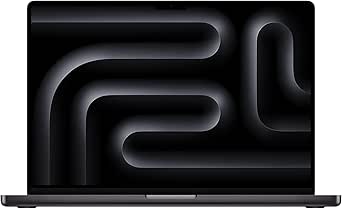
Apple MacBook Pro 14.2-inch with M5 Pro, 15-core CPU, 16-core GPU, 48GB Memory, 1TB SSD, Space Black
For data scientists who want room for larger local datasets and models without stepping up to a Max configuration, this M5 Pro with 48GB unified memory is the most balanced fit in this group. The memory headroom matters more than a small CPU bump when juggling notebooks, containers, and in-memory data, while the 1TB SSD gives projects more breathing room than the M1 Pro model’s storage tier. Its 14.2-inch XDR screen and broad port selection suit a portable workstation setup. Against the 14-inch M5 MacBook Pro with 16GB, it is better suited to heavier parallel work; against the M5 Max models, it gives up substantial GPU capacity and memory. The listing itself has conflicting CPU and display details, so buyers should verify the exact configuration before ordering. It is also a costly, non-upgradeable commitment.
Pros:- 48GB unified memory supports larger working sets and more simultaneous tools than the 16GB options.
- 1TB SSD provides useful space for datasets, environments, and project files.
- Liquid Retina XDR display with 120Hz refresh rate and 3456 × 2234 resolution.
- Three Thunderbolt 5 ports plus HDMI, SDXC, and MagSafe 3 simplify workstation connections.
Cons:- Listing details conflict on processor core count and screen size, making configuration verification necessary.
- The 16-core GPU is less suited to intensive local AI workloads than the M5 Max’s 40-core GPU.
- Memory and storage are fixed at purchase and cannot be expanded later.
Best for: Data scientists who need 48GB of unified memory for local experiments, multitasking, and moderate model work in a portable 14-inch system.
Not ideal for: Buyers training large GPU-heavy models locally, or anyone unwilling to verify the conflicting processor and display details in the listing.
- Processor:Apple M5 Pro, 15-core CPU
- GPU:16-core GPU
- Memory:48GB unified memory
- Storage:1TB SSD
- Display:14.2-inch Liquid Retina XDR, 3456 × 2234, 120Hz
- Ports:Three Thunderbolt 5, MagSafe 3, SDXC, HDMI, headphone jack
- Camera:12MP Center Stage
- Weight:2.14 kg
Our verdict“Choose this M5 Pro configuration for a portable data-science Mac with generous memory, provided you confirm the listed hardware details first.”
Apple MacBook Pro 14-inch (2021) M1 Pro, 10-core CPU, 16-core GPU, 16GB RAM, 1TB SSD – Space Gray
This 2021 MacBook Pro is the entry point for buyers who mainly code, analyze moderate datasets, and want a capable macOS workstation without needing the newest chip. Its 10-core M1 Pro and 16-core GPU still offer a stronger professional foundation than a basic laptop, while the 1TB SSD keeps project files and development environments from crowding out quickly. The 14-inch XDR display and HDMI, MagSafe, and SD card connections also make it practical as a mobile desk. Compared with the newer 14-inch M5 model, this one is an older platform with less forward-looking performance; compared with the 48GB M5 Pro, its 16GB memory is a clear constraint for large notebooks, containers, or local models. It suits learning and conventional analytics better than demanding AI work, and its fixed memory leaves little room to grow.
Pros:- M1 Pro with a 10-core CPU and 16-core GPU handles many professional coding and analytics tasks.
- 1TB SSD offers ample working space for projects and development tools.
- 14-inch Liquid Retina XDR display provides a detailed workspace in a compact chassis.
- HDMI, MagSafe 3, and an SD card slot reduce dependence on adapters.
Cons:- 16GB unified memory can constrain large datasets, containers, and local model workflows.
- Older M1 Pro generation has less performance headroom than the M5 configurations in this roundup.
- RAM and storage are soldered and cannot be upgraded after purchase.
Best for: Students and early-career analysts running Python or R workflows, coursework, and moderate datasets who want a 1TB MacBook Pro configuration.
Not ideal for: Researchers working with large in-memory datasets, multiple virtual environments, or local AI models that need more than 16GB of unified memory.
- Processor:Apple M1 Pro, 10-core CPU
- GPU:16-core GPU
- Memory:16GB unified memory
- Storage:1TB SSD
- Display:14-inch Liquid Retina XDR, 3024 × 1964
- Battery life:Up to 17 hours
- Ports:USB-C, MagSafe 3, HDMI, SD card slot
- Weight:1.6 kg
Our verdict“Pick this model for learning and moderate analytics on a compact Mac, but skip it if your workloads are already memory- or GPU-heavy.”
Apple 14.2-inch MacBook Pro with M5 Chip, 10-Core CPU and GPU, 16GB Memory, 1TB SSD, Space Black
The standard M5 chip and 1TB SSD make this a sensible everyday data-science machine for coding, dashboards, coursework, and analysis that does not depend on very large local models. Its XDR screen, support for two external displays, and built-in HDMI and SDXC slot help it shift between a mobile setup and a desk without much accessory planning. Compared with the 2021 M1 Pro, this newer-generation option is the more current choice for routine work; compared with the M5 Pro model offering 48GB memory, its 16GB unified memory gives less latitude for heavy multitasking and larger in-memory datasets. The 10-core GPU is also a more modest fit for local GPU-intensive AI than either M5 Max. Buyers should treat it as a strong coding and analysis laptop, not a substitute for a dedicated high-memory model-training system.
Pros:- M5 10-core CPU and GPU provide a current platform for everyday coding and analytics.
- 1TB SSD leaves useful room for datasets, tools, and project files.
- Liquid Retina XDR display offers high brightness and contrast for extended work sessions.
- Supports up to two external displays and includes HDMI, SDXC, and three Thunderbolt 4 ports.
Cons:- 16GB unified memory is limiting for large local datasets and AI models.
- 10-core GPU falls short of the 40-core GPU in the M5 Max configurations for demanding accelerated work.
- The listed configuration does not specify memory or storage upgrade options, so buyers should choose capacity carefully.
Best for: Students, analysts, and developers who need a current 14-inch MacBook Pro for coding, data visualization, and moderate-size analysis projects.
Not ideal for: Data scientists running large local language models, GPU-intensive training, or memory-heavy workflows with several containers and datasets open at once.
- Chip:Apple M5
- CPU:10-core
- GPU:10-core
- Memory:16GB unified memory
- Storage:1TB SSD
- Display:14.2-inch Liquid Retina XDR
- Peak brightness:1600 nits
- External displays:Up to two
- Ports:Three Thunderbolt 4, MagSafe 3, SDXC, HDMI, headphone jack
Our verdict“Choose this M5 model for current, everyday data-science work with a 1TB drive, not for substantial local model training.”
Apple MacBook Pro 14.2″ (M5 Max) – 18‑core CPU, 40‑core GPU, 128 GB RAM, 2 TB SSD, Space Black
This is the compact choice for buyers who want the M5 Max’s 40-core GPU and 128GB memory in a 14.2-inch format. That combination gives data scientists far more room for local inference, large data workloads, and GPU-accelerated creative or scientific tasks than the 16GB M5 and 48GB M5 Pro configurations. The 2TB SSD also offers more project capacity than the M1 Pro’s 1TB drive. Against the 16.2-inch M5 Max with 4TB storage, this model saves desk space but gives up screen area and half the listed storage. The listing identifies the memory as SODIMM, while its own cons state that memory and storage are soldered; that inconsistency deserves verification before purchase. Its high-capacity hardware may be excessive for notebook-based analytics, and the 14-inch display can feel constrained beside a large external-workstation setup.
Pros:- M5 Max with 18-core CPU and 40-core GPU targets demanding accelerated workloads.
- 128GB listed memory provides substantially more room for local models and large working sets than the M5 and M5 Pro options.
- 2TB SSD offers more internal storage than the 1TB configurations.
- Three Thunderbolt 5 ports, HDMI, and SDXC support a broad workstation setup.
Cons:- Listing conflicts over whether memory is SODIMM or soldered, so the configuration details need confirmation.
- 14.2-inch workspace is smaller than the 16.2-inch M5 Max option.
- Fixed components, as stated in the listing’s cons, limit later memory and storage changes.
Best for: AI practitioners and data scientists who need substantial local GPU and memory capacity but prefer a smaller 14-inch laptop footprint.
Not ideal for: Buyers whose work is mostly lightweight Python or spreadsheet analysis, or those who need a larger built-in screen and 4TB storage without external drives.
- Processor:Apple M5 Max, 18-core CPU
- GPU:40-core Apple GPU with Neural Accelerator
- Memory:128GB RAM (listed as SODIMM)
- Storage:2TB SSD
- Display:14.2-inch Liquid Retina XDR
- Ports:Three Thunderbolt 5, MagSafe 3, HDMI, SDXC, headphone jack
- Wireless:Wi-Fi 7, Bluetooth 6
- Dimensions:14.01 × 9.77 × 0.66 inches
Our verdict“Choose this configuration for high-memory local AI work in a smaller chassis, after confirming the listed memory details.”
Apple MacBook Pro 16.2-inch with M5 Max, 18-Core CPU, 40-Core GPU, 128GB Memory, 4TB SSD, Space Black
For buyers who want a laptop to handle the largest workloads in this group, this 16.2-inch M5 Max combines an 18-core CPU, 40-core GPU, and 128GB unified memory with a generous 4TB SSD. That makes it the clearest fit for keeping large datasets, multiple environments, and local model files on one machine, while the larger XDR panel offers more room for notebooks and visualizations than the 14.2-inch M5 Max. It also supports up to four external displays, which suits a multi-monitor research setup. Compared with the 14.2-inch M5 Max, it adds screen and storage capacity but is less compact; compared with the 48GB M5 Pro, it is a much more powerful and expensive-tier configuration that many analytics users will not fully use. The listing gives no battery runtime or weight, so portability and unplugged workload expectations are harder to judge.
Pros:- M5 Max combines an 18-core CPU and 40-core GPU for demanding compute and accelerated workloads.
- 128GB unified memory supports large local working sets and model experimentation.
- 4TB SSD provides extensive internal space for datasets, environments, and model files.
- 16.2-inch XDR display and support for up to four external displays suit complex desk setups.
Cons:- Larger 16.2-inch format is less compact than the 14.2-inch M5 Max option.
- No battery runtime or product weight is provided, limiting assessment of mobile use.
- This much memory and GPU capacity is unnecessary for many standard analytics and coding workflows.
Best for: AI researchers and data scientists who need 128GB unified memory, extensive local storage, a large built-in display, and support for a multi-monitor workstation.
Not ideal for: Students or analysts with routine, cloud-based workloads who value portability more than local model capacity and a large internal drive.
- Chip:Apple M5 Max
- CPU:18-core
- GPU:40-core
- Unified memory:128GB
- Storage:4TB SSD
- Display:16.2-inch Liquid Retina XDR, 3456 × 2234
- External displays:Up to four
- Wireless:Wi-Fi 7, Bluetooth 6
- Ports:Three Thunderbolt 5, MagSafe 3, SDXC, HDMI, headphone jack
Our verdict“Choose this premium configuration when local AI capacity, a large screen, and 4TB of storage matter more than compactness.”
Apple 16-inch MacBook Pro with M5 Pro, 18-core CPU, 20-core GPU, 48GB Memory, 2TB SSD, Space Black
I’d choose this 16-inch M5 Pro when data science work needs room for substantial datasets, several active tools, and local model experiments without stepping up to the M5 Max. Its 48GB unified memory and 2TB SSD give it a more practical buffer for concurrent workloads than the 24GB, 1TB 16-inch M5 Pro, while the 18-core CPU and 20-core GPU suit demanding analysis and GPU-accelerated tasks. The expansive Liquid Retina XDR display also gives notebooks, charts, and terminals more working space. Compared with the 128GB M5 Max model, this is the more restrained choice, but it has far less memory and GPU headroom for large local AI workloads. The 16-inch chassis is a real portability tradeoff, and Apple Intelligence features may vary by region or language.
Pros:- 48GB unified memory gives concurrent analysis tools and larger working sets more room.
- 2TB SSD offers substantial space for datasets, environments, and project files.
- 18-core CPU and 20-core GPU are suited to demanding professional workloads.
- 16.2-inch Liquid Retina XDR display provides a large, bright workspace.
Cons:- The 16-inch size is less convenient to carry than the 14.2-inch M5 Pro models.
- It has much less memory and GPU capacity than the 128GB M5 Max option for intensive local AI workloads.
- Some Apple Intelligence features are in beta and may vary by region or language.
Best for: Data scientists who routinely work with sizable local datasets, multiple development tools, and some on-device AI, and want 2TB of storage without choosing an M5 Max.
Not ideal for: Researchers who need maximum GPU capacity or 128GB memory for large local models, or frequent travelers who would rather carry a 14-inch MacBook Pro.
- Chip:Apple M5 Pro
- CPU:18-core
- GPU:20-core
- Unified memory:48GB
- Storage:2TB SSD
- Display:16.2-inch Liquid Retina XDR
- Peak brightness:1600 nits
- Power adapter:140W USB-C
Our verdict“Choose this model for a large-screen M5 Pro workstation with generous memory and storage, but pick the M5 Max if local AI scale matters more than restraint.”
Apple 16.2-inch MacBook Pro with M5 Pro, 18-core CPU, 20-core GPU, 24GB memory, 1TB SSD, Wi-Fi 7, Space Black
This configuration makes sense for buyers who value a large workspace and M5 Pro performance more than a generous memory ceiling. Its 18-core CPU and 20-core GPU match the more expensive 48GB M5 Pro configuration, but 24GB unified memory and 1TB SSD leave less room for large datasets, many concurrent tools, or local model work. That makes it a clearer fit for notebook-based analysis, coding, and cloud-backed AI than for memory-heavy experiments. Compared with the 14.2-inch M5 Pro with 24GB and 1TB, it offers a larger display and a 12MP Center Stage camera, but gives up compactness. It also has a useful port selection, including Thunderbolt 5 and SDXC. I’d skip it if your workload is already pushing past 24GB; the 48GB model is the better buffer.
Pros:- M5 Pro CPU and GPU provide strong compute capability for coding and analysis.
- Large 16.2-inch Liquid Retina XDR display gives notebooks and visualizations more room.
- Thunderbolt 5, HDMI, SDXC, and MagSafe 3 support varied desk and field setups.
- 12MP Center Stage camera is useful for remote collaboration.
Cons:- 24GB unified memory is a tighter limit for large datasets and local AI than the 48GB M5 Pro configuration.
- 1TB storage is half the capacity of the 2TB 16-inch M5 Pro option.
- The 16-inch body is less portable than the 14.2-inch M5 Pro alternative.
Best for: Data science students and professionals who want a 16-inch screen and M5 Pro compute for coding, analysis, and cloud-based AI workflows.
Not ideal for: Buyers who regularly load large datasets or models into memory, or who need an especially portable laptop for commuting.
- Chip:Apple M5 Pro
- CPU:18-core
- GPU:20-core
- Unified memory:24GB
- Storage:1TB SSD
- Display:16.2-inch Liquid Retina XDR
- Wireless:Wi-Fi 7, Bluetooth 6
- Ports:Three Thunderbolt 5, MagSafe 3, SDXC card slot, HDMI, headphone jack
Our verdict“Pick this for a large-screen M5 Pro at a lower memory tier, but move to 48GB if your datasets or local models are growing.”
Apple MacBook Pro 16.2-inch with M5 Max, 18-Core CPU, 40-Core GPU, 128GB Memory, 2TB SSD, Space Black
For buyers who need to run ambitious AI and GPU-heavy workflows on the laptop itself, this is the most capable option in this batch. The combination of a 40-core GPU and 128GB unified memory gives larger models and demanding parallel workloads far more headroom than either M5 Pro configuration, including the 48GB 16-inch model. That capacity can reduce the need to split work across machines, though it does not guarantee a particular model will run efficiently. Its 2TB SSD and broad ports also suit a workstation-style setup with external displays and storage. Compared with the 14-inch M5 Pro, it is a much less portable and more specialized tool; compared with the M5 Max 4TB configuration elsewhere in the roundup, its storage is more limited. I’d reserve it for workloads that can use the extra GPU and memory.
Pros:- 40-core GPU is the strongest graphics configuration among these five products.
- 128GB unified memory supports much larger working sets than the M5 Pro models.
- 2TB SSD provides substantial local workspace for projects and data.
- Thunderbolt 5, HDMI, SDXC, and support for up to four external displays suit workstation setups.
Cons:- The 16.2-inch size makes it less convenient for frequent travel than the 14.2-inch models.
- Its GPU and memory headroom can be unnecessary for cloud-based AI and routine analysis.
- 2TB storage is less than the 4TB M5 Max configuration listed elsewhere in the roundup.
Best for: Machine-learning practitioners and data scientists who need substantial unified memory and GPU capacity for local model work and parallel computation.
Not ideal for: Notebook-focused analysts, cloud-first AI users, or travelers who do not need the M5 Max capacity and prefer a lighter 14-inch system.
- Chip:Apple M5 Max
- CPU:18-core
- GPU:40-core
- Unified memory:128GB
- Storage:2TB SSD
- Display:16.2-inch Liquid Retina XDR
- Peak brightness:1600 nits
- Wireless:Wi-Fi 7, Bluetooth 6
Our verdict“Choose this M5 Max when local AI and GPU-heavy workloads justify 128GB memory; otherwise, an M5 Pro configuration is a more focused fit.”
Apple 14.2-inch MacBook Pro with M5 chip, 10-core CPU and GPU, 16GB memory, 512GB SSD, Space Black
This 14.2-inch MacBook Pro is the compact choice for buyers learning data science, writing code, and running modest analyses rather than training large models locally. Its 10-core M5 CPU and GPU and Liquid Retina XDR display provide a capable everyday setup, while the lighter 3.41-pound chassis is easier to carry than either 16-inch M5 Pro. The tradeoff is the 16GB memory and 512GB SSD: both constrain larger datasets, several simultaneous development environments, and local AI experiments. Compared with the 14.2-inch M5 model with 1TB storage elsewhere in the roundup, this configuration offers half the listed SSD capacity, so dataset management matters more. It still has useful ports and supports up to two external displays. I’d treat it as a portable learning and analysis machine, not a substitute for the 48GB or 128GB options.
Pros:- Compact 14.2-inch form is easier to carry than the 16-inch M5 Pro and M5 Max models.
- 10-core M5 CPU and GPU suit coding and everyday analytical workloads.
- Liquid Retina XDR display and support for up to two external displays offer flexible workspace options.
- Three Thunderbolt 4 ports, HDMI, and SDXC support common peripherals and storage.
Cons:- 16GB unified memory limits headroom for larger datasets and local AI workloads.
- 512GB SSD fills more quickly than the 1TB and 2TB configurations in this roundup.
- Its 10-core CPU and GPU are less suited to demanding compute than the M5 Pro and M5 Max chips.
Best for: Students, educators, and early-career analysts who prioritize portability for programming, coursework, and smaller datasets.
Not ideal for: Researchers working with large datasets, multiple memory-intensive tools, or local AI models that need more than 16GB memory and 512GB storage.
- Chip:Apple M5
- CPU:10-core
- GPU:10-core
- Memory:16GB unified memory
- Storage:512GB SSD
- Display:14.2-inch Liquid Retina XDR
- Weight:3.41 pounds
- External displays:Supports up to two
Our verdict“Choose this compact M5 for learning and lighter analysis, but select an M5 Pro with more memory for sustained or growing workloads.”
Apple 2026 MacBook Pro Laptop with M5 Pro Chip, 14.2-inch Liquid Retina XDR Display, 24GB RAM, 1TB SSD, Space Black
I’d shortlist this 14.2-inch M5 Pro for data scientists who need stronger compute than the base M5 but still want a laptop that travels easily. The listed 15-core CPU and 16-core GPU, paired with 24GB unified memory, make it better suited than the 16GB base M5 to multitasking and more demanding analysis. Its 1TB SSD also doubles the storage of the 512GB compact M5 in this batch. Compared with the 16-inch M5 Pro configurations, it has a smaller workspace and less memory than the 48GB model, so large datasets and extensive local AI work favor the bigger machine. For a portable professional setup, the Thunderbolt 5, HDMI, and SDXC ports add useful flexibility. The 24GB ceiling remains a limitation for large local models, and the listed Apple ecosystem fit may not suit buyers who need cross-platform flexibility.
Pros:- M5 Pro with a 15-core CPU and 16-core GPU offers more compute than the base M5 option.
- 24GB unified memory is a step up from the 16GB compact M5 configuration.
- 1TB SSD gives projects and datasets more room than the 512GB model.
- Thunderbolt 5, HDMI, SDXC, and MagSafe 3 support a flexible professional setup.
Cons:- 24GB memory is less suitable for large local models than the 48GB and 128GB options.
- The 14.2-inch display provides less workspace than the 16.2-inch MacBook Pro models.
- Apple-focused ecosystem integration may be less suitable for buyers who need non-Apple device flexibility.
Best for: Mobile data scientists and developers who want M5 Pro performance, 1TB storage, and professional ports in a 14.2-inch laptop.
Not ideal for: Users who need 48GB or more memory for large local datasets and AI models, or buyers who depend on a non-Apple software and device ecosystem.
- Processor:Apple M5 Pro
- CPU:15-core
- GPU:16-core
- Display:14.2-inch Liquid Retina XDR
- Unified memory:24GB
- Storage:1TB SSD
- Wireless:Wi-Fi 7, Bluetooth 6
- Ports:Three Thunderbolt 5, MagSafe 3, SDXC, HDMI, headphone jack
Our verdict“Pick this 14.2-inch M5 Pro for portable professional analysis, but choose a 48GB or 128GB model if local AI scale is the priority.”

How We Picked
I ranked these configurations for the mix of Python development, notebooks, data preparation, model experimentation, and local AI inference that many buyers mean by data science and AI. The most weight went to unified memory, then chip tier and GPU resources, because memory limits can constrain dataset size and model workloads before storage or display features do. I also weighed SSD capacity, screen size, and portability: a machine that is powerful but cumbersome or cramped may be a poor fit for daily work.
The order reflects usable headroom rather than a claim that every workload runs locally or benefits equally from a higher-tier chip. The M5 Pro with 48GB ranks ahead as a balanced work machine; the M5 Max models with 128GB rank as specialist choices for memory-intensive workloads, with their larger configurations useful when screen space or storage also matters. Base M5 and older M1 Pro models rank lower for demanding work, though they can make sense for lighter tasks and tighter hardware requirements.
| macbook pro for data science and ai | Ports | Chip |
|---|---|---|
| Apple MacBook Pro 14.2-inch wi | Three Thunderbolt 5, MagSafe 3, SDXC, HDMI, headphone jack | — |
| Apple MacBook Pro 14-inch | USB-C, MagSafe 3, HDMI, SD card slot | — |
| Apple 14.2-inch MacBook Pro wi | Three Thunderbolt 4, MagSafe 3, SDXC, HDMI, headphone jack | Apple M5 |
| Apple MacBook Pro 14.2" | Three Thunderbolt 5, MagSafe 3, HDMI, SDXC, headphone jack | — |
| Apple MacBook Pro 16.2-inch wi | Three Thunderbolt 5, MagSafe 3, SDXC, HDMI, headphone jack | Apple M5 Max |
| Apple 16-inch MacBook Pro with | — | Apple M5 Pro |
| Apple 16.2-inch MacBook Pro wi | Three Thunderbolt 5, MagSafe 3, SDXC card slot, HDMI, headphone jack | Apple M5 Pro |
| Apple MacBook Pro 16.2-inch wi | — | Apple M5 Max |
| Apple 14.2-inch MacBook Pro wi | — | Apple M5 |
| Apple 2026 MacBook Pro Laptop | Three Thunderbolt 5, MagSafe 3, SDXC, HDMI, headphone jack | — |
Factors to Consider When Choosing Macbook Pro For Data Science And Ai
Before choosing a MacBook Pro for data science and AI, I would start with the work that must run on the laptop, not the most impressive chip name. Memory, software compatibility, and workload location often shape the decision more than headline GPU counts.
Choose Memory Around Your Largest Workload
Unified memory is shared across the CPU and GPU, so model weights, datasets, applications, and system processes draw from the same pool. Estimate the largest dataset or model you expect to keep active, then leave room for notebooks, browsers, and development tools rather than matching capacity to a single file. A common mistake is buying enough memory for today’s scripts but not for the larger experiments planned next year. For cloud-based training and lighter local inference, 24GB or 48GB may be a reasonable fit; sustained local work with large models points toward the 128GB M5 Max options in this lineup. Memory cannot be upgraded later, so a capacity decision matters more than adding external storage afterward.
Match the Chip Tier to Work Done Locally
Not every AI workflow needs a Max chip: many training jobs run on cloud GPUs, while the laptop handles coding, data cleaning, and orchestration. In that setup, an M5 Pro can be a more balanced choice than paying for GPU capacity that sits idle. Local inference, GPU-accelerated workloads, and repeated experimentation can make the M5 Max’s larger GPU and memory pool more useful. Check that the libraries and frameworks you rely on support Apple silicon acceleration; compatibility varies by package and operation. I would also separate peak compute from sustained workflow speed, since memory pressure or software support can become the limiting factor before raw processor capacity.
Plan Storage for Datasets and Environments
SSD capacity affects how comfortably you can keep datasets, model files, containers, virtual environments, and project archives available offline. A 512GB drive may work for code-first workflows with cloud storage or external drives, but it can fill quickly when several environments and model checkpoints accumulate. Moving large files to external storage helps, though it adds another device to carry and manage. If you work with sensitive data, local storage can also support workflows that should not be uploaded to third-party services. Keep a practical buffer for macOS and active projects rather than treating the full listed capacity as usable workspace.
Decide Whether the Larger Display Improves Your Day
A 16-inch screen gives more room for code, data tables, documentation, and notebook output side by side, which can reduce reliance on an external monitor. The 14-inch models are easier to carry and can still serve as capable workstation machines when paired with a desk display. Think about where most work happens: daily commuting favors portability, while long sessions at one desk may favor a larger built-in canvas. Screen size does not replace memory or compute, so avoid choosing the bigger chassis when the actual need is more capacity for local models. Also account for the space and power setup you normally have available when working away from home.
Check Software, Data, and Deployment Constraints
Before buying, list the frameworks, packages, and tools required by your course or workplace and check their current Apple silicon support. Some projects depend on CUDA-specific tooling or Linux environments that may not map cleanly onto macOS, regardless of the Mac’s GPU tier. Remote servers and cloud notebooks can bridge compute gaps, but they introduce network, access, and data-governance requirements. If you handle regulated or confidential datasets, confirm where computation and storage are allowed before planning around cloud services. A fast laptop is only useful if it fits the environment where your code must run.
Spend for Headroom, Not a Spec You Will Not Use
Paying for more memory is often harder to reverse than adding an external SSD or connecting a monitor, so I would direct upgrade budget toward the constraint most likely to stop your work. Buyers who train remotely may gain more from a balanced Pro configuration and adequate storage than from a Max chip. People experimenting with local models may value the 128GB M5 Max capacity enough to accept a larger investment and fewer portability advantages. Avoid treating every GPU-heavy benchmark as a forecast of your own workload; data cleaning and ordinary notebook use can be less demanding. Choose the configuration that leaves room for your next workload without paying for capacity that your software cannot use.
Frequently Asked Questions
Is 24GB of memory enough for data science and AI on a MacBook Pro?
It can be enough for learning, Python development, moderate datasets, and workflows that send model training to cloud or remote hardware. Memory pressure becomes more likely when you keep large dataframes, multiple notebooks, and local models active at once. In this lineup, the 24GB M5 Pro is a more capable starting point than the 16GB base M5 models, but the 48GB configurations provide more room for multitasking and larger projects. If you already know that local inference or large in-memory datasets are central to your work, consider a higher-capacity configuration rather than relying on workarounds.
Should I choose M5 Max or M5 Pro for machine learning?
Choose based on where the compute runs and whether memory or GPU capacity limits your workflow. M5 Pro is the better-balanced fit for coding, data preparation, notebooks, and projects that use cloud GPUs for training. M5 Max is aimed at heavier local GPU work, and the 128GB versions in this roundup provide substantially more memory headroom for local model experiments. Confirm that your framework can use Apple silicon acceleration before paying for the higher tier, since software compatibility can shape performance more than the chip label.
Is the 2021 M1 Pro still a sensible choice for data science?
The M1 Pro can still suit introductory programming, smaller datasets, and development that relies on remote compute, especially if the required tools support its processor. Its 16GB memory gives it less room for large local datasets and simultaneous workloads than the 24GB and 48GB newer options here. Buyers planning to keep the laptop for years or experiment with local AI should favor a newer configuration with more memory. Check compatibility with your specific libraries and operating environment before choosing an older system for a course or team project.
Is the 512GB SSD enough, or should I choose 1TB or more?
512GB can be workable when projects and datasets are modest, most files live on managed cloud storage, and large model assets are kept elsewhere. A 1TB drive offers more breathing room for development environments, cached data, and project versions without frequent cleanup. Larger datasets and local model libraries make the 2TB or 4TB configurations more convenient, though an external SSD can handle files that do not need to stay on the machine. I would not sacrifice needed memory just to increase internal storage, since storage is easier to supplement later.
Should I buy a 14-inch or 16-inch MacBook Pro for this work?
The choice is mainly about portability and screen workspace, not a guarantee of better software results. A 14-inch model is easier to carry between classes, offices, and home, and it can connect to an external display for desk work. A 16-inch model gives more room for code and data views on the built-in screen, which can be useful if you work away from a monitor often. Compare the memory and chip configuration first, then choose the screen size that fits your routine; a larger display cannot compensate for insufficient memory.
Conclusion
For most buyers, my best overall recommendation is the 14-inch M5 Pro with 48GB memory and 1TB SSD, since it balances portability with meaningful room for active data work. The best value for lighter workloads is the 14-inch base M5 with 1TB SSD, while the 512GB version fits buyers who keep larger files elsewhere. For a best premium local-workstation choice, pick the 16-inch M5 Max with 128GB memory and 4TB SSD; for a more compact specialist system, the 14-inch M5 Max offers the same listed memory and GPU tier in a smaller chassis. Beginners can start with the 14-inch M5 with 16GB memory and 1TB SSD if their projects are modest and cloud-based, while buyers who prefer a larger display should choose the 16-inch M5 Pro with 48GB memory. I would choose the M1 Pro only for lighter work with verified software support, not as the default for new, memory-intensive AI projects.