TL;DR

Get smart everyday buys delivered free with Prime
- Fast, free delivery on millions of items
- Prime Video, Amazon Music and more included
- Member-only deals all year
A PYMNTS report says luxury shoppers are showing interest in eccentric designer shoes as an alternative to handbags that can cost more than $5,000. The shift comes amid a reported decline in U.S. luxury spending, though the available figures do not show how much footwear sales have changed.
Luxury shoppers are showing interest in distinctive designer shoes as an alternative to handbags that can cost more than $5,000, according to a PYMNTS report published Oct. 17. The trend offers luxury retailers a possible lower-priced way to retain customers as U.S. luxury spending weakens, though the report does not provide sales data showing that footwear demand has risen.
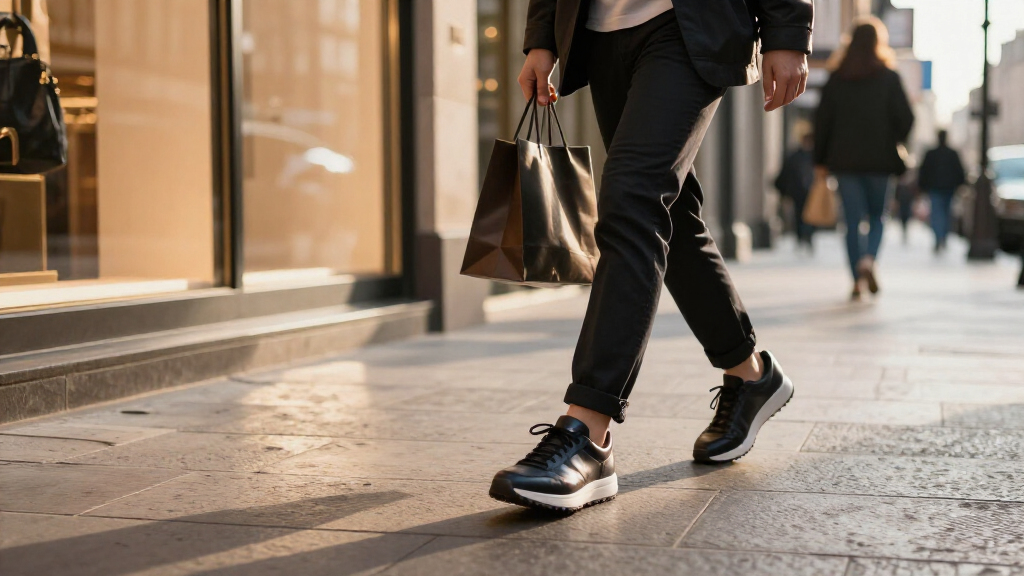
The report points to runway designs including Prada’s revived banana heels and Tory Burch shoes featuring faux shark teeth. It also cites Bernstein analyst Luca Solca, who told Vogue Business that shoes cost about one-third as much as handbags on average. That price difference can give shoppers a way to buy a recognizable luxury item while spending less than they might on a high-end bag.
Specific examples show that “lower-priced” is relative. Versace’s Tina printed pumps were listed at $950, while Maison Margiela’s Tabi ballerinas use a split-toe design. Margiela traces the Tabi style to traditional Japanese socks and the house’s 1989 debut collection, according to the report. These products can offer striking design, but they remain discretionary purchases at luxury prices.
The report describes footwear as one possible response to customers reconsidering bigger-ticket purchases. A distinctive pair can change the look of an outfit without requiring a shopper to buy a full wardrobe or a handbag costing several thousand dollars. But the source material offers examples and a market rationale, not evidence that shoppers have broadly shifted spending from bags to shoes.
Shoes Offer a Lower-Cost Luxury Purchase
For luxury brands, the development points to a potential way to keep customers engaged when they hesitate over the category’s most expensive goods. A customer who delays a large handbag purchase may still choose shoes or another smaller item. That could give retailers another price point through which to maintain a relationship with shoppers, although the report does not quantify the effect on revenue or customer retention.
The distinction matters to consumers, too: less expensive than a luxury handbag does not mean affordable in everyday terms. A $950 pair of shoes is still a substantial expense. The value proposition described here is comparative, within luxury retail, rather than a claim that these products are within reach for most shoppers.
For merchants and payments businesses, the report also highlights practical considerations beyond product design. Clear product details, sizing guidance and straightforward exchange processes can matter when customers cannot try shoes on before ordering. A distinctive shoe may attract attention, but comfort, fit and the ease of completing a purchase can affect whether that interest becomes a sale.
As an affiliate, we earn on qualifying purchases.
Luxury Spending Sets the Backdrop
The commercial setting is a reported pullback in U.S. luxury spending. The Financial Times reported on Oct. 12 that Citi credit card data showed luxury spending in the United States falling at least 4% in each of the previous three months. The source material does not specify the exact comparison baseline or provide further detail about the measure, so the figure should be read as the reported pattern rather than a complete picture of the luxury market.
The footwear angle was also tied to a Vogue Business report dated Oct. 6, which described growing interest in eccentric designer shoes as shoppers looked for alternatives to handbags priced above $5,000. The examples span both conspicuous new designs and styles with longer histories, such as Margiela’s Tabi. Together, they show how retailers may present footwear as a distinct luxury purchase rather than simply a less expensive version of a handbag.
As an affiliate, we earn on qualifying purchases.
Sales Shift Still Unmeasured
The available reporting does not establish whether eccentric designer shoes are selling in greater numbers, how much luxury shoppers are redirecting from handbags to footwear, or whether the interest will persist. It also does not provide comparable sales figures for the cited shoe styles or brands.
The Citi figure is reported as a decline of at least 4% in each of three months, but the supplied material does not state the measure’s comparison baseline or methodology. Nor does it show whether the decline was shared evenly across luxury categories. The trend is described as growing interest, not as a verified, market-wide shift in purchases.
As an affiliate, we earn on qualifying purchases.
Retailers Must Convert Interest
The next test for luxury retailers is whether attention to unusual footwear becomes completed purchases and repeat business. That depends not only on design and price comparisons, but also on practical details such as accurate sizing information, fit, comfort and exchange policies. The source material gives no timeline for further sales data or brand announcements that would confirm whether the category is gaining ground.
For now, the reported development is a possible adjustment in how luxury shoppers spend, rather than proof of a lasting change. Retailers will need sales results to determine whether distinctive shoes are filling a meaningful gap as customers reconsider higher-priced purchases.
As an affiliate, we earn on qualifying purchases.
Key Questions
Why are luxury shoppers looking at designer shoes?
The report says shoppers are showing interest in distinctive footwear as an alternative to handbags that can cost more than $5,000. Shoes generally cost less than handbags, according to Bernstein analyst Luca Solca, though luxury footwear can still be expensive.
How much less do shoes cost than handbags?
Solca told Vogue Business that shoes cost roughly one-third as much as handbags on average. The report does not provide a detailed comparison by brand or product.
Are luxury shoe sales confirmed to be rising?
No. The reporting describes growing interest in eccentric designer shoes, but it does not include sales data confirming a broad increase in footwear purchases.
What spending data is cited?
The Financial Times reported Oct. 12 that Citi credit card data showed U.S. luxury spending falling at least 4% in each of the previous three months. The supplied report does not specify the comparison baseline or methodology.
Source: rss
Fall Picks
fall essentials
As an affiliate, we earn on qualifying purchases.