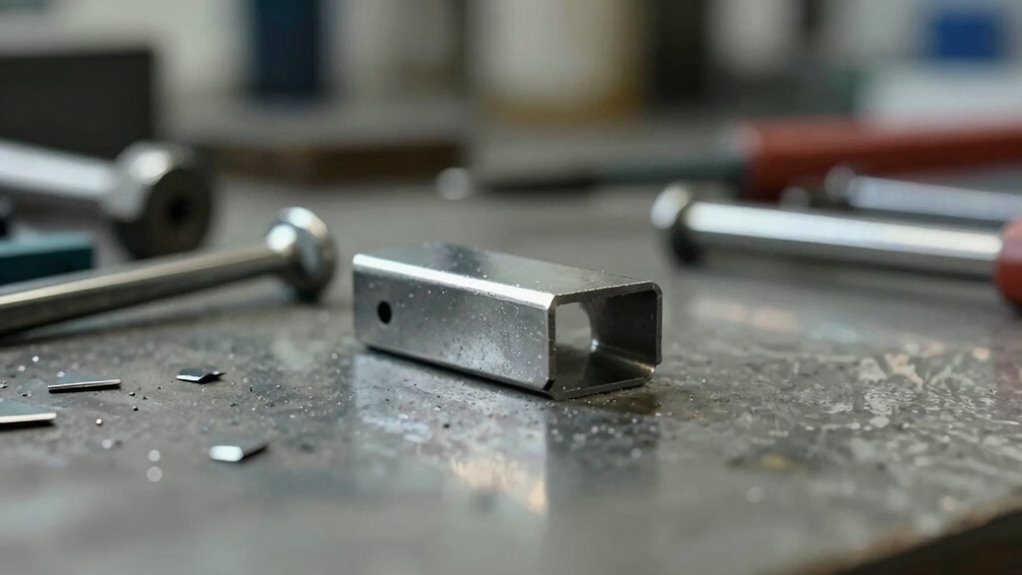

Storing metals directly on the ground or uneven surfaces is a major mistake that puts metals at risk. When metals contact moisture or dirt on the ground, they’re more likely to rust and corrode quickly. Elevating metals on pallets, racks, or shelves prevents this contact, promotes airflow, and reduces moisture buildup. Proper placement helps maintain metal integrity over time. To discover more about safe storage practices, keep going for essential tips and techniques.
Key Takeaways
- Placing metals directly on ground or uneven surfaces exposes them to moisture and accelerates corrosion.
- Storing metals without elevation reduces airflow, increasing humidity and rust risk.
- Ignoring proper separation of incompatible metals can lead to galvanic corrosion.
- Failing to use pallets, racks, or shelving compromises protective spacing and safety.
- Neglecting to inspect storage areas for moisture or damage increases metal deterioration risk.
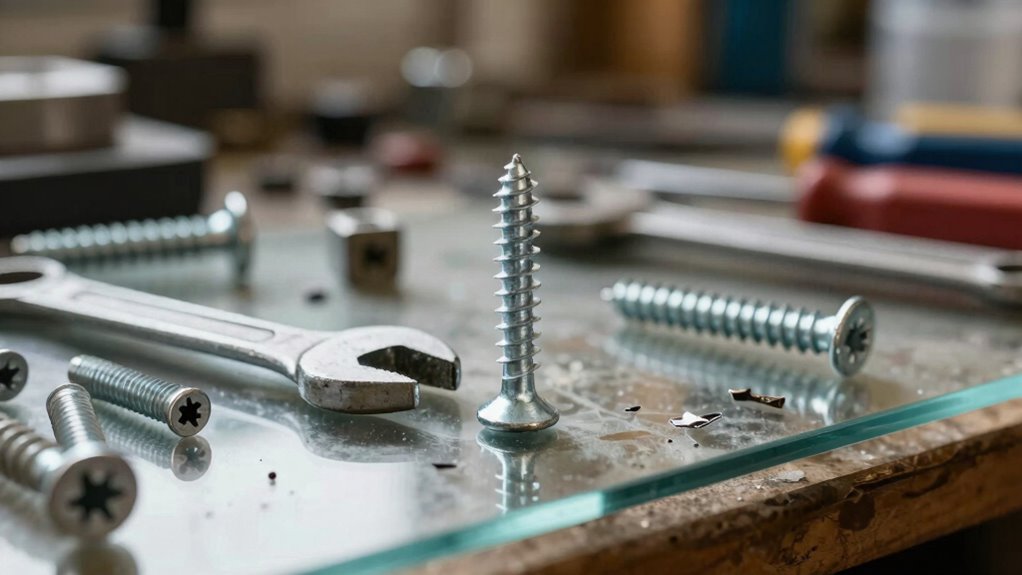
Even a small mistake in how you place metals can lead to serious risks, compromising safety and durability. When metals aren’t stored properly, they become vulnerable to metal corrosion, which can weaken their structure over time. Metal corrosion isn’t just about surface rust; it can cause internal damage that’s hard to detect until it’s too late. This deterioration poses safety hazards, especially if the metals are part of critical infrastructure or machinery. To prevent this, you need to prioritize storage safety by paying close attention to how metals are positioned and protected.
Proper metal storage prevents corrosion, safeguarding safety and extending durability over time.
One common mistake people make is stacking metals directly on the ground or on uneven surfaces. When metals sit directly on concrete or dirt, they’re exposed to moisture, which accelerates corrosion. This moisture can originate from the ground or from environmental humidity. Over time, this contact creates a conducive environment for rust and corrosion, weakening the metal’s integrity. To avoid this, you should elevate metals on pallets, racks, or shelving units that promote airflow and keep moisture away. Elevating metals not only prevents direct contact with moisture but also makes inspection and maintenance easier.
Another mistake is storing metals in areas with poor ventilation or high humidity. When air isn’t circulating well, moisture tends to accumulate, increasing the risk of metal corrosion. You should choose storage locations that are dry, well-ventilated, and away from potential water leaks or condensation sources. Additionally, stacking metals with incompatible materials—like placing iron next to aluminum or other reactive metals—can lead to galvanic corrosion. This electrochemical process speeds up deterioration, especially if protective coatings are compromised. To ensure storage safety, it’s best to separate metals based on their type and consider applying protective coatings or rust inhibitors, especially if metals will be stored for an extended period. Proper storage environment is essential for maintaining metal integrity over time.
Finally, neglecting regular inspections can be a costly mistake. Over time, corrosion can develop unnoticed, weakening the metal and risking failures in structural applications. Routine checks allow you to spot early signs of rust or damage and take corrective steps, such as cleaning or reapplying protective coatings. Proper labeling and organization also help in tracking the condition of stored metals and ensuring they’re handled with care.
In short, avoiding improper placement, ensuring a suitable environment, and performing regular inspections are key to maintaining storage safety. When you pay attention to these details, you significantly reduce the risk of metal corrosion and extend the lifespan of your metals, keeping safety and durability intact.
As an affiliate, we earn on qualifying purchases.
Frequently Asked Questions
How Can I Identify if My Metal Placement Is Unsafe?
You can identify unsafe metal placement by inspecting for signs of metal corrosion, which indicates exposure to moisture or chemicals. Check if the metal is properly aligned and securely positioned; poor placement accuracy can lead to stress points and corrosion risks. If you notice discoloration, rust, or looseness, it’s a sign your metal isn’t positioned correctly. Regularly monitoring and correcting placement ensures safety and prevents potential damage.
Are There Specific Metals More Vulnerable to Safe Placement Mistakes?
Certain metals, like aluminum, are more vulnerable to safe placement mistakes due to their high corrosion susceptibility and thermal expansion. For instance, if aluminum is placed near incompatible metals without proper insulation, it can corrode quickly, weakening the structure. Metals with high thermal expansion require careful placement to prevent stress and deformation from temperature changes, making them more prone to unsafe conditions if not properly managed.
What Are the Long-Term Consequences of Improper Metal Placement?
Improper metal placement can lead to long-term issues like decreased corrosion resistance and compromised structural integrity. You might notice accelerated rust, weakening of the material, or even failure under stress over time. This risk increases if metals are exposed to harsh environments or if protective coatings are damaged. To avoid costly repairs or safety hazards, make sure metals are correctly placed, inspected regularly, and protected from corrosion factors.
Can Safe Placement Practices Vary Across Different Industries?
Yes, safe placement practices can vary across industries because of material compatibility and industry-specific standards. You need to take into account the environment, exposure, and the type of metal you’re working with. Different industries have unique safety protocols and standards designed to prevent corrosion, stress, or failure. By understanding these variations, you can guarantee proper placement, reduce risks, and maintain the integrity of your metal components in any industry context.
What Tools or Equipment Assist in Proper Metal Placement?
To assist in proper metal placement, you should use precise tools like clamps, jigs, and placement techniques tailored to your project. Metal adhesives can also help secure components during assembly, guaranteeing stability and accuracy. These tools and techniques help you avoid common mistakes, maintain alignment, and ensure the metals are safely and correctly positioned, reducing risks and improving the overall quality of your work.
As an affiliate, we earn on qualifying purchases.
Conclusion
So, next time you’re placing metals in storage or handling them, remember: a simple mistake in placement can lead to serious risks. Don’t let oversight be your downfall—take the time to double-check your setup. After all, isn’t it better to prevent damage than deal with costly repairs later? Stay vigilant, prioritize safety, and make sure your metals stay secure. After all, isn’t protecting your valuable materials worth a little extra care?
As an affiliate, we earn on qualifying purchases.
As an affiliate, we earn on qualifying purchases.