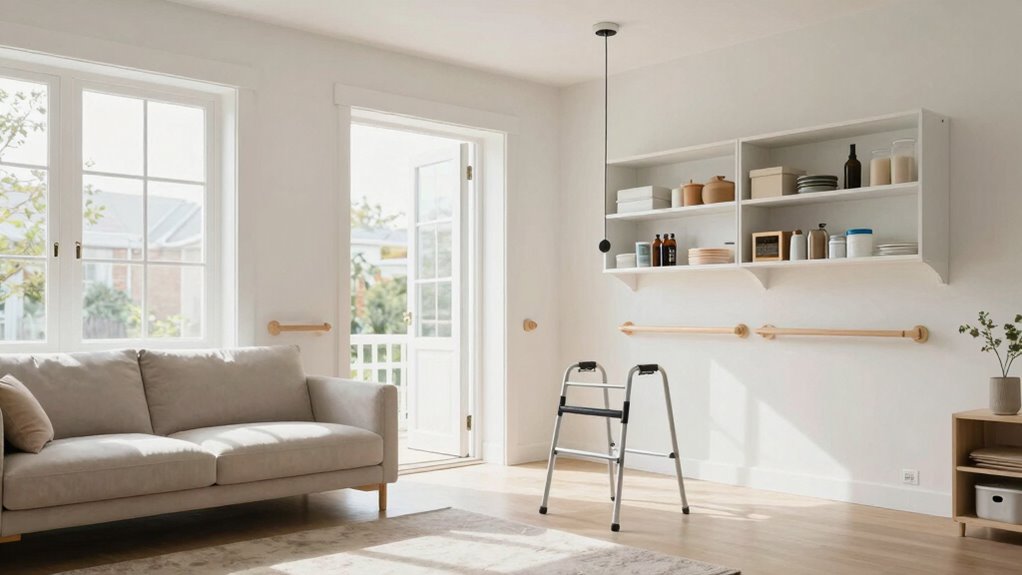

To make your home easier to navigate with limited mobility, you should consider adding ramps at entrances, widening doorways, and removing rugs or obstacles. Installing lever-style handles and adjustable furniture can improve comfort and reachability. Incorporate assistive devices like stairlifts or voice controls, and set up safety features such as emergency alert systems. Thoughtful modifications boost safety and independence, and exploring more ideas will help you create a supportive environment tailored to your needs.

Get smart everyday buys delivered free with Prime
- Fast, free delivery on millions of items
- Prime Video, Amazon Music and more included
- Member-only deals all year
Key Takeaways
- Widen doorways and remove obstacles to ensure clear, navigable pathways throughout the home.
- Install ramps at entrances and replace stairs with stairlifts for wheelchair-friendly access.
- Use lever-style handles and height-adjusted fixtures for easier operation and reach.
- Incorporate assistive technology like voice controls, motion sensors, and smart home systems for remote management.
- Arrange emergency supplies and alert systems within easy reach for quick access during crises.
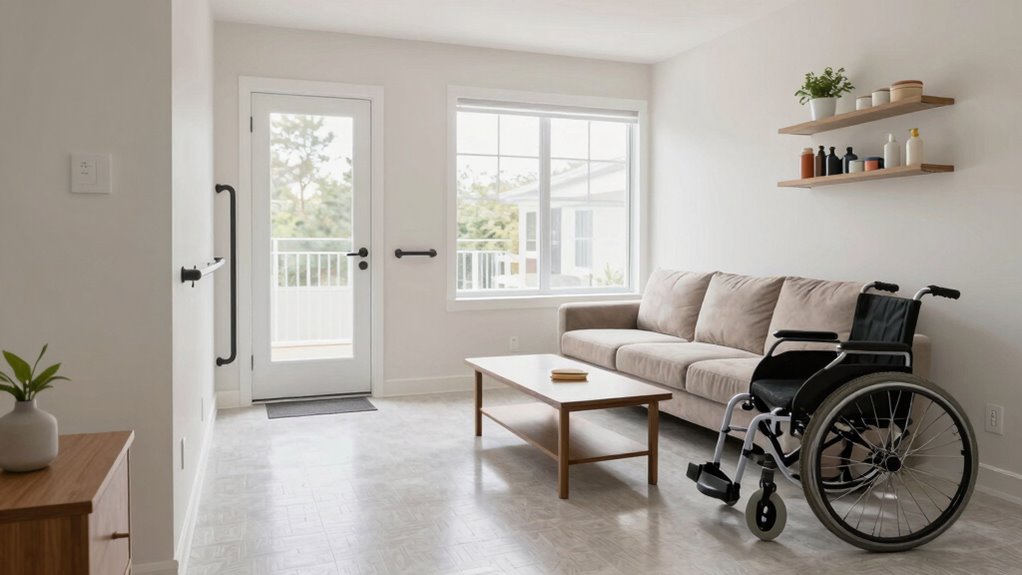
Creating a comfortable and accessible home environment is essential if you have limited mobility. Small changes can make a big difference in your daily life, helping you move more freely and confidently. One of the most effective ways to improve your home setup is by integrating assistive technology. Devices like grab bars, stairlifts, and voice-activated controls can notably reduce the effort needed to perform routine tasks. For example, installing motion-sensor lighting and smart home systems allows you to control lights, doors, and appliances without having to move around too much. These innovations not only promote independence but also enhance your safety. When setting up your home, consider the placement of furniture and accessories to guarantee clear pathways, minimizing the risk of falls or accidents. Widening doorways and removing rugs or obstacles can make navigation easier, especially if you use mobility aids like wheelchairs or walkers. Smart home safety devices can further improve your environment by providing remote monitoring and alerts, ensuring help is available when you need it most. Additionally, incorporating home automation technology can streamline everyday routines and reduce physical strain. Staying informed about assistive technology innovations can help you select the most suitable solutions for your needs. Learning about contrast ratios and their role in visual clarity can also help you optimize your living space for better visibility and safety.
Creating an accessible home with assistive tech and thoughtful setup boosts independence and safety for limited mobility.
Emergency preparedness is another critical aspect of a home setup for limited mobility. You should have a plan in place that accounts for your specific needs during emergencies, such as power outages, fires, or natural disasters. Keep emergency supplies within easy reach, including medications, flashlights, batteries, and communication devices. Installing emergency alert systems, like personal alarms or call buttons, ensures you can quickly summon help if needed. It’s also wise to inform neighbors, friends, or nearby family members about your needs so they can assist promptly during emergencies. Regularly reviewing and practicing your emergency plan can help you stay prepared and reduce panic if a crisis occurs.
Your home should be designed with ease of access in mind, which involves more than just installing assistive technology. Think about the height of countertops, sinks, and appliances to ensure they are reachable. Lever-style door handles and faucet controls are easier to operate than traditional knobs. Installing ramps at entrances instead of stairs can make your home wheelchair-friendly and eliminate barriers. Additionally, consider adjustable furniture, such as desks and beds, which can be customized to your comfort level. These modifications not only improve daily functionality but also provide peace of mind, knowing your environment supports your needs.
Ultimately, creating a home that caters to limited mobility involves strategic planning and thoughtful upgrades. By incorporating assistive technology, preparing for emergencies, and optimizing your space for accessibility, you can enjoy greater independence and safety. Small but intentional changes will make your home a place where you feel secure and comfortable, empowering you to live more fully and confidently every day.
wheelchair ramps for home entrance
As an affiliate, we earn on qualifying purchases.
As an affiliate, we earn on qualifying purchases.
Frequently Asked Questions
How Do I Choose the Best Mobility Aids for My Home?
To choose the best mobility aids for your home, focus on assistive technology that suits your specific needs. Look for options with ergonomic design to maximize comfort and safety. Consult with healthcare professionals or occupational therapists who can recommend devices tailored to your mobility level. Test different aids to verify they’re easy to use and fit well within your living space. Prioritizing ergonomic and assistive features helps enhance independence and daily comfort.
What Budget-Friendly Modifications Can Improve Safety?
Making your home safer is like planting seeds for peace of mind. Start with simple, budget-friendly modifications like furniture rearrangement to clear pathways, preventing trips. Add lighting enhancements, such as brighter bulbs or motion sensors, to improve visibility. These small changes don’t have to cost much but can markedly reduce hazards. Taking these steps keeps you safer and more independent, all without breaking the bank.
Are There Specific Color Schemes That Assist With Navigation?
Yes, choosing color schemes with high contrast can markedly improve navigation. You should use bold, distinct colors for walls, floors, and key features to create clear visual cues. For example, dark flooring with light walls or brightly colored handrails help your eyes distinguish different areas. These visual cues guide you naturally, reducing confusion and making movement safer and easier, especially for those with limited mobility.
How Can I Make My Bathroom More Accessible?
Imagine a vintage movie scene where accessibility is seamless. To make your bathroom more accessible, consider installing grab bars near the bathtub and toilet. You can also opt for a walk-in shower with no threshold and add shower modifications like a bench or handheld showerhead. These changes enhance bathtub accessibility and guarantee safety, making your bathroom functional and comfortable for limited mobility.
What Professional Services Can Help With Home Modifications?
You can hire occupational therapists or home modification specialists to help with your needs. They assess your space and recommend solutions like assistive technology and ergonomic furniture to improve accessibility. These professionals can install grab bars, ramps, or stairlifts, ensuring your home is safer and easier to navigate. Their expertise helps tailor modifications to your specific mobility limitations, making daily routines more comfortable and independent.
As an affiliate, we earn on qualifying purchases.
Conclusion
By making simple changes to your home, you can turn it into a sanctuary that empowers you with ease and independence. These adjustments aren’t just small tweaks—they’re like opening a secret door to freedom, making everyday tasks feel like a walk in the park. Don’t wait for a miracle; your dream home of comfort and accessibility is within reach. Embrace these changes today and watch your world transform into a place where limited mobility no longer holds you back!
As an affiliate, we earn on qualifying purchases.
smart home emergency alert system
As an affiliate, we earn on qualifying purchases.
As an affiliate, we earn on qualifying purchases.
Halloween Picks
halloween
As an affiliate, we earn on qualifying purchases.