
During uncertain times, gold might lag because markets often react slowly to rising risks, and investors may delay buying to cover short-term needs or follow their strategies. Factors like market sentiment, liquidity needs, and macroeconomic moves from central banks also influence its response. Sometimes, investors prefer more liquid or higher-yield assets first, causing delays in gold’s rally. If you want to understand why gold doesn’t always move immediately amid turmoil, there’s more to uncover below.

Get smart everyday buys delivered free with Prime
- Fast, free delivery on millions of items
- Prime Video, Amazon Music and more included
- Member-only deals all year
Key Takeaways
- Investors may sell gold during market dips to cover losses, delaying its rally during uncertainty.
- Short-term strategies and preference for other assets can cause hesitation before gold prices rise.
- Central bank actions and macroeconomic factors often mute or delay gold’s immediate response.
- Market sentiment and investor decision-making processes create time lags in gold’s reaction to crises.
- Gold’s complex behaviors reflect broader economic, monetary, and strategic considerations beyond immediate risk.
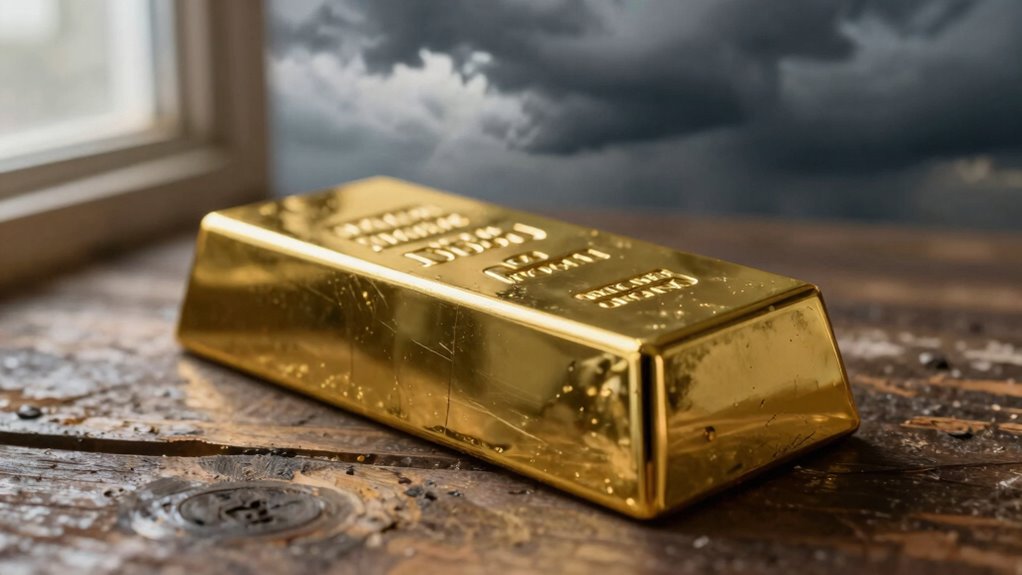
Why does gold, often seen as a safe haven, sometimes fall behind during times of uncertainty? It’s a question that puzzles many investors because, intuitively, gold should shine brightest when the world feels most unstable. Yet, in reality, gold doesn’t always move in lockstep with market fears. Instead, its behavior is influenced by complex factors like market sentiment and prevailing investment strategies, which can sometimes lead to unexpected lags.
During periods of uncertainty, the typical expectation is that investors flock to gold, perceiving it as a safe, tangible asset that preserves value. However, market sentiment can shift quickly, especially when other assets seem more attractive or when liquidity becomes a concern. For example, if the stock market tumbles sharply, investors might initially sell off a broad range of assets, including gold, to cover losses or raise cash. This behavior is driven by immediate needs rather than long-term safety, causing gold to temporarily lag behind. Additionally, if economic data or geopolitical events create a sense that risks are contained or manageable, investors may opt to stay put rather than rush into gold, which could delay its rally. Moreover, market dynamics can also influence how swiftly gold responds to changing conditions, often causing delays in its price adjustments.
During market dips, investors often sell gold to cover losses, causing it to lag behind broader risk-off moves.
Your investment strategies also play a significant role in the lag. Many investors rely on technical signals or short-term trends to guide their decisions. If their strategies emphasize momentum or trend-following, they might hesitate to buy gold until certain thresholds are crossed or until confidence in other assets is restored. Furthermore, some investors might prefer to diversify into assets they perceive as more liquid or with higher yields, like government bonds or certain equities, rather than gold, which is often viewed as a long-term hedge rather than a quick trade.
Another factor is the timing of market reactions. Gold’s price movements are often influenced by global monetary policies, currency fluctuations, and interest rates. When central banks act swiftly to stabilize markets or adjust interest rates, the immediate impact on gold can be muted or delayed. This can create a disconnect where, despite uncertainty, gold doesn’t immediately reflect the risk environment, especially if investors are waiting for clearer signals or if they’re preoccupied with other investment moves. Additionally, understanding market dynamics can help explain why gold often lags during turbulent times. Recognizing these factors underscores how investment behavior shapes gold’s reaction to global uncertainty.
In essence, gold’s lag during uncertain times boils down to the interplay of market sentiment and strategic decision-making. While many see gold as a safe haven, its price doesn’t instantly respond to every crisis. Instead, it reflects a broader set of investor behaviors, expectations, and macroeconomic factors that can sometimes cause it to fall behind, even when the world feels most unstable.
As an affiliate, we earn on qualifying purchases.
Frequently Asked Questions
Can Gold Still Decline Despite Global Economic Instability?
Yes, gold can still decline despite global economic instability. When central banks increase gold mining or sell off reserves, it can flood the market with supply, pushing prices down. Additionally, if economic concerns lead investors to seek other assets like stocks or cryptocurrencies, gold demand drops. Sometimes, central banks’ policies or market sentiment override typical safe-haven flows, causing gold prices to decline even during uncertain times.
How Do Currency Fluctuations Impact Gold Prices?
Currency fluctuations directly impact gold prices by influencing its relative value, with a 1% change in exchange rates often leading to a 0.5% shift in gold prices. When currencies show resilience, gold’s appeal may decline, even during economic uncertainty. Exchange rate dynamics can consequently either boost or suppress gold’s safe-haven status, depending on whether local currencies weaken or strengthen against major currencies like the dollar.
Does Investor Sentiment Influence Gold’s Performance?
Yes, investor sentiment considerably influences gold’s performance. When market sentiment is negative or driven by fear, you tend to see more people turning to gold as a safe haven, pushing prices higher. Conversely, if investor psychology shifts toward optimism, gold might lag as funds flow into riskier assets. Your perception of economic stability and confidence in markets directly impact gold demand, making sentiment a key driver of its price movements.
Are There Specific Markets Where Gold Consistently Underperforms?
In certain markets, gold tends to dance to a different tune, often underperforming despite global jitters. Market correlations with equities or cryptocurrencies can diminish gold’s appeal, influencing investor behavior. If your investment strategies rely heavily on gold’s safe-haven status, you might notice inconsistencies across these markets. Recognizing these nuances helps you adjust your approach, ensuring you capitalize on opportunities where gold’s performance aligns better with your financial goals.
How Do Geopolitical Events Affect Gold’s Lagging Behavior?
Geopolitical events can cause gold to lag because market manipulation and central bank policies influence its movement. When tensions rise, central banks might intervene or manipulate markets, reducing gold’s appeal as a safe haven. Additionally, policies like interest rate hikes can make bonds more attractive, causing investors to shift away from gold. These factors can delay gold’s usual response to uncertainty, making it seem sluggish during times of geopolitical turmoil.
As an affiliate, we earn on qualifying purchases.
Conclusion
So, next time you see gold sitting still amid chaos, remember it’s like a calm lake after a storm—sometimes, even the fiercest uncertainties cause only ripples. Gold doesn’t always respond instantly to turmoil; it waits for the right moment to reflect the true storm. Patience is your ally here, as gold’s true value often emerges only after the initial turbulence has settled. Stay steady, and trust that gold’s quiet strength will eventually shine through.
As an affiliate, we earn on qualifying purchases.
As an affiliate, we earn on qualifying purchases.
Fall Picks
fall essentials
As an affiliate, we earn on qualifying purchases.