
TL;DR

Get smart everyday buys delivered free — and shop member deals
- Fast, free delivery on millions of items
- Access to Prime Big Deal Days deals on October 6–7
- Prime Video, Amazon Music and more included
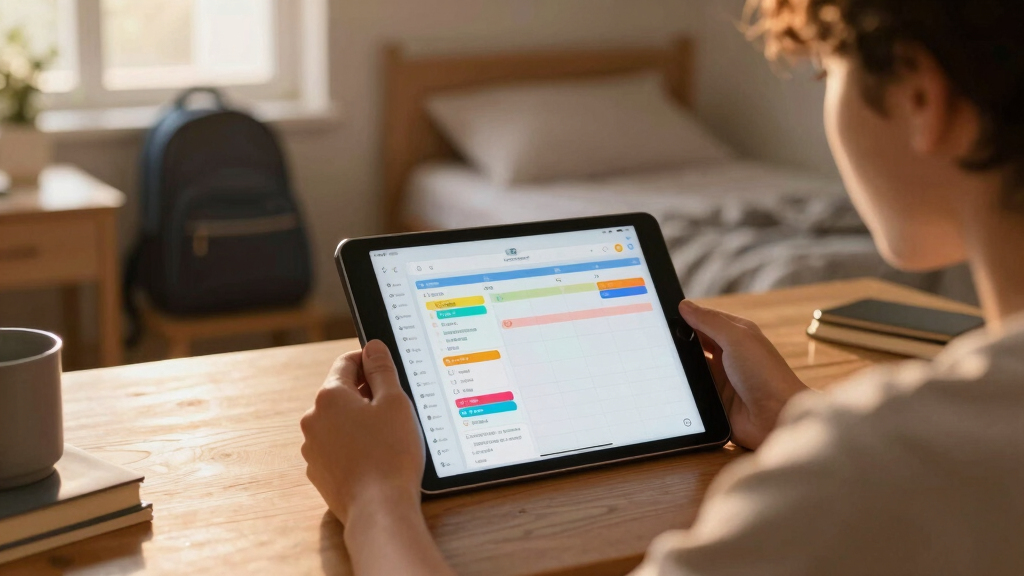
AI student planners are increasingly vital for academic success in 2026. This article reviews the top 15 picks, highlighting their features, benefits, and suitability for different student needs.
AI-powered student planners are becoming essential tools for students preparing for the 2026 academic year, offering personalized guidance and task management. This article reviews the top options. These tools help students break down assignments, set priorities, and adapt schedules, which can improve academic outcomes. The article reviews the top 15 options, highlighting their features and relevance for different student needs. For a detailed overview, see the original analysis.
The AI-Powered Student Success Planning Workbook leads the list due to its direct integration of guided planning with AI assistance, making it suitable for a broad range of students. ChatGPT for Thesis and Dissertation Success is highly recommended for graduate students focusing on research, offering specialized AI guidance. The SKYDUE Student Planner provides a hybrid approach, combining traditional paper planning with AI-generated schedules, valued for its versatility.
Most products are evaluated based on their AI guidance quality, ease of use, and suitability for different workloads. The physical size, layout, and additional features like pockets or stickers also influence their ranking, but the core focus remains on AI integration and planning effectiveness. Notably, many products are not AI-powered on their own, requiring students to use separate tools or platforms.
Buyers should consider whether they prefer software guidance, hybrid workflows, or traditional planners with added AI prompts. Check out The Best AI Student Planners For Smarter Study Scheduling In 2026 for more insights. The choice depends on individual routines, portability needs, and the complexity of academic tasks.
The 15 picks
- 1
 Passionate Penny Pincher Student Planner 2026-2027View on Amazon →
 - 2
 The Power of AI for Educators: Revolutionize Teaching to Stay Competitive, Re…View on Amazon →
 - 3
 ChatGPT for Thesis and Dissertation Success: A Complete, AI-Powered Guide to…View on Amazon →
 - 4
 AI-Powered Student Success Planning WorkbookView on Amazon →
 - 5
 Student Planner 2026-2027, 8.5"×11" Academic Weekly & Monthly Planner, Jul 20…View on Amazon →
 - 6
 School Planner for Elementary Students 2026-27, 8.5 x 11, Pink, Spiral Bound,…View on Amazon →
 - 7
 Student Planner 2026-2027 Middle School & High School Matrix, 8.5" x 11"View on Amazon →
 - 8
 Student Planner 2026-2027, SUNEE Middle or High School Planner for Academic Y…View on Amazon →
 - 9
 SUNEE Elementary Student Planner 2026-2027, Dated Academic Year Jul. 2026 – J…View on Amazon →
 - 10
 Student Planner 2026-2027, SUNEE Academic Weekly & Monthly Plan Book, Jul. 20…View on Amazon →
 - 11
 Student Planner 2026-2027, SUNEE Middle or High School Datebook, Jul 2026 – J…View on Amazon →
 - 12
 SKYDUE Student Planner 2026-2027 with 3-Hole Punch, Monthly & Weekly Layouts,…View on Amazon →
 - 13
 Student Planner 2026-2027, SUNEE Academic Weekly & Monthly Plan Book, Jul. 20…View on Amazon →
 - 14
 Student Planner 2026-2027 Monthly & Weekly School Planner for Middle and High…View on Amazon →
 - 15
 Student Planner 2026-2027, 9” x 11”, Weekly & Monthly Calendar, Tabs, Stick…View on Amazon →
Why AI Student Planners Are Critical for 2026 Success
AI student planners are transforming academic management by providing personalized, adaptable support that helps students meet deadlines, organize complex tasks, and improve overall performance. As education increasingly integrates AI tools, these planners can offer a competitive edge, especially for students managing multiple courses or research projects. Their adoption in 2026 signals a shift toward more technologically integrated learning environments, making understanding and selecting the right tools essential for academic achievement.Evolution of Student Planning Tools in the AI Era
Traditional paper planners have long served students for organizing schedules, but recent advances in AI have introduced intelligent guidance systems that adapt to individual needs. The surge in AI-powered planning tools aligns with broader trends in education technology, aiming to enhance productivity and reduce stress. As of early 2026, the market features a mix of dedicated AI-guided workbooks, hybrid paper-digital systems, and specialized apps for graduate research, reflecting diverse student preferences. This development follows years of incremental improvements in AI assistance, culminating in tools specifically designed for academic success in the current digital age.“The integration of AI into student planners is a game-changer, offering tailored support that adapts to each student’s workload and learning style.”
— Thorsten Meyer, AI Planning Expert
Uncertainties Surrounding AI Planner Adoption in 2026
It is still unclear how widely AI student planners will be adopted across different educational levels and institutions. While the technology is advancing rapidly, some students and educators may face barriers related to digital literacy, privacy concerns, or access to devices. Additionally, the long-term effectiveness of AI-guided planning tools in improving academic performance remains an area for ongoing research. Market preferences and the evolution of AI features could also influence which products become dominant.Next Steps for Students and Developers in 2026
In the coming months, expect further updates and new releases of AI student planners tailored for various education levels. Students should evaluate their specific needs—whether research-focused, routine coursework, or portable planning—and select tools accordingly. Developers are likely to enhance AI capabilities, emphasizing privacy, customization, and integration with other educational platforms. Monitoring user feedback and academic outcomes will be crucial in refining these tools for broader adoption.Key Questions
What features should I look for in an AI student planner?
Look for features like personalized task breakdowns, schedule revisions, AI-generated prompts, and compatibility with your devices. Ease of use and privacy protections are also important considerations.
Are AI student planners suitable for all education levels?
Most are designed for high school and college students, with some tailored for graduate research. The complexity of features should match your academic workload and familiarity with AI tools.
Will AI planners replace traditional paper planners entirely?
Not necessarily. Many students benefit from hybrid approaches, combining AI guidance with manual recording. The choice depends on personal preference and specific academic needs.
How secure are my data in AI student planning tools?
Data security varies by provider. It is advisable to review privacy policies and choose tools that prioritize user data protection, especially when handling sensitive academic information.
Source: ThorstenMeyerAI.com
Fall Picks
fall essentials
As an affiliate, we earn on qualifying purchases.