

The best financial literacy book for adults depends on where you are starting from: The Psychology of Money stands out as the best overall pick because it teaches the mindset behind every money decision, which applies whether you are debt-free or drowning in it. If you want a step-by-step system instead of theory, I Will Teach You to Be Rich delivers a concrete six-week program with automations you can set up immediately. The main tradeoff in this category is between philosophy-driven books that change how you think and workbook-style guides that change what you do this week. Depth versus readability is another real tension: the most thorough books demand patience, while the most approachable ones can feel thin a year later. I ranked all 15 options across those dimensions so you can match a book to your situation rather than guessing. Keep reading for the full breakdown, including who should skip each pick.

Get smart everyday buys delivered free with Prime
- Fast, free delivery on millions of items
- Prime Video, Amazon Music and more included
- Member-only deals all year
Key Takeaways
- Books with built-in programs (I Will Teach You to Be Rich, The Total Money Makeover, You Need a Budget) consistently beat pure-theory titles for readers who need accountability and deadlines.
- The Psychology of Money ranked highest overall because it is the only title that stays useful at every income level and life stage, though it offers no step-by-step instruction.
- Visual and beginner-framed books (The Infographic Guide, For Dummies, How to Adult) trade depth for accessibility — great starting points, but most readers will outgrow them within a year.
- Three of the fifteen books target young adults specifically, and they overlap heavily; the differences came down to inflation coverage and rent-versus-buy guidance rather than core budgeting content.
- The Simple Path to Wealth is the strongest investing-focused pick, but it assumes you already have your budget and debt under control — pairing it with a debt-payoff book is often the smarter sequence.
| The Psychology of Money: Timeless Lessons on Wealth, Greed, and Happiness |  | Best Overall | Format: Paperback / Hardcover / Kindle / Audiobook | Author: Morgan Housel | Genre: Personal Finance / Behavioral Finance | VIEW LATEST PRICE | See Our Full Breakdown |
| I Will Teach You to Be Rich: No Guilt. No Excuses. Just a 6-Week Program That Works (Second Edition) |  | Best Actionable Program | Format: Paperback / Kindle / Audiobook | Edition: Second Edition | Author: Ramit Sethi | VIEW LATEST PRICE | See Our Full Breakdown |
| Financial Literacy for Young Adults Amplified: Prepare for Inflation & Recession, Decide Between Buying or Renting, & Borrow Smarter |  | Best for Macroeconomic Readiness | Format: Paperback / Kindle | Target Audience: Young adults | Focus Areas: Inflation, recession preparation, buying vs. renting, smart borrowing | VIEW LATEST PRICE | See Our Full Breakdown |
| Financial Literacy Essentials For Dummies |  | Best Value for Beginners | Format: Paperback / Kindle | Series: For Dummies (Essentials edition) | Focus Areas: Budgeting, money management, investing basics | VIEW LATEST PRICE | See Our Full Breakdown |
| The Total Money Makeover: A Proven Plan for Financial Peace |  | Best for Debt Elimination | Format: Paperback / Hardcover / Kindle / Audiobook | Author: Dave Ramsey | Edition: Updated and expanded | VIEW LATEST PRICE | See Our Full Breakdown |
| Get Good with Money: Ten Simple Steps to Becoming Financially Whole |  | Best Step-by-Step Framework | Format: Paperback, Kindle, Audiobook | Structure: Ten progressive steps toward ‘financial wholeness’ | Core Topics: Budgeting, savings, credit, insurance, investing basics | VIEW LATEST PRICE | See Our Full Breakdown |
| Financial Literacy for All: Disrupting Struggle, Advancing Financial Freedom, and Building a New American Middle Class |  | Best Big-Picture Perspective | Format: Hardcover, Kindle, Audiobook | Focus: Financial literacy, economic mobility, middle-class wealth building | Perspective: Systemic and societal alongside personal | VIEW LATEST PRICE | See Our Full Breakdown |
| The Infographic Guide to Personal Finance: A Visual Reference for Everything You Need to Know | 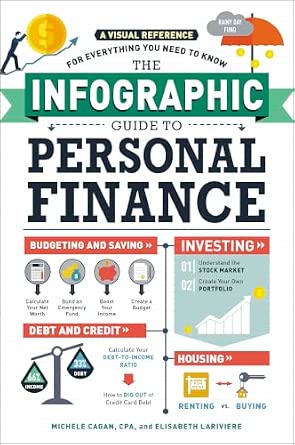 | Best Visual Reference | Format: Paperback | Format Style: Full-color infographics throughout | Core Topics: Budgeting, saving, credit, investing, financial planning | VIEW LATEST PRICE | See Our Full Breakdown |
| Financial Literacy for Young Adults: How to Manage, Save, and Invest Money |  | Best for First-Jobbers | Format: Paperback, Kindle | Target Audience: Teens and young adults | Core Topics: Money management, saving, investing basics | VIEW LATEST PRICE | See Our Full Breakdown |
| Not Born Rich: The Guide to Financial Literacy |  | Best Wealth-Building Mindset for Self-Starters | Format: Paperback, Kindle | Core Topics: Money management, investing, wealth-building | Experience Level: Beginner to intermediate | VIEW LATEST PRICE | See Our Full Breakdown |
| You Need a Budget: The Proven System for Breaking the Paycheck-to-Paycheck Cycle, Getting Out of Debt, and Living the Life You Want |  | Best for Breaking the Paycheck-to-Paycheck Cycle | Author: Jesse Mecham | Format: Kindle, Paperback, Audiobook | Primary Focus: Budgeting and debt elimination | VIEW LATEST PRICE | See Our Full Breakdown |
| Fundamentals of Financial Literacy for Young Adults |  | Best Starter Guide for Older Teens and New Adults | Format: Kindle, Paperback | Primary Focus: Foundational financial literacy | Topics Covered: Budgeting, saving, investing, debt management | VIEW LATEST PRICE | See Our Full Breakdown |
| The Simple Path to Wealth: Your Road Map to Financial Independence and a Rich, Free Life |  | Best Long-Term Wealth-Building Philosophy | Author: JL Collins | Format: Kindle, Paperback, Audiobook, Hardcover | Primary Focus: Financial independence and index investing | VIEW LATEST PRICE | See Our Full Breakdown |
| How to Adult: Personal Finance for the Real World |  | Best for Everyday Money Skills | Format: Kindle, Paperback | Primary Focus: Everyday personal finance skills | Topics Covered: Budgeting, saving, bills, financial planning | VIEW LATEST PRICE | See Our Full Breakdown |
| Financial Literacy for Adults Unlocked: Take Control of Your Money, Spend Smarter, Build a Budget That Works, Grow Your Savings, and Invest with Confidence |  | Best All-in-One Refresher for Returning Adults | Format: Kindle, Paperback | Primary Focus: All-around adult financial literacy | Topics Covered: Budgeting, saving, smarter spending, investing basics | VIEW LATEST PRICE | See Our Full Breakdown |
| financial literacy books for adult | Format | Best Use |
|---|---|---|
| The Psychology of Money: Timel | Paperback / Hardcover / Kindle / Audiobook | — |
| I Will Teach You to Be Rich: N | Paperback / Kindle / Audiobook | — |
| Financial Literacy for Young A | Paperback / Kindle | — |
| Financial Literacy Essentials | Paperback / Kindle | — |
| The Total Money Makeover: A Pr | Paperback / Hardcover / Kindle / Audiobook | — |
| Get Good with Money: Ten Simpl | Paperback, Kindle, Audiobook | Full financial reset over several months |
| Financial Literacy for All: Di | Hardcover, Kindle, Audiobook | Foundational reading and motivation |
| The Infographic Guide to Perso | Paperback | Quick reference and visual learning |
| Financial Literacy for Young A | Paperback, Kindle | First personal finance book |
| Not Born Rich: The Guide to Fi | Paperback, Kindle | Bridging basic literacy and wealth strategy |
| You Need a Budget: The Proven | Kindle, Paperback, Audiobook | Breaking the paycheck-to-paycheck cycle |
| Fundamentals of Financial Lite | Kindle, Paperback | First personal finance book |
| The Simple Path to Wealth: You | Kindle, Paperback, Audiobook, Hardcover | Long-term wealth building and FI planning |
| How to Adult: Personal Finance | Kindle, Paperback | Managing day-to-day adult finances |
| Financial Literacy for Adults | Kindle, Paperback | One-book financial restart for adults |
More Details on Our Top Picks
The Psychology of Money: Timeless Lessons on Wealth, Greed, and Happiness
The Psychology of Money earns the top spot because it fixes the problem most financial literacy books ignore: behavior. Rather than leading with spreadsheets, it explains why smart people make bad money decisions, through short, memorable stories that stick long after the chapter ends. Compared with Financial Literacy Essentials For Dummies, which teaches the mechanics of budgeting and investing, this pick operates one level higher — it shapes how readers actually respond to market panics, windfalls, and lifestyle creep. The tradeoff is real: anyone who wants step-by-step instructions, worksheets, or a numbered plan will finish it inspired but still unsure what to do on Monday morning. Pair it with a tactical book like I Will Teach You to Be Rich and the gap closes.
Pros:- Reframes money decisions around behavior rather than math, which is where most adults actually fail
- Short story-driven chapters make dense concepts easy to retain and apply
- Timeless principles that hold up across market cycles and life stages
- Works for readers at any income level or financial starting point
Cons:- Contains no actionable frameworks, worksheets, or step-by-step financial plans
- Philosophy-first approach may frustrate readers who want prescriptive guidance
Best for: Readers who already know the basics but keep sabotaging their own financial decisions and want to understand the psychology behind it
Not ideal for: Complete beginners who need concrete budgeting instructions and specific first steps — this book offers mindset, not mechanics
- Format:Paperback / Hardcover / Kindle / Audiobook
- Author:Morgan Housel
- Genre:Personal Finance / Behavioral Finance
- Structure:19 short essay-style chapters
- Reading Level:Accessible to all adults
- Focus Areas:Wealth, greed, happiness, risk, saving behavior
Our verdict“If you buy one book on this list, buy this one — it changes how you think about money, but supplement it with a tactical guide if you need instructions.”
I Will Teach You to Be Rich: No Guilt. No Excuses. Just a 6-Week Program That Works (Second Edition)
Where The Psychology of Money explains why we mishandle money, I Will Teach You to Be Rich tells readers exactly what to do about it, week by week. The 6-week program walks through automating accounts, optimizing credit cards, and setting up investments — concrete tasks with deadlines, which is what separates it from philosophy-heavy alternatives. The tone is deliberately guilt-free and irreverent, so it reads less like a lecture than The Total Money Makeover, which demands strict behavioral discipline. The tradeoff: coverage is broad but not deep. Readers with complicated situations — self-employment income, heavy consumer debt, or near-retirement concerns — may find the advice too generic, and the second edition’s focus skews toward a comfortable middle-class starting point.
Pros:- Genuine step-by-step 6-week structure that turns reading into completed tasks
- Updated second edition reflects current account types, fintech tools, and investing options
- Conversational, guilt-free tone keeps readers engaged instead of ashamed
- Covers the full pipeline: banking, credit, automation, and investing in one sequence
Cons:- Some steps lack the granular detail needed for nonstandard financial situations
- Prescriptive checkboxes can feel rigid for readers who prefer adapting advice to their own circumstances
Best for: Motivated adults in their 20s to 40s who want a structured, week-by-week system for setting up accounts, credit, and investing without shame-based lecturing
Not ideal for: Readers drowning in consumer debt or facing complex finances — the one-size-fits-most program skips edge cases
- Format:Paperback / Kindle / Audiobook
- Edition:Second Edition
- Author:Ramit Sethi
- Structure:6-week progressive program
- Focus Areas:Automation, credit cards, banking, investing, conscious spending
- Tone:Casual, guilt-free, action-oriented
Our verdict“The best choice for readers who want a done-for-you checklist they can execute in six weeks rather than a book to slowly absorb.”
Financial Literacy for Young Adults Amplified: Prepare for Inflation & Recession, Decide Between Buying or Renting, & Borrow Smarter
Most beginner finance books pretend the economy is a calm backdrop; this one does not. Financial Literacy for Young Adults Amplified stands out for tackling inflation, recession, and borrowing costs head-on — topics that Financial Literacy Essentials For Dummies touches only lightly in its basics-first approach. The rent-versus-buy chapter is the strongest material, giving readers a framework for a decision many books skip entirely. The flip side is credibility and polish: as a newer, less-established title with no track record of reviews or editions, it lacks the refinement and authority of veteran picks like The Total Money Makeover. Content depth is uneven in places, and it’s read-only — no worksheets or interactive tools to reinforce the concepts.
Pros:- Directly addresses inflation and recession, which most introductory finance books avoid
- Rent-versus-buy framework is practical and immediately usable
- Written for readers with zero prior financial background
- Borrowing guidance helps avoid costly first-time loan mistakes
Cons:- Limited reader reviews and track record compared with established bestsellers on this list
- No interactive elements, worksheets, or supplementary materials to apply the concepts
- Concepts stay at surface level without deeper strategic guidance
Best for: Young adults anxious about the current economy who want plain-English explanations of inflation, recessions, and borrowing before making big money moves
Not ideal for: Readers who want a proven, widely vetted resource — this is a newer title without an established reputation or reader feedback base
- Format:Paperback / Kindle
- Target Audience:Young adults
- Focus Areas:Inflation, recession preparation, buying vs. renting, smart borrowing
- Reading Level:Beginner
- Structure:Topic-based chapters
- Interactivity:None — read-only
Our verdict“A timely primer for economically anxious young adults, though readers wanting a battle-tested classic should look elsewhere in this lineup.”
Financial Literacy Essentials For Dummies
As a trimmed-down entry in the familiar For Dummies line, this book does one job very well: plain-English explanations of budgeting, saving, and investing basics at a budget price. Compared with Financial Literacy for Young Adults Amplified, it covers a wider foundation of personal finance topics rather than drilling into macroeconomic scenarios, making it the safer first purchase for someone starting from zero. It also moves faster than I Will Teach You to Be Rich, which asks for a six-week commitment — this can be finished in a weekend. That brevity cuts both ways: once the fundamentals click, most readers outgrow it within months, and there’s nothing here on advanced topics like tax strategy or real estate. Treat it as an on-ramp, not a destination.
Pros:- Very affordable compared with full-length hardcover finance books
- Trusted, familiar teaching format that simplifies jargon-heavy topics
- Compact enough to finish quickly, which matters for readers who abandon long books
- Balanced coverage of budgeting, money management, and investing basics
Cons:- Lacks advanced financial topics, so readers outgrow it quickly
- No digital companion materials, worksheets, or online resources included
Best for: True beginners and reluctant readers who want the cheapest, fastest way to learn core money concepts without wading through a long program
Not ideal for: Intermediate readers or anyone past the basics — coverage stops at fundamentals with no advanced material
- Format:Paperback / Kindle
- Series:For Dummies (Essentials edition)
- Focus Areas:Budgeting, money management, investing basics
- Reading Level:Absolute beginner
- Length:Condensed essentials format
- Supplementary Materials:None
Our verdict“The smartest low-cost starting point for financial novices, provided they plan to graduate to a deeper book soon after.”
The Total Money Makeover: A Proven Plan for Financial Peace
No book on this list is more single-minded about getting out of debt. The Total Money Makeover lays out a sequential baby-steps plan — emergency fund, debt snowball, wealth building — that has helped millions, and the updated edition keeps the system current. Where I Will Teach You to Be Rich is casual and flexible, this pick is rigid and demanding: cut up the cards, live on a strict budget, attack debt with intensity. That intensity is exactly why it works for readers in serious debt, and exactly why it frustrates everyone else — the advice on investing and credit is conservative to a fault, and the author’s philosophy leaves little room for exceptions. It’s a debt-escape manual that moonlights as a general finance book, and readers should judge it on that basis.
Pros:- Proven debt snowball method with a clear, ordered sequence of steps
- Strong motivational framing that keeps stressed readers committed
- Updated and expanded edition reflects current financial conditions
- Excellent budgeting framework for households living paycheck to paycheck
Cons:- Requires serious commitment; the plan fails if followed halfheartedly
- Investing and credit advice is deliberately conservative and won’t suit optimizers
- Dogmatic tone alienates readers who prefer flexible, judgment-free guidance
Best for: Adults carrying significant consumer debt who need a strict, proven, sequential plan and respond well to firm accountability
Not ideal for: Debt-free readers focused on investing or optimization — the plan’s conservative rules and all-or-nothing tone will feel restrictive and dated
- Format:Paperback / Hardcover / Kindle / Audiobook
- Author:Dave Ramsey
- Edition:Updated and expanded
- Structure:Sequential baby-steps plan
- Focus Areas:Debt elimination, emergency funds, budgeting, wealth building
- Tone:Direct, motivational, strict
Our verdict“The definitive choice if killing debt is your number one goal — skip it if you’re already debt-free and chasing growth.”
Get Good with Money: Ten Simple Steps to Becoming Financially Whole
Get Good with Money stands out for its structured ten-step progression, which gives readers a clear path from scattered finances to what author Tiffany Aliche calls being “financially whole.” Compared with The Total Money Makeover, which leans heavily on debt snowball motivation, this pick spreads its attention more evenly across budgeting, saving, credit, and insurance, making it a better fit for readers who want balance rather than a debt-elimination obsession. The steps are concrete and sequence-dependent, so someone who follows them in order gets a genuine curriculum rather than a collection of tips. The tradeoff is depth: complex topics like investing strategy get surface-level treatment, so readers past the basics will outgrow it. Pair it with The Simple Path to Wealth once the foundation is laid.
Pros:- Ten sequential steps create a genuine curriculum rather than scattered tips
- Covers the full financial picture including credit, insurance, and savings
- Approachable tone that reduces shame around past money mistakes
- Steps are actionable without requiring a high income to start
Cons:- Investing content is thin and may leave readers wanting a follow-up book
- The broad ten-step scope means less depth on any single money problem
Best for: Disorganized earners in their 30s–40s who want a checklist-style plan covering all money pillars, not just debt
Not ideal for: Experienced investors or readers seeking advanced strategy — the steps stop well short of sophisticated portfolio or tax planning
- Format:Paperback, Kindle, Audiobook
- Structure:Ten progressive steps toward ‘financial wholeness’
- Core Topics:Budgeting, savings, credit, insurance, investing basics
- Author Background:Tiffany Aliche, personal finance educator
- Experience Level:Beginner to intermediate
- Best Use:Full financial reset over several months
Our verdict“This is the right pick if you want a whole-life money reset organized into steps you can actually follow in order.”
Financial Literacy for All: Disrupting Struggle, Advancing Financial Freedom, and Building a New American Middle Class
Most books in this roundup coach the individual; Financial Literacy for All widens the lens to systems, policy, and economic mobility, which is exactly why it earns a distinct slot. Where The Psychology of Money examines personal behavior in isolation, this title connects household finances to the broader forces shaping wealth-building for the middle class. That framing makes it the strongest choice for readers who want context and motivation before diving into mechanics. The tradeoff is real: it lacks the case studies and worked examples that make Get Good with Money feel immediately actionable, so a reader in urgent need of a budget template will be frustrated. Think of it as the why-to-read companion to the how-to books on this list rather than a standalone manual.
Pros:- Connects personal finance to larger economic and middle-class mobility issues
- Accessible language that works for readers with zero finance background
- Strong motivational framing for readers who have struggled with money systems
- Broadens perspective beyond individual behavior to structural factors
Cons:- Few case studies or worked numerical examples to anchor the ideas
- Light on tactical, do-this-today guidance compared to step-based books
Best for: Readers who want the economic and social context behind personal finance before committing to a specific system
Not ideal for: Anyone in immediate money trouble needing concrete budgets, worksheets, and step-by-step tactics today
- Format:Hardcover, Kindle, Audiobook
- Focus:Financial literacy, economic mobility, middle-class wealth building
- Perspective:Systemic and societal alongside personal
- Experience Level:Beginner-friendly
- Best Use:Foundational reading and motivation
- Author Background:John Hope Bryant, financial empowerment advocate
Our verdict“Read this for perspective and motivation, then hand yourself a tactical book like Get Good with Money for execution.”
The Infographic Guide to Personal Finance: A Visual Reference for Everything You Need to Know
This is the roundup’s pick for readers whose eyes glaze over at dense prose. The infographic format turns budgeting, credit, and investing basics into scannable visuals, which makes it faster to absorb than text-heavy options like Financial Literacy Essentials For Dummies. It works best as a quick-reference desk companion — flip to a page, grasp a concept in thirty seconds, move on. Compared with Get Good with Money, it sacrifices narrative coaching and sequential structure for immediacy, so it won’t hold your hand through a months-long turnaround. The bigger drawback: advanced topics like retirement account specifics or tax strategy get compressed into single graphics, and readers who master the basics will hit a ceiling quickly. Still, for visual learners or anyone building a reference shelf, nothing else in this lineup competes on format.
Pros:- Visual format makes core concepts graspable in minutes, not chapters
- Covers a wide sweep of personal finance topics in one compact volume
- Functions as a reusable quick-reference guide rather than a one-time read
- Low intimidation factor for readers new to money topics
Cons:- Advanced topics are compressed and lack the nuance text-based books provide
- No digital companion resources or interactive tools
- Content can lag behind current financial trends and rates
Best for: Visual learners and busy readers who want fast, scannable explanations rather than long-form coaching
Not ideal for: Readers wanting depth on investing or taxes — the single-page graphics can’t carry advanced material
- Format:Paperback
- Format Style:Full-color infographics throughout
- Core Topics:Budgeting, saving, credit, investing, financial planning
- Experience Level:Beginner
- Length:Compact illustrated volume
- Best Use:Quick reference and visual learning
Our verdict“Buy this as your fast-lookup companion, not your only book, if you learn better from charts than paragraphs.”
Financial Literacy for Young Adults: How to Manage, Save, and Invest Money
Where most books in this roundup assume some financial history, this one starts at zero — first paycheck, first bank account, first budget. That makes it the natural entry point for teens and early-twenties readers, and a tighter fit for that audience than the broader Financial Literacy for Young Adults Amplified, which pushes into recession prep and rent-versus-buy territory that newcomers don’t need yet. The strength here is simplicity and sequence: manage, save, then invest, in that order, explained without jargon. The tradeoff is that the investing section stays introductory, so a reader ready for index funds and retirement accounts will graduate quickly — The Simple Path to Wealth is the logical next step. It also skips interactive tools, so it’s a book to read, not a workbook to fill out.
Pros:- Starts from absolute basics, assuming no prior money knowledge
- Clear manage-save-invest sequence that builds habits in the right order
- Jargon-free language suited to first-time readers
- Focused on building early financial independence
Cons:- Investing guidance stays surface-level and quickly outgrown
- No worksheets, calculators, or interactive companion resources
Best for: Older teens and young adults with their first income who need foundational money habits before anything advanced
Not ideal for: Mid-career readers or anyone already budgeting and investing — the content will feel too elementary
- Format:Paperback, Kindle
- Target Audience:Teens and young adults
- Core Topics:Money management, saving, investing basics
- Experience Level:Absolute beginner
- Structure:Habit-building progression from managing to investing
- Best Use:First personal finance book
Our verdict“If this is your first money book and your first paycheck, start here — then move on to something with more investing depth.”
Not Born Rich: The Guide to Financial Literacy
Not Born Rich carves out a slot between beginner primers and wealth-specific titles. Compared with Financial Literacy for Young Adults, it targets readers a few years further along — people with some income stability who now want a bridge from managing money to building wealth. Its coverage spans management, investing, and wealth strategy in one accessible package, which is more ground than The Infographic Guide to Personal Finance attempts, though with less polish and less visual support. The honest tradeoff is production and track record: as a lesser-known title, it lacks the established reputation, reader volume, and refinement of bestsellers like I Will Teach You to Be Rich, and its content overview is thin in places. For a motivated self-starter willing to trade brand recognition for breadth, though, it delivers a workable roadmap.
Pros:- Bridges foundational literacy and wealth-building strategy in one volume
- Accessible enough for readers still building confidence
- Affordable and broad enough to serve as a standalone starting library
- Encourages informed, independent financial decision-making
Cons:- Limited editorial track record and few independent reviews to verify quality
- Content detail is sparse in places compared to established bestsellers
- No companion resources, tools, or community support
Best for: Self-directed readers past the basics who want one affordable book bridging money management and wealth-building
Not ideal for: Readers who want a proven, heavily reviewed program — better-established titles offer more accountability and polish
- Format:Paperback, Kindle
- Core Topics:Money management, investing, wealth-building
- Experience Level:Beginner to intermediate
- Positioning:Self-starters building wealth without inherited advantage
- Best Use:Bridging basic literacy and wealth strategy
- Companion Resources:None included
Our verdict“A reasonable budget pick if you want breadth over brand — but proven titles offer more reliability for the same money.”
You Need a Budget: The Proven System for Breaking the Paycheck-to-Paycheck Cycle, Getting Out of Debt, and Living the Life You Want
Most budgeting books give you theory; this one gives you a system with rules you can follow tonight. Built around the four-rule YNAB method, it stands out for teaching readers to give every dollar a job before the month begins — a fundamentally different approach from The Total Money Makeover, which leans on debt-snowball motivation rather than day-to-day cash mechanics. Compared with How to Adult, this pick goes deeper on the single skill of budgeting, which is exactly why someone living paycheck to paycheck should choose it over a broader survey. The tradeoff is real, though: this is a methodology book, not an investing book, and the system demands consistent monthly effort. Readers unwilling to actually maintain a budget will see no results — the framework only works if you work it.
Pros:- A concrete, rule-based budgeting system rather than vague advice
- Directly addresses debt elimination and cash-flow stress
- Actionable strategies that can be implemented immediately
- Better depth on budgeting mechanics than broader overview books like How to Adult
Cons:- Results require ongoing commitment — skimmers won’t benefit
- Almost nothing on investing, retirement, or advanced planning
Best for: Working adults trapped in the paycheck-to-paycheck cycle who are willing to commit to a structured monthly budgeting routine
Not ideal for: Readers looking for investing strategy or passive inspiration — this book demands active participation and offers little on wealth-building beyond debt elimination
- Author:Jesse Mecham
- Format:Kindle, Paperback, Audiobook
- Primary Focus:Budgeting and debt elimination
- Core Method:Four-rule YNAB budgeting system
- Skill Level:Beginner to intermediate
- Best Use:Breaking the paycheck-to-paycheck cycle
- Audience:Adults struggling with cash flow and debt
Our verdict“Buy this if you need a working budget system more than a financial philosophy — and skip it if you already budget consistently.”
Fundamentals of Financial Literacy for Young Adults
This title earns its spot as the gentlest on-ramp in the lineup. Where Financial Literacy Essentials For Dummies assumes some comfort with financial jargon, this book assumes nothing — covering budgeting, saving, investing, and debt basics in plain language a 19-year-old can absorb without feeling lectured. Compared with How to Adult, it skews younger and simpler, making it the better gift for a college student or recent grad, while How to Adult suits someone already paying rent. The tradeoff is depth: this is a foundation book, not a strategy book. Anyone a few years into their career will outgrow it quickly, and the thin author information means less credibility context than name-brand titles like The Psychology of Money. Think of it as training wheels — effective, but temporary.
Pros:- Explains core concepts without assuming prior knowledge
- Covers the four pillars: budgeting, saving, investing, and debt
- Accessible tone suited to first-time money managers
- Faster read than denser titles like The Total Money Makeover
Cons:- Limited author background and edition information available
- Content will be too basic for anyone past the beginner stage
Best for: Older teens, college students, and brand-new earners who need their first exposure to money basics in accessible language
Not ideal for: Readers with a few years of financial independence under their belt — the content will feel rudimentary and repetitive
- Format:Kindle, Paperback
- Primary Focus:Foundational financial literacy
- Topics Covered:Budgeting, saving, investing, debt management
- Skill Level:Absolute beginner
- Target Age Range:Older teens to early twenties
- Reading Difficulty:Easy, jargon-free
- Best Use:First personal finance book
Our verdict“The right first money book for a young adult starting from zero — and the wrong one for anyone who already has a budget and a savings account.”
The Simple Path to Wealth: Your Road Map to Financial Independence and a Rich, Free Life
Where most books in this roundup ask how do I fix my money?, this one asks how do I never have to worry about money again? Its core argument — that low-cost index investing and patience beat cleverness — makes it the natural next step after You Need a Budget stabilizes your cash flow. Compared with The Psychology of Money, it is less storytelling and more actionable wealth-building doctrine, with a clearer path from saving to financial independence. The tradeoff: it deliberately skips granular step-by-step instruction, trusting the reader to execute simple principles over decades. Readers drowning in debt should start elsewhere — this book assumes you already have money to invest — and advanced investors may find its message repetitive. But for its intended reader, that repetition is the point.
Pros:- A genuinely simple, repeatable investing framework built on index funds
- Strong focus on the psychology of long-term wealth and F-you money
- Clearer action path than narrative-driven titles like The Psychology of Money
- Written in an encouraging, conversational tone
Cons:- Light on granular, step-by-step execution details
- US-centric investing advice that translates poorly abroad
Best for: Debt-free earners who want a clear, low-effort investing philosophy for reaching financial independence over 10-30 years
Not ideal for: Readers still in debt or living paycheck to paycheck — the strategy assumes investable surplus income you don’t yet have
- Author:JL Collins
- Format:Kindle, Paperback, Audiobook, Hardcover
- Primary Focus:Financial independence and index investing
- Core Strategy:Low-cost index funds, debt-free living, long time horizons
- Skill Level:Beginner to intermediate investor
- Best Use:Long-term wealth building and FI planning
- Market Focus:US-based investors
- Prerequisite:Stable income with money available to invest
Our verdict“The best pick in this roundup if your goal is early financial independence rather than immediate debt relief.”
How to Adult: Personal Finance for the Real World
This book occupies the practical middle ground of the roundup: more real-world specificity than Fundamentals of Financial Literacy for Young Adults, but far less intimidating than The Simple Path to Wealth. It walks through the actual tasks of adult financial life — rent, bills, insurance, budgeting, saving — the stuff nobody teaches you in school. Compared with I Will Teach You to Be Rich, which pushes an aggressive six-week program, this title takes a calmer, checklist-like pace suited to readers who feel behind rather than ambitious. The honest limitation: it is deliberately shallow on investing. A reader who finishes it will manage money competently but won’t know how to grow it aggressively. Pair it with The Simple Path to Wealth and you have a complete education; buy it alone and you’ve solved only half the problem.
Pros:- Addresses practical tasks like rent, bills, and budgeting that theory-heavy books skip
- Approachable, judgment-free tone for readers who feel financially behind
- Digestible tips that can be applied the same week
- More grounded than program-driven titles like I Will Teach You to Be Rich
Cons:- Minimal depth on investing and retirement planning
- Advanced readers will find the content too elementary
Best for: Young adults newly managing their own bills and rent who want practical, everyday financial skills without ideology or pressure
Not ideal for: Readers focused on building wealth — the investment content is thin and advanced topics are skipped entirely
- Format:Kindle, Paperback
- Primary Focus:Everyday personal finance skills
- Topics Covered:Budgeting, saving, bills, financial planning
- Skill Level:Beginner
- Tone:Casual and practical
- Best Use:Managing day-to-day adult finances
- Investment Content:Minimal
Our verdict“A solid first book for handling adult money responsibilities — just don’t expect it to teach you how to invest.”
Financial Literacy for Adults Unlocked: Take Control of Your Money, Spend Smarter, Build a Budget That Works, Grow Your Savings, and Invest with Confidence
The subtitle tells you the scope: budget, savings, spending, and investing in one volume. This pick makes the most sense for the adult who fell behind on money skills and wants a single book to rebuild from — broader than You Need a Budget (which covers only budgeting) but more structured than the conceptual Psychology of Money. Compared with How to Adult, it pushes further into investing confidence, making it the better one-book answer for someone in their thirties or forties restarting their financial life. The tradeoff is the classic one: breadth costs depth. Each topic gets a chapter where specialist books give it an entire volume, and experienced investors will find little new. There is also no workbook or tooling — you get guidance, not a system. As a financial reset button, though, it does its job well.
Pros:- Covers budgeting, saving, spending, and investing in one book
- Well suited to adults playing catch-up on financial skills
- Removes the need to buy three separate beginner books
- More balanced coverage than single-topic picks like You Need a Budget
Cons:- Each topic gets surface-level treatment compared with specialist titles
- No workbooks, tools, or interactive features included
Best for: Adults restarting their financial life who want budgeting, saving, and investing covered in one affordable single volume
Not ideal for: Advanced investors or readers already fluent in the basics — the wide coverage stays introductory throughout
- Format:Kindle, Paperback
- Primary Focus:All-around adult financial literacy
- Topics Covered:Budgeting, saving, smarter spending, investing basics
- Skill Level:Beginner to early intermediate
- Best Use:One-book financial restart for adults
- Coverage Style:Broad survey across all core topics
- Target Reader:Adults rebuilding financial confidence
Our verdict“The best single-book reset for an adult behind on money basics — but anyone past beginner stage should buy a specialist title instead.”

How We Picked
I evaluated each book against four buyer-relevant criteria. Actionability counted most: does the book give concrete steps, scripts, or numbers, or does it only describe concepts? Clarity for non-experts came next, because a financial literacy book that assumes you already know financial terms has failed at its one job. I also weighed breadth versus depth — some books cover everything thinly, others cover one topic (debt, investing, mindset) thoroughly — and longevity, meaning whether the advice holds up after your situation changes.
The ranking logic follows a simple principle: books that a reader can act on within a week of finishing them placed higher than books that are merely interesting to read. Broad-purpose titles ranked above niche ones unless the niche filled a genuine gap, such as visual learners or complete beginners. Where two books cover the same ground, I favored the one with fresher data, better structure, or a more honest treatment of tradeoffs and failure modes.
Factors to Consider When Choosing Financial Literacy Books For Adults
Before choosing a specific title, it helps to understand what separates a book that changes your finances from one that sits half-finished on a shelf. These are the factors I would weigh first.Match the Book to Your Starting Point, Not Your Goals
The most common mistake adults make is buying an investing book when they still carry credit card debt, or a debt-payoff book when their real problem is income management. Financial progress follows a rough sequence — stabilize spending, build a small cushion, kill high-interest debt, then invest — and books are written for specific points in that sequence. A book that is perfect for someone living paycheck to paycheck will feel elementary to a maxed-out 401(k) contributor, and vice versa. Honestly identifying your stage saves you from the frustration of advice that does not apply. When in doubt, choose the book aimed one stage earlier than you think you are, because gaps in fundamentals cause more stalled progress than advanced strategies do.
Prescriptive Programs versus Conceptual Frameworks
Some books hand you a system with weeks, steps, and rules; others teach you principles and trust you to design the plan. Prescriptive books work better for readers who procrastinate or feel overwhelmed, because a checklist removes decision fatigue and creates momentum. Conceptual books work better once the basics are automatic, because rigid rules stop fitting as your finances grow more complex. The risk with prescriptive books is false confidence — following the steps without understanding why leaves you stuck when life deviates from the script. The risk with conceptual books is finishing them informed but unchanged. A practical middle path many readers take is one prescriptive book first, then one conceptual book six months later.
Author Bias and the Business Model Behind the Advice
Unlike toasters, financial books often have an agenda: some authors earn money from courses, coaching, or financial products they quietly promote. Before buying, check whether the author’s income depends on you buying something else afterward. Advice that funnels readers toward paid programs, annuities, or a specific brokerage deserves extra scrutiny. Authors who teach from research or their own practice tend to give more balanced guidance, including the drawbacks of their recommendations. A good test is whether the book tells you when its advice does not apply — honest authors admit the limits of their systems, and that admission is usually a sign the rest of the content can be trusted.
Publication Date Matters More Than in Most Categories
Personal finance fundamentals barely change, but the mechanics around them do: interest rates, tax brackets, account types, apps, and consumer protections shift enough that a 2005 book on budgeting apps or mortgage rules can mislead you today. This matters unevenly across topics — books on psychology and behavior age well, while books on debt strategies, investing platforms, and housing decisions age poorly. Look for revised editions, which usually update numbers without changing the core system. If a book has not been touched in over a decade, treat its specific figures as illustrations rather than instructions. The behavioral lessons may still be worth the price; the arithmetic may not.
Format and Reading Style: Where Format Actually Affects Results
In few categories does format matter as much as here, because financial advice only works if you finish and retain it. Adults who have abandoned money books before usually failed on format, not content — dense 400-page hardcovers with small print get skimmed, and skimmed advice does not get implemented. Short chapters, visual layouts, and workbooks with fill-in exercises measurably improve follow-through for readers without a finance background. Audiobooks work well for mindset-driven titles but poorly for anything with worksheets or numbers you need to reference later. Match the format to when you will actually read: commuters get more from audio, and anyone who wants to budget alongside the book needs print or digital they can annotate.
One Book versus a Stacked Approach
Buying multiple books at once feels productive but usually backfires — half-read money books are the most common shelf decoration in American homes. A better approach is sequencing: pick the single book that matches your most urgent problem, finish it, apply one idea for a month, and only then buy the next. The exception is pairing a behavior-focused book with a mechanics-focused one, since they reinforce rather than compete with each other. Libraries make this experimentation cheap, and most of these titles circulate widely, so you can test an author’s voice before committing. What you want to avoid is the collection mentality, where accumulating financial books substitutes for acting on any of them.
Frequently Asked Questions
Should I read a mindset book like The Psychology of Money or a step-by-step program first?
Start with whichever problem is more urgent. If you have no budget and no system, a step-by-step program produces faster visible progress, and early wins build the confidence that mindset books assume you already have. If you understand the mechanics but keep sabotaging yourself — overspending, panic-selling, avoiding money conversations — a behavioral book addresses the actual root cause. Many readers report the ideal order is program first, mindset second, because the program creates results worth protecting. Reading them in reverse order often means understanding your psychology while still doing nothing about it. The one exception is readers with stable finances and bad habits, where the mindset book alone can fix the problem.
Are books aimed at young adults still useful if I’m 35 or older?
Usually yes, but with diminishing returns depending on the topic. Books covering rent-versus-buy, first jobs, and student loans address problems that fade with age, so a 40-year-old homeowner will skim large sections. However, the core material on budgeting, credit, and emergency funds applies at any age, and young-adult titles tend to explain those basics more clearly than general books do. The bigger question is whether the book covers topics you now face — retirement accounts, insurance, college savings — which young-adult titles often skip entirely. If you are new to money management and want gentle explanations, these books still work well. If you are past the early-career stage and need depth on investing or estate planning, choose an adult-focused title instead.
Can a book replace a financial advisor?
For most everyday situations — budgeting, debt payoff, basic index-fund investing, building an emergency fund — a good book covers everything an advisor would tell you, at a tiny fraction of the cost. Books fall short when your situation involves unique complexity: stock compensation, business ownership, inheritance, taxes across states, or estate planning with blended families. A reasonable rule is that books handle the first 80% of financial decisions, and an advisor earns their fee on the messy 20%. The sequence matters too: even people who hire advisors benefit from reading first, because you cannot evaluate advice you do not understand. If a book’s system fully solves your problem, save the advisor fee; if your situation has moving parts a book cannot address, pay for personalized help.
Is it worth buying the newest edition, or will an older used copy do?
It depends on the book’s subject matter. For behavioral and psychology-focused titles, an older edition loses almost nothing, and a used copy is a genuinely smart buy. For anything involving numbers that change — tax rules, interest rates, contribution limits, recommended apps — the newest edition matters, because outdated figures can lead to real mistakes, like over-contributing to an account or misjudging a mortgage. Revised editions typically refresh the data while keeping the system intact, which is the best of both worlds. A middle option is buying the older edition cheap and checking the author’s website for updates, which many publish for free. What you want to avoid is a decade-old book giving specific investment or debt advice, since the rate environment behind that advice has likely flipped.
How many financial books do I actually need to read?
Fewer than you think — one good book per problem area is enough, and most adults need only two or three total: one on cash flow and debt, one on investing, and optionally one on psychology. Beyond that, returns drop sharply because reputable books converge on the same advice: spend less than you earn, kill expensive debt, keep an emergency fund, buy boring diversified investments. Reading a tenth book on the same principles is procrastination dressed as productivity. The better investment after two or three books is execution — actually setting up the automation or budget the books described. If a specific new topic emerges in your life, like buying a house or having a child, add a targeted book then rather than stocking up in advance.
Conclusion
The right pick depends less on which book is objectively best and more on which one matches your situation. For best overall, The Psychology of Money earns the top spot because its lessons apply at every income level and never expire, even though you will need a second book for actual instructions. For best value, Financial Literacy Essentials For Dummies covers the most ground per dollar and per page, making it the cheapest way to fill knowledge gaps fast. I Will Teach You to Be Rich works as the best premium-style pick — it is the closest thing in book form to a paid course, with a complete system you can finish in six weeks. True beginners should start with How to Adult or The Infographic Guide to Personal Finance, which assume zero background and never talk down to the reader. For specific needs: choose The Total Money Makeover or You Need a Budget for breaking the debt and paycheck-to-paycheck cycle, The Simple Path to Wealth once you are ready to invest, and Financial Literacy for Young Adults Amplified if inflation, recession readiness, or the rent-versus-buy decision is your immediate concern. Whatever you choose, buy one, finish it, and act on a single idea before adding another — that habit will do more for your finances than any title on this list.
Halloween Picks
halloween
As an affiliate, we earn on qualifying purchases.