
📊 Full opportunity report: 2026 External GPU Guide: 8 Best For AI And Machine Learning on ThorstenMeyerAI.com — validation score, market gap, and execution plan.

Get smart everyday buys delivered free — and shop member deals
- Fast, free delivery on millions of items
- Access to Prime Big Deal Days deals on October 6–7
- Prime Video, Amazon Music and more included
TL;DR
This article reviews the top eight external GPUs in 2026 optimized for AI and machine learning tasks. It covers performance, compatibility, and what users need to consider before purchasing.
Eight external GPUs stand out in 2026 for their performance in AI and machine learning applications, offering professionals and enthusiasts powerful, portable options. These models are selected for their compatibility with the latest connection standards and high processing capabilities, making them vital tools for demanding workloads.
The list includes models like the Razer Core X V2, known for broad compatibility and affordability, and the ASUS ROG XG Mobile, which offers premium performance with an integrated design. These external GPUs support Thunderbolt 4 and USB4, ensuring high-speed data transfer essential for AI workloads.
Many of these enclosures feature PCIe 4.0 support, future-proofing performance for intensive tasks such as deep learning, data analysis, and large-scale model training. Setup varies: some are plug-and-play, while others may require BIOS adjustments or driver updates, depending on user expertise.
Price points range from budget-friendly options to high-end solutions, emphasizing the importance of matching the GPU dock to specific performance needs and budget constraints.
The 8 picks
- 1
 ASUS ROG XG Mobile (2025) External Graphics Card with NVIDIA GeForce RTX 5090View on Amazon →
 - 2
 MINISFORUM MGA1 External GPU Docking Station with AMD Radeon 7600M XTView on Amazon →
 - 3
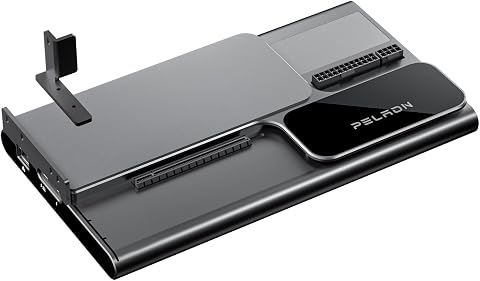 PELADN S-3 eGPU Dock with Thunderbolt 5 Cable – External GPU Dock with PCIe 4…View on Amazon →
 - 4
 Razer Core X V2 External Graphics Enclosure (eGPU)View on Amazon →
 - 5
 MINISFORUM DEG2 USB4 V2 (TBT5 Compatible) & OCuLink eGPU DockView on Amazon →
 - 6
 AOOSTAR AG01 External GPU Docking Station Supports NVIDIA and AMD Graphics Ca…View on Amazon →
 - 7
 MINISFORUM DEG1 eGPU Docking Station for RTX 4090 and AMD RX 7900 XTXView on Amazon →
 - 8
 MINISFORUM DEG1 External GPU Dock Station for RTX 4090 and AMD RX 7900 XTXView on Amazon →
Why External GPUs Are Critical for AI and ML in 2026
External GPUs in 2026 are transforming how professionals approach AI and machine learning tasks by providing portable, high-performance computing power without needing a dedicated desktop. They enable faster processing times, support for larger models, and increased flexibility for mobile workflows.
As AI applications grow in complexity, having access to external GPUs that support the latest standards and high-capacity GPUs becomes essential for researchers, data scientists, and developers, making these devices a key component in modern AI infrastructure.
Evolution of External GPUs for AI in Recent Years
Over the past few years, external GPUs have transitioned from niche accessories to mainstream tools for professional workloads. The adoption of Thunderbolt 3 and 4 standards, along with PCIe 4.0 support, has significantly improved data transfer speeds, making external GPUs viable for demanding AI and machine learning tasks.
In 2024 and 2025, manufacturers introduced models with integrated cooling, higher wattage power supplies, and support for larger GPUs like the RTX 4090 and RX 7900 XTX. 2026 models build on this trend, emphasizing compatibility, portability, and future-proofing, especially for AI workloads that require substantial GPU resources.
“Our Core X V2 remains a versatile choice for users needing reliable, affordable external GPU solutions supporting demanding workloads.”
— Razer spokesperson
Outstanding Questions About External GPU Compatibility and Performance
While many models support the latest standards, it is still unclear how well some external GPUs will perform with upcoming AI frameworks and large-scale models. Compatibility with future GPU releases and software optimizations remains unconfirmed, and real-world benchmarks are still emerging.
Additionally, the longevity and upgradability of certain enclosures, especially fixed models, pose questions for long-term investment, as AI workloads evolve rapidly.
Upcoming Developments and Next-Generation External GPUs
Expect manufacturers to release updated models with even higher PCIe support, improved cooling, and enhanced compatibility with upcoming AI frameworks. Software optimizations and driver updates will likely improve performance further, making external GPUs even more integral to AI workflows.
Research and industry testing will clarify real-world performance and compatibility, guiding users on optimal configurations for AI and machine learning tasks in 2026 and beyond.
Key Questions
Which external GPU is best for AI and machine learning in 2026?
The top models include the Razer Core X V2 for affordability and compatibility, and the ASUS ROG XG Mobile for high performance and integrated design. The best choice depends on your specific needs and budget.
Do external GPUs support the latest AI frameworks?
Most current external GPUs support popular AI frameworks like TensorFlow and PyTorch, but compatibility can vary based on drivers and software updates. Always verify support for your specific AI tools before purchase.
Are external GPUs worth it for AI professionals?
Yes, external GPUs provide portable, high-performance computing power that can significantly accelerate AI training and inference, especially for users working on laptops or compact systems.
What should I consider when choosing an external GPU for AI?
Focus on connection standards (Thunderbolt 4 or USB4), GPU compatibility and size, power delivery, and future upgrade potential. Match the enclosure to your workload and budget for best results.
Source: ThorstenMeyerAI.com
Fall Picks
fall essentials
As an affiliate, we earn on qualifying purchases.