High-yield savings accounts can help keep emergency funds and near-term savings accessible while earning interest, but rates, account rules, and the quality of guidance vary. In this roundup, The High-Yield Cash Guide (2026 Edition) is my best overall pick because it connects savings accounts with CDs and choice-making; the beginner-focused guide is a strong starting point, while My Three Favorite High-Yield Savings Accounts offers a more account-centered angle. The main tradeoffs are simplicity versus breadth, current account details versus durable financial principles, and easy access versus strategies that may involve CDs or investing. These are books and guides, not bank accounts, so I judge them by how well they help readers compare options rather than by account rates or deposit terms. Read on for the full breakdown and a guide to choosing the right kind of resource for your needs.

Get smart everyday buys delivered free with Prime
- Fast, free delivery on millions of items
- Prime Video, Amazon Music and more included
- Member-only deals all year
Key Takeaways
- The High-Yield Cash Guide (2026 Edition) earns the overall lead because its savings-account and CD scope is useful for comparing cash choices, rather than treating a savings account as the only option.
- The beginner guide on savings, CDs, and money market accounts is the clearest fit for readers who need basic distinctions before choosing an account.
- The titles focused on personal favorites or annual reviews may offer account-specific perspectives, but their dated references make current verification especially important.
- Several books place savings within a larger wealth strategy, including Roth IRAs, 401(k)s, HSAs, and dividend investing; that breadth helps with planning but may distract readers who only want account-selection basics.
- A title mentioning a specific yield or year should not be read as evidence of a current rate. The strongest resources for a 2027 decision are those that explain comparison criteria readers can verify with providers.
| Getting Started with High-Yield Savings Accounts: Overcoming Your Banking Fears |  | Best for Banking Beginners | ASIN: B0C47181PY | Format: Book | Primary topic: Getting started with high-yield savings accounts | VIEW LATEST PRICE | See Our Full Breakdown |
| Best Savings Accounts for April 2025 |  | Best as a Dated Research Lead | ASIN: B0F39J621K | Product title: Best Savings Accounts for April 2025 | Stated subject: Savings accounts | VIEW LATEST PRICE | See Our Full Breakdown |
| What Your Bank Doesn’t Tell You: How to Use High-Yield Savings Accounts, Roth IRAs, 401(k)s, HSAs, and Other Smart Accounts to Build Long-Term Wealth (The Long-Term Wealth Series) |  | Best for Broader Financial Planning | ASIN: B0HCWZYBW3 | Series: The Long-Term Wealth Series | Primary subject: Building long-term wealth with financial accounts | VIEW LATEST PRICE | See Our Full Breakdown |
| The Magic of 3: High-Yield Savings Accounts Hit 3% Interest |  | Best for a Rate-Focused Introduction | ASIN: B0BP2563G8 | Series: Massive Passive Income Books | Book number: 118 | VIEW LATEST PRICE | See Our Full Breakdown |
| Dividend Growth Investing vs. High-Yield Savings Accounts: How to Get a 4% Yield |  | Best for Comparing Cash and Investing | ASIN: B0FFHJ9ZV4 | Format: Book | Primary comparison: Dividend growth investing versus high-yield savings accounts | VIEW LATEST PRICE | See Our Full Breakdown |
| Building Wealth Fast with High-Yield Savings: Financial Security and Wealth Accumulation |  | Best for Connecting Savings to Long-Term Goals | Format: Not specified | Subject: High-yield savings | Stated focus: Financial security and wealth accumulation | VIEW LATEST PRICE | See Our Full Breakdown |
| My Three Favorite High-Yield Savings Accounts: Get Paid While You Save |  | Best for a Shortlist-First Approach | Format: Not specified | Subject: High-yield savings accounts | Stated account count: Three favorites | VIEW LATEST PRICE | See Our Full Breakdown |
| High-Yield Savings Accounts vs. Standard Savings Accounts: We Should All Love Yield |  | Best for Understanding the Account-Type Difference | Format: Book | Subject: High-yield savings accounts and standard savings accounts | Stated approach: Comparison of account types | VIEW LATEST PRICE | See Our Full Breakdown |
| The High-Yield Cash Guide (2026 Edition): How to Choose Savings Accounts and CDs | 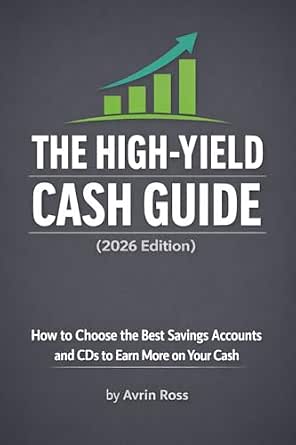 | Best for Comparing Savings Accounts and CDs | Edition: 2026 Edition | Format: Not specified | Subject: High-yield cash | VIEW LATEST PRICE | See Our Full Breakdown |
| My High-Yield Savings Account: Year in Review 2022 |  | Best for a Historical Account Snapshot | Format: Book | Subject: High-yield savings account | Content type: Year in review | VIEW LATEST PRICE | See Our Full Breakdown |
| Investing for Interest 6: My Favorite High-Yield Savings Account |  | Best for a Focused Introduction | Format: Book | Subject: High-yield savings accounts and investing | Account focus: High-yield savings accounts | VIEW LATEST PRICE | See Our Full Breakdown |
| High-Yield Savings, CDs, and Money Market Accounts: The Complete Beginner’s Guide (Money Guide Series, Book 69) |  | Best for Beginners Comparing Cash Accounts | Series: Money Guide Series | Book number: 69 | Audience: Beginners | VIEW LATEST PRICE | See Our Full Breakdown |
| high yield savings account | Format | ASIN | Subject |
|---|---|---|---|
| Getting Started with High-Yiel | Book | B0C47181PY | — |
| Best Savings Accounts for Apri | Not provided | B0F39J621K | — |
| What Your Bank Doesn’t Tell Yo | Not provided | B0HCWZYBW3 | — |
| The Magic of 3: High-Yield Sav | Not provided | B0BP2563G8 | — |
| Dividend Growth Investing vs. | Book | B0FFHJ9ZV4 | — |
| Building Wealth Fast with High | Not specified | — | High-yield savings |
| My Three Favorite High-Yield S | Not specified | — | High-yield savings accounts |
| High-Yield Savings Accounts vs | Book | — | High-yield savings accounts and standard savings accounts |
| The High-Yield Cash Guide | Not specified | — | High-yield cash |
| My High-Yield Savings Account: | Book | — | High-yield savings account |
| Investing for Interest 6: My F | Book | B09TTS59L7 | High-yield savings accounts and investing |
| High-Yield Savings | Book | B0HKFL5N6C | — |
More Details on Our Top Picks
Getting Started with High-Yield Savings Accounts: Overcoming Your Banking Fears
This is the most directly beginner-focused title in the group: it pairs getting started with high-yield savings accounts with the emotional hurdle of banking fears. That angle may suit readers who need reassurance before comparing account terms. By contrast, What Your Bank Doesn’t Tell You ranges across retirement and health accounts, so it offers a broader financial frame rather than this book’s narrower savings focus. The limitation is that the available details do not describe its advice, examples, or treatment of account features such as access and variable rates. I would treat it as a possible confidence-building introduction, not as a verified account-comparison guide; readers seeking specific, current account details may need another source.
Pros:- Focuses directly on getting started with high-yield savings accounts
- Addresses banking fears that can keep beginners from taking action
- Narrow subject focus may be easier to approach than books spanning several account types
Cons:- Available product information does not describe the guidance, examples, or chapter contents
- No account-selection criteria or current rate information are specified
- The description does not establish whether it covers access rules, fees, or rate changes
Best for: Readers new to online or high-yield savings accounts who feel uneasy about choosing or opening a bank account.
Not ideal for: Readers who want documented account comparisons, detailed rate guidance, or a clearly described step-by-step curriculum.
- ASIN:B0C47181PY
- Format:Book
- Primary topic:Getting started with high-yield savings accounts
- Additional topic:Overcoming banking fears
- Named series:Not provided
- Account types mentioned:High-yield savings accounts
Our verdict“Choose this title if banking anxiety is your main barrier, but look elsewhere for verified account comparisons or detailed rate guidance.”
Best Savings Accounts for April 2025
The title reads like a month-specific savings-account headline, not a clearly described book or account product. That makes it potentially useful as a prompt for April 2025 research, but weaker as lasting guidance: savings rates and account terms can change, and the supplied information does not identify any accounts, rates, or selection method. Compared with The Magic of 3: High-Yield Savings Accounts Hit 3% Interest, which at least signals a specific rate topic, this entry provides no account-level detail at all. I would not use it alone to choose where to keep cash. Its role here is limited to readers looking for a dated starting point who can verify every claim against current bank disclosures.
Pros:- Clearly identifies a savings-account topic and a specific publication month in its title
- May serve as a lead for historical or time-bounded account research
- The title is concise about its subject
Cons:- Product data does not confirm that this is a book or provide any format
- No accounts, rates, eligibility rules, or comparison criteria are supplied
- A dated headline may not reflect current savings-account terms
Best for: Readers researching what savings-account options were being discussed in April 2025 who plan to verify details independently.
Not ideal for: Savers who need current account recommendations, documented rates, or a confirmed format and contents.
- ASIN:B0F39J621K
- Product title:Best Savings Accounts for April 2025
- Stated subject:Savings accounts
- Date named in title:April 2025
- Format:Not provided
- Named series:Not provided
Our verdict“Treat this as a dated research lead rather than a dependable guide for choosing a high-yield savings account today.”
What Your Bank Doesn’t Tell You: How to Use High-Yield Savings Accounts, Roth IRAs, 401(k)s, HSAs, and Other Smart Accounts to Build Long-Term Wealth (The Long-Term Wealth Series)
This title stands apart by placing high-yield savings accounts alongside Roth IRAs, 401(k)s, and HSAs, framing cash savings as one part of a longer-term plan. That wider scope may help readers thinking about how different account types serve different goals. It is less focused on choosing a savings account than Getting Started with High-Yield Savings Accounts: Overcoming Your Banking Fears, whose stated subject is a more direct introduction to savings. The tradeoff is breadth: the supplied data gives no detail on how the book distinguishes accessible savings from retirement or health accounts, and it does not specify format or practical examples. I would choose it for a multi-account overview, not for a focused, current account shortlist.
Pros:- Covers high-yield savings alongside Roth IRAs, 401(k)s, and HSAs
- Connects account choices to long-term wealth building
- Part of the named Long-Term Wealth Series
Cons:- Available data does not describe the book’s format or specific contents
- The broad account mix may leave less room for detailed savings-account comparisons
- No current rate, fee, or account-selection guidance is specified
Best for: Readers who want to understand where high-yield savings fit alongside retirement and health savings accounts in a long-term plan.
Not ideal for: Savers who only want help comparing high-yield savings accounts or need details about current rates and bank terms.
- ASIN:B0HCWZYBW3
- Series:The Long-Term Wealth Series
- Primary subject:Building long-term wealth with financial accounts
- Account type:High-yield savings accounts
- Additional account types:Roth IRAs, 401(k)s, and HSAs
- Format:Not provided
Our verdict“Pick this for a broad account-planning perspective, but choose a savings-specific guide if your immediate task is comparing cash accounts.”
The Magic of 3: High-Yield Savings Accounts Hit 3% Interest
The clearest point of difference here is its focus on 3% interest, giving rate-conscious readers a specific theme to follow. That makes it more targeted than What Your Bank Doesn’t Tell You, which covers several account categories, but the stated rate focus also dates the premise: a particular yield is not a lasting feature of a savings account, and rates can change. The available details do not say whether the book explains how rates are set, how to compare account terms, or when the stated figure applied. I would see it as a focused introduction to the appeal of yield rather than a current account-picking reference. Its place in the Massive Passive Income Books series signals its series context, not the depth of its guidance.
Pros:- Centers its subject on high-yield savings accounts
- Uses a specific 3% interest theme that makes the rate focus clear
- Identifies its series and book number
Cons:- The 3% premise may not reflect current rates or account conditions
- Product details do not explain the book’s advice or contents
- No fees, access terms, or account-comparison approach are specified
Best for: Readers curious about the appeal of a specific high-yield savings rate and looking for a narrowly themed introduction.
Not ideal for: Savers who need current rate comparisons, clear account-selection steps, or a guide built around today’s bank terms.
- ASIN:B0BP2563G8
- Series:Massive Passive Income Books
- Book number:118
- Primary topic:High-yield savings accounts
- Rate theme in title:3% interest
- Format:Not provided
Our verdict“Choose it for a narrowly rate-themed introduction, not as a current source for deciding which savings account to open.”
Dividend Growth Investing vs. High-Yield Savings Accounts: How to Get a 4% Yield
This book’s distinguishing feature is the comparison between dividend growth investing and high-yield savings, which may help readers weigh cash savings against an investment approach. The title’s 4% yield theme gives that comparison a concrete focus, but it does not tell readers whether the figure refers to savings interest, dividends, or a broader target. Unlike The Magic of 3, which centers its title on a savings-rate theme, this book explicitly sets savings beside investing; that wider comparison may be more useful for readers weighing different uses for money, but it also raises questions about risk and changing returns that the supplied description does not answer. I would not treat the stated yield as a guaranteed or current account outcome.
Pros:- Directly compares dividend growth investing with high-yield savings accounts
- Frames the discussion around a specific 4% yield target
- May help readers distinguish a savings approach from an investment approach
Cons:- Available description does not clarify what the 4% yield refers to
- No details are provided about the book’s risk discussion or comparison method
- Does not identify current savings-account terms or rates
Best for: Readers deciding whether cash savings or dividend-growth investing better fits a particular financial goal.
Not ideal for: Savers seeking a straightforward account-opening guide or a verified, current savings-rate comparison.
- ASIN:B0FFHJ9ZV4
- Format:Book
- Primary comparison:Dividend growth investing versus high-yield savings accounts
- Yield theme in title:4%
- Named series:Not provided
- Account type covered:High-yield savings accounts
Our verdict“Choose this if you are weighing savings against dividend investing, but do not treat its 4% theme as a guaranteed savings-account yield.”
Building Wealth Fast with High-Yield Savings: Financial Security and Wealth Accumulation
This title frames high-yield savings as one part of a broader financial-security plan, which may suit readers who want more context than a list of account features. Compared with My Three Favorite High-Yield Savings Accounts: Get Paid While You Save, its stated focus is wealth accumulation rather than choosing among three accounts. That makes it a better fit for goal-oriented readers, but the supplied description gives no account comparisons, rate details, or specific methods to judge. The word “fast” in the title should not be taken as a promise: savings interest can support cash growth, but it does not establish a guaranteed path to wealth. Choose it for the stated big-picture angle; skip it if you need current account terms or a practical, verified shortlist.
Pros:- Connects high-yield savings with financial security and wealth accumulation
- May appeal to readers seeking a broader goal-setting perspective
- Its focus differs from account-pick guides such as My Three Favorite High-Yield Savings Accounts
- The title makes its central topic clear
Cons:- No account names, rates, fees, or eligibility details are supplied
- No methods or evidence are described to support the title’s wealth-building framing
- The supplied information does not establish how current or actionable the guidance is
Best for: Readers who want a high-level discussion of how savings can support financial security and wealth-building goals
Not ideal for: Shoppers comparing current APYs, fees, withdrawal rules, or named banks, since none are provided in the supplied product details
- Format:Not specified
- Subject:High-yield savings
- Stated focus:Financial security and wealth accumulation
- Account comparisons:Not specified
- Rate information:Not specified
- Fees and eligibility:Not specified
Our verdict“Choose this for a broad savings-and-wealth framing, not for current account comparisons or rate-shopping guidance.”
My Three Favorite High-Yield Savings Accounts: Get Paid While You Save
The appeal here is a focused comparison of three high-yield savings accounts, giving readers a narrower starting point than a general cash guide. Its investing-resource framing may help readers place savings interest within a wider personal-finance plan, while Building Wealth Fast with High-Yield Savings takes a broader, goal-centered angle. The tradeoff is that the supplied description does not identify the accounts, explain how they were selected, or provide rates, fees, and access rules. Because account terms can change, a three-account list is most useful when its details are dated and easy to verify; no such information is supplied here. This is the clearest fit for readers who want account picks, but it is less useful to anyone needing documented, current terms before opening an account.
Pros:- Promises a focused set of three account options rather than an expansive survey
- Directly centers on earning interest while saving
- Presented as an investing resource, which may connect cash savings to broader planning
- Offers a more selection-oriented angle than Building Wealth Fast with High-Yield Savings
Cons:- The supplied description does not name the three accounts
- No rates, fees, access rules, or selection criteria are provided
- The information’s publication date and current relevance are not specified
Best for: Readers who want a compact starting shortlist of high-yield savings accounts before checking current bank terms themselves
Not ideal for: Readers who need verified current rates, fee schedules, account eligibility, or an explanation of how the three accounts were chosen
- Format:Not specified
- Subject:High-yield savings accounts
- Stated account count:Three favorites
- Stated purpose:Earn interest while saving
- Content framing:Investing resource
- Named accounts:Not provided in supplied description
- Rates and fees:Not provided in supplied description
Our verdict“Pick this as a shortlist-oriented introduction only if you are prepared to verify every account detail independently.”
High-Yield Savings Accounts vs. Standard Savings Accounts: We Should All Love Yield
This book’s strongest stated use is explaining the distinction between high-yield and standard savings accounts, a useful first step for readers who are unsure why the account category matters. Unlike The High-Yield Cash Guide (2026 Edition), which covers both savings accounts and CDs, this title stays centered on the comparison between two kinds of savings accounts. That narrower scope may keep the decision approachable, but the supplied data does not describe its examples, account criteria, or advice on choosing a bank. The title signals an enthusiastic stance toward yield, yet readers still need neutral details on access, fees, and variable rates to make a sound choice. It suits concept-level learning; it is a weaker fit for anyone seeking a current, actionable account-by-account guide.
Pros:- Directly compares high-yield and standard savings accounts
- A focused subject may help readers who are new to the account distinction
- Its scope is narrower than The High-Yield Cash Guide, which also covers CDs
- Book format is explicitly identified in the supplied data
Cons:- No examples, provider comparisons, or selection guidance are described
- No current rates, fees, or access terms are provided
- The supplied information does not indicate how the comparison is structured
Best for: New savers who want to understand the basic difference between high-yield and standard savings accounts before comparing providers
Not ideal for: Experienced rate shoppers or readers seeking current bank recommendations, CD comparisons, or detailed account terms
- Format:Book
- Subject:High-yield savings accounts and standard savings accounts
- Stated approach:Comparison of account types
- High-yield account details:Not specified
- Standard account details:Not specified
- CD coverage:Not specified
- Publication date:Not provided in supplied data
Our verdict“Choose this for a focused introduction to account types, not for current provider picks or CD guidance.”
The High-Yield Cash Guide (2026 Edition): How to Choose Savings Accounts and CDs
This guide earns a distinct place by covering both savings accounts and CDs, giving cash savers a wider set of account types to weigh than the savings-only focus of High-Yield Savings Accounts vs. Standard Savings Accounts: We Should All Love Yield. That added scope could help readers decide whether they want flexible savings access or are willing to compare a CD as well. The 2026 edition label signals a time-specific guide, but the supplied description does not include actual rates, named providers, or details about how often its information is updated. CD terms also make access restrictions relevant, so readers should look for clear discussion of withdrawal conditions before relying on any recommendation. Its broader cash-choice scope is the main advantage; the missing contents details make it hard to judge how deep or current the guidance is.
Pros:- Covers both savings accounts and CDs
- Focuses on choosing among cash-saving options rather than savings alone
- The 2026 edition label signals a time-specific publication framing
- Offers broader account-type coverage than High-Yield Savings Accounts vs. Standard Savings Accounts
Cons:- No named providers or account terms are included in the supplied description
- No rates or update schedule are provided
- The supplied details do not explain how CD access restrictions are treated
Best for: Cash savers who are open to comparing savings accounts with CDs and want a guide framed around choosing between them
Not ideal for: Readers seeking only a simple savings account explanation or those who require confirmed current rates, provider names, and detailed withdrawal terms
- Edition:2026 Edition
- Format:Not specified
- Subject:High-yield cash
- Account types covered:Savings accounts and CDs
- Stated purpose:Choosing savings accounts and CDs
- Named providers:Not provided in supplied description
- Rates and terms:Not provided in supplied description
Our verdict“Choose this if you are weighing savings accounts against CDs, but verify current terms and withdrawal rules separately.”
My High-Yield Savings Account: Year in Review 2022
This title is framed as a 2022 year-in-review of one high-yield savings account, making it more of a historical account snapshot than a guide for choosing among current options. That narrow, retrospective angle differs from My Three Favorite High-Yield Savings Accounts: Get Paid While You Save, which promises three account picks, and from the 2026 cash guide’s broader account-type coverage. A single-account review may help readers understand what one saver chose to track, but the supplied description gives no account name, rate history, or review criteria. Its 2022 timeframe also limits its usefulness for present-day decisions, since savings terms can change. Read it for historical perspective only; skip it if your main goal is to choose an account now.
Pros:- Clearly identifies a retrospective focus on 2022
- Centers on a single high-yield savings account, which may offer a narrow case-study perspective
- Provides a different historical angle from the three-account shortlist in My Three Favorite High-Yield Savings Accounts
Cons:- The 2022 timeframe makes it poorly suited to current account selection
- The account name and review criteria are not supplied
- No rates, fees, or account terms are provided
Best for: Readers researching a historical 2022 account experience or looking for a retrospective example of high-yield savings
Not ideal for: Current account shoppers who need up-to-date rates, named providers, comparison criteria, or present-day recommendations
- Format:Book
- Subject:High-yield savings account
- Content type:Year in review
- Account count stated:One account
- Account name:Not provided in supplied description
- Rates and fees:Not provided in supplied description
Our verdict“Choose this for historical context on one account, not as a source for current high-yield savings decisions.”
Investing for Interest 6: My Favorite High-Yield Savings Account
This book focuses on high-yield savings accounts while also connecting the topic to investing, making it a narrower starting point than High-Yield Savings, CDs, and Money Market Accounts: The Complete Beginner’s Guide. That focus may suit readers who want to learn about savings yield without beginning with a broad comparison of cash products. The title signals a personal perspective, but the available product information does not describe its advice, account examples, publication details, or level of detail, so I would not treat it as a current account comparison or a substitute for checking rates and terms directly. Its main tradeoff is that the scope and practical depth are unclear. Choose it for a targeted read; skip it if you need documented comparisons across savings accounts, CDs, and money market accounts.
Pros:- The title centers high-yield savings accounts, keeping the subject focused.
- Connects savings interest with investing in its stated topic.
- Book format allows readers to explore the subject beyond a short account listing.
Cons:- Available product information does not describe the advice or chapter contents.
- No account examples, rate details, or publication date are provided to judge how current the guidance is.
- Its stated scope is less broad than the beginner’s guide covering savings accounts, CDs, and money market accounts.
Best for: Readers who want a focused book-length introduction to high-yield savings accounts alongside investing concepts.
Not ideal for: Beginners seeking a clearly described comparison of savings accounts, CDs, and money market accounts, since the available product details do not establish that broader scope.
- Format:Book
- Subject:High-yield savings accounts and investing
- Account focus:High-yield savings accounts
- Title:Investing for Interest 6: My Favorite High-Yield Savings Account
- ASIN:B09TTS59L7
- Account examples:Not specified in provided product data
Our verdict“Pick this for a focused book about high-yield savings and investing, but choose the broader beginner’s guide if you want coverage of multiple cash account types.”
High-Yield Savings, CDs, and Money Market Accounts: The Complete Beginner’s Guide (Money Guide Series, Book 69)
For readers deciding among cash account types, this guide has the clearest stated breadth in this pair: it covers high-yield savings accounts, CDs, and money market accounts, and is aimed at beginners. That makes it a better fit for someone weighing access to cash against other account options than Investing for Interest 6: My Favorite High-Yield Savings Account, whose title points to a narrower savings-and-investing focus. The tradeoff is that the product information does not reveal the book’s actual comparisons, examples, or how current its guidance is. I would use the stated scope as a reason to shortlist it, not as proof that it offers up-to-date rates or detailed account recommendations. Its advantage is breadth; readers wanting only a focused discussion of high-yield savings may prefer the other title.
Pros:- Covers high-yield savings accounts, CDs, and money market accounts.
- Explicitly aimed at beginners.
- Broader stated account coverage than Investing for Interest 6.
Cons:- The available product data does not describe the book’s contents or comparison method.
- No publication date or rate information is provided to establish how current its guidance is.
- Its multi-account scope may be broader than needed for readers focused only on savings accounts.
Best for: First-time savers who want an introductory overview of high-yield savings accounts, CDs, and money market accounts before choosing where to keep cash.
Not ideal for: Readers who want a focused discussion of high-yield savings alone or need verified current rates and detailed account recommendations, which the available information does not confirm.
- Series:Money Guide Series
- Book number:69
- Audience:Beginners
- Topics:High-yield savings accounts, CDs, and money market accounts
- Format:Book
- Title:High-Yield Savings, CDs, and Money Market Accounts: The Complete Beginner’s Guide
- ASIN:B0HKFL5N6C
Our verdict“Choose this as a beginner-oriented starting point for comparing several cash account types, while verifying current rates and terms separately.”

How We Picked
I ranked these 12 books and guides by how directly their stated focus supports a reader choosing or understanding a high-yield savings account. I gave more weight to practical comparison value, clear explanations of cash options, and usefulness across changing rate environments than to an appealing yield claim or a personal account preference. Because the items are informational products rather than financial institutions, I did not rank them by APY, fees, minimum balances, insurance coverage, or service quality.
The High-Yield Cash Guide (2026 Edition) leads for its explicit comparison of savings accounts and CDs, while the beginner guide stands out for readers who need foundational explanations. Broader wealth books rank lower for a narrow account-selection task, though they may suit readers thinking about savings alongside investing. Titles tied to older dates or specific rates are judged as potentially useful background, not as sources of current account terms; readers should confirm all live details directly with a bank or credit union.
| high yield savings account | Format | Subject |
|---|---|---|
| Getting Started with High-Yiel | Book | — |
| Best Savings Accounts for Apri | Not provided | — |
| What Your Bank Doesn’t Tell Yo | Not provided | — |
| The Magic of 3: High-Yield Sav | Not provided | — |
| Dividend Growth Investing vs. | Book | — |
| Building Wealth Fast with High | Not specified | High-yield savings |
| My Three Favorite High-Yield S | Not specified | High-yield savings accounts |
| High-Yield Savings Accounts vs | Book | High-yield savings accounts and standard savings accounts |
| The High-Yield Cash Guide | Not specified | High-yield cash |
| My High-Yield Savings Account: | Book | High-yield savings account |
| Investing for Interest 6: My F | Book | High-yield savings accounts and investing |
| High-Yield Savings | Book | — |
Factors to Consider When Choosing High Yield Savings Accounts
Before choosing a high-yield savings account, decide what job the money needs to do. The best fit for an emergency reserve may differ from the right place for a home down payment or cash you will not need for several months. These checks help separate a useful account comparison from advice that sounds attractive but does not match your timeline.
Match access to the money’s purpose
Emergency savings should be reachable without relying on investment sales or a fixed term. Check how withdrawals work, how quickly transfers typically arrive, and whether the provider limits or complicates access. A higher advertised yield may not compensate for friction when a bill is due. For money with a known future use, compare a savings account with CDs, which may trade flexibility for a fixed term and rate. Keep the emergency portion liquid even if you place some planned savings elsewhere.
Treat APY as a changing figure
A savings account’s APY can change, so a rate quoted in a book, article, or comparison page may no longer apply. Check the provider’s current disclosure and confirm whether the quoted figure is variable or subject to conditions. Avoid choosing based on a brief promotional rate without understanding what happens afterward. A modest rate difference can matter over time, but account access, fees, and reliability also affect the result. Recheck the rate periodically rather than assuming an account remains competitive forever.
Check fees, minimums, and qualification rules
Look beyond the headline yield for monthly charges, minimum opening deposits, balance tiers, and requirements such as linked accounts or recurring deposits. A fee can erode interest, particularly when your balance is small. Tiered rates may pay the strongest APY only within a specified balance range, so estimate how your own balance would be treated. Ask whether there are charges for outgoing transfers or other services you expect to use. Compare the full account terms, not just a summary table.
Verify deposit protection and provider identity
Confirm whether the account is held at an FDIC-insured bank or an NCUA-insured credit union, and verify the institution through the relevant official resources. Some financial apps work with partner banks, which can add steps to understanding where deposits sit and how coverage applies. Do not assume a brand name alone tells you which institution holds the funds. Review the account agreement for ownership structure and coverage details, especially if you already hold deposits at the same institution. This check is separate from comparing interest rates.
Choose a resource that fits your knowledge level
A beginner guide can help explain the difference between savings accounts, money market accounts, and CDs, while a broader investing book may be more useful after those basics are clear. Do not let a book’s wide scope replace checking current provider terms. Older editions and account-year reviews can still explain concepts, but their rates, product names, and rules may be stale. For a focused decision, prioritize material that teaches a repeatable comparison process. Use account-specific claims as prompts for verification, not as a substitute for it.
Decide how much convenience is worth
Consider how you will deposit money, move it between accounts, and get help if a transfer fails. Online-only providers may offer a streamlined digital experience but lack branches, while a bank with local access may fit buyers who value in-person support. Review mobile deposit limits, transfer timing, customer service channels, and how the account connects to your everyday bank. These details can matter more than a small APY gap if they affect how consistently you save. Choose an arrangement you can maintain without adding avoidable steps.
Frequently Asked Questions
Can I rely on a book’s quoted APY when choosing an account in 2027?
No. APY can change, and several titles in this roundup refer to past years or specific yield levels. Treat those figures as historical context, not a current offer. Confirm today’s rate on the provider’s own site and read the account disclosures for conditions, balance tiers, and fees. A useful guide should help you compare terms even after the quoted rate has changed.
Should I choose a savings account or a CD for money I may need soon?
Start with how certain you are about the withdrawal date. A savings account generally offers more flexibility, while a CD may restrict access or impose an early-withdrawal penalty in exchange for a term-based rate. If an emergency could require the money, keeping it accessible is often more practical than locking it away. For a planned expense, you might compare a CD for the portion you can leave untouched with a liquid account for the rest. Read the terms before committing.
Are guides about Roth IRAs, 401(k)s, or dividend investing useful for choosing a savings account?
They can help explain how cash savings fit into a larger financial plan, especially when deciding what money belongs in an emergency reserve versus a long-term investment. They are less direct if your immediate task is comparing account access, fees, or deposit rules. Savings accounts and investments serve different purposes, and investment returns are not equivalent to deposit interest or insured deposits. Use broad wealth guides for context, then consult current account disclosures for the selection itself. This split keeps a long-range plan from obscuring near-term cash needs.
Is a guide focused on someone’s favorite account still useful if it is several years old?
It may still offer a helpful way to think about features or saving habits, but account names, rates, and terms can change. A personal favorite is not a guarantee that the same account remains available or competitive. Check the publication date and compare every account-specific claim with current provider information. For an older guide, put more weight on durable explanations than on its recommendation. If it does not explain how to verify current terms, use it as background rather than a decision source.
What should I do if a high-yield account has a much better APY than my current account?
First compare the full terms, including fees, minimums, withdrawal access, insurance status, and any conditions attached to the advertised APY. Check how long transfers take and whether moving funds could leave bills or automatic payments short. Then estimate the interest difference using your likely balance and a realistic period, remembering that a variable rate can change. If the gain is small relative to the added inconvenience, staying put may be reasonable. If you switch, confirm the new account is open and functional before moving all your savings.
Conclusion
Best overall: I recommend The High-Yield Cash Guide (2026 Edition) for readers comparing savings accounts with CDs. Best value for beginners: choose High-Yield Savings, CDs, and Money Market Accounts: The Complete Beginner’s Guide for foundational distinctions. Best for broad financial planning: What Your Bank Doesn’t Tell You connects cash savings with other account types, though it is less focused on selecting one savings account. Best for a personal-account perspective: My Three Favorite High-Yield Savings Accounts offers a narrower lens, but verify any account details against current disclosures. Best for specific needs: readers comparing savings with dividend investing may prefer Dividend Growth Investing vs. High-Yield Savings Accounts, while anyone seeking a current account should use these books as guidance and confirm live rates and terms directly with providers.