
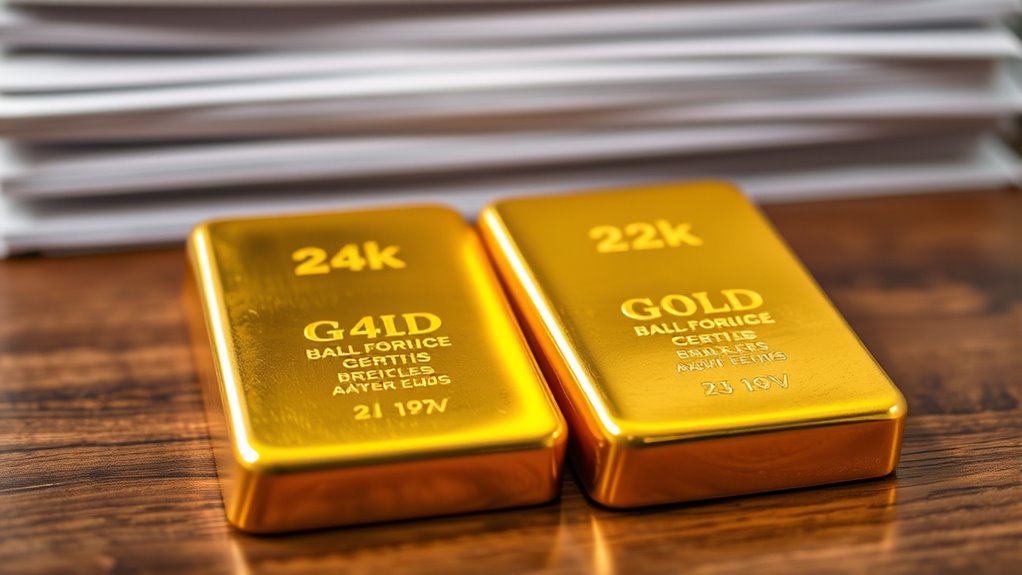
When it comes to gold purity, 24K gold is 99.9% pure and perfect for investments, while 22K gold, with 91.6% purity, is more durable and suitable for everyday jewelry. If you’re considering IRA-approved metals, remember that they need a minimum purity of 99.5%. Proper certification and storage are vital for compliance. Understanding these differences can help you make informed choices. You’ll discover even more insights as you explore further.

Get smart everyday buys delivered free with Prime
- Fast, free delivery on millions of items
- Prime Video, Amazon Music and more included
- Member-only deals all year
Key Takeaways
- Purity Standards: To qualify for IRAs, gold must meet a minimum purity of 99.5%, making 24K gold the primary choice for investment.
- Hallmarking Importance: Gold should be stamped with purity indicators, such as “999” for 24K, to confirm authenticity and regulatory compliance for IRAs.
- Market Demand: 24K gold generally holds higher market demand and resale value, making it a stable investment compared to 22K gold.
- Durability: 22K gold, with its alloy content, offers better wear resistance, making it more suitable for everyday jewelry rather than IRA investments.
- Storage Regulations: Gold in IRAs must be stored in IRS-approved depositories to comply with legal and tax regulations, ensuring the integrity of the investment.
As an affiliate, we earn on qualifying purchases.
Overview of Gold Purity Levels
When it comes to gold purity levels, understanding the differences can help you make informed decisions. Gold purity is measured in karats, and 24K gold is considered pure, boasting 99.9% gold content. On the other hand, 22K gold has a purity of 91.6%, containing 8.4% other metals like copper and silver. This alloy content affects not just the purity, but also the durability and use cases. While 24K gold is often favored for investment and ceremonial purposes, 22K gold is more commonly used in jewelry due to its strength and resistance to wear. Knowing these distinctions allows you to choose the right type of gold for your specific needs and preferences. Additionally, staying informed about legislative changes can influence the market and investment opportunities in precious metals.
22K gold jewelry for everyday wear
As an affiliate, we earn on qualifying purchases.
As an affiliate, we earn on qualifying purchases.
Physical Properties of 24K and 22K Gold

Understanding the physical properties of 24K and 22K gold can help you appreciate their unique characteristics. 24K gold, with its high purity, showcases a bright yellow color and is incredibly soft and malleable, making it less suitable for everyday wear. In contrast, 22K gold retains a rich yellow hue but is more durable due to the 8.4% alloy content. This added strength makes 22K gold more resistant to scratches and bending. While 24K gold is less dense, its softness allows for intricate designs, but it can easily be damaged. Choosing between the two depends on your intended use; if you’re after jewelry, 22K gold is often the better option for everyday wear. Engaging with Waldorf toys can lead to improved social interactions among peers, much like how choosing the right gold can enhance your experience in jewelry.
As an affiliate, we earn on qualifying purchases.
Investment Value of Gold Purity

Investing in gold can be a smart move, especially when you consider the purity levels that considerably impact its value. 24K gold, with its 99.9% purity, is often preferred for investment due to its high intrinsic value and market demand. Here are three reasons why 24K gold stands out:
- High Resale Value: Its purity guarantees a better resale price compared to lower karat gold.
- Market Demand: 24K gold is widely sought after in global markets, making it a liquid asset.
- Value Retention: This gold tends to hold its value well over time, making it a stable investment choice. Additionally, investing in high-purity gold mirrors the financial impact of WWE Raw, showcasing how valuable assets can appreciate significantly over time.
IRS approved gold storage depository
As an affiliate, we earn on qualifying purchases.
As an affiliate, we earn on qualifying purchases.
IRA Approval and Gold Regulations
When investing in gold for your IRA, it’s vital to understand the specific standards for IRA-approved gold. Knowing the tax benefits and compliance requirements can help you make informed decisions. You’ll also want to guarantee that any gold you consider meets the certification process to avoid potential issues down the line. Additionally, it is important to select a custodian selection that is IRS-approved to ensure compliance with regulations.
IRA-Approved Gold Standards
Have you ever wondered what standards gold must meet to qualify for IRA approval? To guarantee your investment aligns with IRS regulations, you’ll want to focus on three key factors:
- Purity Levels: Gold must meet a minimum purity standard of 99.5% for it to be IRA-approved. This typically means investing in 24K gold.
- Hallmarking: Each piece should be stamped with a hallmark indicating its purity, like “999” for 24K gold.
- Certification: The gold must be certified by an approved refiner or manufacturer, confirming its authenticity and compliance with regulations. Additionally, understanding purity levels in other precious metals can help diversify your IRA investments.
Tax Benefits Overview
Understanding the tax benefits associated with IRA-approved gold can enhance your investment strategy. When you invest in gold through an IRA, you can defer taxes on any gains until you withdraw funds. This means you can potentially grow your investment without the immediate tax burden. Additionally, if you hold your gold until retirement, you may pay a lower tax rate on withdrawals. The IRS allows specific gold products, like 24K coins and bars, which helps guarantee compliance and maximizes your tax advantages. Furthermore, the diversification gold provides can lead to increased long-term stability in your portfolio. By taking advantage of these tax benefits, you can strategically enhance your overall financial planning for retirement.
Compliance and Certification Process
How can you guarantee your gold investments comply with IRA regulations? First, ensure your gold meets strict purity standards—24K gold is a common choice for IRA-approved metals. Second, look for proper hallmarking; your gold should be stamped to indicate its purity level, like “999” for 24K. Finally, work with reputable dealers who provide certification. This certification verifies that your gold complies with regulatory requirements and confirms its authenticity. Additionally, understanding the importance of certification can help you make informed decisions regarding your investments.
To summarize:
- Verify that your gold is 24K for IRA approval.
- Check for hallmarking that indicates purity.
- Obtain certification from trustworthy dealers.
Following these steps will help secure your investments and keep you in line with IRA regulations.
Jewelry Craftsmanship With 22K Gold
When you choose 22K gold for your jewelry, you’re opting for a material that combines durability with versatility. This allows artisans to create intricate designs that showcase both beauty and strength. You’ll find that 22K gold pieces not only look stunning but also stand the test of time. Additionally, working with self-watering planters can enhance your gardening experience by providing consistent moisture for your plants.
Durability and Versatility
Although 24K gold shines brightly, it’s 22K gold that truly shines in the domain of jewelry craftsmanship thanks to its remarkable durability and versatility. With a blend of purity and strength, 22K gold is perfect for intricate designs and daily wear. Here are three reasons why it stands out:
- Durability: The alloy content in 22K gold makes it more resistant to scratches and dents, ensuring your jewelry lasts longer.
- Versatility: Its malleability allows for creative designs, from elegant rings to detailed necklaces.
- Aesthetic Appeal: 22K gold maintains a rich yellow hue that appeals to many, making it a favorite choice for traditional jewelry.
Moreover, the aesthetic appeal of 22K gold can be enhanced with different textures and designs, making it not only a practical choice but also a stylish one. Embrace the beauty of 22K gold, and enjoy both its craftsmanship and longevity.
Intricate Design Opportunities
Building on the durable and versatile nature of 22K gold, this material opens up a world of intricate design possibilities for jewelry makers. You can easily create detailed patterns and engravings, allowing your pieces to showcase unique artistry. The malleability of 22K gold enables you to craft delicate filigree and elaborate settings, making your jewelry stand out. Its rich yellow hue enhances the visual appeal of gemstones, complementing their colors beautifully. Plus, the strength of 22K gold means your creations can withstand daily wear while retaining their elegance. Whether you’re designing traditional pieces or modern statements, 22K gold provides the perfect canvas for your creativity, ensuring your craftsmanship shines through in every piece. Additionally, incorporating rustic lighting can further highlight the beauty of your jewelry displays, creating a warm and inviting atmosphere.
Price Differences Between 24K and 22K Gold

How do the price differences between 24K and 22K gold impact your purchasing decisions? Understanding these differences can help you make informed choices. Here are three key factors to contemplate:
- Cost: 24K gold is generally more expensive due to its high purity, which could stretch your budget.
- Value Retention: 24K gold often retains its value better over time, making it a safer investment for long-term holding.
- Usage: If you’re buying jewelry for daily wear, 22K might be a more practical choice, balancing cost and durability. Additionally, the contrast ratio in gold’s visual appeal can also influence purchasing choices, as higher quality often leads to a more desirable appearance.
Market Demand for Gold Purity

Why is market demand for different gold purities so significant? It directly impacts your investment decisions and the value of your assets. When you consider 24K gold, its high purity makes it a preferred choice for investors looking to hedge against inflation. On the other hand, 22K gold is more sought after for jewelry, combining durability and beauty. The demand for each purity level fluctuates based on cultural trends and economic conditions, influencing their market prices. If you’re planning to invest or purchase jewelry, understanding these dynamics helps you make informed choices. Ultimately, knowing market demand allows you to align your investments with your financial goals and personal preferences effectively.
Legal and Regulatory Compliance for Gold
Understanding the legal and regulatory compliance for gold is essential for anyone looking to invest in or purchase gold products. To guarantee you’re on the right side of the law, keep these key points in mind:
- Purity Standards: Gold must meet specific purity standards to qualify for IRA approval, so check the karat before investing.
- Hallmarking: Authentic gold items are stamped with a hallmark indicating purity, like “999” for 24K or “916” for 22K—always look for this.
- Compliance: Adhering to these standards is vital for legal and tax purposes, as regulatory bodies enforce these requirements to protect investors.
Storage Requirements for IRA-Approved Gold

When investing in IRA-approved gold, you must adhere to specific storage requirements to guarantee compliance and protect your investment. First, your gold must be stored in an IRS-approved depository, ensuring it meets strict security and insurance standards. You can’t keep this gold at home or in a personal safe. Additionally, the depository must provide proper documentation and inventory records for your precious metals. This documentation is vital for maintaining compliance with IRS regulations. You’ll also want to ensure that your gold is easily accessible for audits or if you decide to liquidate your assets. Following these guidelines helps you safeguard your investment while remaining within legal boundaries. Always consult with a financial advisor for personalized guidance.
Frequently Asked Questions
Can I Mix 24K and 22K Gold in Jewelry?
Yes, you can mix 24K and 22K gold in jewelry. However, keep in mind that the purity levels will affect the overall durability and appearance. While 24K gold is softer and more malleable, 22K gold offers better strength and scratch resistance. Mixing them can create unique designs, but it’s essential to take into account how the different purities will wear over time. Just ensure you’re aware of the potential changes in color and durability.
How to Identify Fake Gold Purity?
To identify fake gold purity, you can start by checking for a hallmark. Genuine gold usually has stamps indicating its purity, like “999” for 24K or “916” for 22K. Conduct a magnet test; real gold isn’t magnetic. You can also try the acid test, where specific acids react differently with gold. Finally, weigh your piece; if it feels unusually light, it might not be real gold. Always consult a professional if you’re uncertain.
What Are the Benefits of 22K Gold for Daily Wear?
22K gold offers several benefits for daily wear. It combines beauty with durability, making it less prone to scratches and damage compared to higher-purity gold. You’ll appreciate its rich yellow hue, which retains a classic elegance. The alloy content also gives it strength, ensuring your jewelry withstands everyday activities. Plus, 22K gold is versatile for intricate designs, allowing you to express your personal style without compromising on practicality.
Does Gold Purity Affect Allergy Reactions?
Did you know that around 10% of people experience allergic reactions to certain metals in jewelry? Gold purity can definitely affect these reactions. Higher purity gold, like 24K, contains fewer alloys, which may reduce the risk of allergies compared to lower karat golds that contain metals like nickel or copper. If you’re sensitive, opting for higher purity gold can help minimize discomfort and promote a better wearing experience.
How to Care for 22K Gold Jewelry?
To care for your 22K gold jewelry, clean it regularly with a soft cloth to remove dirt and oils. Avoid harsh chemicals or abrasive materials that can scratch the surface. Store your pieces separately to prevent tangling and scratching. If needed, gently wash them in warm, soapy water and use a soft brush for intricate designs. Finally, consider taking it to a professional jeweler for periodic inspections and maintenance to keep it looking its best.
Conclusion
In the world of gold, understanding purity levels is like charting a treasure map; the right knowledge leads to valuable investments. Whether you choose 24K or 22K, each has its unique benefits and appeal. With IRA-approved metals, you’re not just buying gold; you’re securing your financial future. So, weigh your options carefully, consider your investment goals, and remember that every ounce of gold tells a story—make yours a wise one!
Halloween Picks
halloween
As an affiliate, we earn on qualifying purchases.