
Global central banks are notably increasing their gold purchases, reshaping how you should view investments. With geopolitical tensions and economic uncertainties, gold’s appeal as a safe-haven asset is rising. As central banks diversify away from the U.S. dollar, this may create price stability and act as a hedge against inflation. You might want to keep an eye on these trends, as they could have major implications for your investment strategy moving forward.
Key Takeaways
- Central banks’ increased gold accumulation serves as a price stabilizer, creating a floor for gold prices which benefits investors.
- Growing geopolitical tensions and economic volatility heighten gold’s appeal as a hedge, influencing investor strategies toward safer assets.
- Analysts predict significant price increases for gold, with forecasts suggesting prices could reach $5,000 by 2026, attracting investor interest.
- Central banks diversifying away from the U.S. dollar reinforces gold’s role, bolstering investor confidence in gold as a long-term investment.
- Monitoring central bank activities is crucial for investors, as these actions directly impact gold market dynamics and future price movements.
As an affiliate, we earn on qualifying purchases.
Trends in Central Bank Gold Accumulation
As geopolitical tensions rise and economic uncertainty looms, central banks have ramped up their gold accumulation, purchasing over 1,000 tonnes annually for the past three years—significantly more than the 400-500 tonnes average seen in the previous decade. This surge reflects a strategic shift, as central banks diversify their reserves away from the U.S. dollar, increasing gold’s share to around 18% in 2024. Notably, about 44% of central banks actively manage their gold reserves, up from 37% in 2024, indicating a more dynamic approach. The stability of U.S. gold reserves at approximately 8,133.46 tonnes highlights a consistent strategy among major economies while emerging markets are also boosting their holdings, reshaping the global gold landscape. Additionally, sizing and load-planning tools are becoming increasingly important for investors looking to understand the implications of these trends on their portfolios.
As an affiliate, we earn on qualifying purchases.
Geopolitical Factors Driving Gold Demand
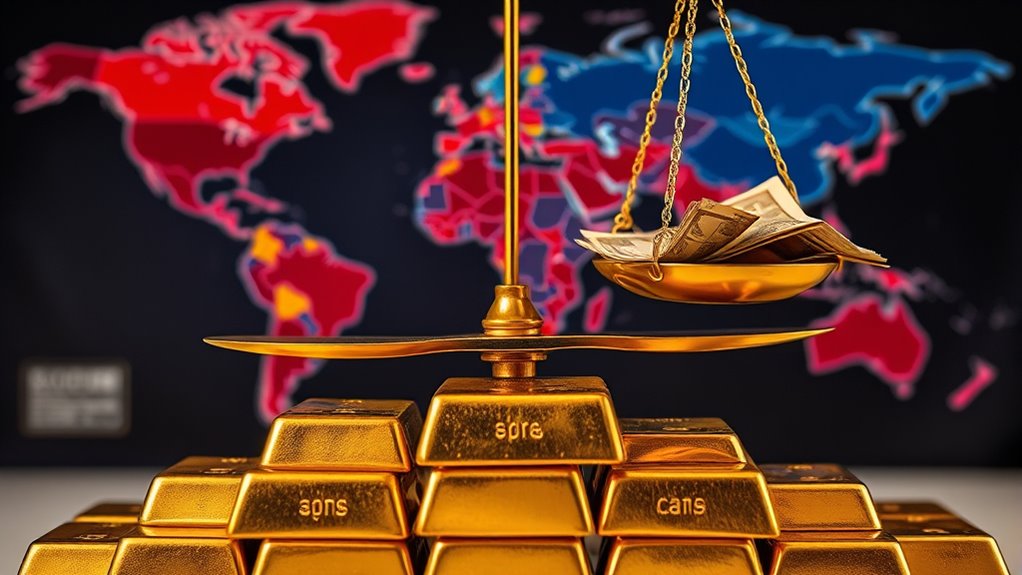
Rising geopolitical tensions and economic volatility strongly influence central banks’ increasing demand for gold. As you observe the shifting landscape, you’ll notice that many central banks are diversifying away from the U.S. dollar, viewing gold as a vital hedge. The declining confidence in dollar-backed assets prompts these institutions to seek safer options. Gold, free from sanction risks, emerges as a preferred choice in a fragmented financial environment. Additionally, some countries leverage gold for cross-border trade settlements, bypassing traditional currency systems altogether. This growing trend reflects a strategic shift, enhancing gold’s role in national reserves and reinforcing its appeal amid uncertainties. As an investor, understanding these dynamics can guide your decisions in this evolving market. Moreover, central banks often prioritize bicycle tire longevity as they strategize their reserve management, ensuring that their assets are preserved effectively.
As an affiliate, we earn on qualifying purchases.
The Role of China in the Global Gold Market

China plays a pivotal role in shaping the global gold market, substantially influencing both demand and prices. The People’s Bank of China’s consistent gold purchases, alongside strong retail demand, sets a price floor that impacts international markets.
| Factor | Impact on Gold Market |
|---|---|
| Central Bank Purchases | Increases demand and prices |
| Retail Demand | Drives consumption and speculation |
| Gold ETFs and Futures | Enhances market liquidity |
| Geopolitical Tensions | Heightens gold’s safe-haven status |
As a result, China’s actions resonate globally, affecting how investors strategize in response to evolving market dynamics. Keeping an eye on China’s gold activities can provide insights into future price movements and investment opportunities.
As an affiliate, we earn on qualifying purchases.
Implications for Gold Prices and Market Dynamics

While central banks have ramped up gold purchases, their actions are reshaping market dynamics and influencing prices in significant ways. You’ll notice that gold prices soared over 50% in 2025, surpassing $4,000 per ounce, driven by factors like geopolitical tensions and dollar weakness. Analysts predict further increases, with estimates reaching $5,000 by 2026. As central banks diversify away from traditional reserves, their growing demand sets a price floor, creating a more stable environment for gold. This trend signals potential volatility in fiat currencies, prompting you to regard gold as an essential portfolio diversifier and inflation hedge. Keep an eye on central banks’ activities; they can amplify safe-haven rallies during economic uncertainties, impacting your investment strategy. Additionally, the role of color accuracy in market perceptions can influence investor sentiment toward gold as a stable asset.
Future Outlook for Gold Reserves and Investors
As central banks continue to increase their gold holdings, you should be aware of the evolving landscape of global reserves and its implications for investors. With central banks diversifying away from the U.S. dollar, gold’s role as a safe-haven asset is more vital than ever. Expect ongoing demand driven by geopolitical tensions and economic uncertainties, which could further push prices upward. As more institutions recognize gold’s value in their portfolios, you might see increased volatility in fiat currencies. This shift suggests that gold could redefine monetary systems, offering you a potential hedge against inflation and instability. Incorporating natural materials in your investment strategy may enhance your overall resilience. Staying informed on central bank activities will be essential for making strategic investment decisions in the coming years.
Frequently Asked Questions
How Do Individual Investors Benefit From Central Bank Gold Purchases?
You benefit from central bank gold purchases because they often drive up gold prices, creating a more lucrative market for your investments. As central banks accumulate gold, they signal its value as a safe haven, encouraging you to diversify your portfolio. This trend can enhance your returns during times of economic instability. Additionally, increased demand can lead to more liquidity, making it easier for you to buy or sell gold assets.
What Are the Risks of Investing in Gold Compared to Other Assets?
Investing in gold can feel like walking a tightrope—thrilling but risky. While gold offers a hedge against inflation and economic instability, it lacks the income potential of stocks or bonds. Prices can be volatile, influenced by geopolitical events and market sentiment. Additionally, gold doesn’t produce dividends or interest, which can limit returns. Weigh these factors carefully against other assets to navigate the investment landscape effectively.
How Can I Start Investing in Gold as an Individual?
To start investing in gold, you can buy physical gold, like coins or bars, from reputable dealers. Alternatively, consider gold ETFs or mutual funds that track gold prices without needing to store the metal yourself. You might also explore gold mining stocks or futures contracts for more exposure. Research your options, understand the risks, and decide how much you want to invest based on your financial goals. Always stay informed about market trends.
What Factors Influence the Volatility of Gold Prices for Investors?
Several factors influence gold price volatility for you as an investor. Economic data, geopolitical tensions, and changes in currency values all play significant roles. When inflation rises or the dollar weakens, gold often becomes more appealing, driving prices up. Conversely, if interest rates increase or global stability improves, gold may decline in value. Additionally, central bank policies and demand fluctuations from countries like China can create sudden price shifts, affecting your investment decisions.
Are There Specific Gold Investment Products Recommended for Long-Term Holding?
Did you know that gold surged over 50% in price during 2025? For long-term holding, consider gold ETFs, which offer liquidity and diversification without the hassle of physical storage. Gold mining stocks can also be a great option, providing potential for high returns linked to gold prices. Additionally, physical gold, like coins or bars, allows you to own a tangible asset. Each of these options can help stabilize your investment portfolio over time.
Conclusion
In today’s world, central banks are hoarding gold like it’s the new digital currency, driven by geopolitical tensions and economic uncertainty. As you keep an eye on these trends, remember that their gold accumulation could markedly sway market dynamics and prices. With China playing a pivotal role, it’s essential for you to stay informed. The future of gold reserves looks promising, and as an investor, adapting to these shifts could be your golden ticket to success.