

Bitcoin could hit $200,000 to $300,000 by 2026 due to institutional demand and regulatory changes. Ethereum’s growth hinges on Layer-2 solutions, boosting transaction efficiency. Meanwhile, altcoins like Solana and XRP could considerably impact the market, with strong predictions for their growth. However, regulatory risks persist, posing challenges for investors. Understanding these dynamics can shape your investment strategy, and there’s much more to contemplate as the crypto landscape evolves.

Get smart everyday buys delivered free — and shop member deals
- Fast, free delivery on millions of items
- Access to Prime Big Deal Days deals on October 6–7
- Prime Video, Amazon Music and more included
Key Takeaways
- Bitcoin’s price could range from $60,000 to $500,000 by 2026, with a median estimate around $200,000 driven by institutional demand.
- Ethereum’s growth will rely on Layer-2 solutions adoption, enhancing transaction speeds and utility in decentralized finance (DeFi).
- Altcoins, particularly Solana and XRP, are projected to influence market dynamics significantly, depending on scalability and real-world applications.
- Evolving regulatory landscapes pose risks and uncertainties, impacting compliance, market access, and the overall crypto ecosystem.
- Ethical considerations in AI-driven trading and staying informed on regulatory trends are crucial for strategic investment planning in the crypto market.
As an affiliate, we earn on qualifying purchases.
Bitcoin Price Projections and Market Dynamics
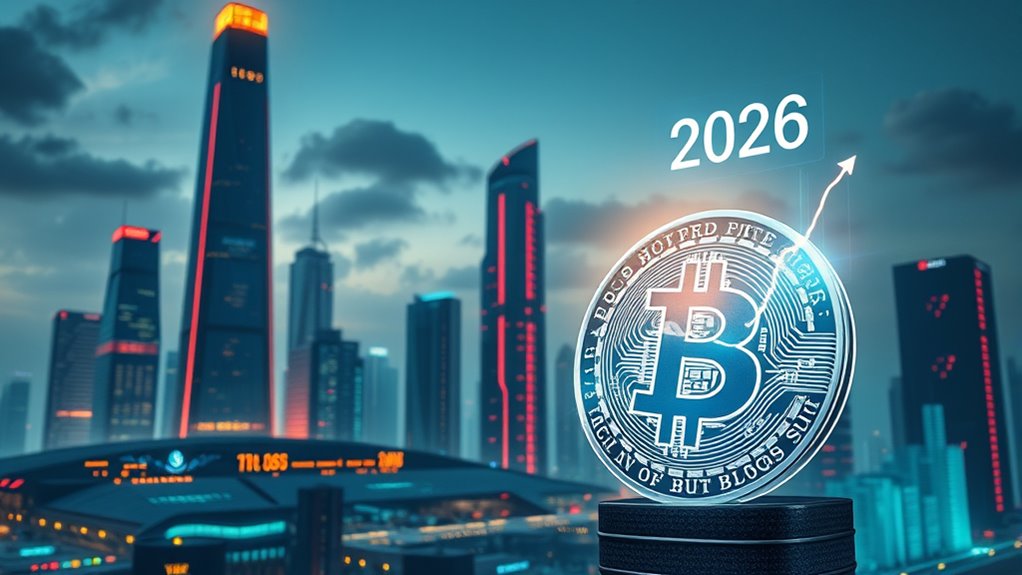
As the crypto landscape evolves, Bitcoin’s price projections for 2026 present a fascinating study in market dynamics. Analysts predict a wide range for Bitcoin’s value, with Bernstein and Standard Chartered suggesting it could hit between $200,000 and $300,000, driven by institutional demand and ETF inflows. You might encounter various forecasts, from a conservative $60,000 to an optimistic $500,000, with a median estimate near $200,000. Prediction markets show a 47% chance for Bitcoin reaching $130,000 by early 2026, while technical analysis suggests an average trading price around $100,000. However, don’t overlook downside risks; there’s a notable chance of Bitcoin dipping below $70,000, emphasizing the market’s inherent volatility and unpredictability. As the landscape shifts, ethical considerations regarding AI’s role in trading and market analysis will become increasingly important.
Ethereum Layer-2 scaling solutions
As an affiliate, we earn on qualifying purchases.
As an affiliate, we earn on qualifying purchases.
Ethereum’s Growth and Layer-2 Developments
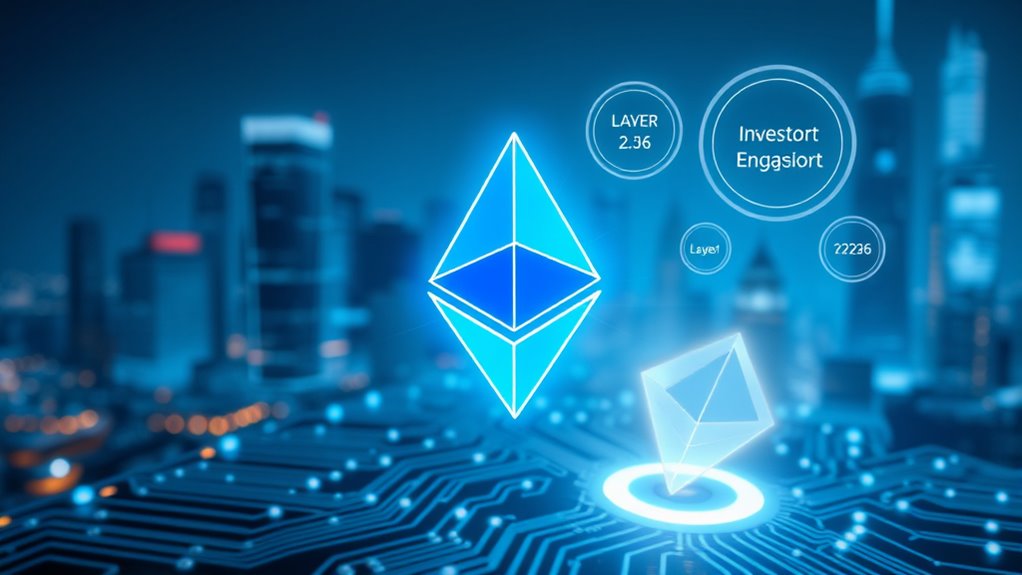
While Ethereum’s future looks promising, its growth hinges on the adoption of Layer-2 solutions and robust network activity. You should keep an eye on the development of full data-availability scaling and roll-up ecosystems, which are set to enhance Ethereum’s infrastructure. These advancements will not only improve transaction speed but also reduce costs, making decentralized apps and smart contracts more accessible. As more users flock to Ethereum, you’ll likely witness an uptick in its utility, particularly within DeFi and tokenized assets. Furthermore, clearer regulatory frameworks could accelerate Ethereum’s integration with mainstream finance, further propelling its adoption. Staying informed about these trends will be essential for maximizing your investment strategy in the Ethereum ecosystem. Additionally, color accuracy in projectors can significantly improve the viewing experience of decentralized applications on large screens.
As an affiliate, we earn on qualifying purchases.
Altcoin Performance and Ecosystem Expansion

With the crypto landscape evolving rapidly, altcoins are expected to play a significant role in driving ecosystem expansion by 2026. As you look ahead, keep an eye on these key factors influencing altcoin performance:
- Solana’s potential price range of $400–$600 hinges on scalability and institutional partnerships.
- Prediction markets suggest XRP has a 21% chance of hitting $4 before January 2026.
- The demand for decentralized finance (DeFi), gaming, and tokenization will boost smart contract platforms.
- Major altcoins’ success often correlates with Bitcoin’s market movements.
- Developer activity and real-world applications are vital for sustainable ecosystem growth.
- Additionally, the process of mindful decluttering can lead to a more focused investment strategy, helping investors prioritize their assets effectively.
As an affiliate, we earn on qualifying purchases.
Regulatory Trends and Risks for Investors

Although the regulatory landscape for cryptocurrencies is evolving, investors must stay vigilant about potential risks that could impact their strategies. As governments refine their approaches, uncertainty remains a significant factor. Inconsistent regulations across jurisdictions can create challenges for compliance and market access. You should be particularly aware of potential crackdowns on decentralized finance (DeFi) and the implications for liquidity and innovation. Additionally, as regulatory clarity increases, it could lead to heightened scrutiny of crypto projects, impacting their valuations. Keep an eye on how regulations might affect institutional adoption, as this could influence market dynamics. Staying informed about these trends will help you make more strategic investment decisions as the crypto landscape continues to change. It’s also crucial to monitor the impact of regulatory clarity on investor confidence, as this can significantly shape market behavior.
Frequently Asked Questions
What Factors Influence Bitcoin’s Price Volatility in 2026?
Bitcoin’s price volatility in 2026 will depend on several key factors. You’ll want to watch macroeconomic conditions, including potential recessions or monetary policies. Institutional demand and ETF inflows will also play significant roles. Additionally, regulatory clarity can either bolster or hinder market confidence. Finally, technical developments and competition from other cryptocurrencies will influence Bitcoin’s stability, making it essential to stay informed about these dynamics as you navigate the market.
How Do Geopolitical Events Impact Cryptocurrency Markets?
Geopolitical events can substantially impact cryptocurrency markets by influencing investor sentiment and market stability. When tensions rise or conflicts occur, uncertainty often drives people to seek alternative assets like cryptocurrencies. Additionally, regulatory changes stemming from geopolitical developments can either bolster or hinder crypto adoption. You’ll notice that reactions can be swift, with prices fluctuating rapidly based on news, making it essential for you to stay informed about global events affecting the market.
What Role Do Energy Consumption and Sustainability Play in Crypto Adoption?
Energy consumption and sustainability markedly impact crypto adoption. As you consider investments, you’ll notice that increasing scrutiny over energy use drives demand for eco-friendly solutions in the crypto space. Sustainable practices, like proof-of-stake mechanisms, enhance network efficiency and appeal to environmentally conscious investors. By prioritizing green technologies, cryptocurrencies can foster broader acceptance among regulators and the public, ultimately influencing market growth and sustainability in the industry.
How Can Investors Protect Themselves From Crypto Market Risks?
To protect yourself from crypto market risks, think of it like steering a pirate-infested sea. Diversify your portfolio across different cryptocurrencies, keeping a mix of stable and volatile assets. Set stop-loss orders to limit potential losses and regularly reassess your investments. Stay informed about market trends and regulatory changes that could impact prices. Finally, only invest what you can afford to lose, ensuring you maintain a safety net for unexpected downturns.
What Technological Advancements Could Reshape the Crypto Landscape by 2026?
Technological advancements like Layer-2 solutions and improved scalability will reshape the crypto landscape by 2026. You’ll see Ethereum and other blockchains enhancing their infrastructure, making transactions faster and cheaper. AI integration for predictive analytics could help you make informed investment choices. Additionally, advancements in decentralized finance (DeFi) and tokenization of real-world assets will broaden your investment opportunities, while clearer regulatory frameworks will encourage institutional adoption and stabilize the market.
Conclusion
As you navigate the unpredictable waters of cryptocurrency, think of yourself as a sailor adjusting your sails to the winds of change. The predictions for 2026 are like stars guiding your journey—Bitcoin’s resilience, Ethereum’s innovations, and the rise of altcoins illuminate the path ahead. Keep an eye on regulatory trends, as they can act like storm clouds on the horizon. Stay informed and adaptable, and you’ll chart a course through this evolving landscape toward potential success.
Fall Picks
fall essentials
As an affiliate, we earn on qualifying purchases.