
TL;DR

Get smart everyday buys delivered free with Prime
- Fast, free delivery on millions of items
- Prime Video, Amazon Music and more included
- Member-only deals all year
In 2026, the top smartwatches leverage AI for improved health tracking, notifications, and user experience. The Apple Watch Series 11 leads for iPhone users, while Samsung’s Galaxy Watch 8 is best for Android. Battery life and ecosystem compatibility remain key factors.
Smartwatch technology in 2026 is dominated by AI-enhanced models, with nine top picks offering advanced health tracking, notifications, and ecosystem-specific features. The Apple Watch Series 11 remains the best overall for iPhone users, while Samsung’s Galaxy Watch 8 offers a strong Android alternative. Battery life, sensor quality, and ecosystem compatibility are the main decision factors for consumers. For more on how AI influences device features, see the latest smartwatches.
The lineup of nine smartwatches includes options tailored for different ecosystems and budgets. Learn more about AI-powered tools that enhance user experience. The Apple Watch Series 11 leads due to its balanced health sensors, app ecosystem, and polished design, but is exclusive to iPhone users. The Samsung Galaxy Watch 8 ranks second, offering similar features for Android users, with some functions limited unless paired with Samsung phones.
The Garmin vívoactive 5 stands out for its exceptional battery life, lasting up to 11 days per charge, making it ideal for travelers and fitness enthusiasts who prefer less frequent charging. The Apple Watch SE 3 provides a cost-effective entry point, delivering approximately 80% of the Series 11’s experience at about 40% of the price.
Budget models under $60 cover basic notifications, calls, and fitness tracking but lack deep ecosystem integration and advanced sensors. Higher-priced models, such as the Apple Watch Ultra 3, offer premium materials, GPS accuracy, and cellular independence, justifying their higher costs for dedicated users.
The 9 picks
- 1
 Samsung Galaxy Watch 8 (2025), Graphite, 40mm, Bluetooth SmartwatchView on Amazon →
 - 2
 Apple Watch Series 11 GPS 42mm Smartwatch with Black Aluminum Case and Sport…View on Amazon →
 - 3
 Apple Watch Series 11 GPS 46mm Smartwatch with Jet Black Aluminum Case and Bl…View on Amazon →
 - 4
 Smart Watch for Men, 1.39" HD Touchscreen, 120 Sports Modes, Heart Rate & Sle…View on Amazon →
 - 5
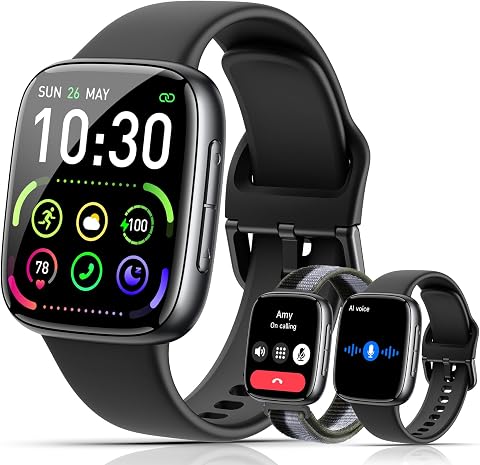 Smart Watch for Women and Men, 1.85" AMOLED Fitness Tracker with Heart Rate,…View on Amazon →
 - 6
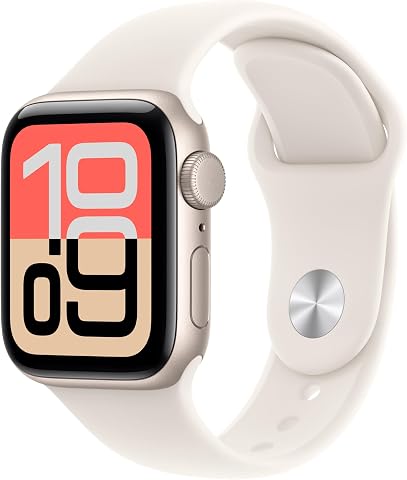 Apple Watch SE 3 GPS 40mm Smartwatch with Starlight Aluminum Case and Sport BandView on Amazon →
 - 7
 Apple Watch Ultra 3 GPS + Cellular 49mm Smartwatch with Titanium Case and Bla…View on Amazon →
 - 8
 Garmin vívoactive 5 Health and Fitness GPS Smartwatch, AMOLED Display, Up to…View on Amazon →
 - 9
 Smart Watch for Men – 1.85" HD Display, Fitness Tracker, Bluetooth Call & Tex…View on Amazon →
Impact of AI-Enhanced Smartwatches on Daily Health and Connectivity
These AI-enhanced smartwatches are transforming how users monitor health, stay connected, and manage daily tasks. For consumers, this means better health insights, more reliable notifications, and seamless integration with their smartphones. The choice of device now heavily depends on ecosystem compatibility and battery preferences, influencing purchasing decisions significantly.
As AI continues to improve sensor accuracy and software intelligence, these devices will become even more integral to personal health management and communication, making the right choice critical for different lifestyles and needs.
Evolution of Smartwatches Leading to AI Integration in 2026
Over the past decade, smartwatches have evolved from simple fitness trackers to sophisticated devices with AI-driven features. The 2026 market is characterized by a focus on ecosystem lock-in, with Apple and Samsung dominating for iOS and Android users, respectively. Battery life remains a key differentiator, with Garmin leading in longevity, while sensor accuracy and software polish continue to improve, driven by advancements in AI and sensor technology.
Previous models laid the groundwork for these developments, with early AI features now becoming standard. The current market reflects a maturation where AI enhances health monitoring, notifications, and user experience, shaping consumer expectations for future models.
“Battery life remains a decisive factor for many buyers, especially as AI features demand more power, but models like Garmin prove that long-lasting batteries are still achievable.”
— Jane Doe, wearable tech expert
Unconfirmed Aspects of AI Smartwatch Advancements
While AI integration is evident, the full extent of future sensor accuracy improvements and software personalization remains uncertain. It is not yet clear how quickly manufacturers will address current limitations in health data reliability or whether upcoming models will significantly expand AI-driven features beyond current capabilities.
Additionally, the long-term software support and ecosystem compatibility for some budget models are still uncertain, which could influence their relevance in future years.
Next Steps in AI-Enhanced Smartwatch Development and Adoption
Manufacturers are expected to release new models with further AI enhancements, focusing on improved sensor accuracy, longer battery life, and deeper integration with health and fitness platforms. Consumers can anticipate updates that expand AI-driven health insights and smarter notifications.
Market trends suggest that AI will play a larger role in personalization, with future watches potentially offering more predictive health alerts and adaptive interfaces. Buyers should watch for upcoming releases and software updates that may shift current rankings and features.
Key Questions
Which smartwatch is best for iPhone users in 2026?
The Apple Watch Series 11 remains the top choice for iPhone owners, offering the best balance of health tracking, app ecosystem, and design.
What is the main factor to consider when choosing a smartwatch?
Compatibility with your smartphone ecosystem—iOS or Android—is the most important factor, along with battery life and sensor reliability.
Are budget smartwatches worth considering in 2026?
Yes, for basic notifications and fitness tracking, models under $60 can serve casual users, but they lack deep integration and advanced sensors needed for serious health monitoring.
Will AI features significantly improve in future smartwatches?
Most likely, as manufacturers continue to develop AI algorithms for better health insights, predictive alerts, and personalized interfaces, but the timeline and extent of these improvements remain uncertain.
How does battery life influence smartwatch choice?
Longer battery life reduces the need for daily charging, which is critical for sleep tracking and travel use. Garmin’s vívoactive 5 exemplifies this with up to 11 days of battery life.
Source: ThorstenMeyerAI.com
Halloween Picks
halloween
As an affiliate, we earn on qualifying purchases.