
📊 Full opportunity report: The Economic Toll Of Free AI Technologies on ThorstenMeyerAI.com — validation score, market gap, and execution plan.

Get smart everyday buys delivered free — and shop member deals
- Fast, free delivery on millions of items
- Access to Prime Big Deal Days deals on October 6–7
- Prime Video, Amazon Music and more included
TL;DR
Free AI technologies are commoditizing intelligence, leading to a decline in its economic value. The real assets now lie in physical infrastructure and human judgment, reshaping global economic dynamics.
Free AI technologies are rapidly commoditizing intelligence, causing a fundamental shift in how economic value is distributed. Experts warn that the real strategic assets are now physical infrastructure and human judgment, not the AI models themselves, which are becoming fungible and low-cost. This development has significant implications for regional sovereignty, economic competitiveness, and the future of work.
According to industry analyst Thorsten Meyer, the core forecast is that intelligence will become abundant and nearly free, transforming AI from a value-generating asset into a commodity. As AI models become more interchangeable and cost-effective, the physical infrastructure—including chips, data centers, and power supply—emerges as the primary source of competitive advantage. Meyer emphasizes that the moat is now in the means of production, not the models themselves, which can be replicated quickly.
Furthermore, Meyer highlights that human judgment and accountability remain irreplaceable. Despite advances in AI, people prefer to trust humans for decision-making, accountability, and responsibility, which preserves the value of human expertise and oversight. This underscores a shift where the economic and strategic importance of physical assets and human factors increases as AI models become commoditized.
The forecast is right: intelligence becomes a commodity, cheap and ambient like electricity. But “commodity” is a statement about where value leaves. The whole game is being early to where it goes instead.
▲ Opinion & analysis · not investment adviceWhen the crude is cheap, value moves to the refinery, the trusted name on the deal, and the buyer who can only drink so much. Same shape here.
When a capability becomes abundant and free, we stop exercising it. Some of that is fine. Some of it hollows us out.
knowing which wishes are worth making — and being a person who can still tell.
Implications for Economic Power and Sovereignty
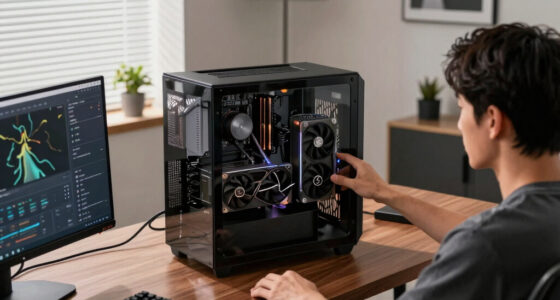
This shift means regions and companies that do not control physical AI infrastructure risk losing economic sovereignty. The strategic advantage now resides in owning the production capacity—such as chip fabs and data centers—rather than purely developing or deploying AI models. Countries that outsource their AI infrastructure may find themselves dependent on external providers, weakening their technological independence and economic resilience.
enterprise data center cooling systems
As an affiliate, we earn on qualifying purchases.
As an affiliate, we earn on qualifying purchases.
Background on AI Commoditization and Infrastructure
The industry has long forecasted that AI would become a ubiquitous utility, similar to electricity. Recent developments confirm that models are rapidly approaching zero marginal cost, making them fungible commodities. Historically, the value in technology has been in the physical assets that enable production. As AI models become easier to replicate, the physical infrastructure—chips, data centers, power supply—becomes the new strategic asset, requiring significant investment and long-term commitment.
This trend echoes past shifts in industrial and digital economies, where control over physical assets determined economic dominance. The current AI landscape underscores that ownership of the means of production remains crucial, especially for regions aiming to maintain technological sovereignty.
"The moat is the means of production, not the intelligence itself. A gigawatt of data center capacity takes years and billions to build, which no algorithm can replicate instantly."
— Thorsten Meyer
As an affiliate, we earn on qualifying purchases.
Unclear Aspects of Future AI Infrastructure and Policy
It is still unclear how regional policies, supply chain disruptions, and technological breakthroughs will influence the distribution of physical AI infrastructure. The pace at which physical assets can be scaled and the geopolitical landscape's impact on infrastructure ownership remain uncertain.
As an affiliate, we earn on qualifying purchases.
Next Steps in AI Infrastructure Development and Policy
Regions and companies will likely increase investments in physical AI infrastructure to retain strategic advantage. Policymakers may also implement measures to secure supply chains and foster domestic production of chips and data centers. Monitoring these developments will be critical to understanding future power dynamics in AI and technology sectors.
human judgment decision-making tools
As an affiliate, we earn on qualifying purchases.
As an affiliate, we earn on qualifying purchases.
Key Questions
Why is physical infrastructure now more important than AI models?
Because AI models are becoming cheap and interchangeable, control over physical assets like chips and data centers determines long-term competitive advantage and sovereignty.
Will human judgment continue to be valuable?
Yes, human judgment and accountability remain essential for decision-making, trust, and responsibility, preserving economic value despite AI's proliferation.
How might this shift affect global economic power?
Countries controlling physical AI infrastructure could gain significant strategic advantage, while those outsourcing risk dependency and loss of sovereignty.
What are the risks for regions lacking physical AI assets?
They may become dependent on external providers, weakening their technological independence and economic resilience in the AI era.
What should companies and governments do next?
Invest in physical infrastructure, secure supply chains, and develop domestic manufacturing capabilities to maintain strategic control over AI assets.
Source: ThorstenMeyerAI.com
Fall Picks
fall essentials
As an affiliate, we earn on qualifying purchases.