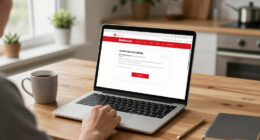
📊 Full opportunity report: The Nordics: Protect the Worker, Not the Job on ThorstenMeyerAI.com — validation score, market gap, and execution plan.

Get smart everyday buys delivered free with Prime
- Fast, free delivery on millions of items
- Prime Video, Amazon Music and more included
- Member-only deals all year
TL;DR
The Nordic countries prioritize protecting workers over jobs through flexible labor markets and generous social support. This approach reduces resistance to automation and helps society adapt to technological change. The development highlights a distinct model of social policy that contrasts with traditional job-centric strategies.
Nordic countries are adopting a social policy approach that emphasizes protecting workers over safeguarding specific jobs, a shift that is reshaping responses to automation and economic change. This strategy, rooted in the concept of ‘flexicurity,’ allows for flexible hiring and firing while providing robust social safety nets, reducing resistance to technological disruption.
The Nordic model, exemplified by Denmark’s ‘flexicurity,’ combines weak employment protection laws with high unemployment benefits and active labor market policies. This approach makes layoffs less catastrophic and encourages acceptance of automation, as workers are supported through transitions rather than defending existing jobs at all costs.
Key features include high unemployment replacement rates, substantial investment in retraining, and strong union participation in setting wages. Norway’s sovereign wealth fund exemplifies a unique aspect of ownership, providing a collective financial stake in capital without direct citizen dividends.
Protect the Worker, Not the Job
Where Germany saves the job, the Nordics let the job go and catch the worker. The counterintuitive result: unions that welcome automation — because the person is protected even when the role isn’t.
Independent commentary, produced with AI assistance under human editorial oversight. The views are the author’s own and may change. This is analysis, not policy, economic, investment, or legal advice. Descriptions of flexicurity, Nordic active-labor spending, Finland’s basic-income experiment, and Norway’s sovereign wealth fund reflect publicly reported information as of mid-2026 and may change. This phase maps differing approaches and endorses none; contested questions are presented with competing views, not a verdict. Country and program names are referenced for analysis and imply no affiliation.
Why the Nordic Worker-Centric Model Matters
This approach matters because it offers a blueprint for societies facing rapid technological change. By prioritizing worker protection, Nordic countries reduce societal resistance to automation, enabling smoother transitions and fostering innovation. It challenges traditional job preservation strategies and suggests a shift towards supporting individuals directly, which could influence policy debates globally.flexicurity labor market policy books
As an affiliate, we earn on qualifying purchases.
As an affiliate, we earn on qualifying purchases.
The Nordic model emerged in the 1990s with Denmark’s ‘flexicurity,’ combining flexible labor markets with strong social safety nets. Unlike Germany’s Kurzarbeit, which preserves jobs through work-sharing, the Nordic approach accepts job flexibility, focusing on supporting workers through unemployment and retraining. This paradigm shift aligns with broader trends towards automation and digital transformation, positioning the Nordics as pioneers in social resilience.
“The Nordic instinct is almost the opposite of the German: let the job go — and catch the worker before they hit the ground.”
— Thorsten Meyer
unemployment benefit support programs
As an affiliate, we earn on qualifying purchases.
As an affiliate, we earn on qualifying purchases.
Remaining Questions About Nordic Flexicurity
It is not yet clear how scalable or adaptable the Nordic model is to larger or less cohesive societies. The long-term fiscal sustainability of generous unemployment benefits and active labor policies also remains under debate, especially amid economic shocks or demographic shifts. Additionally, the precise impact on inequality and social mobility warrants further study.
As an affiliate, we earn on qualifying purchases.
Policymakers will likely continue refining the balance between flexibility and security, especially as automation accelerates. Monitoring the long-term fiscal health of social safety nets and the societal acceptance of automation will be critical. Internationally, other countries may adopt or adapt aspects of the Nordic model, testing its effectiveness outside its traditional context.
union participation in wage setting
As an affiliate, we earn on qualifying purchases.
As an affiliate, we earn on qualifying purchases.
Key Questions
How does the Nordic approach differ from traditional job protection policies?
The Nordic approach prioritizes flexible labor markets with weak employment protection laws, combined with strong social safety nets and active labor policies, rather than rigid job protections that aim to prevent layoffs.
Why does this model reduce resistance to automation?
Because workers know they will be supported through unemployment and retraining, they are less likely to oppose automation initiatives, viewing change as manageable rather than threatening their livelihoods.
Can this model be applied effectively in other countries?
While the principles are adaptable, success depends on social cohesion, fiscal capacity, and institutional strength. Countries with weaker social safety nets or less unified labor markets may face challenges implementing a similar approach.
What are the potential risks of the Nordic model?
The main risks include fiscal sustainability of generous benefits and active labor policies, especially if demographic trends or economic shocks increase costs or reduce revenues.
Source: ThorstenMeyerAI.com
Halloween Picks
halloween
As an affiliate, we earn on qualifying purchases.