
📊 Full opportunity report: How Imaging Your Gum Line Every Day Supports Dental Prevention on IdeaNavigator AI — validation score, market gap, and execution plan.

Get smart everyday buys delivered free — and shop member deals
- Fast, free delivery on millions of items
- Access to Prime Big Deal Days deals on October 6–7
- Prime Video, Amazon Music and more included
TL;DR
A new method involves patients taking daily photos of their gum line to monitor early signs of inflammation. This approach aims to improve preventive dental care by catching issues earlier, supported by a pilot program with promising results. It could transform at-home oral health monitoring and patient engagement between dental visits.
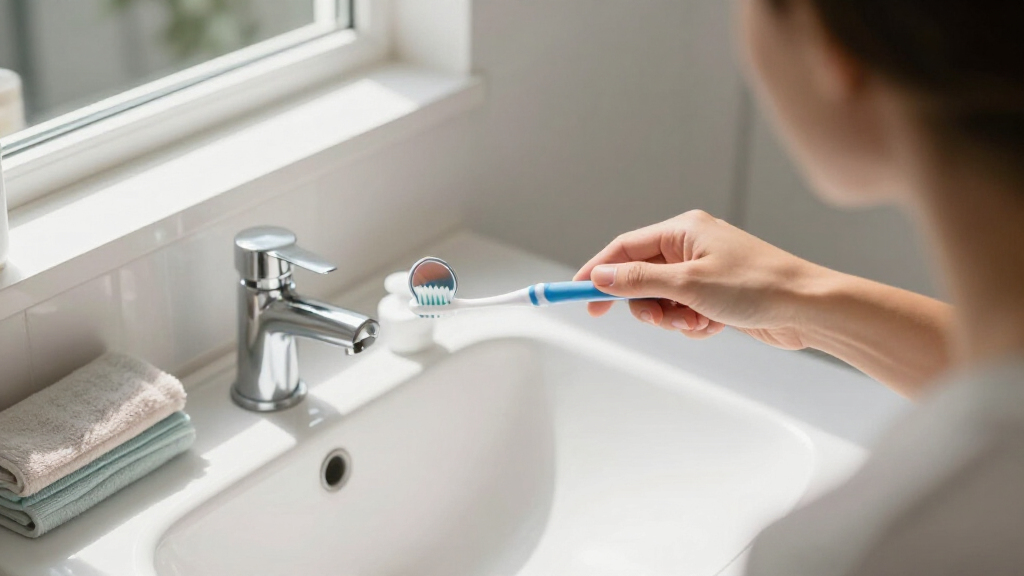
Dental practices are testing a new approach that encourages patients to take daily photos of their gum lines to monitor early signs of inflammation and plaque buildup. Supported by advances in smartphone camera technology and on-device scoring, this method aims to improve preventive dental care and patient engagement between visits. The initiative is currently in a pilot phase, involving 20 patients over three weeks, with initial results showing promise for early detection of gum issues.
According to recent developments, dental hygienists are exploring the use of daily gum-line photographs as a simple, at-home preventive tool. Patients are instructed to take standardized photos of their gum line using their smartphones, which are then scored against general dental health benchmarks. The scores help identify worsening redness or inflammation, which patients can then address during their next dental visit. This process aims to catch early signs of gum disease before they develop into more serious problems, which typically go unnoticed until the next scheduled cleaning.
The pilot program involves 20 patients under the supervision of a single hygienist, who reviews the photos and scores weekly. After three weeks, the hygienist assesses whether flagged cases correspond with actual inflammation observed during routine checkups. Early feedback indicates that the photo scoring system can reliably highlight early gum issues, making it a potentially valuable addition to preventive care routines.
This approach leverages existing smartphone technology, with on-device scoring making it accessible and user-friendly. It also offers a new way to keep patients engaged in their oral health between visits, potentially reducing the incidence and severity of gum disease. The subscription-based model plans to offer this as an add-on service through dental practices, aiming to create a scalable consumer health monitoring tool.
Implications for Preventive Dental Care
This development could significantly change how dental practices monitor and prevent gum disease. By enabling patients to regularly track their gum health, early signs of inflammation can be identified sooner, possibly reducing the need for invasive treatments later. If validated at larger scales, this method could foster more proactive patient behavior, improve outcomes, and lower overall dental care costs. It also offers a new revenue stream for practices through subscription services, aligning patient engagement with preventive health.
As an affiliate, we earn on qualifying purchases.
Emerging Trends in At-Home Oral Health Monitoring
In recent years, advances in smartphone camera quality and mobile health technology have opened new avenues for at-home health monitoring. While traditional dental checkups occur every six months, many issues develop in the interim. Current methods lack simple, effective ways for patients to detect early gum problems. The proposed daily photo scoring system builds on trends toward personalized, preventive health management, and aligns with increasing efforts by dental professionals to maintain patient engagement between visits.
Previous efforts have focused on digital tools for oral health education or remote consultations, but few have targeted daily, self-administered assessments of gum health. This pilot program represents a step toward integrating consumer technology into routine dental prevention, emphasizing early detection and patient participation.
“Using daily photos and scoring could enable earlier detection of gum inflammation, potentially reducing the progression of periodontal disease.”
— an anonymous researcher
at-home gum inflammation detection kit
As an affiliate, we earn on qualifying purchases.
As an affiliate, we earn on qualifying purchases.
Validation and Scalability of the Photo Scoring System
It is not yet confirmed whether the photo scoring system will reliably detect early gum inflammation across larger and more diverse patient populations. The current pilot involves a small sample over three weeks, and results need to be validated in broader clinical trials. Additionally, questions remain about how accurately patients can standardize their photos and whether the scoring system can adapt to different lighting conditions and camera qualities.
As an affiliate, we earn on qualifying purchases.
Next Steps for Broader Testing and Implementation
The next phase involves expanding the pilot to include more patients across multiple practices to validate the effectiveness of the scoring system. Researchers plan to analyze the correlation between flagged scores and clinical signs of inflammation observed during routine visits. If successful, the system could be integrated into dental software platforms and offered as a subscription service, with further development to improve user experience and scoring accuracy.
As an affiliate, we earn on qualifying purchases.
Key Questions
How easy is it for patients to take consistent gum-line photos?
Patients are instructed to follow standardized guidelines to ensure consistent, clear images, but some variability may occur. Ongoing development aims to simplify the process further.
Can this method replace regular dental checkups?
No, it is intended as a supplementary tool to enhance early detection and patient engagement, not a replacement for professional dental examinations.
What are the privacy considerations for at-home gum imaging?
Images are processed locally on the device or uploaded securely to dental practice systems, with strict data privacy protocols in place to protect patient information.
Will insurance cover this preventive monitoring?
Currently, coverage depends on individual insurance policies; as the system develops, advocacy for coverage as a preventive service may increase.
Source: IdeaNavigator AI
Fall Picks
fall essentials
As an affiliate, we earn on qualifying purchases.