
TL;DR

Get smart everyday buys delivered free — and shop member deals
- Fast, free delivery on millions of items
- Access to Prime Big Deal Days deals on October 6–7
- Prime Video, Amazon Music and more included
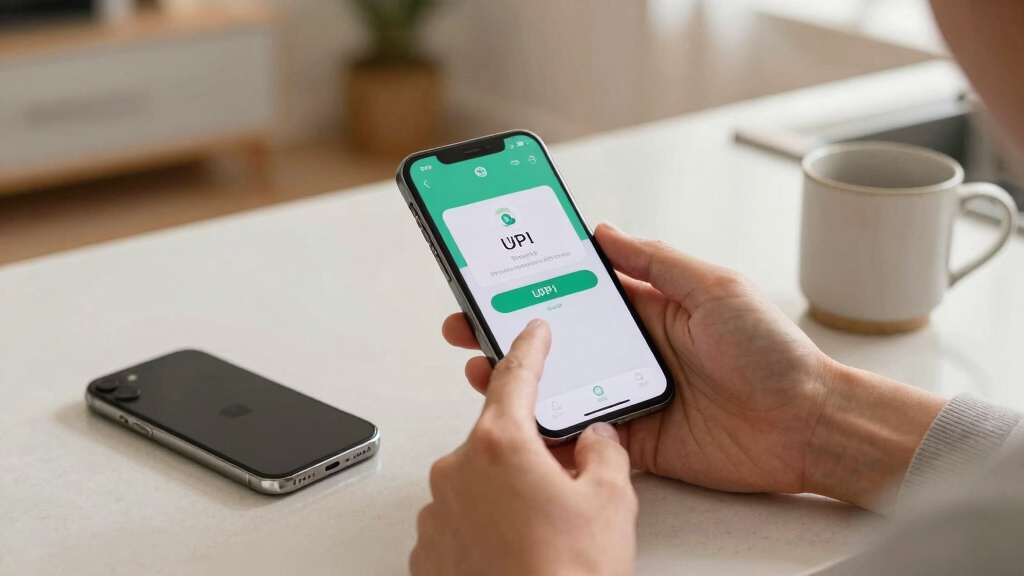
This article breaks down the anatomy of a UPI payment transaction, detailing each step from initiation to settlement. It clarifies confirmed processes and highlights ongoing areas of development, helping readers understand how digital payments work.
Unified Payments Interface (UPI) transactions involve a complex, secure process that enables instant fund transfers between bank accounts using mobile devices. This detailed breakdown reveals the confirmed steps involved, highlighting why UPI has become a cornerstone of digital payments in India and beyond.
Recent analyses, including insights from industry experts and official disclosures, confirm that a UPI transaction begins when a user initiates a payment via a mobile app linked to their bank account. The app communicates with the National Payments Corporation of India (NPCI), which manages the UPI platform, to authenticate and process the request.
Once the user enters the recipient’s Virtual Payment Address (VPA) and confirms the payment, the app sends a request to the payer’s bank, which verifies the account details and available funds. If the account is valid and funds are sufficient, the bank blocks the amount and sends a confirmation to NPCI.
NPCI then relays the instruction to the recipient’s bank, which credits the amount to the recipient’s account. This entire process, confirmed to occur within seconds, relies on a real-time messaging system that ensures security and transparency. The transaction concludes with both banks updating their records, and the user receives a notification confirming the transfer.
Why Understanding the UPI Payment Flow Matters
Understanding the anatomy of a UPI transaction helps consumers appreciate the security and efficiency of digital payments. It also underscores the importance of robust banking infrastructure and real-time processing systems, which are critical for financial inclusion and digital economy growth. As UPI expands globally, clarity about its process builds trust among users and regulators alike.
As an affiliate, we earn on qualifying purchases.
The Evolution of Digital Payments in India
Since its launch in 2016, UPI has revolutionized digital payments in India, enabling millions to transfer funds instantly without the need for cash or card-based transactions. The platform’s success has prompted other countries to explore similar real-time payment systems. Industry analysts note that UPI’s architecture, which combines mobile technology with banking infrastructure, is a key factor behind its rapid adoption and scalability.
While the core process remains consistent, recent updates aim to enhance security features and transaction limits. Experts emphasize that ongoing technological improvements and regulatory oversight are vital to maintaining trust and expanding UPI’s reach.
“The UPI transaction process is a finely tuned sequence of verifications and real-time messaging that ensures security, speed, and transparency.”
— Ravi Kumar, Payment Systems Expert
As an affiliate, we earn on qualifying purchases.
Unresolved Aspects of UPI Transaction Processing
While the overall process is well-understood, details about the specific security protocols at each step, especially related to fraud prevention and data encryption, remain proprietary and are not publicly disclosed. It is also unclear how future scalability challenges will be addressed as transaction volumes increase.
Additionally, some experts question the resilience of the system under extreme load or cyberattacks, although no such incidents have been publicly confirmed.
As an affiliate, we earn on qualifying purchases.
Future Developments in UPI Technology and Security
Industry observers expect ongoing enhancements to UPI’s security features, including stronger encryption and biometric authentication. The NPCI is also exploring interoperability with other payment systems and expanding the platform’s capabilities to include international transactions. Further transparency about technical safeguards is anticipated as the platform evolves.
Regulators and industry stakeholders are likely to monitor and improve the system’s resilience, especially in response to emerging cyber threats and increasing transaction volumes. The next major update or expansion is expected within the next year.
UPI transaction monitoring software
As an affiliate, we earn on qualifying purchases.
As an affiliate, we earn on qualifying purchases.
Key Questions
How long does a UPI transaction typically take?
Most UPI transactions are completed within seconds, thanks to real-time messaging and processing systems managed by NPCI.
What security measures protect UPI transactions?
UPI employs multiple layers of security, including two-factor authentication, encryption, and device-based verification, though specific protocols are proprietary.
Can UPI transactions be reversed?
In general, UPI transactions are final once confirmed, but disputes can be raised through banks if errors or fraud are suspected.
Is UPI used outside India?
While primarily an Indian platform, UPI interoperability initiatives are being explored for cross-border payments, but widespread international use is still in development.
Source: hn
Halloween Picks
halloween
As an affiliate, we earn on qualifying purchases.