
📊 Full opportunity report: 10 Ways AI Will Revolutionize Daily Life In 2026 on ThorstenMeyerAI.com — validation score, market gap, and execution plan.

Get smart everyday buys delivered free — and shop member deals
- Fast, free delivery on millions of items
- Access to Prime Big Deal Days deals on October 6–7
- Prime Video, Amazon Music and more included
TL;DR
By 2026, AI is expected to significantly alter daily life through advancements in personalized healthcare, smart home automation, and autonomous transportation. These changes are based on confirmed technological trends and industry forecasts, impacting consumers and industries alike.
Artificial intelligence is set to dramatically transform daily life by 2026, with ten confirmed innovations that will impact how people work, communicate, and manage their homes. These developments are based on current technological trajectories and industry forecasts, highlighting AI’s growing role in everyday activities, as detailed in the original analysis.
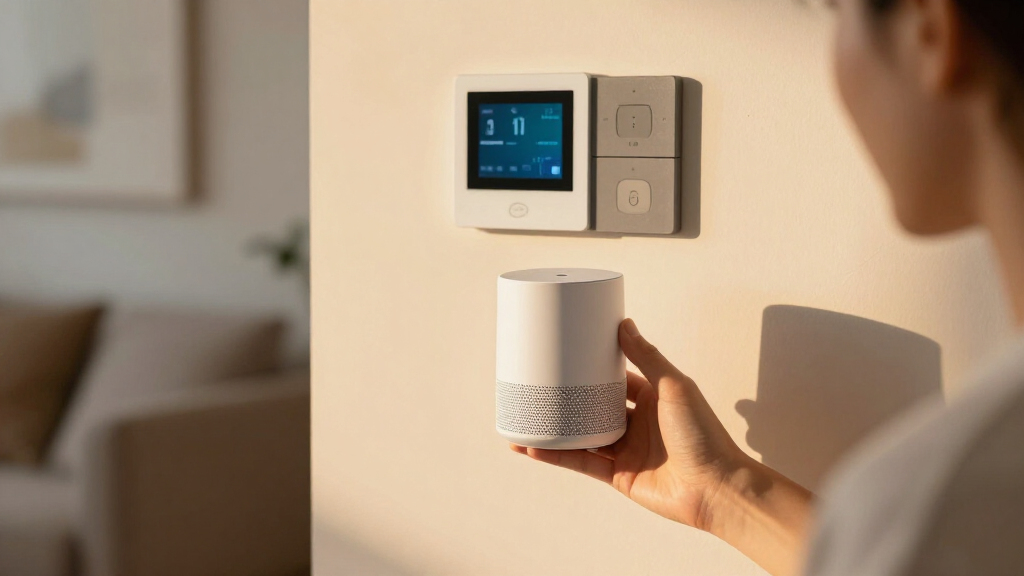
Experts predict that by 2026, AI-powered personal assistants will become more intuitive, managing schedules and tasks with minimal user input. You can learn more about top AI hardware in this guide to graphics cards. Healthcare will see AI-driven diagnostics and personalized treatment plans becoming standard, improving health outcomes. Smart home devices will evolve into fully integrated systems that anticipate user needs and optimize energy use, while autonomous vehicles will become more widespread, reducing commute times and accidents. For insights into AI applications in smart homes, see this article on revolutionizing K-12 support. Additionally, AI will revolutionize education through personalized learning platforms, and retail will shift toward highly tailored shopping experiences powered by AI analytics.
Industry sources from leading tech firms and research institutions confirm that these innovations are already in advanced development stages, with some products expected to launch within the next two years. However, the full societal and economic impacts remain to be seen, and regulatory frameworks are still evolving to address ethical concerns and data privacy issues.
The 10 picks
- 1
 ASUS ROG Astral NVIDIA GeForce RTX 5080 16GB GDDR7 OC Edition Gaming Graphics…View on Amazon →
 - 2
 ASUS TUF Gaming GeForce RTX 5080 16GB GDDR7 OC Edition Graphics CardView on Amazon →
 - 3
 PNY NVIDIA GeForce RTX 5080 Epic-X ARGB OC Triple Fan Graphics Card (16GB GDD…View on Amazon →
 - 4
 GIGABYTE GeForce RTX 5070 Ti Gaming OC 16G Graphics CardView on Amazon →
 - 5
 ASUS Prime NVIDIA GeForce RTX 5070 OC Edition Graphics Card (12GB GDDR7, PCIe…View on Amazon →
 - 6
 ASUS Dual NVIDIA GeForce RTX 5060 Ti 16GB GDDR7 OC Edition Graphics CardView on Amazon →
 - 7
 XFX Swift AMD Radeon RX 9060 XT OC Triple Fan Gaming Edition with 16GB GDDR6View on Amazon →
 - 8
 GIGABYTE Radeon RX 9060 XT Gaming OC ICE 16G Graphics CardView on Amazon →
 - 9
 ASUS Dual NVIDIA GeForce RTX 5060 8GB GDDR7 OC Edition Graphics CardView on Amazon →
 - 10
 GIGABYTE GeForce RTX 5060 WINDFORCE OC 8G Graphics CardView on Amazon →
Impact of AI on Daily Routines by 2026
The confirmed AI advancements projected for 2026 will fundamentally alter daily routines, improving efficiency, safety, and personalization. These changes have the potential to boost productivity, reduce accidents, and enhance quality of life. However, they also raise concerns about data privacy, job displacement, and ethical use of AI technologies, making it crucial for policymakers and industry leaders to address these issues proactively.
Current AI Trends and Industry Forecasts for 2026
AI technology has advanced rapidly over the past decade, with recent developments in machine learning, natural language processing, and robotics. Major tech companies like Google, Microsoft, and Apple have invested heavily in AI research, with many products already integrated into daily life. Industry forecasts suggest that by 2026, AI will be embedded in nearly every aspect of personal and professional activities, driven by improvements in hardware, data availability, and algorithmic efficiency. Regulatory discussions are ongoing, but widespread adoption is expected to accelerate as costs decrease and capabilities expand.
“The next few years will be critical in shaping AI’s societal impact, especially concerning privacy and ethical use.”
— John Miller, CTO of FutureTech Innovations
Uncertainties Surrounding AI Adoption and Regulation
While industry forecasts are optimistic, it remains unclear how quickly regulatory frameworks will evolve to address privacy, security, and ethical concerns associated with widespread AI deployment. Additionally, the pace of technological breakthroughs and consumer acceptance could influence the timeline and extent of these innovations’ adoption.
Next Steps for AI Development and Policy
Industry leaders and policymakers are expected to continue collaborating on standards and regulations to ensure safe AI integration. Research and development will focus on enhancing AI transparency, robustness, and ethical safeguards. Consumers can expect pilot programs and early adoption phases over the next 1-2 years, with broader implementation projected around 2026.
Key Questions
Which AI applications are most likely to be widespread by 2026?
Personalized healthcare diagnostics, smart home automation, autonomous vehicles, and AI-powered education platforms are among the most likely to see widespread adoption.
Are there risks associated with AI becoming more integrated into daily life?
Yes, potential risks include data privacy breaches, job displacement in certain sectors, and ethical concerns about decision-making transparency. Regulatory and technical safeguards are being developed to mitigate these issues.
Will AI replace human jobs entirely by 2026?
While AI is expected to automate certain tasks, experts predict it will augment many roles rather than replace them entirely, leading to shifts in job types rather than wholesale displacement.
How soon can consumers expect to see these AI innovations in their daily lives?
Some AI applications are already in early stages or limited release, but widespread integration is projected for 2026, contingent on regulatory developments and technological advancements.
Source: ThorstenMeyerAI.com
Halloween Picks
halloween
As an affiliate, we earn on qualifying purchases.