TL;DR

Get smart everyday buys delivered free with Prime
- Fast, free delivery on millions of items
- Prime Video, Amazon Music and more included
- Member-only deals all year
AI experts predict eight key trends will define 2026, from breakthroughs in generative AI to increased focus on ethical standards. These developments will influence industries and technology standards worldwide.
Experts predict that by 2026, AI will see significant advancements across eight key areas, including generative models, ethical frameworks, and industry-specific applications, marking a pivotal year for artificial intelligence development.
Multiple industry analysts, including those from ThorstenMeyerAI.com, have identified eight prominent AI trends expected to dominate in 2026. These include the maturation of generative AI capabilities, increased integration of AI in healthcare and finance, and the development of more sophisticated ethical standards to guide AI deployment.
Confirmed developments include ongoing improvements in large language models and AI-driven automation across sectors. Experts emphasize that these trends are driven by rapid technological innovations, increased investment, and a growing demand for AI solutions that are more reliable, ethical, and industry-specific.
While these trends are widely forecasted, some specifics—such as the exact pace of regulatory changes or the full impact of AI in certain sectors—remain uncertain and are subject to ongoing developments and policy debates.
The 8 picks
- 1
 AULA F75 Pro Wireless Mechanical Keyboard, 75% Hot Swappable RGB Backlit Gami…View on Amazon →
 - 2
 Logitech G413 SE Full-Size Mechanical Gaming Keyboard – BlackView on Amazon →
 - 3
 AULA F75 75% Wireless Mechanical Keyboard, Hot Swappable, RGB Backlit, Multi-…View on Amazon →
 - 4
 AULA F99 Wireless Mechanical Keyboard, Tri-Mode BT5.0/2.4GHz/USB-C, Hot Swapp…View on Amazon →
 - 5
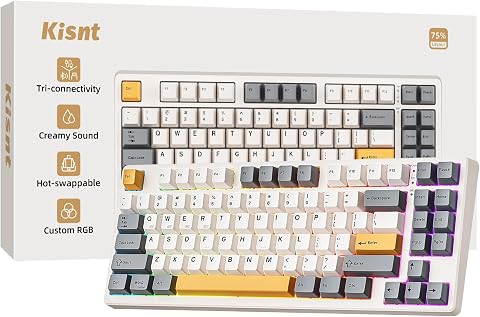 Kisnt KN85 Wireless Mechanical Keyboard, 75% Layout, Bluetooth/2.4GHz/USB-C,…View on Amazon →
 - 6
 Redragon K668 108-Key Hot-Swap Wired RGB Gaming Keyboard with Extra HotkeysView on Amazon →
 - 7
 Redragon Mechanical Gaming Keyboard Wired, 11 Backlit Modes, Hot-Swappable Re…View on Amazon →
 - 8
 RisoPhy Mechanical Gaming Keyboard, RGB Backlit, 104 Keys, Blue Switch, USB W…View on Amazon →
Implications of the 2026 AI Trends for Industry and Society
The predicted AI trends for 2026 will likely transform multiple sectors, including healthcare, finance, and entertainment, by enabling more personalized, efficient, and ethical applications. These developments could also influence regulatory frameworks, workforce dynamics, and global competitiveness, making understanding these trends essential for policymakers, businesses, and consumers alike.
Products Worth Considering

Logitech MX Mechanical Full-Size Wireless Mechanical Keyboard, Tactile Quiet Switches, Backlit Keys, Bluetooth, USB-C, Multi-Device, Graphit

Logitech MX Mechanical Wireless Illuminated Keyboard, Tactile Quiet, Graphite

Logitech MX Mechanical Mini Mac Wireless Keyboard Low-Profile – Space Grey
As an affiliate, we earn on qualifying purchases.
Current State of AI and Emerging Directions
As of 2023, AI technology is rapidly advancing, with large language models like GPT-4 demonstrating significant capabilities. Investment in AI startups and research continues to grow, fueling innovation. Experts have long anticipated that by 2026, these technological strides will culminate in broader adoption and more sophisticated applications, especially as ethical and regulatory considerations gain prominence.
The focus has shifted from basic automation to complex, industry-tailored AI solutions, with ongoing debates about AI safety, bias, and governance shaping the development landscape.
Unconfirmed Aspects and Policy Uncertainties
While the general direction of AI development is clear, specific details—such as the exact regulatory landscape, the speed of adoption in certain industries, and potential breakthroughs—remain uncertain. The pace at which ethical standards and safety measures will be adopted globally is also still evolving, influenced by political, economic, and technological factors.
Next Steps for Stakeholders and Industry Watchers
Industry leaders, policymakers, and researchers will closely monitor the progress of these trends through ongoing developments, pilot projects, and regulatory proposals. Key milestones include the release of new AI models, updates to ethical guidelines, and sector-specific AI integrations expected throughout 2024 and 2025, leading up to 2026.
Key Questions
What are the main AI trends expected in 2026?
The top eight trends include advancements in generative AI, increased industry-specific applications, ethical framework development, AI in healthcare and finance, improved automation, multi-modal AI systems, AI-driven personalization, and regulatory evolution.
Why are these AI trends important for businesses?
These trends will shape competitive advantages, operational efficiencies, and compliance requirements, making it essential for businesses to adapt and innovate accordingly.
Will AI regulation keep pace with technological advances?
It is uncertain; regulatory frameworks are still in development, and their alignment with rapid technological progress remains a key challenge.
How might AI impact employment by 2026?
AI could automate many tasks, potentially displacing some jobs while creating new roles in AI development, oversight, and industry-specific applications. The overall impact will depend on policy responses and industry adoption rates.
Source: ThorstenMeyerAI.com