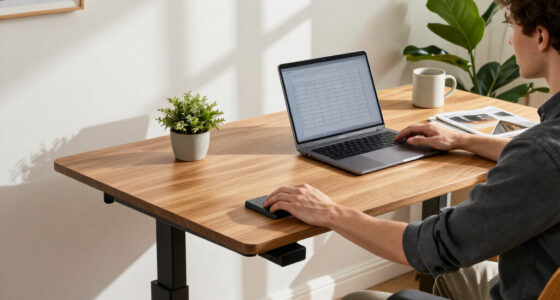

🔍 Read the full analysis: A Checklist For Building An AI Automation Desk In 2026 on ThorstenMeyerAI.com

Get smart everyday buys delivered free with Prime
- Fast, free delivery on millions of items
- Prime Video, Amazon Music and more included
- Member-only deals all year
TL;DR
A ThorstenMeyerAI.com checklist outlines six components for an AI development and automation desk, from a main laptop to optional local hardware, a dock and portable storage. It names a Dell Precision 7780 and an NVIDIA Jetson Orin Nano Developer Kit, while leaving several product choices open and stressing compatibility checks.
ThorstenMeyerAI.com has outlined a six-item checklist for people building a desk for AI development, automation and hands-on experimentation. It names a Dell Precision 7780 workstation laptop and an NVIDIA Jetson Orin Nano Developer Kit, while treating a USB accelerator and local AI server as optional choices that depend on a user’s projects.
According to the ThorstenMeyerAI.com checklist, equipment is grouped by role: a primary computer, hardware for local experimentation, desk connectivity and portable storage. Its six slots are a workstation laptop, USB AI accelerator, local AI server, AI development board, Thunderbolt docking station and portable NVMe SSD. The supplied checklist material does not name a product for every slot, so several are guidance categories rather than specific recommendations.
For the main computer, the checklist names the Dell Precision 7780, describing it as a 17.3-inch FHD mobile workstation with an Intel Core i9-13. The guide cautions that the model name alone does not establish a buyer’s exact configuration. It advises checking the processor, memory, storage, operating system and ports on the specific seller listing, along with dimensions and weight.
The checklist names the NVIDIA Jetson Orin Nano Developer Kit as its development board. It advises readers to review the board’s official documentation and check what the seller’s listing includes. The supplied excerpt notes that a kit may need additional equipment, but ends before completing its examples. The checklist provides no specifications or named products for the dock or portable SSD.
Dell Precision 7780 17.3-inch FHD Mobile Workstation, Intel Core i9-13950HX, 128

A professional mobile workstation built for engineering, design, software development, data analysis, and content creation. It includes an Intel Core i9-13950HX processor, NVIDIA RTX 3500 Ada graphics with 12GB VRAM, Windows 11 Pro with AI Copilot, and a Dell manufacturer warranty through March 2031.
Pros:
- High-performance processor for demanding applications
- 128GB RAM and 1TB NVMe SSD
- Professional NVIDIA graphics with 12GB VRAM
- ISV-certified for professional software
Cons:
- The 17.3-inch size may make it less portable than smaller laptops
Best for: A desk-centered setup that can accommodate a 17.3-inch laptop.
Not ideal for: A compact workspace or frequent travel if the size does not suit you.
Bottom line: Choose this workstation only after confirming the exact configuration and checking that its size and ports fit your setup.
Matching Hardware to Real Projects
The checklist’s practical point is to start with the workload, then choose equipment that supports it. In its discussion, AI development can involve ordinary coding on a laptop, embedded experiments on a board or a separate machine for local workloads. The guide does not present every optional item as necessary for those uses.
The guide advises buyers to check operating system, framework and model support, as well as power, cooling, network access and placement where relevant. It also says to account for desk space, travel needs and compatibility with equipment already owned. These are checks the checklist recommends; the supplied material does not report compatibility testing.
For readers assembling a setup, the checklist serves as a set of questions to resolve before purchase, rather than a complete bill of materials. The supplied material includes no prices, performance comparisons or benchmark results, so it does not establish which configuration offers better value or suits a particular project.
Six Roles in the Desk Setup
In the guide’s outline, the main workstation is distinct from optional computing hardware. It suggests a laptop may handle coding, automation management and connections to desk accessories. A USB accelerator or local AI server is presented as relevant only if a specific project benefits from one and the software supports it.
For a separate server, the checklist recommends defining the intended workload before comparing machines. It directs readers to check software requirements, network access, management method, storage and expansion, as well as power, cooling, noise and physical placement. The guide suggests starting with a current laptop if it can do the initial work, then reconsidering a server when a concrete need emerges.
The supplied excerpt also identifies desk connectivity and portable storage as checklist roles, naming a Thunderbolt docking station and portable NVMe SSD. It gives no brand or model picks, capacity guidance, transfer speeds or compatibility details for either. The guide therefore leaves those choices to checks against the buyer’s computer, peripherals and project requirements.
Product Details Still Missing
The supplied ThorstenMeyerAI.com material does not state when the checklist was published or give a testing method or basis for selecting the two named products. It also does not identify the precise Dell configuration behind the laptop description; the checklist advises buyers to verify the seller’s exact listing.
Several checklist entries remain open-ended: no USB accelerator, local server, dock or portable SSD model is specified. The supplied excerpt cuts off during the development board discussion, so it does not provide the full list of possible kit accessories. It gives no prices, availability, performance measurements or compatibility results.
Checks Before Any Purchase
For readers following the checklist, the next step is to define a project and compare its software and hardware requirements with the exact products under consideration. The guide recommends checking official documentation and seller listings for configuration, compatibility and included accessories, then confirming the desk has suitable ports, space, power and network access.
The supplied source does not announce a follow-up, buying guide or product test. The checklist provides a framework for evaluating a setup, but does not resolve which components a particular reader should buy.
Key Questions
Which products does the checklist name?
The ThorstenMeyerAI.com checklist names the Dell Precision 7780 workstation laptop and the NVIDIA Jetson Orin Nano Developer Kit. The supplied material does not name products for the other listed categories.
Does the guide say every desk needs a local AI server?
No. The checklist presents a local server as an option for projects that call for a separate machine and advises readers to define the workload first. It suggests beginning with an existing laptop if it can handle the initial work.
What should buyers check on the Dell laptop listing?
The checklist advises verifying the exact processor configuration, memory, storage, operating system and ports. It also recommends checking dimensions and weight against desk space and travel needs.
What information is missing from the supplied checklist?
The supplied material gives no prices, performance tests or specific models for the USB accelerator, local server, docking station or portable SSD. The excerpt also ends before finishing its discussion of accessories for the development kit.
Source: ThorstenMeyerAI.com
Fall Picks
fall essentials
As an affiliate, we earn on qualifying purchases.